


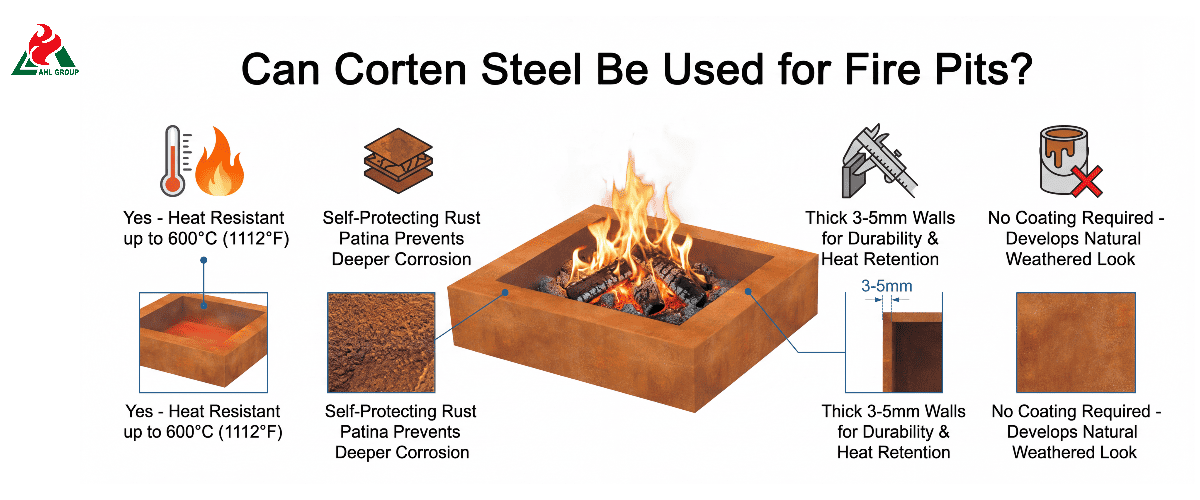
Corten steel can be used to construct fire pits when the product is designed to withstand repeated heating, accommodate outdoor drainage, and meet the expected fuel usage requirements. Weathering steel forms a rust-colored oxide layer, thereby reducing the need for exterior surface painting; however, the steel grade alone does not guarantee that all designs will be safe and durable. Factors such as the fire pit’s geometry, sheet thickness, welds, ventilation, fuel components, ash removal, installation surface, and manufacturer-specified clearances must all be verified.
Therefore, the question “Can it be used?” actually encompasses four sub-questions: Can weathering steel form the main structure? Can the structure withstand deformation during heating and cooling without experiencing unacceptable distortion? Is the entire fire pit safe given the fuel used and its installation location? Is it approved for optional functions such as cooking?
When using any fire pit, strictly follow the instructions in its manual. Check local fire safety restrictions, permit requirements, and fire bans. Never substitute general safety clearances for the requirements in the product manual and local regulations, and never treat a homemade steel enclosure as an approved gas appliance.
Therefore, the question “Can it be used?” actually encompasses four sub-questions: Can weathering steel form the main structure? Can the structure withstand deformation during heating and cooling without experiencing unacceptable distortion? Is the entire fire pit safe given the fuel used and its installation location? Is it approved for optional functions such as cooking?
When using any fire pit, strictly follow the instructions in its manual. Check local fire safety restrictions, permit requirements, and fire bans. Never substitute general safety clearances for the requirements in the product manual and local regulations, and never treat a homemade steel enclosure as an approved gas appliance.
1. Is Corten Steel Suitable for a Fire Pit
Weathering steel is a practical material suitable for many outdoor fire pit structures because of its high malleability, structural stability, and unique appearance. In the right environment, it naturally forms a strong, adherent layer of rust without relying on traditional painted finishes. However, its suitability depends on the overall structure, fuel type, and intended use.
Contributions of Weathering Steel to Fire Pit Design
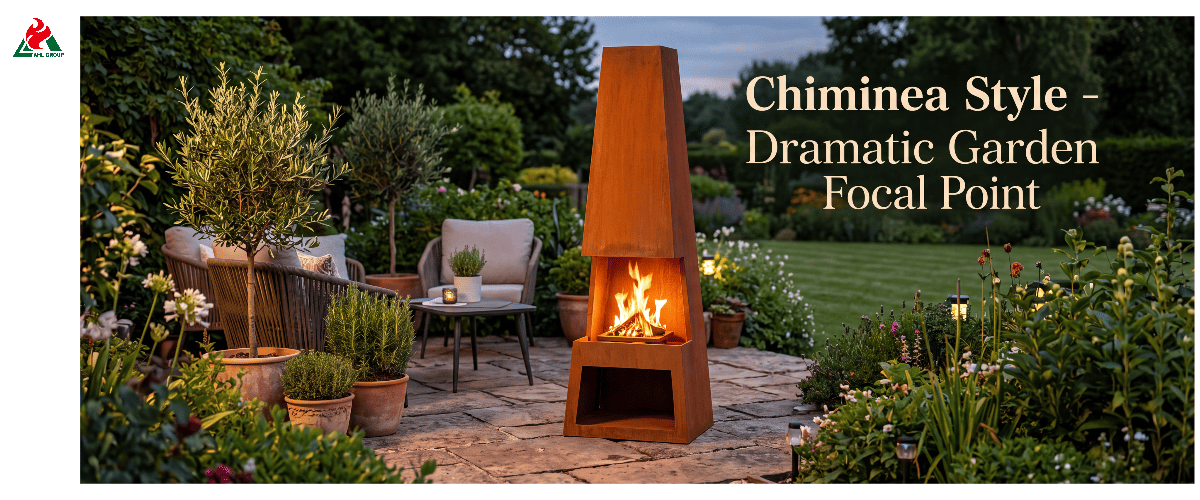
Manufacturers can fabricate weathering steel panels into round basins, square fireboxes, conical containers, or architectural bases. Curves, folded edges, reinforcing ribs, and separate internal components all enhance structural rigidity. The material also pairs well with stone, gravel, concrete, wood, Corten steel planters, and landscape screens.
What Weathering Steel Does Not Guarantee
What weathering steel does not guarantee is equally important. It does not ensure safe clearances, combustion airflow, resistance to various types of thermal deformation, gas system certification, or food contact safety, nor does it guarantee safe use on patios. It is not entirely immune to corrosion and may release oxide-containing runoff, which can stain light-colored paving surfaces.
2. Why Is Corten Steel Used for Fire Pits
Weathering steel is used to construct fire pits primarily because it offers both design flexibility and a unique surface texture—a texture that allows the fire pit to blend visually with the outdoor landscape throughout all four seasons. Even when no fire is burning, the fire pit becomes a work of architectural art.
Architectural Rust Blends with the Landscape
The rust gradually evolves from the original hue of new steel into shades of orange and reddish-brown. This ever-changing appearance blends naturally with masonry, concrete, gravel, vegetation, and wood. Since its appearance is inherently designed to showcase the oxidation process, homeowners do not need to deliberately maintain a pristine, painted finish. However, this does not mean the fire pit requires no maintenance; drain openings, ash pits, welds, fire grates, and gas components still need to be properly maintained.
Manufacturing Flexibility
Weathering steel sheets can be cut, bent, and welded into bowl-shaped, box-shaped, conical, and custom shapes. Designers can incorporate flanges, removable ash pans, splash guards, or approved cooking accessories. For gas products, weathering steel may be used as the housing for code-compliant burner systems, provided that the housing complies with all ventilation, drainage, and clearance requirements.
Limitations on Stability and Service Life
Although weight can make a metal fire pit appear sturdy, weight alone does not guarantee stability. The base’s geometry, center of gravity, legs, and surface condition collectively determine whether it will tip over or wobble. Similarly, service life depends on the thickness of the steel plate, thermal cycling, drainage, ash disposal, and exposure to local environmental conditions.
Data on weathering steel bridges should not be directly applied to the service life assessment of residential fire pits. This is because there are differences in environmental conditions, steel plate thickness, loads, and inspection protocols between the two. The structural design of the specific product and its on-site usage history are far more valuable references.
3. What Are the Pros and Cons of Corten Steel Fire Pits
Its main advantages lie in its appearance, customizability, and surface treatment specifically designed to withstand exposure to the elements. Major limitations include rainwater runoff, ongoing oxidation, potential thermal deformation, and sensitivity to poor drainage or corrosive environmental conditions.
| Factor |
Potential advantage | Limitation or condition |
| Appearance |
Distinctive orange-brown patina | Colour changes and may remain uneven |
| Exterior finish |
No conventional paint required in suitable exposure | Not maintenance-free; persistently wet areas may corrode faster |
| Fabrication |
Supports custom shapes and sizes | Poor geometry or welding can distort under heat |
| Heat use |
Steel is compatible with fire-pit construction | Thickness, spans, stiffening and expansion matter |
| Outdoor durability |
Weathering steel can perform well atmospherically | Salt, wet ash and trapped moisture create aggressive local exposure |
| Maintenance |
Exterior usually needs limited cosmetic treatment | Ash, drains, seams and accessories need inspection |
| Runoff |
Natural weathering produces the intended finish | Oxide-bearing water can stain pale paving |
| Cooking |
Some purpose-built models accept cooking accessories | The body material alone is not proof of food-contact suitability |
| Design integration |
Coordinates with other Corten landscape elements | Hot-zone separation and clearances remain essential |
| Customization |
Can be cut, folded and welded | Modifications may compromise structure, airflow or certification |
Therefore, while weathering steel is an excellent material choice, it does not necessarily equate to a high-quality fire bowl. A well-designed product made of ordinary steel, stainless steel, or cast iron may outperform a weathering steel product with poor attention to detail.
For buyers, the decisive factors are the product as a whole: suitable fuels, the structure of the fire bowl or inner liner, sheet metal thickness, drainage design, safety clearances, installation instructions, and warranty terms. For gas-fired products, documentation related to the burner, control devices, ventilation system, and protective covers is more important than the decorative outer casing.
4. Can Corten Steel Withstand Fire Pit Heat
Weathering steel can be used to construct fire pits, but repeated exposure to heat can cause the material to expand, creating temperature differentials and stress. Whether the product retains its shape depends on its thickness, unsupported span, geometry, reinforcement measures, weld placement, fuel load, and cooling method.
Heat Resistance and Thermal Deformation
Steel can deform without reaching its melting point. Even a wide, flat plate will bend when one section is significantly hotter than others. Thin, unsupported bases are more prone to deformation than compact, arched bowls or folded plates. Corners and reinforcing ribs can increase stiffness, while sudden changes in cross-section and concentrated welds may create localized stresses.
How Fuel Placement Affects Heat Flow
Performance is influenced by the placement of fuel and the manner in which the flame contacts the furnace chamber. Raised grates, replaceable combustion plates, or separate linings can all alter heat flow. When burning wood, the flame distribution varies as the wood moves; gas burners, on the other hand, have a fixed flame distribution pattern that must be matched to the furnace design and the approved combustion medium.
Why Cooling Methods Are Critical
Cooling is equally critical. Pouring water onto red-hot steel can cause sudden and uneven temperature changes and may result in unpredictable movement of slag or molten material. Please follow the fire-extinguishing methods outlined in the manual; never assume on your own that quenching is acceptable.
For all Corten steel fire pits, there is no one-size-fits-all, universally applicable maximum temperature or “deformation-resistant” plate thickness standard. The manufacturer or fabricator should specify the geometry, support span, plate thickness, expected fuel load, and deformation criteria for the specific model. If deformation affects stability, drainage, burner alignment, or required clearances, discontinue use of the fire pit.
5. How Thick Should a Corten Fire Pit Be
Not all weathering steel fire pits have a uniform sheet thickness. The required thickness depends on the product dimensions, unsupported span, geometry, whether it is directly exposed to flames, fuel type, reinforcement measures, welds, intended use, and whether the component is a high-temperature inner liner or a lower-temperature decorative outer shell.
Design Factors Determining Steel Sheet Thickness
Small, curved inner liners behave differently from large, square enclosures with wide, flat sides. Flanges, tapered geometries, or reinforcing ribs can enhance resistance to deformation without relying solely on plate thickness. Replaceable liners or raised grates can protect the outer shell from direct contact with fuel, but this benefit must be explicitly stated as part of the design documentation.
What Documentation Should Suppliers Provide
Request steel specifications, component thicknesses, relevant manufacturing drawings, and spare parts information. “Heavy-duty weathering steel” is not a quantifiable specification. Similarly, specific values cannot be recommended without knowledge of the design. For custom-built fire protection systems, the manufacturer or engineer should determine steel plate dimensions and reinforcement measures based on the proposed geometry and thermal exposure conditions.
6. Will a Corten Steel Fire Pit Rust Through
If drainage, environmental, or maintenance conditions are poor, a Corten steel fire bowl may eventually become thinner. The purpose of Corten steel is to form a more protective atmospheric rust layer; however, it is not entirely immune to corrosion.
The Normal Formation Process of Weathering Steel Rust Layers
Authoritative guides on weathering steel explain that the adherent rust layer forms through repeated cycles of wetting and drying. Persistently damp environments hinder its normal formation, while exposure to high levels of chlorides can have adverse effects. For fire pits, based on these principles, standing water, damp ash, clogged drains, and salt exposure become critical inspection points.
Normal Weathering vs. Destructive Corrosion
Normal early weathering phenomena may include a shift to an orange-brown color, changes in hue, flaking of the oxide layer, and rust bleeding. Warning signs include persistent damp areas, pitting corrosion, accelerated thinning at drain outlets or welds, perforations, weld cracking, severe deformation, and instability of the base.
High-Risk Exposure to Moisture and Chlorides
Wet-set installation is particularly undesirable because it traps moisture and contaminants on the surface of the tiles. Even after the exposed surface dries, crevices, folded seams, and debris-filled corners may remain damp. Salt spray, salt in coastal air, and salt- or chlorine-containing pool splash water all increase the risk. Never treat specific coastal distances intended for bridges as a fixed rule for residential projects; instead, assess the site’s microclimate and consult product guidelines.
A material’s name alone does not guarantee service life. Panel thickness, structure, fuel type, drainage conditions, thermal cycling, and inspection practices collectively determine the remaining service life. A visually mature oxide layer is no substitute for inspecting drainage outlets, welds, and high-temperature areas.
7. Does a Corten Fire Pit Need Drainage
For uncovered Corten fire pits, it is typically necessary to develop a customized solution for the product to prevent rainwater from pooling inside the fire basin. Details regarding drainage openings, cover plates, and ash disposal must also ensure that embers, high-temperature residues, or rusty water do not flow onto unsafe or vulnerable surfaces.
Why Standing Water and Wet Ash Matter
Standing water keeps the steel continuously damp. Ashes can clog small drainage holes, creating a layer of moisture that clings to the inner walls of the fire pit. In freezing conditions, trapped water places additional stress on enclosed structural components. Water can also carry oxides onto nearby paved surfaces and may mask damage in low-lying areas.
Differences in Drainage Between Wood-Burning and Gas Fire Pits
Never apply the drainage specifications for wood-burning fire pits directly to gas fire pits. Gas fire pits may have specific requirements regarding vents, drainage, fill material depth, and burner spacing. Strictly follow all requirements outlined in the equipment or burner manual.
Inspect the drainage system after storms, after removing ashes, and before seasonal storage. Perform maintenance only after the fire pit has completely cooled. Never cover a fire pit while it is still warm or damp; an airtight cover will trap condensation, disrupting the drying cycle required for weathering steel.
8. Wood-Burning vs Gas Corten Fire Pits
Although wood-burning and gas Corten metal fire pits use the same outer shell material, they are distinct systems. Because their combustion, maintenance, and safety requirements differ, they must be evaluated separately.
Wood VS. Gas Fire Pit Comparison
| Feature |
Wood-burning Corten fire pit | Gas Corten fire pit |
| Primary hazards |
Sparks, embers, smoke, ash and excess fuel | Fuel leaks, ventilation, burner setup and shutoff access |
| Heat pattern |
Variable with log size and placement | Defined by burner and media arrangement |
| Key documentation |
Fuel limit, clearances, spark control and ash procedure | Approved burner, fuel specification, ventilation and installer requirements |
| Maintenance |
Ash, grate, screen, bowl and drain | Burner ports, media, ignition, vents, connections and controls |
| Installation |
Approved surface and local recreational-fire rules | Manufacturer enclosure design and gas-code compliance |
| Cooking |
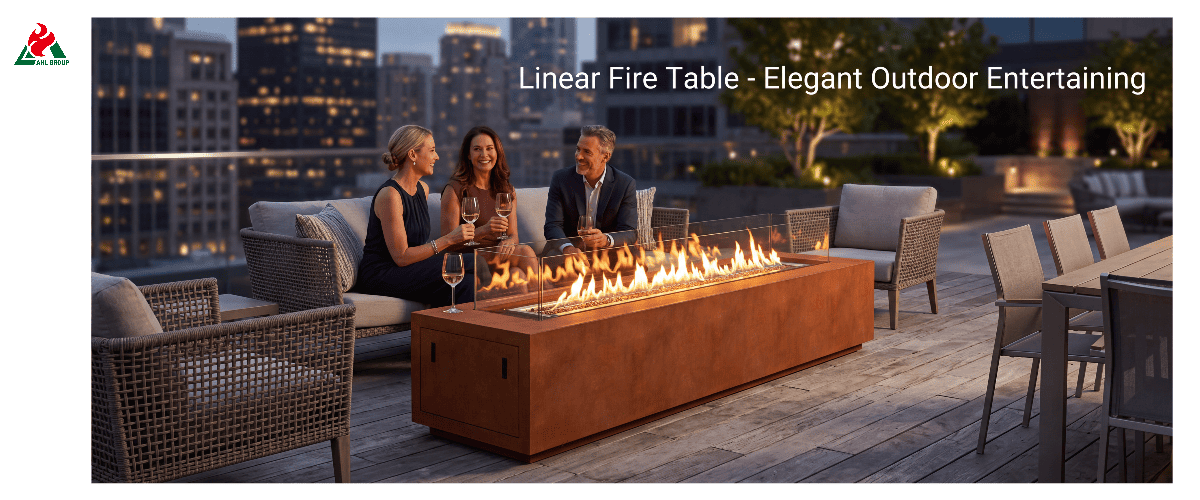
Only with a purpose-designed grate or accessory | Only when explicitly approved for cooking |
Wood-Burning Fire Pit Requirements
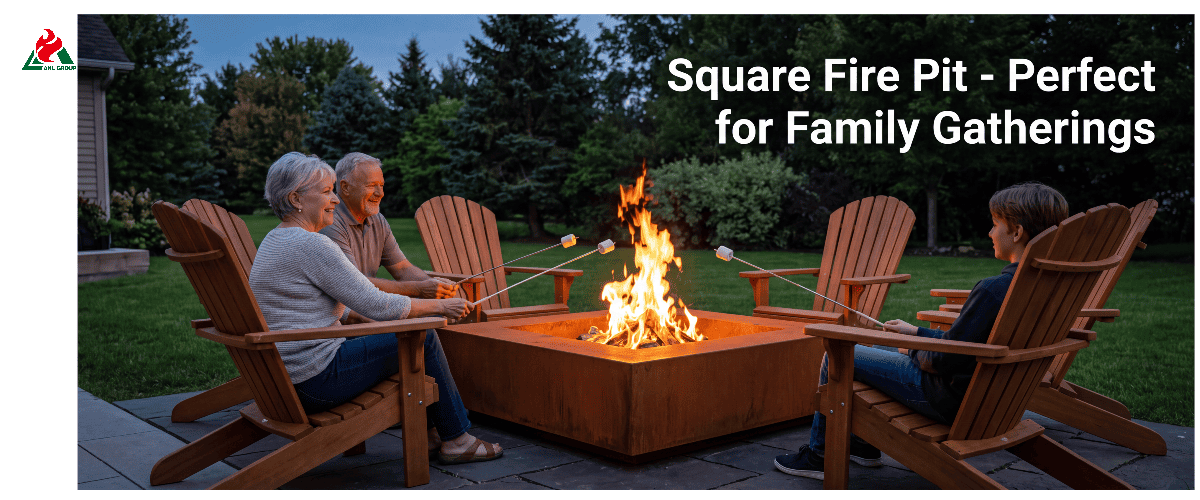
Wood-burning designs require a stable base for firewood, good airflow, clearly defined fuel restrictions, easy access for ash removal, and spark control measures when necessary. Wind can scatter embers and smoke. Users must follow the prescribed extinguishing procedures and be aware that embers remain hazardous even after the flames have gone out.
Gas Fire Pit Requirements
Gas designs require the correct gas type and pressure, an approved burner, an easily operable shut-off valve, specified enclosure ventilation, drainage, permitted combustion media, and a qualified installation. Listed manuals may specify requirements for opposing vents, safety clearances, or the placement of combustion media for that specific equipment; these requirements cannot be inferred solely based on the weathering steel enclosure.
Why a Decorative Corten Box Is Not a Gas Appliance
Decorative weathering steel enclosures must not be constructed around gas burners unless the entire system fully complies with the burner manufacturer’s requirements regarding enclosures, ventilation, drainage, safety clearances, and controls. Modifying ventilation openings, overfilling with combustion media, or obstructing shut-off valves may compromise safe operation.
9. Are Corten Steel Fire Pits Safe
Corten backyard fire pits designed for outdoor use are safe when installed and used in accordance with the product instructions and local regulations. Safety depends on the product as a whole, the fuel, the placement, the weather, and user behavior—not just the material of the outer shell itself.
Before Lighting the Fire Pit
Before lighting the fire:
► Confirm that the product is suitable for outdoor use.
► Check local permitting requirements, burning restrictions, and temporary bans.
► Use only the specified fuel.
► Place the fire pit on an approved and stable surface.
► Observe the required safety clearances on the sides and above the product.
► Remove flammable furniture, plants, and debris from the designated area.
► Check wind conditions.
► Keep children and pets away from the fire pit.
► Have the required fire-extinguishing equipment on hand.
► Inspect gas components or the wood-burning grate according to the instructions.
During Use of the Fire Pit
While in use, do not exceed the fuel usage limits, and keep the fire pit under constant supervision. Do not use unapproved fuel additives; never move the unit while it is hot, and do not touch blackened steel surfaces to test their temperature. Ensure the gas shut-off valve is within easy reach. If required by the product or usage conditions, use a fire guard.
Extinguishing the Fire and Ash Disposal
After use, follow the extinguishing procedure outlined in the instruction manual. The fact that the flame has gone out does not mean the fire pit, fuel, or ashes have cooled down. The ashes may still be extremely hot; it is recommended to place them in a metal container with a secure lid and dispose of them safely away from flammable materials. Please follow the instructions of your local fire department.
Why Fire Pit Safety Distances Vary by Product
There is no universal safety distance that applies to all products and jurisdictions. The type of fuel, test results, wind conditions, surrounding structures, and local regulations collectively determine the appropriate placement of a fire pit.
10. Can a Corten Fire Pit Be Placed on a Patio or Deck
A Corten landscape fire pit may only be placed on a non-combustible patio if the product manual permits installation on such a patio and issues related to heat, weight, drainage, and safety clearances have been properly addressed. For patios paved with wood or composite materials, explicit product approval must be obtained, and a comprehensive protection plan must be developed; the use of generic spacers alone should not be considered sufficient.
Comparison of Terrace and Deck Surfaces
Different surfaces present different risks:
| Surface |
Main questions |
| Concrete |
Heat exposure, rust staining, cracking risk, drainage and feet |
| Natural stone |
Thermal sensitivity, porosity and oxide staining |
| Pavers |
Heat, joint material, settlement, staining and base stability |
| Gravel |
Product stability, ember containment and vegetation beneath |
| Lawn or soil |
Combustibility, uneven support, moisture and prohibited use |
| Timber deck |
Combustibility, radiant heat, embers and structural load |
| Composite deck |
Temperature limits, deformation and warranty |
How Heat Is Transferred to the Installation Surface
Heat is transferred to the installation surface through radiation from the flames and high-temperature sides, conduction from the base or legs, falling embers, and heat reflected from beneath overhanging structures. Non-combustible surfaces do not necessarily completely prevent discoloration or heat damage.
Managing Rust Water Drainage on Patios
Before placing a fire pit on a light-colored concrete or stone surface, a plan for rust water drainage should be established in advance. Direct drainage toward a safe and stain-resistant path to prevent water from pooling beneath the base. Any drainage system or protective layer must be able to withstand the expected heat and ensure proper ventilation of the product.
Can a Corten Steel Fire Pit Be Placed Under a Pergola
For pergolas, roofs, or other overhead structures, fire pits may only be used if specifically permitted by applicable equipment standards, safety clearance requirements, ventilation conditions, and local regulatory authorities. The steel shell itself does not constitute authorization for use in covered spaces.
11. Can You Cook on a Corten Steel Fire Pit
Cooking on a Corten steel fire pit grill is permitted only if the entire product has been specifically designed and is documented as compatible with approved grates, flat-bottomed baking pans, or accessories. The fact that the main body is made of weathering steel does not imply that all heated surfaces, coatings, welding residues, or accessories are suitable for contact with food.
Fire Pit Components and Food-Contact Surfaces
Break down the product into its functional components:
► Decorative Corten steel outer shell;
► Fire bowl or combustion chamber;
► Grate supporting the fuel;
► Grill or flat baking pan that comes into contact with food;
► Gas burners and approved fuel;
► Handles, tools, and removable accessories.
Items to Verify Before Cooking
Parts that come into contact with food may be made of different materials than the outer casing. Before cooking, confirm which surfaces will come into contact with food, as well as their materials and surface treatments, approved fuels, cleaning methods, and any seasoning processes. Check to ensure that grease does not flow into drains, burners, or hard-to-reach cavities. Use only replacement parts specified for this model.
12. Frequently Asked Questions
Q1: Is Corten Steel Fireproof?
Although steel is non-combustible, the term “fire-resistant” can be misleading. High temperatures cause steel to expand, which can reduce its strength or cause deformation. A complete fire pit consists of welds, linings, burners, surfaces, and surrounding materials; the safety of each of these components must be evaluated separately.
Q2: Will a Corten Fire Pit Rust Through?
Wall thickness may be reduced when drainage is poor, or when damp ash, chlorides, or trapped moisture create a localized corrosive environment. Please inspect drain openings, seams, welds, low-lying areas, and areas that remain damp for extended periods.
Q3: How Far Should a Corten Fire Pit Be From a House?
Strictly adhere to the product’s safety clearance specifications and local fire codes. Due to variations in fuel type, fire intensity, wind conditions, test results, overhead conditions, and jurisdictional requirements, a uniform safety distance cannot be established.
Q4: Does Corten Steel Warp in a Fire Pit?
It may, especially when the sheet is thin, flat, wide, or subjected to uneven heating. Appropriate thickness, curvature, flanges, reinforcing ribs, linings, welding design, and fuel control can reduce this risk.
Q5: Is Corten Better Than Regular Steel for a Fire Pit?
In suitable environments, weathering steel typically offers a more aesthetically pleasing, naturally rusted appearance. Whether it is a better choice depends on factors such as the overall structure, thermal management, drainage, climate, maintenance, and cost.
Q6: How Long Does a Corten Steel Fire Pit Last?
No uniform service life can be guaranteed. The service life is determined by a combination of factors, including steel thickness, manufacturing process, fuel, thermal cycling, climate, drainage, salt exposure, and maintenance conditions.
Conclusion: Should You Choose a Corten Steel Fire Pit
Choose a Corten outdoor fire bowl when you want to achieve an architectural-style weathered finish, and the product specifications provide comprehensive and reliable information regarding fuel, construction, drainage, installation location, and intended use. Never make a decision based solely on the presence of the word “Corten” in the product name.
Request a Customized Proposal for a Weathering Steel Fire Pit: Please provide the fuel type, installation surface, project location, required dimensions, and intended use to receive a customized solution tailored to your specific project.
Before comparing prices, review the steel specifications, sheet thickness, fire pit design, drainage system, safety clearances, certifications, cooking permits, replaceable parts, and warranty terms. Relevant resources may cover topics such as weathering steel fire pit maintenance, the formation of rust on weathering steel, and preventing rust stains.

