


Corten steel garden lights are increasingly used in landscape design because they combine practical outdoor lighting with a unique weathered metal appearance. Unlike traditional painted garden lights, Corten lights develop a natural rust patina that complements plants, stone, wood, concrete, and other landscape materials.
The optimal use of weathering steel garden lights depends on the installation location, required illuminance, fixture height, beam angle, color temperature, IP rating, and the overall landscape design. Pathways are typically best suited for low-profile path lights, while driveways and commercial landscapes often require taller bollard lights. Wall sconces can highlight architectural features, while spotlights are better suited for illuminating trees, sculptures, and weathering steel planters.
This guide will detail the most suitable locations for installing Corten steel courtyard lights, how to select the right fixtures for different applications, and how to combine different types of lighting to create a safe, aesthetically pleasing, and harmonious outdoor environment.
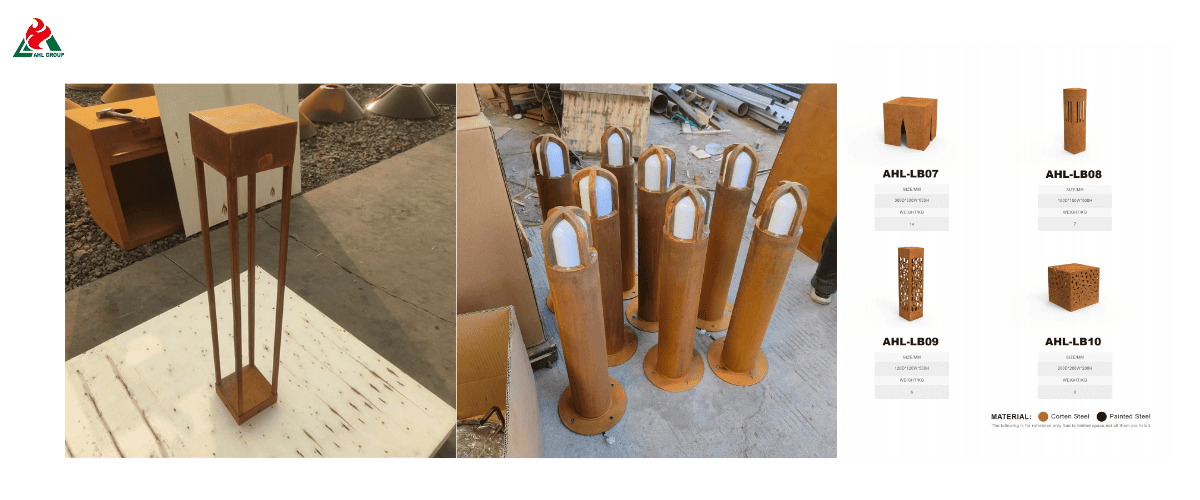
The optimal use of weathering steel garden lights depends on the installation location, required illuminance, fixture height, beam angle, color temperature, IP rating, and the overall landscape design. Pathways are typically best suited for low-profile path lights, while driveways and commercial landscapes often require taller bollard lights. Wall sconces can highlight architectural features, while spotlights are better suited for illuminating trees, sculptures, and weathering steel planters.
This guide will detail the most suitable locations for installing Corten steel courtyard lights, how to select the right fixtures for different applications, and how to combine different types of lighting to create a safe, aesthetically pleasing, and harmonious outdoor environment.
1. Quick Answer
Most Common Applications
Corten steel lights are primarily used to illuminate paths, driveways, garden borders, patio perimeters, building facades, and focal-point sculptures. Made from atmospheric weathering steel (ASTM A588 or ASTM A606-4), these fixtures feature a self-healing iron oxide rust layer that blends seamlessly with natural stone, gravel, and greenery.
Best Light Fixture Types by Location
► Paths and Driveways: Low-profile path lights (300 mm to 500 mm) and structural bollard lights (600 mm to 1,000 mm).
► Garden Borders and Lawns: Short ground-mounted bollards and integrated step lights (200 mm to 400 mm).
► Building Facades and Walls: Surface-mounted weather-resistant steel wall sconces and downlights.
► Sculptures and Notable Trees: Directional spotlights and underground uplights.
Key Design Considerations
When installing Corten steel outdoor lights, choose warm color temperatures (2,200K to 2,700K) to highlight the distinctive reddish-orange hues of the steel’s patina. Ensure that luminaires have a protection rating of at least IP65 to withstand general outdoor environments (IP67/IP68 is required near water features), use optical systems that comply with Dark Sky standards and feature anti-glare shields, and install ground-mounted luminaires on a gravel bed to prevent early rust runoff from contaminating nearby translucent paving stones.
2. Understand Corten Garden Lights
What Are Corten Garden Lights
Corten garden lights are outdoor lighting fixtures with housings made of atmospheric weathering steel. Unlike synthetic powder coatings or paint finishes that crack, peel, and flake under UV exposure from the sun, Corten lights utilize a copper-chromium-nickel alloy steel to form a protective surface layer.
How Does the Rust Layer Form
As Corten steel undergoes alternating cycles of wet and dry weather, a dense oxide layer—known as a passivated rust layer—forms. Over a period of 6 to 18 months, the surface gradually changes from its original rolled gray to a bright amber color, eventually evolving into a rich, velvety reddish-brown. This oxide layer acts as a permanent seal, preventing oxygen and moisture from penetrating deep into the structure’s exterior.
Why It’s Suitable for Outdoor Use
► No Chemical Maintenance: No need for ongoing painting, powder coating touch-ups, or anti-corrosion sealants.
► Vandal-Resistant and Impact-Resistant: Thick-gauge steel structures (2.0 mm to 4.0 mm) can withstand accidental impacts from lawn mowers and heavy foot traffic.
► Natural Aesthetics: Warm earth tones blend naturally and harmoniously with soil, greenery, wooden decks, and dry-stone walls.
Typical Lighting Fixture Types
► Pole Lights: Vertical, column-shaped lights that provide downward illumination or 360° perimeter lighting along paths.
► Path Lights: Post-mounted fixtures with shades that direct light downward onto walkways.
► Wall Sconces: Recessed or surface-mounted fixtures used for wall-washing illumination at entrances and along surrounding walls.
► Spotlights and Floodlights: Adjustable-direction lights designed specifically to highlight architectural and botanical features.
Service Life and Maintenance
High-quality weathering steel (Corten) garden lights equipped with solid-state LED light sources and potted electronic drivers have a service life of 20 to 30 years or more. Maintenance is minimal and primarily involves removing fallen leaves from the lens covers and inspecting the rubber gaskets.
3. Pathway and Driveway Lighting
Low-Profile Path Lights
Low-profile path lights (300 to 450 mm high) cast a low-angle beam over walking areas while preventing direct light from entering the observer’s eyes and causing glare. With shades or louvered heads that direct light downward, they are ideal for residential sidewalks and flagstone garden paths.
Driveway Bollard Lights
Heavy-duty, Corten steel bollard lights (700 mm to 1,000 mm in height) installed along the perimeter of driveways serve a dual purpose of structural support and illumination: they clearly mark parking boundaries at night while casting a wide beam of light onto asphalt or gravel surfaces.
Defining Sidewalks and Boundaries
Using Corten steel lighting along the edges of hardscape features creates a clear visual transition between soft lawn areas and paved paths, enhancing safety without tall, visually intrusive overhead poles.
Safe Nighttime Traffic Flow
Uniform lighting prevents dark spots and glaring shadows. To minimize tripping risk, residential sidewalks should maintain a continuous illuminance of 5 to 15 lux, while commercial walkways should maintain a continuous illuminance of 15 to 30 lux.
Visual Rhythm Along the Path
Placing outdoor lights in a uniform, staggered pattern along both sides of the path creates an engaging visual rhythm that guides the eye along the garden landscape.
Spacing and Height
► Path lights (height 300–50 mm): Spacing between lights is 2.0 to 3.0 meters.
► Post lights (height 600–1,000 mm): Spacing between fixtures should be 3.0 to 4.5 meters.
Color Temperature
Pathway lighting should use warm white LED lights with a color temperature of 2,200K to 2,700K. Warm color temperatures highlight the vibrant red and orange hues in the rust of Corten steel, whereas cool white light (>4,000K) makes weathered steel appear dull and lifeless.
IP Rating
Since path and driveway luminaires are installed close to the ground, they are susceptible to water splashes and standing water. Be sure to specify a minimum IP65 rating (dust-tight and resistant to water jets) and ensure they are equipped with sealed cable glands.
4. Garden Border and Lawn Edge Lighting
Low-Profile Bollard Lights for Flower Beds
Compact, Corten bollard lights (200 mm to 350 mm in height) are embedded in flower beds to cast low-angle light onto groundcover plants, highlighting the texture of the low-growing vegetation without causing glare.
Defining Planting Areas
Placing low-voltage Corten garden lights along the front edge of shrub borders visually separates active lawn areas from deep planting beds, adding structural depth to the nighttime landscape.
Highlighting Lawn Edges
Creating a clear band of light along the lawn’s edge cleanly highlights neatly trimmed lawn borders and steel garden edging systems.
Layered Lighting Effects
Combining low-profile path lights with medium-height boundary posts creates a layered lighting scheme that eliminates harsh shadows and adds spatial depth to flower beds.
Recommended Height
Boundary lighting should be kept at a low height (200 mm to 400 mm) so that the light sources are concealed beneath the canopies of mature plants, casting soft light onto flowers and groundcover.
Combining Path Lights and Bollard Lights
Place slender, directional path lights along the main walkway and install 360° diffused bollard lights with a wider beam in adjacent flower beds to create a balanced combination of direct wayfinding lighting and soft ambient lighting.
5. Bollard Lights for Open Areas
Medium-Height Bollards
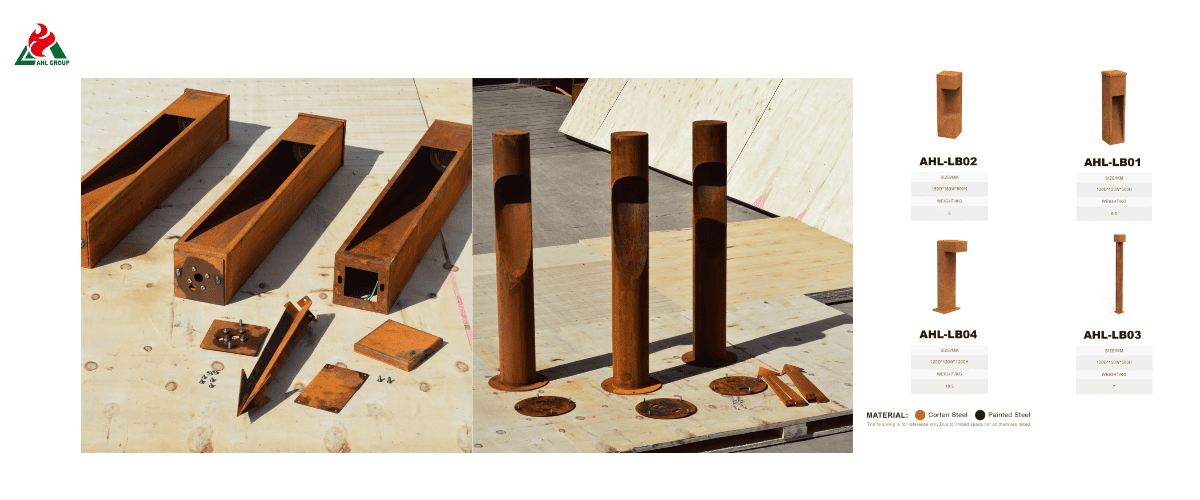
Medium-height bollards (500 mm to 700 mm) provide effective, uniform lighting for residential patios, courtyard seating areas, and outdoor dining patios.
Tall, Sculptural Bollards
Tall weathering steel bollards (800 mm to 1,200 mm and above) feature laser-cut geometric or organic notched designs, serving as landscape sculptures by day and ambient light sources by night.
Plazas and Gathering Spaces
In commercial plazas, sturdy and durable weathering steel bollard lights can delineate pedestrian gathering areas, guide foot traffic, and enhance the areas around seating with a warm, industrial-modern aesthetic.
Commercial Applications
Due to their high structural strength, corrosion resistance, and low long-term maintenance costs, weathering steel bollards are widely used in outdoor restaurant patios, resort walkways, wineries, and public parks.
Residential Entrances
Placing a pair of matching, tall weathering steel bollards on either side of the main entrance or driveway gate creates a warm and upscale atmosphere at the building’s entrance.
Spacing and Layout
When installing bollards in open areas, the spacing should be 3 to 4 times the height of the bollards to ensure consistent light overlap while avoiding dark gaps.
Function and Aesthetics
Choose a light pole design that strikes a balance between lighting performance and visual appeal: opt for open louvers or built-in reflectors to achieve optimal ground illumination, or select laser-cut patterned panels to create decorative accent lighting.
Dark Sky Certified Options
To protect the night sky, choose “Dark Sky Certified” Corten steel lamp posts, whose flat, fully light-shielding caps direct 100% of the light downward, completely eliminating upward light spill and sky glow.
6. Wall Sconces and Facade Lighting
Wall Mounting
Mounting Corten steel wall lights on exterior brick walls, natural stone, cast-in-place concrete, or wooden exterior wall panels creates a rich contrast of materials while illuminating the building’s exterior.
Highlighting Corten Steel Facades
When illuminating Corten steel facades, use surface-mounted downlights installed close to the wall so that the light sweeps downward along the metal surface, highlighting the rich textures and color variations created by the passivated rust.
Entrance Lighting
Installing weathering steel wall sconces at the main entrance or side garage door provides glare-free, safe lighting for door locks, steps, and house numbers.
Wall-Washing Lighting Techniques
► Wall-Sweeping Lighting: Position wall sconces 50 to 150 millimeters away from textured walls and use a narrow beam angle to highlight the surface’s three-dimensional depth.
► Wall Diffusion: Install the fixtures 300 to 600 millimeters away from the wall and use a wide, diffused beam to create a smooth, even effect on flat surfaces.
Color Temperature
Select LED light sources with a color temperature between 2700K and 3000K for wall sconces. Warm white light accentuates the natural brown tones of the building’s facade and creates a warm, inviting atmosphere at the entrance.
IP Rating
Wall lights installed in open, uncovered locations must have an IP rating of at least IP65 to protect the internal driver from wind and rain.
Prevent Glare
Choose wall lights equipped with concealed LED chips, frosted tempered glass lenses, or deep-grooved louvered shades to prevent harsh horizontal glare from shining directly into pedestrians’ eyes.
Harmonize with Architectural Style
Coordinate the contours of Corten steel wall lights with nearby window frames, door hardware, and eaves lines to maintain consistency in the overall geometric form of the building’s facade.
7. Accent Lighting for Sculptures and Plants
Sculpture Spotlights
Directional, Corten steel spotlights equipped with adjustable mounting joints can precisely illuminate garden sculptures, fountains, and architectural features.
Tree Accent Lighting
Placing ground-mounted Corten steel accent lights at the base of notable trees—such as Japanese red maples, olive trees, or birches—illuminates the trunk structure and the canopy’s foliage, creating a striking visual focal point.
Highlighting Details
Use narrow-beam spotlights (15° to 24°) to highlight specific focal points, such as stone sculptures, decorative gates, or rare plants, making them stand out against the dark background of surrounding vegetation.
Illuminating Corten Steel Planters
Use low-angle ground-level spotlights to cross-light Corten steel planters, highlighting the warm tones of the steel while creating a striking contrast with cascading greenery.
Creating Visual Focal Points
By illuminating a few key landscape elements with dedicated accent lighting, you can establish clear visual layers and guide the eye through the outdoor space.
Beam Angles
► Narrow beam (10°–20°): Towering columns, slender statues, and palm tree trunks.
► Medium beam (25°–40°): Small tree canopies, sculptures, and broad shrubs.
► Wide beam (50°–80°): Wide retaining walls, dense hedges, and large Corten flower beds.
Color Temperature
For warm-toned hardscape materials and weathering steel landscape elements, 2700K LED lights should be used; for green tree canopies and vegetation, 3000K LED lights should be used to make the foliage appear vibrant.
Brightness Balance
Accent lighting should remain subdued. Overly bright floodlights shining directly on landscape elements can diminish visual depth and disrupt the tranquil atmosphere of a garden at night.
8. Water Feature and Pool Area Lighting
Water Feature Lighting
Placing Corten steel path lights and spotlights along the edges of ponds, waterfalls, and dry stream beds captures the play of light and shadow reflected on the moving water’s surface.
Pool Perimeter Lighting
Installing low-profile Corten steel landscape lighting around the pool deck clearly defines the swimming area and pool edges, ensuring safety at night.
IP65 and IP67
► IP65: Suitable for path lights and wall sconces located more than 1.5 meters from water bodies; resistant to rain and splashes.
► IP67: Suitable for fixtures installed near water’s edge that may be briefly submerged during heavy rain or pool splashes.
► IP68: Suitable for luminaires permanently installed underwater in ponds or fountains.
Preventing Water Accumulation
Install ground-mounted luminaires on a 50-millimeter-high gravel base to prevent water from pooling around the luminaire base and cable entry points.
Color Temperature
Use 2700K light sources around water features. This warm light creates a rich visual contrast with the cool blue tones of pool and pond water.
Safety and Standards
Outdoor patio lighting fixtures located near water should always be powered by a Class 2 low-voltage (12V or 24V AC/DC) power source protected by a ground-fault circuit interrupter (GFCI).
Chlorinated Environments
When installing Corten steel lamps near chlorinated swimming pools or saltwater systems, high-quality Corten A or ASTM A588 steel should be used, along with sealed 316 stainless steel hardware, to resist chemical corrosion from the air.
9. Commercial and Public Landscapes
Resort and Hotel Walkways
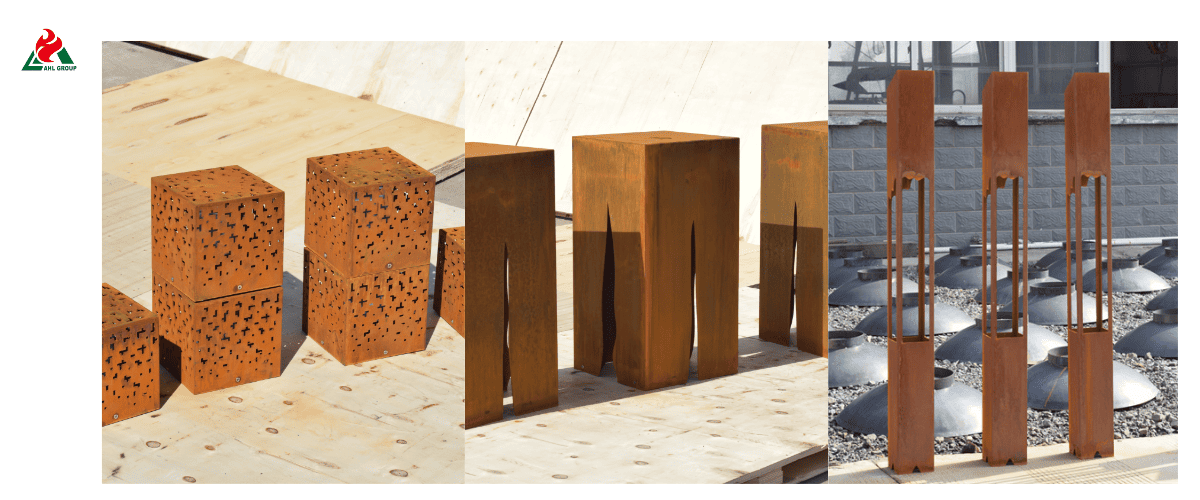
Corten steel lighting is widely used in luxury resorts to illuminate guest walkways, outdoor lounges, and garden paths, creating a refined, eco-conscious, and pastoral atmosphere.
Corporate Campuses
Integrating Corten steel bollards into corporate courtyards not only complements modern concrete and glass architecture but also withstands the rigors of daily, high-intensity use.
Outdoor Retail Areas
Warm Corten steel lighting enhances outdoor shopping plazas and dining terraces, creating an inviting nighttime atmosphere that entices visitors to linger.
Parks and Squares
Municipal parks benefit from Corten steel’s inherent strength; its substantial walls withstand vandalism and harsh weather without requiring ongoing painting or maintenance.
Sidewalks
Placing sturdy weathering steel bollards at regular intervals along public multi-use trails ensures clear nighttime navigation while clearly defining path boundaries for pedestrians and cyclists.
Durability in High-Traffic Environments
Weathering steel bollards, with thicknesses ranging from 3.0 mm to 4.0 mm, offer far superior impact resistance compared to thin-walled aluminum bollards and can withstand impacts from maintenance equipment, bicycles, and heavy foot traffic.
Low Maintenance Costs
Since they do not require periodic painting, Corten steel lighting fixtures can help municipal and commercial property managers reduce long-term maintenance costs for labor and materials.
Architectural Integration
Corten steel lighting easily coordinates with matching Corten steel site fixtures—such as trash cans, planters, tree grates, and retaining walls—to create a cohesive landscape design.
10. Residential Garden Applications
Front Door Lighting
Installing Corten steel wall lights or porch light posts at the front entrance can enhance the building’s curb appeal at night with warm, inviting lighting.
Backyard Pathways
Low-voltage Corten steel path lights can guide family members safely through backyard gardens, stepping-stone paths, and functional areas.
Courtyards and Patios
Placing decorative, laser-cut Corten steel light posts along the edges of the courtyard casts warm ambient light and creates elegant shadow patterns throughout the outdoor living space.
Defining Garden Spaces
Use lighting to outline different outdoor areas—such as fire pit lounges, outdoor kitchens, and dining areas—thereby defining cozy and functional “garden spaces.”
Pool and Water Features
Arrange low-voltage Corten steel decorative lights around the pool deck and water features to create relaxing reflections on the water’s surface while highlighting the boundaries of the water bodies.
Integration with Weathering Steel Elements
Pair weathering steel garden lights with existing weathering steel landscape elements—such as raised planters, privacy screens, and lawn edging—to establish a cohesive design theme.
Outdoor Ambience
Combining soft, warm white LED lighting (2200K to 2700K) with weathering steel surfaces creates a warm and relaxing atmosphere for outdoor gatherings.
Architectural Appeal
Carefully designed weathering steel landscape lighting enhances the building’s nighttime appeal, highlighting its architectural lines and garden scenery.
11. Design Considerations
2200K–2700K: Suitable for Ground-Mounted Fixtures
Ultra-warm light (2200K to 2700K) highlights the rich amber, orange, and deep brown tones in the patina of weathering steel, making it the preferred choice for ground-mounted bollard lights and path lights.
3000K: Suitable for Wall and Accent Lighting
Warm white light (3000K) accurately renders the colors of tree canopies, white stone walls, and building facades made of mixed materials.
IP Protection Rating Requirements
► IP65: Suitable for standard outdoor paths, garden borders, and wall sconces exposed to rain.
► IP67: Suitable for low-lying garden areas prone to temporary water accumulation or heavy water splashes.
► IP68: Suitable for underwater landscape lighting.
Dark Sky Standards
To protect the night sky and local wildlife, select luminaires equipped with full-cut-off optical systems, flat-top covers, and downward-directed beams to completely eliminate upward light spill.
Glare Control
Use deep-shading louvers, frosted glass lenses, or indirect reflectors to ensure the LED light source is not directly visible to the eye.
Integration with Weathering Steel Elements
Coordinate the luminaire’s surface finish with adjacent weathering steel components. If installing new, natural-colored weathering steel luminaires next to weathered, dark brown weathering steel planters, pre-weather the new luminaires with a salt and hydrogen peroxide spray to quickly match their tone to the rust tones of the older pieces.
12. Combine Different Fixture Types
Layered Arrangement of Path Lights, Bollard Lights, and Accent Lighting
Create a layered lighting layout by combining low-intensity path lights for the walkway surface, medium-intensity bollard lights to define boundaries, and directional spotlights to illuminate tree canopies.
Creating Visual Depth
Naturally guide the eye by adjusting the brightness levels in different areas of the landscape: keep the main walkways at a lower brightness level (5 to 10 lux), while using brighter accent lighting (30 to 50 lux) to highlight key focal points such as statues or notable trees.
Defining Zones
Use different styles of fixtures to delineate functional outdoor areas—for example, placing bollard lights around a patio dining area, arranging path lights along walkways, and installing uplights along the perimeter of a backyard privacy wall.
Balancing Safety and Aesthetics
Ensure adequate lighting on walkways, stairs, and areas with elevation changes to guarantee safety, while using soft accent lighting in other areas to preserve the nighttime ambiance.
Avoid Over-Lighting
Brighter isn’t necessarily better. Leaving dark spaces between lighting elements creates contrast, depth, and visual interest in the nighttime landscape.
Use Dimming and Control Systems
Connect low-voltage, Corten steel fixtures to a smart lighting transformer equipped with an astronomical timer, zone dimming, and smartphone control features, so you can adjust lighting brightness based on the time of night or activity needs.
13. FAQs
Q1: Where are Corten Garden Lights Suitable for Use?
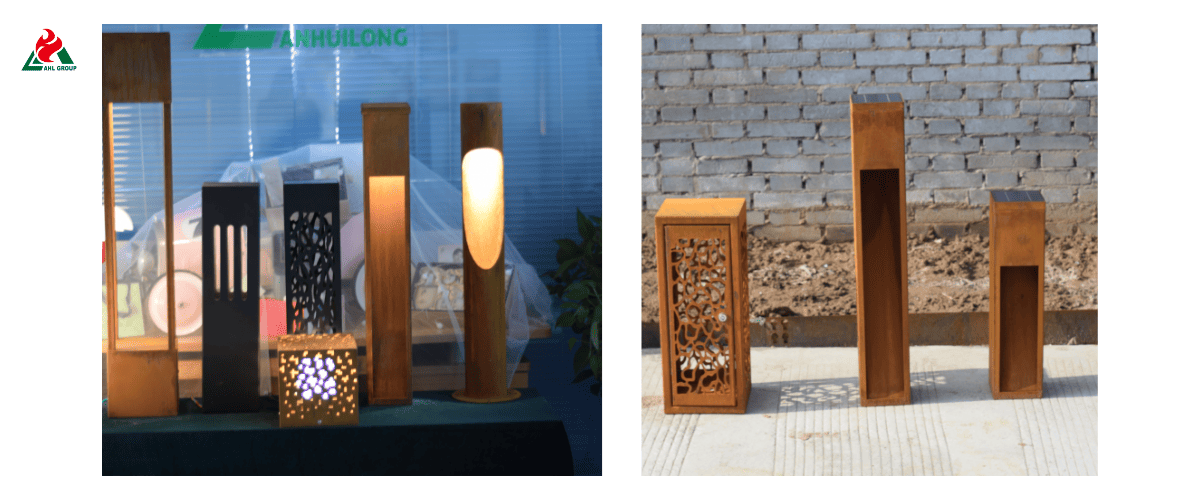
Corten Lights are ideal for landscape lighting along sidewalks, driveways, flower beds, patio edges, building facades, entrances, around water features, and in commercial plazas.
Q2: What is the Optimal Color Temperature?
For Corten steel lamp bodies and ground areas, we recommend using warm white LED lights with a color temperature of 2200K to 2700K; for illuminating greenery and building facades, 3000K is recommended.
Q3: How Should IP Ratings Be Selected for Pool Areas?
Fixtures located 1.5 meters or more from the pool edge should have an IP65 rating; fixtures situated at the water’s edge and susceptible to heavy splashing should have an IP67 rating; and underwater fixtures should have an IP68 rating.
Q4: Are They Suitable for Commercial Landscapes?
Yes. Weathering steel’s thick-walled construction, high impact resistance, and lack of need for painting make it ideal for high-traffic commercial spaces, hotels, and public parks.
Q5: What is the Optimal Height for Pathway Bollards?
The ideal height for pathway bollards is 400 millimeters to 700 millimeters, which allows light to be widely distributed across the ground while keeping the light source below eye level.
Q6: What is the Service Life?
Weathering steel lamp bodies can last 20 to 30 years or more outdoors, with a service life that even exceeds that of the internal LED light sources and electronic drivers—components that can be maintained as needed.
Q7: Does It Require Special Maintenance?
No special metal maintenance is required. Simply wipe the glass lenses periodically and clear fallen leaves from around the lamp base.
Conclusion: Key Design Principles
Corten Outdoor lights perfectly blend structural durability, low-maintenance characteristics, and a warm, natural style, making them an ideal choice for modern outdoor landscapes. By selecting the right fixture styles, specifying warm-toned LED color temperatures (2200K to 2700K), maintaining an appropriate IP rating, and layering path lights, bollard lights, and accent lighting, you can transform your paths, patios, and garden features into outdoor spaces that are both inviting and safe, while standing the test of time.

