


Open flames possess a primal and powerful allure—they remain the timeless centerpiece for human connection, storytelling, and relaxation. In landscape design, metal fire pits have evolved from simple utilitarian features into sophisticated architectural statements. Among various materials, weathering steel stands apart, uniquely blending industrial strength with natural beauty. This guide is crafted for discerning homeowners and professional designers, offering rigorous operational guidance to master the technical intricacies and aesthetic possibilities of weathering steel. Whether you seek a striking visual focal point for a contemporary estate or a rugged hearth space for a rustic retreat, the following chapters will empower you to execute an investment that grows in character and value over time.
Introduction: Why a Corten Fire Pit is a Transformative Outdoor Investment
Unique Charm: Warmth, Ambiance, and Lifestyle Aesthetics
The modern fire pit stands at the heart of the outdoor living space. Unlike traditional materials that age or appear worn over time, weathering steel (often called patina steel) embodies a “living” aesthetic. When exposed to the natural environment, it develops a stable rust-like glaze that forms a protective shell. From its raw gray steel hue to deep earthy burnt orange, and ultimately evolving into a refined deep ochre, this gradual transformation resembles a visual narrative of seasonal change. It not only provides warmth but also imparts a tactile sense of coziness, complementing organic garden settings as well as accentuating sleek modern architecture.
Beyond Purchase: Treating the Fire Pit as a Permanent Landscape Feature
Choosing a Corten steel fire pit represents an investment in enduring infrastructure rather than temporary decoration. With exceptional corrosion resistance and high tensile strength, a high-quality Corten fire pit can remain permanently installed for decades. It becomes an anchor point in your courtyard or garden—furniture arranges around it, memories settle here. Unlike cheap alternatives that rust through and eventually fail, weathering steel grows stronger under thermal stress. It maintains structural integrity while developing a surface patina that becomes increasingly captivating over time.
What This Guide Covers: Matching Form, Function, and Long-Term Value to Your Space
Selecting the right fire pit requires balancing metallurgical knowledge, spatial design, and lifestyle assessment. This guide employs a professional ten-step framework to guide you through the selection process. We will explore how to define your outdoor fire pit experience, measure the space to ensure safety, choose the appropriate fuel type, and verify the quality of the steel itself. Upon completing this guide, you will possess the expertise to select a landscape element that delivers maximum return on investment—both in terms of property value and quality of life.
Step 1: Define Your Primary Use Case and Fire Experience
Social Gathering Type: Large Flames Ideal for Group Entertainment
If you're planning a large gathering, size and heat radiation range are top priorities. Social gathering fire pits typically feature a wide, open fire bowl design for 360-degree surround heating. This layout encourages guests to sit around the fire, ensuring everyone equally enjoys the radiant warmth. For such settings, we recommend large fire pits with diameters of 100 cm or more. These accommodate thick logs while creating more dramatic flame effects.
Cooking Enthusiasts: Grilling, Roasting, and Campfire Cooking
For users who view fire as a cooking medium, a fire pit must be versatile. Cooking-oriented designs often feature flat “skillet” edges, adjustable grates, or integrated tripod stands for Dutch ovens. When selecting a cooking fire pit, prioritize ease of ash removal and base stability—after all, cooks will interact with the equipment far more frequently than those simply enjoying the fire.
Ambience Seekers: Soft Glow, Low Smoke, Odorless, Extending Nighttime Relaxation
When a brazier aims to create an atmosphere for quiet evenings and intimate conversations, “ambience” is the primary consideration. These enthusiasts typically favor gas-fueled (propane or natural gas) fire pits crafted from Corten steel. Such units deliver clean, smoke-free flames with instant on/off capability. Design emphasis lies in the vessel's architectural aesthetics and the continuous soft glow emitted by fuel media like volcanic rock or flame glass.
Versatile Needs: Hybrid Designs Deliver Flexible Functionality
Many modern homeowners seek an “all-in-one” solution. Hybrid fire pits feature removable tops that transform into functional coffee tables during the day. Others incorporate interchangeable inserts, allowing you to switch between traditional wood-burning grates, gas burners, or grilling attachments based on your occasion.
Step 2: Assess Your Available Space and Placement Options
Site Measurement: Clearance Requirements (Three-Foot Rule)
Safety is the paramount consideration when selecting placement. As an industry standard, maintain a minimum clearance of 3-10 feet (1-3 meters) from any combustible structures, including wooden fences, overhanging trees, or exterior walls. Ensure the ground is level and non-combustible; stone, gravel, or concrete pavers provide ideal substrates for heavy-duty weathering steel installations.
Patio Integration: Freestanding, Tabletop, or Built-in Island Designs
On paved patios, freestanding weathering steel fire pits create striking visual focal points. However, tabletop fire pits deliver comparable ambiance without occupying significant floor space in compact areas. For high-end luxury properties, built-in weathering steel islands can be connected to natural gas lines, seamlessly integrating with the surrounding hardscape for a cohesive aesthetic.
Garden and Lawn Layout: Protecting Surrounding Vegetation from High Temperatures
When installing Corten fire pits in lush gardens, careful consideration must be given to “heat radiation.” High temperatures may cause nearby vegetation to wither or lawns to scorch. It is recommended to position the fire pit on a dedicated gravel or slate “hearth” within the garden. This creates a buffer zone to protect the landscape design while highlighting the fire pit as a focal point.
Balcony and Roof Considerations: Load-Bearing Capacity, Wind Resistance, and Fire Safety Regulations
Weathering steel possesses high density (approximately 7.85 g/cm³). Before installation on balconies or rooftops, consult a structural engineer to verify adequate load-bearing capacity. Additionally, rooftop areas typically experience higher wind speeds, necessitating the installation of spark arrestor screens and deep bowl designs to prevent the dispersion of embers.
Step 3: Choose the Right Size and Bowl Depth
Small Spaces (Compact/Tabletop): 50-70cm Diameter for Intimate Settings
Fire pits measuring 50-70 cm in diameter are ideal for urban courtyards or small balconies. These units are easy to move while providing a cozy gathering space for 2-4 people to sit around and stay warm.
Medium Spaces (Standard Family Use): 80-110cm Diameter for Versatility
This size represents the “golden choice” for most residential backyards. Fire pits measuring 80-110 cm in diameter accommodate standard-sized logs, emitting sufficient radiant heat to warm six to eight people. Their substantial presence makes them a focal point in the garden without dominating the entire patio space.
Large Spaces (Commercial/Statement Pieces): 120cm+ Diameter for Maximum Impact
Commercial venues, hotels, or large estates require fire pits exceeding 120cm in diameter. These “star-level” installations deliver striking visual presence. Though fuel-intensive, they emit potent heat suitable for large outdoor gatherings.
Bowl Depth Considerations: Shallow Bowls for Visibility vs. Deep Bowls for Wind Protection
Shallow bowls (15-25 cm depth) maximize the visual spectacle of burning wood while directing heat toward spectators' legs. Conversely, deep bowls (30-50 cm depth) create a natural wind barrier, maintaining stable flames even in breezy conditions.
Step 4: Select Your Fuel Type and Combustion System
Wood-Burning Fire Pit: Authentic Experience, Crackling Sounds, and Smoke Management
Wood remains the traditional choice. It delivers high heat output, nostalgic wood smoke aroma, and dynamic flames. However, it requires a steady supply of dry hardwood, and the resulting ash must be cleared regularly. For Corten outdoor fire pits, wood burning is particularly effective—the high temperatures accelerate the formation of a protective rust patina.
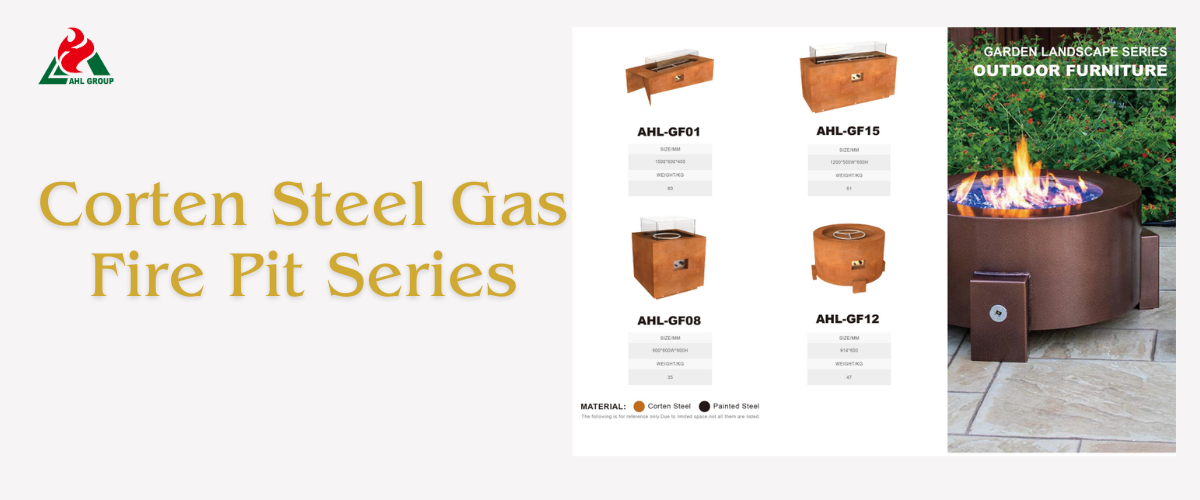
Gas Fire Pit (Propane/Natural Gas): Convenient Operation, Clean Combustion, Instant Temperature Control
Gas is renowned for its convenience. A simple turn of the key ignites the flame instantly. It produces no smoke, ash, or flying sparks. It's particularly suitable for covered patios (ventilation must be ensured) or areas subject to strict “no-burn” environmental regulations.
Dual-Fuel Options: Flexible Adaptation to Preferences and Fuel Availability
Some premium manufacturers offer dual-fuel systems that switch between wood and gas. This “best of both worlds” design allows you to quickly ignite a gas fire on weeknights while enjoying the traditional charm of wood burning during weekend gatherings.
Gel Fuel and Bioethanol: Portable, Smoke-Free Solutions for Restricted Areas
Bioethanol, as an eco-friendly renewable fuel, burns without producing smoke or carbon deposits. It is particularly suited for small weather-resistant steel fire pits, which can be placed in semi-enclosed spaces or used as tabletop decorative elements.
Step 5: Evaluate Material Quality and Construction Standards
Verifying Genuine Corten Steel: ASTM A588 vs. EN 10025-5 Certification
Not all “rusting” steel is weathering steel. Ordinary low-carbon steel will eventually rust through completely. Ensure suppliers use certified weathering steel (U.S. ASTM A588 or European EN 10025-5 S355J0WP). These certifications guarantee the specific alloy composition required for forming a protective rust layer, including copper, chromium, and nickel.
Thickness Matters: Minimum 4-6mm for Heat Resistance and Warp Prevention
Thin steel plates can suffer “oil drum effect” or deformation under intense fire temperatures. For guaranteed lifetime performance, insist on steel no thinner than 4-6mm. This heavy-duty specification provides both the thermal mass needed for heat retention and structural rigidity, ensuring the pit maintains a perfect circle or square shape through years of thermal expansion and contraction.
Welding Quality: Fully Penetrated Welds, Smooth Surfaces, and Structural Integrity
Inspect welds. Premium fire pits feature fully penetrated welds that are ground smooth. This process eliminates “stress points” prone to cracking and ensures uniform rust layer formation at welds.
Base and Leg Design: Stability, Leveling Capability, and Scratch-Resistant Pads
Given the weight of weathering steel, bases require oversized construction. Selecting models with broad base surfaces effectively prevents tipping. Some variants feature adjustable leveling pads—crucial on uneven surfaces like natural stone or gravel—to ensure stable flame combustion.
Step 6: Consider Essential Features and Accessories
Spark Screen and Metal Mesh Guard: Safety Protection and Ember Control
A stainless steel or carbon steel mesh guard is an essential safety accessory, especially if you have children, pets, or live in a fire-prone area. It intercepts “sparks” and flying embers while maintaining an unobstructed view of the flames.
Cooking Accessories: Grill Grates, Rotisserie Kits, and Dutch Oven Hooks
Elevate your garden fire pit into an outdoor kitchen. Most weathering steel fire pits accommodate heavy-duty 304 stainless steel grill grates. Verify if the manufacturer offers a “rotisserie” accessory for precise temperature control by moving food away from direct heat.
Covers & Storage: Weather Protection During Off-Season
While weathering steel is inherently durable, heavy-duty vinyl or canvas covers prevent water stains and leaf buildup inside the pit. This is especially crucial for gas models, effectively shielding burner ports from debris clogs.
Log Racks, Fire Tools, and Ash Removal Systems
A cohesive outdoor space requires a matching weathering steel log rack. Opt for fire pits with integrated ash drawers or removable center grates to simplify cleanup after your bonfire.
Step 7: Match Aesthetics to Your Outdoor Design Language
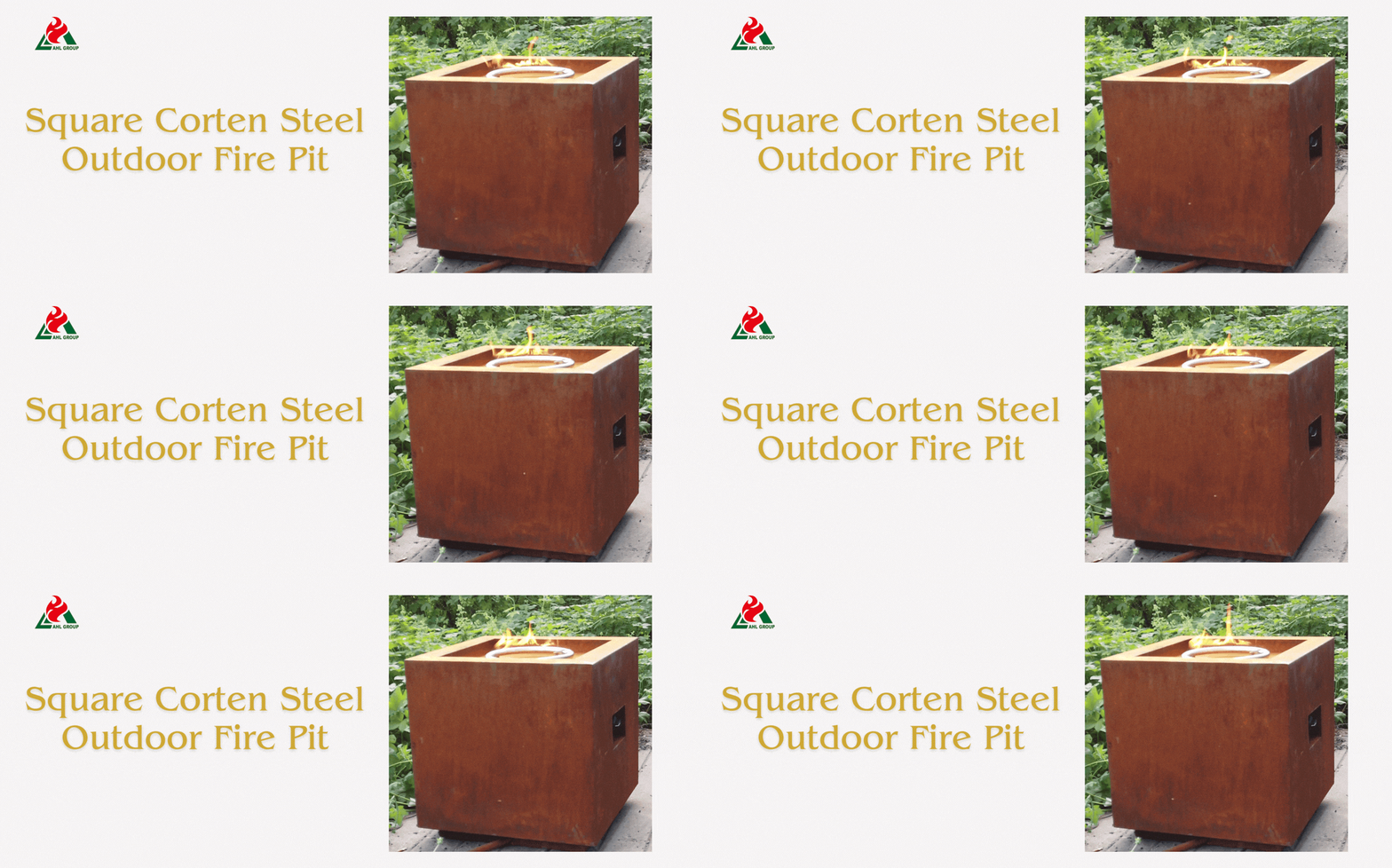
Shape Options: Round, Square, Rectangular, or Custom Geometric Designs
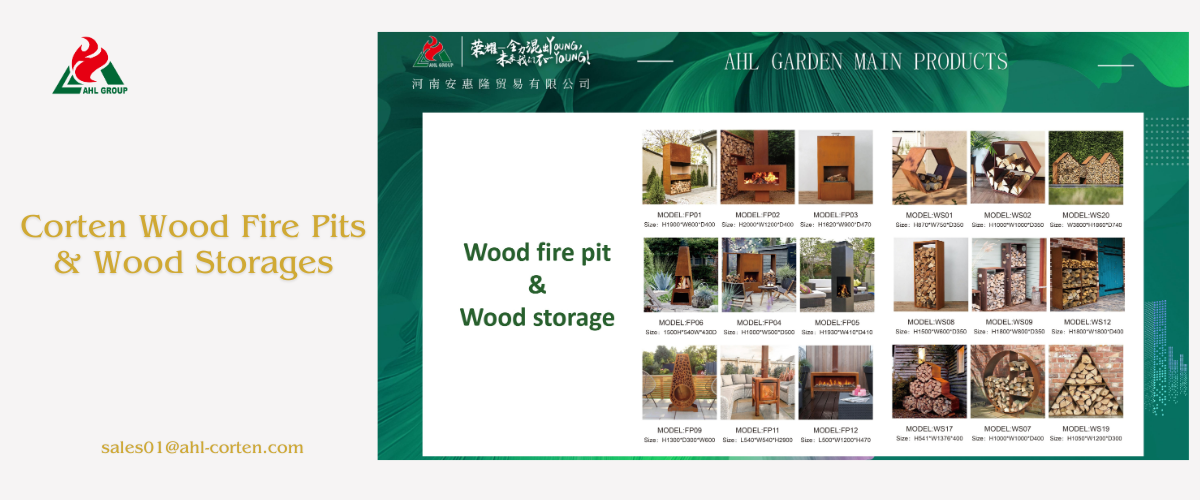
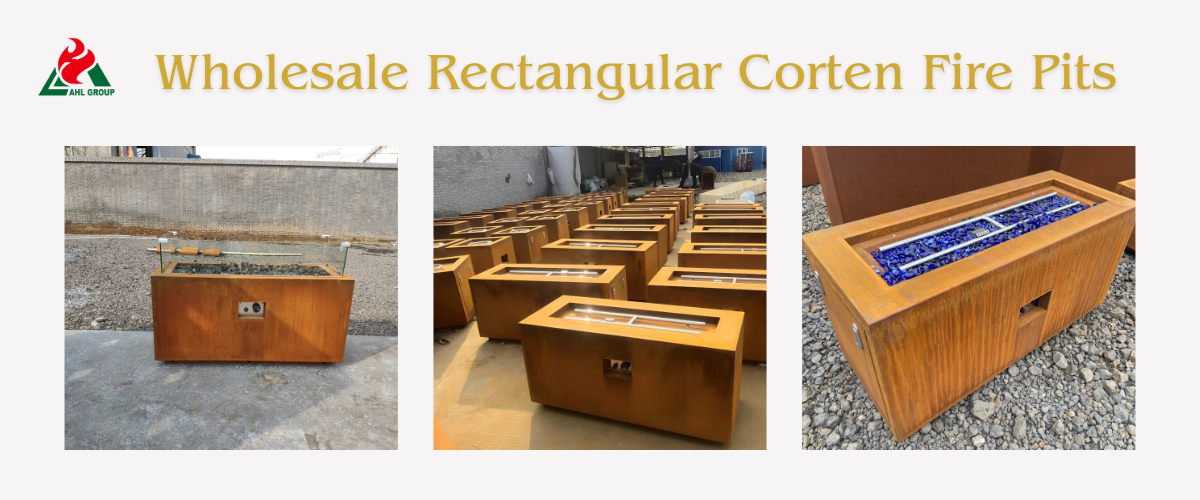
Round fire pits foster social gatherings; square and rectangular fire pits complement formal linear architectural styles. Custom geometric shapes—such as hexagons or multi-faceted bowls—serve as avant-garde sculptures even when unlit.
Rust Finish Treatment: Natural Weathering vs. Pre-Weathered Finish vs. Oil-Sealed Finish
You may opt for natural weathering over 6-9 months, or purchase pre-weathered products for immediate effect. Some users prefer sealing rust with specialized oils to achieve a deeper matte finish while preventing staining on light-colored stone surfaces.
Design Integration: Harmonizing with Existing Materials (Stone, Wood, Concrete)
The rust-brown tones of weathering steel create striking contrasts against gray concrete, light limestone, or lush garden foliage. Consider how the fire pit's texture interacts with the existing hardscape.
Custom Inscriptions & Laser-Etched Details: Commercial or Personal Identity Display
Laser-cutting technology allows intricate patterns or corporate logos to be directly engraved onto the Corten steel surface. When flames ignite, these textures cast captivating light and shadow effects, adding dramatic flair to the piece.
Step 8: Understand Regional and Climate-Specific Considerations
Coastal Environments: Salt Tolerance and Accelerated Rusting
In coastal areas, high concentrations of salt in the air accelerate the rusting process. This means your equipment will develop a rust layer more quickly, but it also means you should select thicker steel specifications (≥6 mm) to withstand harsher conditions.
Windy Areas: Deep Bowl Design, Windshields, and Stable Spark Screens
If your location experiences frequent strong winds, shallow dish-shaped fire pits may be unsuitable. Opt for a “deep well” design or add a glass windshield to stabilize flames and prevent ash from drifting onto guests.
High Rainfall or Humid Climates: Drainage Design and Rust Management
Ensure the fire pit has a central drainage hole. Standing water in the weathering steel bowl can lead to “pitting” and localized corrosion. In humid conditions, the rust patina may remain “active” longer; using a rainwater collection system during the first season prevents deck staining.
Cold Climate Use: Freeze-Thaw Durability and Winter Storage Solutions
Weathering steel withstands extreme cold, outperforming clay or cast iron fire pits prone to cracking at freezing temperatures. The steel itself requires no special winter storage, but gas components must be protected from freezing.
Step 9: Establish Your Budget and Calculate Long-Term Value
Hidden Costs: Accessories, Fuel, Transportation, and Installation
Budgeting should include gas line installation fees (if applicable), premium tooling costs, and heavy steel product transportation expenses.
Life Cycle Cost Comparison: Weathering Steel vs. Cast Iron, Copper, and Stainless Steel
Cast iron is prone to cracking; copper tends to discolor and is susceptible to theft; stainless steel is expensive and has a cold, hard appearance. Weathering steel offers the lowest “annualized cost” due to virtually no replacement needs and near-zero maintenance expenses.
Return on Investment Perspective: Permanent Landscape Features Enhance Property Value
Professionally installed weathering steel fire pits serve as a “value-adding feature” for residences. Appraisers and buyers alike recognize premium outdoor installations as indicators of well-maintained, high-end properties.
Step 10: Select a Trusted Manufacturer with Proven Expertise
The Importance of Customization Capabilities (OEM/ODM for Unique Needs)
Leading manufacturers like AHL Group offer OEM/ODM services that enable adjustments to dimensions, custom laser cutting, or integration of specific gas combustion systems—features unavailable in off-the-shelf products.
Verifying Manufacturer Credentials and Project Case Studies
Select manufacturers with proven commercial project experience. For installations in public spaces like parks or hotels, prioritize durability and safety standards backed by reliable track records.
Why AHL Group's Engineering and Quality Assurance Stand Out
We fuse precision laser cutting with traditional metallurgical techniques. Our fire pits are engineered by specialists in thermal expansion and atmospheric corrosion principles, ensuring both safety performance and aesthetic value.
Conclusion: Your Fire Pit as a Legacy Element in Outdoor Living
Selecting the perfect Corten metal fire pit is a journey from defining your hearth's ambiance to verifying the metal's technical specifications. By following this guide, you've evolved from enthusiast to savvy consumer. The magic of Cor-Ten lies in its paradoxical nature: this rugged industrial material creates the coziest, most natural atmosphere while being the only material that withstands both weather and flame.
Whether you seek a standard-sized fire bowl for your home or a custom-branded commercial landscape installation, AHL Group will help you infuse warmth into your courtyard. Explore our product range now and embark on your journey to lifelong outdoor warmth.

