


What are the best liners for Corten steel planters, and how do you install them without trapping moisture? The best lining system for a Corten steel planter is a composite assembly tailored to climate and plant type: extruded polystyrene (XPS) rigid foam boards (20mm–25mm thick) provide superior thermal insulation to protect plant roots from summer heat stress and winter frost heave, while dimpled high-density polyethylene (HDPE) membranes create an essential 8mm air gap that allows the inner steel wall to breathe and drain condensation. Non-woven needle-punched geotextile fabric (150–200 g/m²) should be placed over a 50mm–80mm gravel drainage bed at the bottom to filter silt without obstructing drainage. Avoid unventilated polythene plastic bags or tarps, which trap water against the steel and cause severe anaerobic rust-through. By elevating the planter on 15mm–25mm riser feet and sizing drainage holes to at least 25mm–32mm, you ensure a thriving garden and a 50+ year planter lifespan.
Over recent years, architectural heavy-duty outdoor Corten steel planters have become the defining container choice for high-end residential patios, commercial streetscapes, hotel rooftop terraces, and civic plazas. Fabricated from structural weathering steel (ASTM A588 / Corten-A / EN 10025-5 S355J2W), these planters—ranging from modern square planter boxes to large custom commercial troughs and round planters—develop a rich, organic rust-orange patina that deepens in aesthetic beauty alongside architectural custom decorative Corten screens and custom garden water features.
However, as landscape architects, commercial contractors, and horticulture enthusiasts specify Corten planters in increasingly challenging climates, a critical technical question emerges: What are the best liners for Corten steel planters, and what is the correct engineering method to install them?
In the past, the debate was often simplified to a binary question: "Do I need a liner or not?" Today, professional landscape engineering recognizes that lining a weathering steel planter is not merely an optional accessory—it is a sophisticated moisture, thermal, and structural management strategy. Installed correctly, a high-performance liner shields delicate root systems from scorching summer metal temperatures and destructive winter freeze-thaw cycles. Installed incorrectly (such as wrapping the interior in cheap, unventilated plastic film), a liner becomes a death trap that suffocates plant roots and corrodes thick steel plates from the inside out within a few short years.
This comprehensive engineering guide examines the biological and metallurgical physics governing Corten container gardening, provides an in-depth comparative review of the five best planter lining materials, details step-by-step composite installation protocols, and delivers proven methods to guarantee healthy plants and multi-decade planter durability.
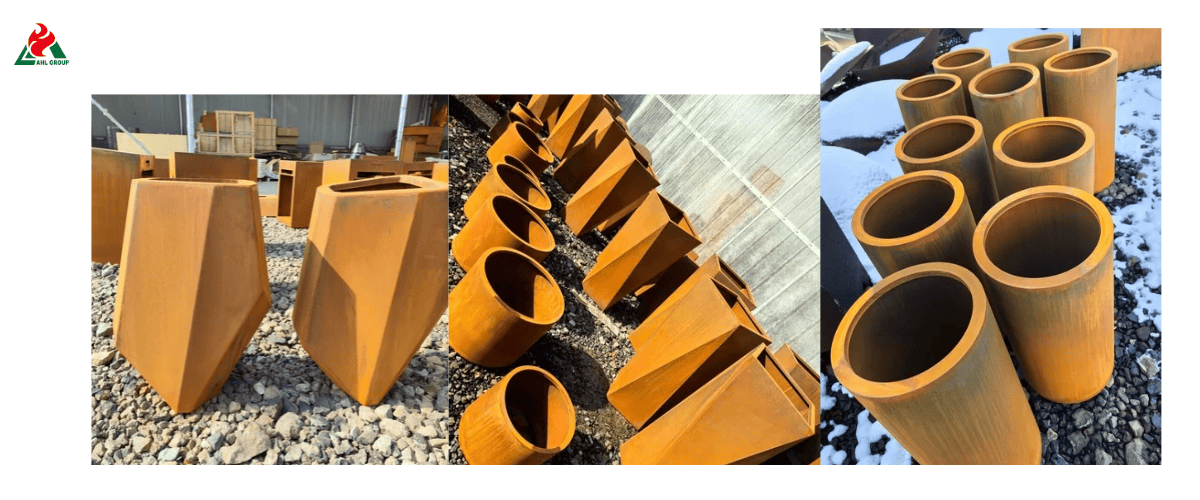
Not Sure Whether Your Planter Needs an Inner Liner? Discuss Drainage and Liner Options!
1. The Metallurgy & Botany Conflict: Why Ordinary Liners Destroy Corten Steel
To select the correct planter liner, one must first understand the delicate thermodynamic and chemical balance between weathering steel and botanical biology:
- Irrigation water inevitably trickles behind unsealed plastic film.
- Eliminates atmospheric drying cycle required for α-FeOOH patina.
- Forms an unventilated anaerobic water sac against the bare steel.
- Bores localized rust pinholes through 3.0mm plate in 3–5 years.
- 8mm dimpled HDPE studs form a vertical chimney for air circulation.
- Internal condensation drains immediately to bottom sump.
- Corten steel continues its natural wet/dry breathing cycle.
- Guarantees 50+ year structural container integrity.
1. The "Plastic Bag Trap": How Bad Liners Cause Steel Rot
The primary failure mode in lined Corten planters is what corrosion engineers call the plastic trap. Homeowners and inexperienced contractors frequently line planter interiors with standard polyethylene plastic sheeting, trash bags, or non-breathable pool tarps, believing this protects the metal from damp soil.
The physical reality is the exact opposite:
- Water Infiltration Behind the Film: Irrigation water, capillary seepage, and rain invariably find their way behind the top edge of the plastic sheet.
- Elimination of the "Wet/Dry" Cycle: Corten steel relies on an unhindered, alternating cycle of wetting followed by atmospheric drying to convert active iron oxides into dense, crystalline α-FeOOH (goethite). Beneath a non-breathable plastic sheet, moisture is permanently trapped against the bare steel.
- Anaerobic Pitting Attack: Trapped in darkness without air circulation, the steel enters anaerobic corrosion. Dissolved organic acids from soil microbes accelerate localized galvanic pitting, boring through
2.0mm to 3.0mmheavy structural plates in as little as 36 to 60 months.
The Fundamental Engineering Rule: Any vertical lining material placed against a Corten steel planter wall must either be mechanically bonded with a continuous air-gap space (such as dimpled drainage sheets) or consist of rigid closed-cell insulation detailed with water-tight top perimeter flashing that prevents moisture from sitting trapped against the metal.
2. The Botanical Threat: Solar Radiation & Root Heat Stress
While the steel requires protection from trapped moisture, the plants require protection from the steel's thermal conductivity.
Weathering steel possesses high thermal conductivity (k ≈ 45–50\, W/m·K) and high solar absorptance (\alpha ≈ 0.75–0.85 for weathered rust patina). When exposed to direct southern or western summer sunlight:
- The exterior surface temperature of a Corten planter can easily reach 55°C to 65°C (131°F to 149°F) on an afternoon with an ambient air temperature of 32°C (90°F).
- Without insulation, this heat conducts directly into the peripheral root zone (
50mm to 100mmfrom the metal wall). Soil temperatures above 35°C (95°F) can cause rapid thermal shock to delicate root hairs, leading to permanent root desiccation, impaired nutrient uptake, leaf drop, and plant death—even with daily watering.
Thermal Conductivity, Breathability & Corrosion Impact of Lining Methods
| Lining Strategy | Thermal R-Value (per inch) | Moisture Breathability | Root Heat Protection | Steel Corrosion Risk |
|---|---|---|---|---|
| No Liner (Direct Soil Contact) | Negligible (R-0.1) |
High (breathes through soil) | Poor (high root scorching risk) | Low-Medium (if drainage is open) |
| Loose Polyethylene Plastic Sheet | Negligible (R-0.2) |
Zero (impermeable trap) | Poor (conducts heat readily) | Extremely High (rapid rust-through) |
| Extruded Polystyrene (XPS Board) | High (R-5.0) |
Moderate (closed-cell vapor delay) | Excellent (complete heat barrier) | Very Low (when top-sealed) |
| Dimpled HDPE Air-Gap Sheet | Moderate (R-1.2) |
Superior (continuous air chimney) | Good (conductive decoupling) | Zero (drains all condensation) |
| Non-Woven Geotextile Fabric | Low (R-0.4) |
High (water-permeable filter) | Fair (filters soil, minor barrier) | Low (promotes free drainage) |
Download our commercial planter specification pack (2D/3D CAD internal anti-bowing bracing, forklift base channels, riser feet & root-insulation details, ASTM A588 MTC & FOB wholesale price list):
>> WhatsApp Planter Engineer (+1 213-729-4677) >> View Commercial Planter Specs >> Request Custom CAD & Bulk Quote
2. In-Depth Material Comparison: The 5 Professional Corten Planter Liners
Rather than settling for makeshift garden plastics, professional landscape architects specify purpose-engineered lining materials based on climate demands, plant sensitivity, and container scale:
Effect: R-5 insulation blocks 60°C summer solar heat and cushions winter frost heave.
Effect: 8mm continuous drainage air-gap prevents water pooling against the steel.
Effect: 150–200 g/m² felt prevents soil silt from washing into and clogging bottom drain holes.
Material 1: Extruded Polystyrene (XPS) Rigid Foam Boards (20mm to 25mm)
Extruded Polystyrene (XPS)—commonly recognized under brand names such as Owens Corning Foamular or DuPont Styrofoam—is the gold standard for thermal root protection in modern container design:
- Thermal Performance: XPS provides an extraordinary thermal insulation value of R-5 per inch of thickness (
R-4.0for standard20mmboards). A20mmsheet drops peak root-zone temperatures by 15°C to 20°C (27°F to 36°F) during peak summer afternoons. - Moisture Resistance: Unlike open-cell expanded polystyrene (standard white styrofoam EPS, which absorbs water and disintegrates under root pressure), XPS has a closed-cell crystalline structure with water absorption rates below
0.3% by volume. It will not waterlog, rot, or degrade when buried in damp potting mix. - Compressive Resistance: High compressive strength (
150 to 250 kPa) ensures the boards withstand heavy wet soil pressures and expanding root balls without crushing. - Best Applications: Large commercial street planters, rooftop garden terraces with intense sun exposure, and installations in USDA Zones 3–6 subject to severe winter ground freezing.
Material 2: Dimpled High-Density Polyethylene (HDPE) Air-Gap Membranes
Dimpled HDPE drainage sheets—widely utilized in commercial foundation waterproofing (such as Delta-MS or Platon)—are the ultimate mechanical protector against steel corrosion:
- The Air-Gap Principle: Fabricated with regular
8mmraised, cup-shaped studs, these rigid membranes are installed with the studs facing inward against the Corten steel wall. This creates a permanent, continuous8mmvertical air chimney between the damp soil and the metal substrate. - Condensation Drainage: Any condensation or incidental moisture running down the inner steel wall drains freely through the air gap directly into the bottom drainage sump, preventing anaerobic water pockets.
- Toughness & Root Inpenetrability: Made from puncture-resistant virgin HDPE, the membrane is 100% impenetrable to aggressive woody plant roots, bamboo rhizomes, and burrowing insects.
- Best Applications: Deep Corten retaining-wall planters, architectural landscape troughs, and luxury residential planters where maximizing the 50+ year steel service life is the primary project goal.
Material 3: Non-Woven Needle-Punched Geotextile Fabric (150 to 200 g/m²)
Landscape fabric is widely misunderstood; contractors frequently make the mistake of wrapping the vertical walls in fabric, which provides neither thermal insulation nor a water barrier:
- The Real Role of Geotextile: Non-woven needle-punched polypropylene geotextile (specified at
150 to 200 g/m²or4.5 to 6 oz/yd²) belongs strictly at the basal transition zone between the bottom drainage gravel and the potting soil. - Soil Filtration: Its microscopic pore structure permits water to drain at rates exceeding
100 to 150 liters/min/m², while mechanically blocking soil silt and organic fines from washing down into the drain ports. - Prevents Drain Clogging: Without geotextile, potting soil gradually migrates into the bottom gravel bed, packing tightly into drainage ports and causing fatal water saturation.
- Best Applications: The horizontal separation boundary in every outdoor Corten planter box, regardless of shape or size.
Material 4: Liquid EPDM / Food-Grade Elastomeric Bituminous Coatings
For custom-welded geometric planters with complex angles, internal cross-braces, or round cylindrical shapes (such as the AHL Round Corten Planters), rigid foam boards cannot easily conform to curved radiuses:
- Seamless Chemical Bond: Liquid rubber or elastomeric asphalt emulsions are applied via brush or roller directly onto grit-blasted steel interiors, curing into a continuous, seamless, rubberized waterproof membrane (
1.5mm to 2.0mmcured dry film thickness). - Elongation Capacity: High elasticity (
> 500% elongation) accommodates natural thermal expansion and contraction of the steel without cracking or peeling. - Food-Grade Safety: Certified VOC-free, non-toxic liquid rubber coatings are 100% safe for organic vegetable gardening, preventing any direct contact between soil nutrients and the steel substrate.
- Best Applications: Curved and cylindrical planter bowls, complex bespoke architectural geometries, and interior lobby planters requiring 100% watertight containment.
Material 5: Factory Double-Walled Insulated Corten Assemblies (AHL Custom OEM)
For premier commercial developments, municipal streetscapes, and corporate headquarters, on-site manual liner installation adds labor costs and introduces potential installation errors:
- Factory-Integrated Assembly: AHL Corten Group engineers custom double-walled insulated planters. These feature an exterior structural weathering steel shell (
3.0mmplate), an internal25mmhigh-density closed-cell polyisocyanurate (PIR) insulation core, and an inner marine-grade aluminum or galvanized steel liner wall. - Zero On-Site Labor: The planter arrives on site fully insulated, pre-weathered, and ready for immediate potting soil placement, providing an industrial-grade, zero-maintenance asset with a lifetime structural guarantee.
3. Master Material Selection Matrix
To guide landscape architects, commercial contractors, and project estimators, the matrix below cross-evaluates all five lining systems across structural and environmental criteria:
| Material Type | Primary Function | Thermal R-Value | Water Vapor Permeability | Compressive Strength | Expected Service Life | Ideal Application Scenario |
|---|---|---|---|---|---|---|
| 1. Extruded Polystyrene (XPS Board) | Thermal insulation & freeze-thaw cushion | R-4.5 to R-5.0 (per inch) | < 0.8 Perms (Vapor barrier) |
150 – 250 kPa (Rigid) |
30 to 50+ years | High-sun patios, rooftop gardens, USDA Zones 3–6 freeze zones |
| 2. Dimpled HDPE Membrane | Air-gap ventilation & condensation drainage | R-1.2 (air chimney effect) | 0.0 Perms (Watertight) |
200 – 400 kPa (Crush-proof) |
50+ years | Deep commercial planters, unventilated zones, permanent longevity |
| 3. Non-Woven Geotextile Fabric | Soil retention & particulate filtration | Negligible (R-0.4) |
High (> 150 L/min/m²) |
Flexible tensile sheet | 25 to 40 years | Basal separation layer between drainage gravel and potting soil |
| 4. Liquid Elastomeric Rubber | Seamless hermetic water & chemical seal | Negligible (R-0.2) |
0.0 Perms (Hermetic) |
High elastic elongation (500%) |
15 to 25 years | Round cylindrical planters, complex curves, organic food planters |
| 5. Factory Double-Walled Corten | Integrated structural, thermal & drainage unit | R-6.0 to R-8.0 | Factory sealed hermetic | Heavy structural steel envelope | 50 to 100+ years | Commercial public realms, hotel plazas, municipal streetscapes |
4. Step-by-Step Installation Protocol: The 6-Layer Composite System
The most reliable, industry-proven method to line a Corten steel planter is the Composite Layering Protocol, which synchronizes thermal protection, air-gap drainage, and soil containment into a unified structural assembly:
• 2.0mm–3.0mm Corten Steel Exterior Shell
• 20mm Closed-Cell XPS Thermal Board (R-5)
• 8mm Dimpled HDPE Drainage Air Gap
• Lightweight Permeable Potting Soil Mix
• 150–200 g/m² Non-Woven Geotextile Filter Fabric
• 50mm–80mm Washed Volcanic Rock / LECA Bed
Phase 1: Base Elevation & Airflow Verification
Before placing any soil or lining materials, inspect the planter's structural base:
- Welded Riser Feet: Verify that the planter is equipped with
15mm to 25mm(0.6 to 1.0 inch) welded bottom riser feet (standard on all AHL Modern Square and Rectangular Planters). Riser feet lift the bottom steel plate off the patio surface, ensuring that drainage water flows freely out of the ports without pooling underneath the planter. - Drain Hole Sizing: Confirm that the planter floor features
25mm to 32mm(1.0 to 1.25 inch) diameter drain holes spaced no more than300mmapart. Drill additional holes if the manufacturer provided inadequate drainage openings.
Phase 2: Installing Sidewall Thermal & Air-Gap Liners
Lining the vertical walls requires precision detailing to prevent moisture intrusion behind the boards:
- Cut the Panels: Measure the interior height from the top of the drainage gravel line to the underside of the top return flange. Cut
20mmXPS foam boards or dimpled HDPE sheets to fit tightly against the four vertical walls. - Mounting the Boards: Use spots of polyurethane construction adhesive or double-sided foam tape to hold the boards against the steel during soil filling.
- Flange Detailing: Ensure the top edge of the liner tucks securely underneath the planter's top return lip. Never allow the liner to protrude above the steel rim, where it would create an unsightly visual flaw and catch rainwater, directing it behind the insulation board.
Phase 3: Drainage Hole Sleeving & Basal Gravel Reservoir
- Insert Drainage Sleeves: Push short sections of
25mmPVC conduit or flexible EPDM grommets through each floor drain hole, extending30mmupward into the basin. This prevents gravel from shifting directly over the hole. - Install Coarse Drainage Media: Pour a
50mm to 80mm(2 to 3 inch) layer of non-limestone aggregate across the planter floor. Optimal materials include expanded clay pebbles (LECA), washed volcanic scoria, or smooth river gravel. Avoid crushed limestone, as alkaline calcium carbonate leaches into the water and raises soil pH unnaturally.
Phase 4: Laying the Geotextile Filtration Barrier
- Drape the Fabric: Cut a sheet of
150–200 g/m²non-woven needle-punched geotextile landscape fabric large enough to cover the entire gravel bed and extend100mm to 150mmup the vertical XPS sidewalls. - Smooth & Lap: Lay the fabric flat with zero gaps or folds. The upward vertical perimeter prevents soil from escaping around the edges during heavy storm events.
Phase 5: Soil Mix Placement & Surface Mulching
- Engineered Lightweight Soil: Fill the container with a high-permeability, lightweight planting mix formulated for container horticulture (e.g.
60%compost/pine bark fines,20%peat moss/coco coir, and20%perlite or pumice). Avoid heavy, dense field topsoil, which compacts, loses porosity, and suffocates roots. - Top Organic Mulch Layer: Apply a
50mm(2 inch) top dressing of dark organic pine bark or cedar wood chips. Surface mulch shades the upper soil surface, cutting moisture evaporation by up to40%and preventing hard baking under midday sun.
5. Seasonal Thermal Dynamics: Summer Scorching vs. Winter Freeze-Thaw
Outdoor Corten planters operate under extreme seasonal temperature swings. Understanding container thermodynamics explains why lining protects both plant life and structural weld seams:
Dark rust patina absorbs solar radiation, heating uninsulated steel to 55°C–65°C. Temperatures over 35°C boil fine root hairs. A 20mm XPS foam board cuts conductive heat transfer, keeping soil below 28°C.
Wet soil expands 9% upon freezing, exerting immense lateral hydraulic thrust against container walls. Compressive closed-cell XPS foam yields elastically, cushioning the ice block and preventing weld rupture.
1. Summer Heat Dissipation & Soil Root Physics
Plant roots evolved in subterranean environments where soil temperatures remain remarkably stable (15°C–22°C). In an unlined metal container:
- As the metal wall heats to 60°C, heat transfers rapidly via conduction into the outer
50mmsoil boundary. - Above 35°C, root cellular respiration outpaces photosynthesis, consuming carbohydrate reserves. Above 40°C, fine feeder roots die off completely.
- The XPS Solution: Installing
20mmXPS foam breaks direct conductive heat transfer, maintaining peripheral soil temperatures below 28°C even during 38°C heatwaves.
2. Winter Frost-Heave Protection & Structural Weld Defense
In cold-climate regions (such as northern US states, Canada, and Northern Europe), winter brings an equally severe hazard:
- When saturated potting soil freezes, water expands volumetrically by approximately
9%. - In rigid, unyielding metal containers with vertical walls, this expanding ice block exerts tremendous lateral hydraulic pressure (often exceeding
1.5 to 2.5 MPa), pushing relentlessly outward against corner welds and sidewall plates. - Over several winter cycles, this lateral force causes corner seam rupture, structural bowing, and distorted planter silhouettes.
- The Foam Compression Buffer: A
20mmclosed-cell XPS foam board acts as a sacrificial, elastic compression buffer. As expanding ice pushes outward, the foam compresses safely, absorbing the expansion volume and shielding the steel welds from structural fatigue.
6. 10-Point Planter Lining & Drainage Engineering Checklist
Before filling your architectural Corten planter with expensive soil and plant stock, audit the assembly against this job-site checklist:
- 1. Elevated Riser Feet Confirmed: Planter possesses ≥ 15mm welded bottom feet; base is not sitting flush on flat patio paving.
- 2. Drain Holes Sized Adequately: Floor drain openings are ≥ 25mm in diameter and clear of metal fabrication burrs.
- 3. Liners Strictly Non-Trapping: Unventilated polythene plastic bags, shrink wrap, and tarps are 100% prohibited from sidewalls.
- 4. XPS Foam Density Verified: Sidewall foam is closed-cell extruded polystyrene (XPS, ≥ 20mm thick), not spongy white EPS.
- 5. Air-Gap Drainage Installed (If Specified): Dimpled HDPE membranes installed with studs facing the steel wall to ensure vertical ventilation.
- 6. Top Flange Overhang Detailing: Insulation boards terminate cleanly beneath the top return flange; zero liner exposure to direct sunlight.
- 7. Bottom Drainage Layer Installed: A 50mm–80mm layer of non-alkaline volcanic rock or expanded clay aggregate (LECA) in place.
- 8. Needle-Punched Geotextile Positioned: 150–200\, g/m² non-woven fabric covers the gravel bed and extends ≥ 100mm up the sidewalls.
- 9. High-Porosity Soil Recipe Used: Potting substrate is engineered for container permeability; heavy native clay avoided.
- 10. Top Organic Mulch Applied: A 50mm layer of shredded bark mulch installed across the soil surface to control top-layer thermal baking.
7. Frequently Asked Questions (FAQ)
Q1: Can I plant directly into a Corten steel planter without any liner at all?
A: Yes, you can, provided the planter is fabricated from heavy structural plate (≥ 2.0mm to 3.0mm thickness) and features excellent bottom drainage. Corten steel naturally forms a protective patina in contact with soil, provided the soil passes through wet/dry cycles. However, in hot sunny climates or regions with freezing winters, omitting a liner leaves plant roots vulnerable to summer thermal scorching and exposes the container welds to winter freeze-thaw expansion stress.
Q2: What happens if I use a standard plastic garbage bag as a planter liner?
A: Using a garbage bag or non-breathable plastic sheet is the fastest way to ruin a Corten planter. Water inevitably trickles behind the plastic, where it cannot evaporate. Deprived of air circulation and oxygen, the steel cannot form its protective goethite patina. Instead, it enters an anaerobic corrosion cycle that causes deep pitting and structural rust-through in as little as 3 to 5 years.
Q3: Are Corten steel planter liners necessary for growing organic vegetables?
A: From a botanical and food-safety standpoint, weathering steel (ASTM A588) consists primarily of iron alloyed with minor amounts of copper, chromium, and phosphorus—elements that are natural soil micronutrients. At standard soil pH levels (6.0 to 7.0), leaching is negligible. However, for complete organic certification and peace of mind, lining vegetable planters with food-grade HDPE dimpled sheets or natural non-woven geotextiles prevents root contact with the metal without trapping anaerobic moisture.
Q4: Does lining a Corten planter stop rust runoff from staining my patio?
A: No. An internal liner protects the inside of the planter and the plant roots, but rainwater falling on the exterior Corten walls will still generate iron runoff during the first 6 to 18 months of natural weathering. To prevent patio staining, choose AHL factory pre-weathered planters, install hidden drip trays, or position planters over dark gravel catchment trenches.
Q5: How thick should the XPS foam insulation board be inside a Corten planter?
A: For most residential and commercial applications, a 20mm to 25mm (0.75 to 1.0 inch) thick XPS board delivers the optimal balance between high thermal insulation (R-4 to R-5) and minimal loss of interior soil planting volume. In extreme desert climates or harsh Canadian winters, upgrading to 30mm–40mm boards on the southern-facing walls is recommended.
Q6: What is the difference between EPS (Styrofoam) and XPS foam for planter liners?
A: Never use standard white EPS (Expanded Polystyrene) beads. EPS is composed of fused beads that absorb water (up to 4%–5% by volume), degrade rapidly under wet soil pressure, and harbor mold. XPS (Extruded Polystyrene) is manufactured through a continuous extrusion process that creates a rigid, closed-cell matrix with near-zero water absorption (< 0.3%), offering triple the compressive strength and lasting decades underground.
Q7: How do I line a round or cylindrical Corten steel planter?
A: Rigid XPS boards cannot bend around tight circular curves. For round Corten planters (such as the AHL Corten Round Planter series), use either flexible dimpled HDPE membranes (which curve easily), two coats of spray-applied liquid elastomeric rubber, or insert a pre-molded, slightly smaller commercial circular plastic pot as an inner sleeve.
Q8: Does AHL Corten Group manufacture planters with pre-installed insulation?
A: Yes. As a premier architectural weathering steel manufacturer, AHL Corten Group engineers custom double-walled insulated commercial planters for public spaces, luxury hotels, and rooftop developments. We provide custom CAD detailing, precision laser-cut drainage ports, factory pre-weathered finishes, and internal thermal cores tailored to project specifications worldwide.
Conclusion: Maximizing Architectural Longevity with AHL Corten Group
Lining an architectural Corten steel planter is not a matter of guesswork—it is a calibrated engineering science that bridges metallurgy and horticulture.
By eliminating the dangerous "plastic bag trap," ensuring an active 8mm air-gap chimney with dimpled HDPE sheets, installing closed-cell XPS foam boards for thermal root insulation, and assembling a clean basal drainage bed with needle-punched geotextiles, landscape architects and property owners can guarantee vibrant plant health and a multi-decade planter lifespan.
At AHL Corten Group, our engineering team combines heavy structural ASTM A588 weathering steel fabrication with advanced architectural container design. Explore our complete planter portfolio—including Modern Square Corten Planters, Large Rectangular Trough Planters, and Round Statement Planters. Contact our engineering specialists today to receive material test certificates, request custom 3D shop drawings, or obtain a bespoke manufacturing quotation for your upcoming landscape installation.
Request an Engineering Consultation & Custom Planter Quotation
Have a commercial landscape project, custom planter dimension requirement, or thermal insulation question? Connect directly with the AHL Corten engineering team. We provide certified ASTM A588 material test reports (MTRs), CAD shop drawings, and wholesale factory pricing within 24 hours.
- Heavy-gauge 2.0mm to 5.0mm genuine ASTM A588 weathering steel.
- Integrated bottom riser feet and oversized precision drain holes.
- Factory pre-weathering & passivation surface treatments.
- Double-walled insulated options for commercial projects.

