


In the field of architectural metal components, the durability of a project hinges on its smallest constituent parts. When utilizing weathering steel (Corten steel), the selection of fasteners is by no means a secondary consideration—it is a critical engineering decision. The AHL Group has observed that the most common cause of failure in Corten steel curtain walls and structures is not the steel itself, but rather accelerated corrosion resulting from incompatible bolts and screws.
The Critical Role of Fasteners in Corten Installations
Fasteners are high-stress points in any installation. In Corten steel cladding or structural components, these parts must endure the same weathering cycles as the panels they secure.
Why Fastener Selection Goes Beyond Holding Strength
While pull-out strength and shear resistance are critical, the primary challenge in weathering steel projects lies in electrochemical compatibility. Fasteners must not only bear loads but also avoid becoming “sacrificial anodes” in electrochemical reactions.
Risks of Using Incompatible Materials
Incorrect fastener selection—such as plain carbon steel or poorly coated bolts—can cause “bleed-through” staining, localized pitting corrosion, and ultimately structural failure. AHL Group emphasizes: joint failure compromises the safety of the entire installation.
Detailed Technical Analysis
Understanding the interactions between different metals is crucial for any professional working with weathering steel in construction.
1. Principles of Chemical Compatibility
The relationship between fasteners and Corten steel panels is governed by electrochemical principles. When two dissimilar metals come into contact in the presence of an electrolyte (such as rainwater or a humid environment), a galvanic cell forms.
Analysis of Anodic Index and Electrochemical Series
To prevent bimetallic corrosion, the “anodic index” of fasteners should be as close as possible to that of the weathering steel. AHL Group engineering standards stipulate: Fasteners must exhibit greater precious metal characteristics (i.e., be more cathodic) than the steel substrate. This ensures structural integrity remains intact even with minor surface oxidation.
2. Fastener Material Options
There is no such thing as a “universal bolt.” The environment dictates material selection.
Stainless Steel (A4/316), Silicon Bronze, and Corten Steel Matching Alloys
► Stainless Steel (Grade 316/A4): The industry gold standard for Corten steel façades, offering exceptional noble metal properties. However, isolation treatment is required to prevent “stain” contrast effects.
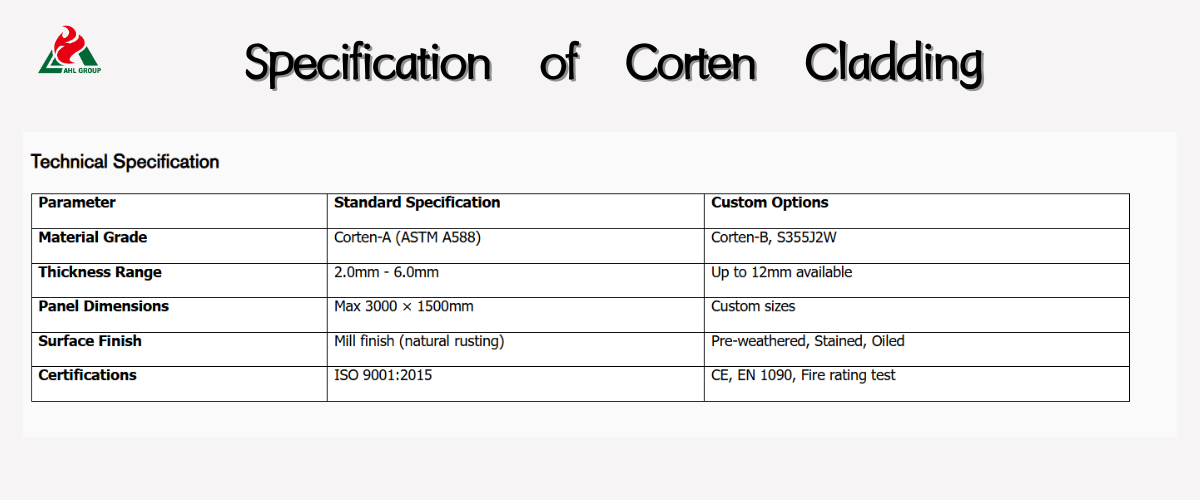
► Corten Steel Fasteners (ASTM A325/A490 Type 3): Bolts made from the same alloy as the panels. The resulting patina perfectly matches the panels, creating invisible, seamless structural connections.
► Silicon Bronze: Frequently used in AHL Group's high-end artistic weathering steel projects due to its exceptional corrosion resistance and warm texture.
3. Corrosion Mechanisms
The corrosion process of fasteners rarely occurs uniformly, typically manifesting as localized and severe erosion. AHL Group notes that if not prevented during the design phase, the following three primary electrochemical threats will compromise the integrity of Corten steel components:
Crevice Corrosion, Pitting Corrosion, and Galvanic Corrosion
► Crevice Corrosion: Occurs in oxygen-deprived microenvironments trapped beneath bolt heads or washers. In weathering steel systems, moisture trapped within these crevices inhibits the formation of the protective rust layer, leading to accelerated material degradation.
► Pitting Corrosion: This localized corrosion creates micro-pores or “pits” on the fastener surface. Even if the remainder of the bolt appears intact, pitting can penetrate deep into the core, forming “stress concentration points” that cause sudden brittle fracture.
► Bimetallic (Electrochemical) Corrosion: When fasteners made of lower-noble metals (e.g., galvanized steel) are used with weathering steel, potential differences create a battery effect. The fastener acts as an anode, accelerating corrosion to “protect” the larger steel plate, often failing within just a few seasons.
4. Mechanical and Load Considerations
Beyond the realm of chemistry, fasteners must serve as structural engines. AHL Group ensures every connection is precisely engineered to withstand dynamic forces from wind, weight, and thermal expansion—never loosening.
Shear Strength, Clamping Force, and Fatigue Resistance
► Shear Strength: Fasteners in curtain wall systems must resist “shearing” forces from panel self-weight and wind suction. We specify fasteners with high ultimate shear capacity to prevent “bolt shearing” during extreme weather events.
► Clamping Force: This is the force maintaining joint integrity. Correct torque is critical: insufficient torque causes panel vibration and wear, while excessive torque may crush insulation washers or overstretch bolt threads, triggering “stress corrosion cracking.”
► Fatigue Resistance: Building structures undergo continuous movement due to thermal expansion and contraction, as well as wind vibration. Our fasteners are specially selected to withstand millions of micro-stress cycles (fatigue) without developing micro-cracks that could lead to complete failure.
.png)
System-Specific Recommendations
Different building structure configurations require specialized fastening solutions to meet drainage and thermal expansion demands. The AHL Group categorizes these recommendations based on the system's primary functions, ensuring the selected hardware meets the specific engineering requirements of the components.
Fastening Components for Cladding and Ventilated Curtain Walls
In ventilated systems, fasteners endure continuous airflow and face potential moisture retention risks behind metal panels. AHL Group recommends low-profile stainless steel fasteners with integrated EPDM gaskets. This configuration creates a watertight seal at penetration points while allowing the ventilation cavity to equalize pressure differentials, preventing localized corrosion at fastener interfaces.
Fastening Components for Structural Connectors and Brackets
For primary structural supports and heavy-duty brackets, shear load capacity and matching oxidation rates become paramount considerations. AHL Group specifies high-strength weathering steel bolts (Type 3) for such applications. This ensures structural connectors develop the same protective oxide layer as the main components, maintaining structural integrity and visual continuity at all load-bearing joints.
Fastening Systems for Decorative and Non-Structural Panels
Aesthetics take precedence for non-structural cladding and artistic screens. AHL Group frequently employs countersunk or “concealed” fastening systems crafted from silicon bronze or color-matched stainless steel. These solutions deliver essential pull-through resistance while ensuring fasteners do not compromise the organic evolution of the Corten steel's decorative surface texture.
Installation Protocol and Detailing
The precision of on-site construction is the key differentiator between successful and failed installations—a successful installation will not exhibit rust spots or mechanical failures. AHL Group has established strict operating procedures, including reserving precise gaps for movement, systematically installing isolation barriers, and employing torque-controlled fastening techniques to prevent damage to the protective rust layer during assembly.
Hole Preparation and Tolerance Control
To accommodate thermal expansion in large Corten steel exterior panels, oversized holes are often required. AHL Group recommends a logical “floating point” and “fixed point” design approach for exterior wall projects.
Application of Isolation Washers and Sleeves
To eliminate electrochemical contact between stainless steel bolts and weathering steel, AHL Group mandates the use of neoprene or nylon washers. This simple isolation layer breaks the electrical circuit.
Sealants and Anti-Corrosion Grease
Applying a thin layer of isolation grease to threads prevents “cold welding” or galling, particularly for stainless steel fasteners in high-vibration environments.
Long-Term Performance and Maintenance
The performance of weathering steel systems exhibits dynamic characteristics, with their protective rust layer gradually maturing over time. AHL Group advocates a proactive maintenance philosophy, focusing on metal interface areas—early detection of chemical imbalance prevents costly structural repairs while preserving the project's aesthetic integrity.
Expected Service Life of Properly Selected Fasteners
When adhering to AHL Group specifications, fasteners should outlast the panels themselves, typically maintaining over 60 years of service without significant deterioration.
Inspection Cycles and Failure Indicators
Annual visual inspections must prioritize identifying “bleeding” (bright orange streaks), a warning sign that fastener corrosion is outpacing the panel. Salt deposits forming on bolt heads also serve as critical early warning indicators.
Conclusion: The Non-Negotiable Rule
The allure of AHL Group's Corten panel lies in its elegant patina. Yet this elegance stems from the invisible strength at its joints. The ironclad rule for weathering steel installation is this: the quality of fasteners must never be compromised. Only by selecting premium hardware can architectural visions withstand the tests of time, climate, and chemical reactions.

