


Corten steel planters are widely popular in modern landscape design due to their durability and striking rust-colored appearance. However, many gardening enthusiasts and homeowners are unsure whether it is safe to place soil and plants directly inside them. Unlike painted or galvanized steel, Corten steel forms a protective layer of weathered rust that slows down ongoing corrosion. This unique characteristic raises questions about soil safety, drainage, and the long-term health of plants. This guide will explain whether plants can be planted directly in weathering steel planters, how safe they are for plants, what setup methods are recommended, and how to avoid common mistakes.
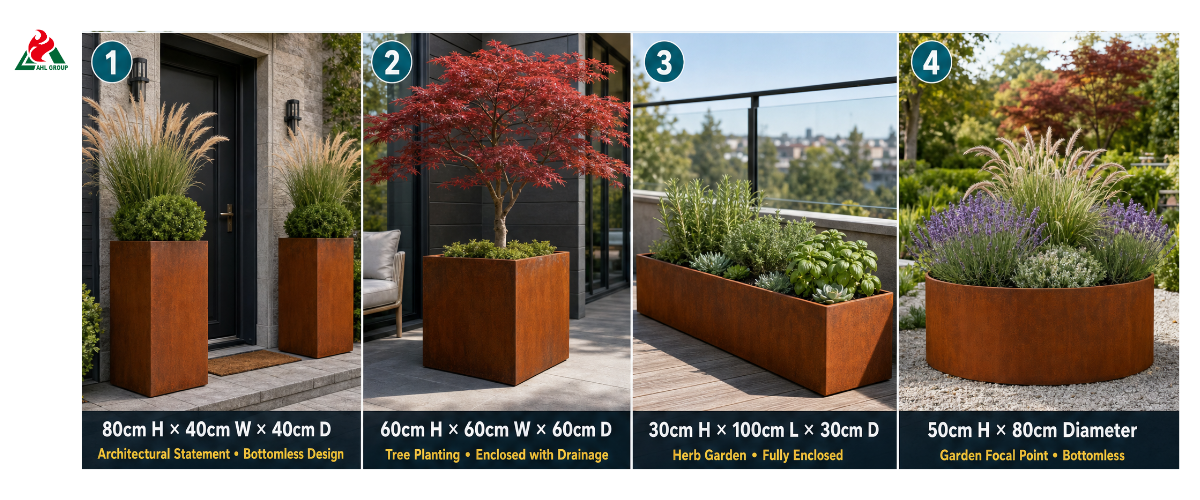
1. Introduction
Why Do People Ask If They Can Plant Directly in Corten Steel Planters
As weathering steel has become a dominant feature in modern landscape design, landscape architects, urban planners, and home gardeners often ask: Is it safe to plant directly in Corten planters? Or will the metal leach toxic substances and damage delicate root systems? The striking, rustic appearance of Corten steel is undeniable, but given that it is essentially an industrial steel alloy, many gardeners worry that prolonged contact between moist soil and the metal walls will either poison the plants or cause the planter to rust through rapidly, thereby compromising its structural integrity.
How Do Corten Planters Differ from Other Metal Planters
Traditional metal planters—such as those made of galvanized steel, aluminum, or iron—rely on artificial coatings, paint, or galvanization to prevent corrosion. Once these surface layers become scratched or weathered, the underlying metal begins to pit and rust along structural pathways, often flaking off into unsightly orange debris. Weathering steel (commonly known as Corten steel) works in exactly the opposite way. It is specially formulated with specific trace elements such as copper, chromium, and nickel intentionally added. When exposed to the natural environment, it forms a dense, compact, and highly stable layer of iron oxide—known as “patina.” Far from damaging the metal, this structural rust layer acts as a self-healing protective barrier that seals the underlying steel, preventing oxygen and moisture from penetrating—thereby eliminating the need for internal chemical coatings.
What This Guide Covers
This detailed technical guide provides a comprehensive analysis of the environmental and chemical dynamics involved in direct planting in weathering steel planters. We will explore the safety characteristics of this alloy, examine how thermodynamics affect root-zone temperatures, and outline proper soil engineering and drainage specifications. In addition, we will evaluate the differences between open-bottomed planters and enclosed planter bases, highlight plant varieties best suited for this environment, and provide proven strategies to protect expensive surrounding hardscape from runoff stains.
2. Can You Plant Directly in Corten Steel Planters
Short Answer
Yes, you can definitely plant directly in Corten steel planters. From both a biological and structural standpoint, there is no need to install a plastic liner or apply a chemical coating before adding soil and plants. The metal does not affect plant growth, and moist soil will not cause high-quality, thick-gauge Corten steel sheets (2 to 3 millimeters thick) to rust through over the course of decades.
When Direct Planting Is Appropriate
Direct planting works exceptionally well and is suitable for the vast majority of standard landscaping projects, including:
► Large architectural planters: Containers with a volume greater than 0.5 cubic meters, where the sheer mass of soil acts as a natural thermal buffer.
► Open (bottomless) planters: Retaining rings or raised beds placed directly on native subsoil, allowing roots to grow freely and ensuring optimal drainage.
► Cold-hardy, non-invasive plants: Planting schemes focused primarily on structural ornamental grasses, deep-rooted perennials, and woody shrubs that are naturally tolerant of soil temperature fluctuations.
Situations Requiring Additional Preparation
Although direct planting is generally safe, additional preparation and insulation measures are required in certain special circumstances:
► Urban environments exposed to intense sunlight: Placing small planters on scorching asphalt or concrete patios, where the sun’s heat is absorbed extremely intensely.
► Crops with shallow or tender root systems: Planting heat-sensitive vegetables (such as lettuce or spinach) during the hottest months of summer.
► High-value, multi-season evergreen plants: In regions experiencing severe and persistent freeze-thaw cycles, insulating the root ball can protect it from sudden temperature drops.
3. Are Corten Planters Safe for Plants
Does Steel Affect Plant Health
A common misconception is that weathering steel leaches harmful, toxic heavy metals into the soil. In reality, the trace amounts of iron and copper released during the early stages of the oxidation process are completely non-toxic. Iron and copper are essential micronutrients for plants, which actively absorb them to synthesize chlorophyll and drive metabolic functions. The concentrations released are far below the threshold for heavy metal phytotoxicity (plant poisoning), so these containers are completely safe for both ornamental plants and edible crops.
Changes After the Rust Layer Forms
During the first few months of outdoor exposure, Corten steel undergoes a dynamic weathering cycle, gradually transforming from its original blue-gray rolled surface to a rich orange-brown hue. During this active rusting phase, a small amount of iron oxide is lost. However, once the stable outer rust layer matures and hardens (typically taking 6 to 18 months, depending on local humidity conditions), the oxidation rate drops to near zero. This barrier becomes firmly established, locking the alloy in place and ensuring a stable, inert interface between the soil and the steel walls.
What Are the Most Common Plants Grown in Corten Steel Planters
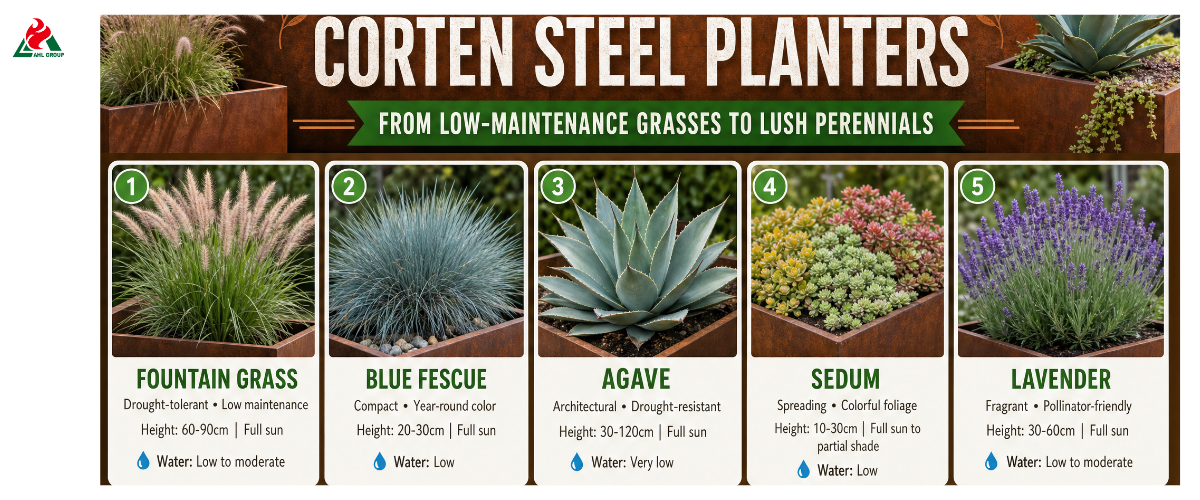
Because this material is extremely durable, it is suitable for a wide variety of plants. Landscape designers often pair the warm, orange-brown tones of weathered steel with the following plants:
► Structural agaves and succulents: Create a high-contrast aesthetic in minimalist or desert-style landscapes.
► Lush, graceful ornamental grasses: These create a textural contrast with the rigid, geometric steel panels.
► Edible kitchen gardens: A safe and high-yielding way to grow organic vegetables, Mediterranean herbs, and dwarf fruit trees.
4. Heat, Roots, and Plant Safety
Do Corten Planters Get Too Hot
Like all metals, weathering steel is an efficient conductor of heat. If a flower pot is placed in an open area exposed to intense, direct sunlight in the summer, the metal walls will absorb solar radiation and become very hot to the touch. However, the steel itself does not store heat for long; it quickly transfers the heat to whatever it is in contact with—in this case, the soil inside.
The Impact of Heat on Root Systems
Plant root systems are extremely sensitive to sudden spikes in temperature. While a plant’s green leaves can cope with high ambient temperatures through transpiration (evaporative cooling), the underground root system prefers stable, cool conditions. If the soil temperature immediately adjacent to the metal walls rises above 35°C (95°F), the outer root tips may experience heat stress, thereby reducing their ability to efficiently absorb water and nutrients.
When to Be Concerned About Sun Exposure
Root heat stress primarily occurs in small, shallow (less than 300 millimeters deep) metal containers that are exposed to direct south- or west-facing sunlight throughout the day. In large commercial grow boxes or deep raised beds, however, the soil core provides excellent thermal insulation and remains cool, meaning that only a very small portion of the roots near the outer walls is affected by temperature fluctuations.
How to Reduce the Risk of Overheating
If you plan to install planter pots in areas with high temperatures, you can easily reduce the risk of overheating by following these simple design techniques:
► Foam Insulation (Best Option): Before filling with soil, line the inner walls with 10- to 20-millimeter-thick extruded polystyrene (XPS) boards. This creates an effective thermal barrier.
► Interior Coating: Apply a thick coat of commercial-grade bitumen emulsion paint to provide mild thermal insulation and a moisture barrier.
► Container Size: Choose deep, high-capacity planters (depth > 400 mm) to maximize the soil mass's natural self-insulating properties.
5. Drainage and Soil Preparation
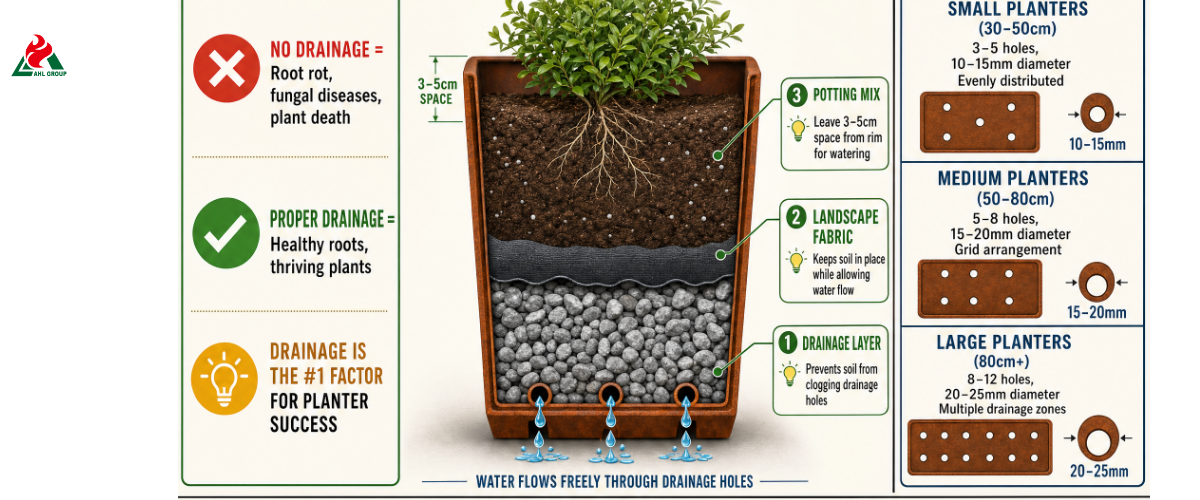
Why Drainage Is Critical
In Corten outdoor planters, the most common cause of plant death is not the metal itself, but standing water. If water cannot drain freely from the bottom of the container, the soil becomes an anaerobic (oxygen-deprived) environment, leading to root rot and drowning the plant. Furthermore, standing water in a closed steel container keeps the metal constantly submerged, hindering the drying process necessary to form a protective rust layer, which may shorten the container’s lifespan.
Proper Use of Drainage Holes
Every closed Corten planter pot must be equipped with a sufficient number of factory-pre-drilled drainage holes, which should be evenly distributed across the bottom of the planter. For standard installation, ensure that the planter is slightly raised off the ground using integrated feet or concealed spacers (5 to 15 mm high). This elevation prevents the drainage holes from being blocked by flat concrete or patio surfaces, allowing water to drain freely.
Choosing the Right Soil Mix
Never use heavy, clay-rich native garden soil in enclosed planters. Clay will compact against the metal walls, causing excessive waterlogging and hindering air circulation. This mix ensures rapid water drainage while maintaining excellent nutrient retention.
Adding Gravel or a Drainage Layer
To prevent drainage holes from becoming clogged with fine soil particles over time, lay a structured drainage layer before filling the planter with soil:
► Spread a layer of coarse gravel or expanded clay pellets (50 to 100 millimeters thick) across the bottom of the planter box.
► Place a layer of permeable non-woven geotextile filter fabric over the gravel. This geotextile allows water to permeate freely while strictly separating the soil mixture from the drainage gravel.
6. Best Plants for Corten Planters
Vegetables and Herbs
As long as they receive sufficient moisture, edible plants thrive in Corten garden planters. Mediterranean herbs, such as rosemary, thyme, sage, and oregano, particularly benefit from the well-drained, warm microclimate that forms near the surface of Corten steel. Deep-rooted summer crops such as tomatoes, peppers, and eggplants also perform exceptionally well in large Corten steel planting beds, as the gentle warming of the soil in spring helps accelerate early root development.
Shrubs and Perennials
To create a low-maintenance landscape that remains visually appealing year-round, pair weathering steel with hardy, structural perennials and shrubs. Plants such as lavender, coneflowers (Echinacea), Russian sage, and lily-of-the-valley provide striking color contrasts against the rust-stained surface. Cold-hardy structural shrubs like boxwood, dwarf conifers, and hydrangeas are not only aesthetically pleasing but also withstand winter temperature fluctuations with ease within the thick steel walls.
Ornamental Grasses
Ornamental grasses are undoubtedly the most visually striking choice when paired with Corten steel. The delicate, dynamic textures of feathery reedgrass (Karl Foster), blue fescue, Miscanthus, and ryegrass create a stunning contrast with the heavy, industrial lines of the steel plates. These grasses are also extremely resilient, and their fibrous root networks can easily adapt to fluctuations in moisture levels.
Small Trees and Focal Plants
Large, deep Corten steel cubes or cylinder planters make excellent containers for planting eye-catching focal trees. Japanese red maples, olive trees, crape myrtles, and ornamental cherry trees look particularly spectacular when surrounded by amber-brown Corten steel bases. When planting trees, ensure the pot is at least 600 to 800 millimeters wide to provide ample anchoring space for the development of a structural root ball.
7. Bottomless vs Fully Closed Planters
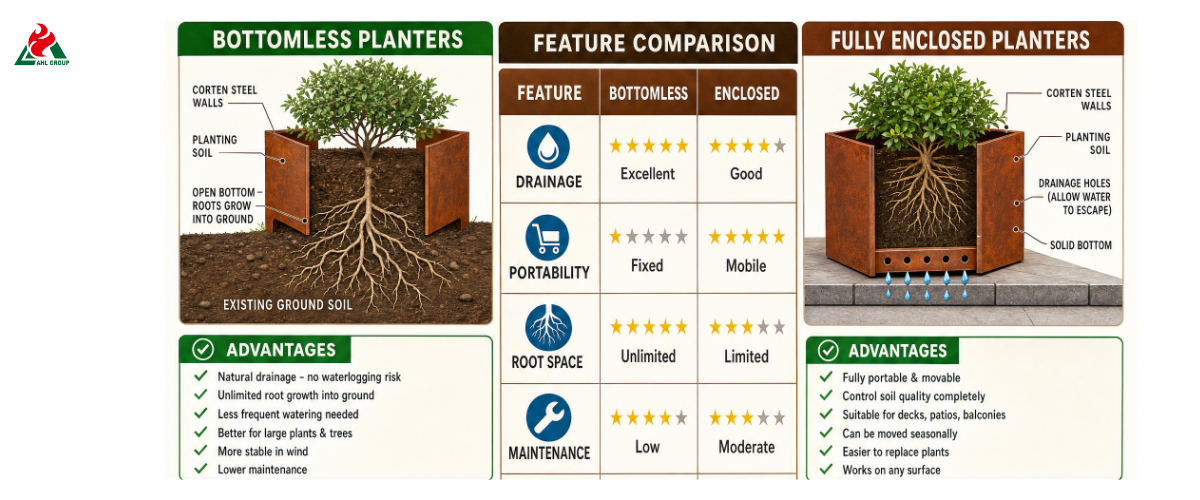
What Is a Bottomless Planter
A bottomless planter consists solely of vertical side walls, with the bottom completely open. It functions as a raised garden bed or retaining border, placed directly on top of native soil or subsoil rather than holding soil in a separate metal tray.
When Is Direct Planting in the Ground Most Effective
Open-bottomed planters are the preferred choice for large landscape flower beds, vegetable gardens, and deep-rooted trees. Since the container is directly connected to the subsoil, plant roots can penetrate deep into the ground to access the natural water table and beneficial soil microorganisms, thereby forming an extremely resilient, self-sustaining ecosystem.
When Is a Fully Enclosed Planter More Appropriate
Fully enclosed planters feature an integrated base with dedicated drainage holes. These outdoor planters are suitable for ground-level applications where soil spillover must be prevented, such as urban rooftops, public sidewalks, commercial balconies, and high-end indoor or outdoor living spaces with tiled surfaces.
Pros and Cons of Each Option
| Attribute | Bottomless Planters | Fully Enclosed Planters |
| Drainage Profile | Flawless (Natural percolation into the earth) | Controlled (Dependent on drainage ports) |
| Root Space | Uncapped (Roots can grow infinitely deep) | Restricted (Bounded by the container walls) |
| Hardscape Runoff | Zero (Water and rust run into the subsoil) | High Risk (Requires catch trays or risers) |
| Mobility | Fixed permanent installation | Relocatable via forklifts/pallet jacks |
| Best Used For | Lawn borders, deep trees, and large gardens | Patios, balconies, and commercial plazas |
8. Common Mistakes to Avoid
Poor Drainage
Blocking or omitting drainage holes is the quickest way to kill plants and ruin your planter arrangement. Never place a closed-bottom, rusted steel planter directly on a smooth stone surface without using legs or risers; otherwise, standing water will cause the root zone to rot.
Overheating in Direct Sunlight
During hot summer weather, placing small, uninsulated metal containers directly against a west-facing brick wall can cause the soil to dry out completely. Be sure to use a built-in foam insulation liner or choose a large-capacity planter to protect the roots from extreme solar heat.
Inappropriate Soil
Filling high-end metal planters with dense, heavy topsoil dug from your own backyard can lead to poor aeration and waterlogging. Be sure to use a high-quality, lightweight, and highly porous potting mix specifically formulated for container gardening.
Neglecting Pot Size and Root Space
Planting fast-growing, vigorous trees in narrow, shallow Corten steel cube pots will quickly lead to root binding. As the roots expand and press against the steel walls, they will compact the soil, reduce water absorption, and potentially stunt the tree’s growth. Be sure to select a pot size based on the mature footprint of your chosen plant.
9. How to Protect Surrounding Surfaces
Preventing Stains Caused by Rust Runoff
During the early stages of reactive patina, rainwater washing over the Corten steel surface can wash tiny iron oxide particles onto the ground below. If garden planters are placed on porous stone, light-colored concrete, or high-quality wooden deck flooring, this rust runoff can leave permanent and unsightly orange rust stains.
Protecting Patios and Decks
To maintain the clean appearance of outdoor surfaces while the planters develop their patina, please follow these professional protection methods:
► Integrated Drip Tray: Install a matching weathering steel or powder-coated steel drip tray beneath the planter to collect overflowing water and sediment.
► Sacrificial Protective Layer: During the initial 12-month weathering period, place temporary shims, thick plastic sheeting, or inexpensive concrete pavers beneath the planters. Once the rust has stabilized and seepage has stopped, these temporary protective layers can be cleanly removed.
► Pre-weathering Treatment: Treat the steel with chemical weathering accelerators during the manufacturing stage to lock in the rust before the planters are shipped to the site and installed.
Managing Standing Water
In high-traffic commercial areas or at the entrances to luxury residences, drainage flow can be directed into concealed drainage channels or gravel catch basins located beneath flower beds. This design ensures that rainwater completely bypasses paved walkways, keeping concrete surfaces clean and preventing slippery areas.
Cleaning and Maintenance Tips
If rust stains appear on adjacent stones, don’t panic. Fresh rust stains can be scrubbed off using eco-friendly solutions such as oxalic acid or commercial rust removers specifically designed for masonry. Afterward, rinse the surface thoroughly with clean water to prevent corrosion.
10. Frequently Asked Questions
Q1: Are Corten Planters Suitable for Growing Vegetables?
Yes. Corten steel is perfectly suited for growing edible vegetables, salad greens, and culinary herbs. The iron oxide and copper oxide that form naturally during the weathering process are safe micronutrients for plants and pose no health risks to food production.
Q2: Do Corten Planters Need Lining?
No, they do not require lining to protect the steel or the plants. However, if your planter is small and will be placed in intense direct sunlight, it is strongly recommended to line the inner walls along the edges with a 10-millimeter-thick layer of extruded polystyrene (XPS) foam board to provide thermal insulation for the root system.
Q3: Will Rust Harm My Plants?
No. The stable layer of iron oxide rust is chemically inert and completely non-toxic to plants. It acts as a natural protective barrier for the steel and poses no risk to the health and vitality of plant roots.
Q4: How Deep Should a Corten Planter Be?
To ensure optimal plant health and thermal stability, the pot depth should be at least 300 to 400 millimeters when planting standard flowers, herbs, and perennials. For large shrubs and trees, the depth should be increased to 600 to 1,000 millimeters to ensure sufficient space for root growth and soil volume.
Conclusion: When Is It a Wise Choice to Use Corten Steel Planters
The key takeaway is that planting directly in Corten landscape planters is an extremely safe, durable, and architecturally appealing choice for modern landscape design. Thanks to weathering steel’s unique self-healing chemical properties, this metal forms a completely stable, inert protective layer that neither leaches harmful toxins into the soil nor relies on synthetic coatings as a barrier, yet still offers a service life spanning decades.
Weathering steel planters are the top choice for projects requiring clean architectural lines, industrial rustic aesthetics, and a maintenance-free lifespan. They perform exceptionally well in settings such as high-end residential landscapes, urban streetscapes, and public plazas—where traditional materials like wood, rot, and plastic or concrete crack over time under harsh winter conditions.
To ensure that plants grown directly in Corten metal planters thrive, focus on proper structural preparation: ensure the base has good drainage, use integrated risers to slightly elevate the enclosed planter, use a high-quality, breathable potting mix, and—if planting in a hot, full-sun environment—add a simple foam insulation panel inside. By addressing these core moisture and temperature requirements during installation, your weathering steel planters will become vibrant, attractive, and durable focal points in your outdoor living space.

