


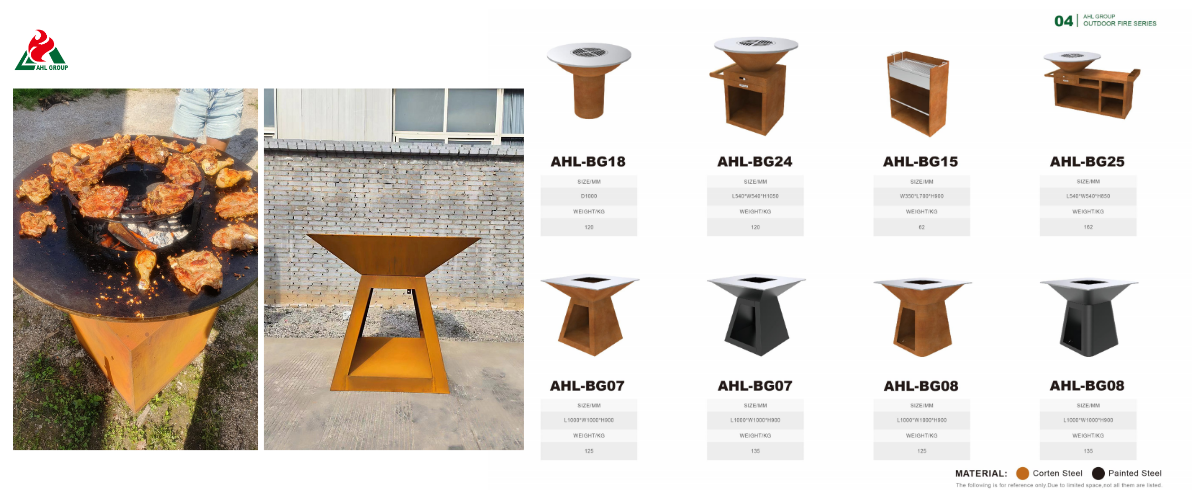
Corten steel charcoal grills are designed specifically for outdoor cooking, combining the durability of weathering steel with the versatility of a flat cooking surface. Although Corten steel is known for being low-maintenance, this does not mean the grill requires no maintenance at all. Regular cleaning and proper maintenance help preserve its cooking performance, extend the grill’s lifespan, and maintain the attractive appearance of the weathering steel. The cooking grate, firebox, ash pan, and moving parts are all subject to different types of wear and tear and require varying degrees of attention. The purpose of maintenance is not to make the Corten steel grill look brand new. The beauty of Corten steel lies in its natural patina, which develops over time and protects the surface. Proper maintenance means keeping the cooking area clean and fully functional while preserving this protective layer.
1. Introduction
Why Corten Steel Plancha Grills Require Regular Maintenance
A Corten steel plancha grill is a valuable investment—it serves not only as a high-performance cooking surface but also as a striking architectural feature in any outdoor kitchen. However, the combined effects of extremely high cooking temperatures (200°C to 400°C), organic acids and fats in food, and outdoor weather conditions create an extremely challenging environment for the metal. Regular, systematic maintenance is essential to keep the griddle completely non-stick and hygienic, while also ensuring that the protective steel body develops its signature appearance without developing localized corrosion.
What Makes the Corten Steel Grill Unique
Unlike traditional stainless steel or cast iron grills, the Corten steel BBQ grill features a dual-material design that requires two distinctly different maintenance approaches. The heavy-duty carbon steel or cast iron cooking surface (plancha) requires vigorous cleaning, scraping, and continuous oiling to prevent rust and food sticking. In contrast, the outer shell is made of heavy-gauge weathering steel, which relies on a fine layer of rust (known as “patina”) that forms naturally on its surface to resist environmental erosion. Excessive cleaning of the outer shell or the use of inappropriate cleaning agents can strip away this protective layer, while neglecting the maintenance of the cooking surface will ruin your food.
What This Guide Covers
This comprehensive, engineering-grade guide provides you with a step-by-step framework for maintaining your Corten plancha grill. We’ll break down the following procedures in detail: sanitizing the high-temperature cooking surface, protecting the weathering steel exterior, performing seasonal deep cleaning, and avoiding common mistakes that can lead to structural issues. Following these field-proven maintenance procedures will preserve your BBQ grill’s performance and ensure that its self-protecting exterior remains durable for decades.
2. What Parts Need Cleaning
Cooking Surface
A thick, round cooking ring—that is, a flat baking pan—requires the most consistent maintenance. Since it comes into direct contact with meat, seafood, and vegetables, you must ensure its surface is free of charred food residue, rancid grease, and environmental dust. Since this griddle is typically made of high-density carbon steel or precision-ground cast iron, it must be treated just as you would a high-quality cast-iron skillet: keep it clean, completely dry, and thoroughly coated with food-grade cooking oil.
Grill Body
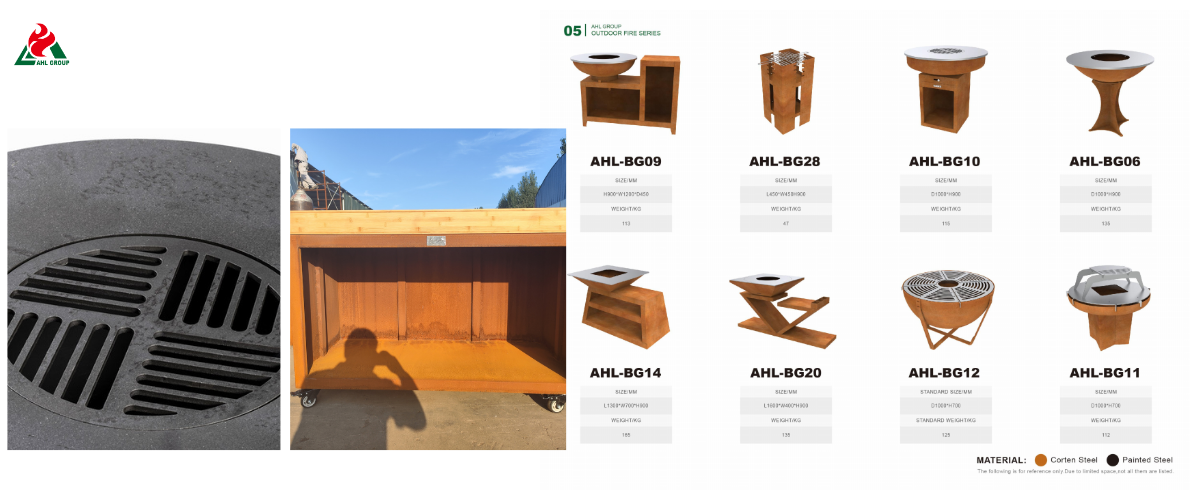
The grill’s structural base, cone, and pedestal are all made of genuine weathering steel. The exterior is designed to weather naturally over time, requiring virtually no manual intervention. Cleaning is primarily limited to gently removing loose wood ash, wind-blown dust, or accidental grease splatters to prevent them from affecting the appearance or interfering with the even formation of the protective amber-brown rust patina.
Ash Pan or Combustion Chamber
The internal firebox and removable ash pan are located at the very heart of the heat source. Wood ash is naturally alkaline and highly hygroscopic, meaning it absorbs large amounts of moisture from the surrounding air. If left inside the grill, damp ash will turn into a corrosive paste that erodes the internal ventilation grates and structural support brackets; therefore, regular cleaning is essential.
Vents, Handles, and Accessories
The barbecue grill’s other mechanical components—including the air intake slider, damper controls, stainless steel handles, and optional side tables—require regular inspection. Ensuring that vents are free of insect nests and ash buildup guarantees optimal oxygen flow and clean wood burning; keeping the hardware clean also prevents moving parts from becoming stuck or seized over time.
3. How to Clean the Cooking Surface
Removing Food Residue After Cooking
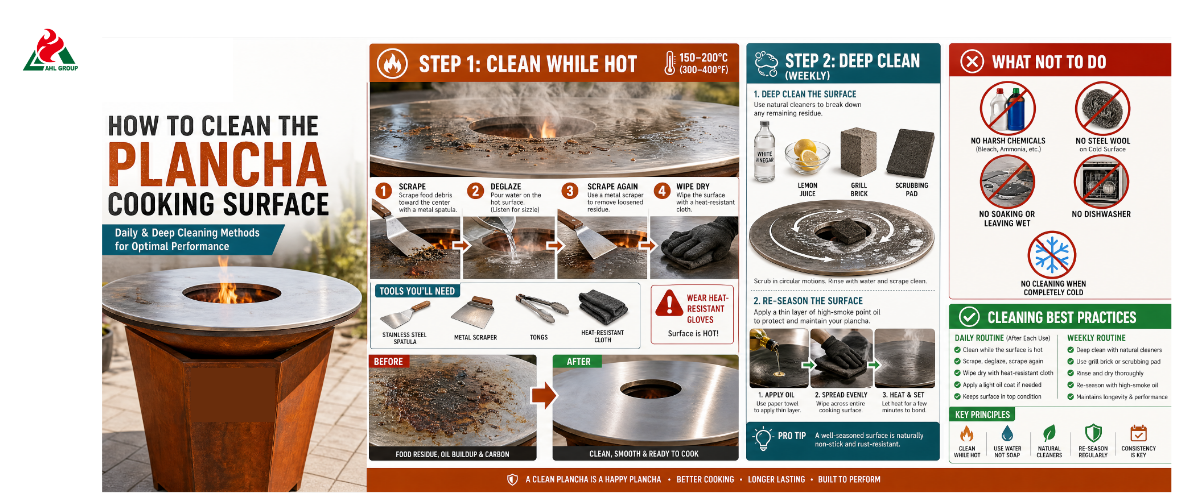
It’s easiest to clean a baking sheet right after cooking, while the metal surface is still hot. As the heat gradually subsides, use a sturdy, long-handled stainless steel spatula or a dedicated baking sheet scraper to push all loose food residue, excess fat, and cooking juices directly into the central vent. This quick step prevents sugars and proteins from baking into a rock-hard, carbonized layer as the metal cools.
Scraping Off Grease and Burned-On Residue
For stubborn caramelized marinades or burnt-on residue adhering to the pan, hold the spatula at a 30° angle and scrape with firm, rhythmic strokes. Don’t worry about scratching the pan; the thick carbon steel is extremely durable and can easily withstand the scraping of a steel spatula. Continue scraping the surface until the area beneath the spatula’s edge feels completely smooth.
Use Heat to Soften Stubborn Residue
If you encounter areas with severe buildup, use the “de-coking” technique. While the baking sheet is still hot, carefully splash a small amount of water on the problem area or place a few ice cubes directly on it. The sudden thermal shock will cause the water to boil instantly, thereby loosening the grease and burnt-on food stuck to the metal surface. Before the water completely evaporates, immediately scrape the softened residue into the fire pit.
Wipe and Dry the Surface Properly
After scraping the baking sheet clean, fold a stack of thick paper towels or a clean cotton cloth and secure it firmly with a clip. Wipe the entire surface to remove any remaining fine grime. Finally, while the griddle is still warm, apply a thin, even coat of high-smoke-point vegetable oil (such as canola oil, grapeseed oil, or peanut oil) to the entire circular surface. Wipe repeatedly until the surface shines, forming a thin protective film that seals out environmental moisture and prevents flash rust.
4. Caring for the Corten Steel Body
Why You Shouldn’t Overclean the Exterior Surface
The golden rule for maintaining weathering steel is: don’t touch the exterior surface. The rough, matte, orange-brown coating on the surface is a living layer of controlled iron oxide known as “patina.” This coating is not dirt; it is a dense microstructure that seals the exposed steel beneath, preventing it from coming into contact with oxygen and moisture. Scrubbing the surface vigorously or using strong degreasers will strip away this protective layer, forcing the steel to restart the oxidation process and resulting in mottled, uneven areas and weak spots on the metal surface.
How to Safely Remove Dirt and Ash
If loose soot, wind-blown dirt, or bird droppings have accumulated on the exterior base or cone surfaces, clean them using a soft microfiber cloth or a soft-bristled nylon brush dipped in clean, warm water. Gently wipe away the debris; never scrub the metal surface vigorously. After cleaning, allow the outdoor grill body to air dry completely in the sun; this helps the “patina” restore its natural self-protective state.
Products to Avoid
Never allow highly corrosive chemical cleaners to come into contact with the weathering steel exterior. Keep the following products away from the grill body:
► Oven cleaners and commercial chemical degreasers
► Hydrochloric acid or phosphoric acid cleaning solutions
► Wire brushes, steel wool, or abrasive cleaning pads
► Using a pressure washer directly against the metal surface
These products will destroy the rust layer, scratch the steel substrate, and introduce harmful chemical ions, thereby triggering rapid and uncontrolled pitting corrosion.
How to Protect the Rust Layer
The best way to protect the patina on Corten steel is to allow it to undergo natural wet-dry cycles. Rain triggers a controlled oxidation process, while sunlight and wind dry the surface and harden the iron oxide crystals. Be sure to install the durable grill in an open, well-ventilated area rather than in a damp, perpetually shaded corner, so that the steel can “breathe” and naturally regenerate its protective layer.
5. Maintenance After Each Use
Safe Cooling
After cooking, allow the wood or charcoal fire to burn out naturally inside the fire bowl. Never pour cold water into the fire chamber to extinguish the embers. Pouring water onto a hot grill causes a severe thermal shock, which can warp or crack thick steel components, loosen structural welds, and create a dangerous cloud of superheated steam.
Clean While the Grill Is Still Warm
As described in Section 3, make it a habit to scrape the grill grates clean and apply a fresh coat of protective oil while the metal surfaces are still warm. Cleaning the grates while they are warm prevents grease from hardening into a sticky, stubborn film that is difficult to remove—once cooled, these films become even harder to remove—ensuring your grill remains in top condition and ready for your next barbecue.
Cleaning Up Ashes and Residue
Once the Corten grill has cooled completely—usually the next morning—be sure to empty the ashtray or the central ash collection bucket. Wood ash absorbs moisture from the air and contains potassium carbonate, which becomes highly alkaline when exposed to moisture. If damp ash is left on the steel interior panels, it will slowly corrode the metal; therefore, regular cleaning is essential to ensuring the grill’s long-term durability.
6. Seasonal Maintenance
Deep Cleaning at the Start of the Season
As the spring grilling season begins, give your griddle a thorough inspection. If the griddle has developed a rough texture or slight surface rust over the winter, use a fine-grit grill stone or high-grit sandpaper to sand it back to a smooth, bare-metal finish. Wipe away any fine dust, light a hot wood fire, and apply several thin layers of oil before your first major outdoor barbecue to rebuild a durable, non-stick protective coating.
End-of-Season Maintenance and Storage
Before closing up your outdoor kitchen for the winter, prepare your grill for the cold months ahead. Thoroughly scrape away any residue from the grill grate, cleaning it down to the bare metal, and apply a thick, generous coat of food-grade mineral oil or paraffin wax. Remove all traces of old ash from inside the firebox, wipe down the vents, and ensure that all moving parts are lightly lubricated with heat-resistant graphite spray.
How to Protect Your Grill on Rainy Days
If your charcoal grill will be exposed to heavy rain or winter snow, we strongly recommend using a durable, weatherproof cover. However, make sure the cover has built-in vents to ensure proper airflow. Alternatively, you can install a solid stainless-steel or weathering-steel top directly over the grill pan. This will protect the oiled ring-shaped grill pan from direct rain exposure while allowing the main weathering steel base to weather naturally outdoors.
Winter Storage Tips
If you live in an area with harsh winter weather, storing your grill in a dry garden shed, garage, or pool house is the safest option. If the grill must remain on a patio, use a non-perforated rubber mat or stone blocks to raise the base slightly off the ground to prevent the bottom edge from being submerged in standing water or melted snow for months on end.
7. Common Mistakes to Avoid
Using Harsh Chemicals
Spraying commercially available oven cleaners or chemical degreasers onto flat baking pans or weathering steel bodies is a serious mistake. These harsh chemicals strip away the nonstick oil layer on cooking surfaces and leave chemical stains on weathering steel exteriors, forming bright white streaks that ruin the surface finish—damage that takes months of natural weathering to repair.
Scrubbing the Weathering Steel Housing Too Hard
Scrubbing minor scratches or uneven areas on the weathering steel exterior with a wire brush or steel wool is counterproductive. Vigorous scrubbing carves deep grooves into the protective rust layer, exposing the bare steel beneath. This creates an unpolished area that will rust rapidly and seep heavy orange stains into the patio pavers the next time it rains.
Grease and Ash Residue
Neglecting firebox maintenance and allowing old grease and ash to accumulate at the bottom is one of the main causes of premature equipment failure. This damp, corrosive mixture can clog vents, leading to uneven heat distribution during your next barbecue and accelerating crevice corrosion at the seams inside the firebox.
8. How to Protect the Grill Over Time
Keep the Vents Clear
Please regularly check the adjustable air intake sliders at the bottom of the base and the openings in the internal grate. Remove any ash, charcoal chunks, or fallen leaves blocking these passages. Clean, unobstructed vents allow you to precisely control the temperature and ensure a vigorous, clean wood fire with minimal smoke.
Use a Protective Cover When Necessary
Although the Corten steel body can easily withstand year-round outdoor exposure even without a cover, it is still highly beneficial to protect the cooking surface. A sturdy, waterproof top cover or full-length cover will shield the oil-treated flat griddle from direct exposure to heavy rain, preventing rust before it starts, and keeping wind-blown dust out of the cooking area.
Check for Rust Leakage
During the first 12 to 18 months of use, the Corten steel exterior will continue to leak small amounts of iron oxide rust water when it rains. To protect your outdoor kitchen, avoid placing a new grill directly on porous, high-end stone pavers or light-colored concrete. Place the grill temporarily on rubber mats, dark-colored pavers, or a gravel bed until a mature layer of rust forms on the surface, and the rust seepage stops.
Inspect Moving Parts and Hardware
Inspect all mechanical connections on the grill once per season. Make sure the hinges on the access door operate smoothly, check that the ash pan slides out easily without getting stuck, and confirm that all leveling feet or heavy-duty casters are securely installed and coated with weather-resistant grease.
9. When to Use Oil or Seasoning
Do You Need to Oil the Cooking Surface
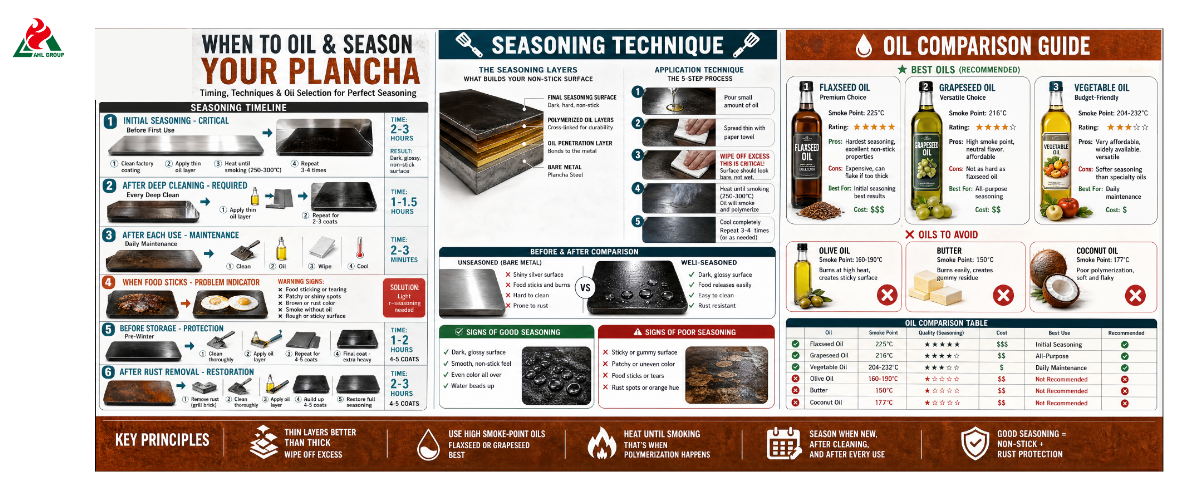
Of course you do. Carbon steel griddles must be oiled regularly. Just like the French steel skillets used by professional chefs, your griddle relies on a process called “polymerization.” When vegetable oils with a high smoke point are applied to a scorching-hot steel surface, they transform from liquid fat into a tough, smooth, plastic-like polymer layer that bonds directly to the metal, creating a natural nonstick surface.
How to Prevent Food from Sticking to the Griddle
To prevent delicate foods like fish or eggs from sticking, follow this simple three-step process:
► Light the grill and heat the griddle to the highest cooking temperature.
► Scrape off any dust or dried-on oil residue from the surface.
► Before placing food on the griddle, apply a fresh, thin layer of cooking oil and spread it evenly with a spatula.
Oils That Should Not Be Applied to Corten Steel Bodies
Never apply cooking oil, animal fat, or WD-40 to a Corten steel body. Although applying oil to the body may temporarily give it a dark brown appearance, organic fats oxidize quickly, deteriorate in sunlight, attract dust, and form a sticky, unsightly film, thereby disrupting the natural rusting process.
How Seasoning Affects Cooking Performance
A thoroughly seasoned griddle can significantly enhance your outdoor cooking experience. It ensures excellent and even heat distribution across the entire surface, prevents food from sticking to the metal, and forms a durable protective layer that prevents flash rust caused by moisture between uses, making daily cleanup much quicker.
10. Signs Your Grill Needs Extra Attention
Uneven Rust
If your cast-iron skillet has dark, rough, orange-colored patches that flake off when scraped, it means the seasoning layer has worn away. This uneven rust indicates that moisture has seeped in. To restore the skillet to good condition, you’ll need to thoroughly sand it down with a cast-iron whetstone, followed by a complete re-seasoning process.
Severe Grease Buildup
If a thick, sticky, black layer of congealed grease has accumulated along the outer edge of your flat baking pan, it means you did not thoroughly scrape the surface clean after cooking. This old grease can become a breeding ground for bacteria and alter the flavor of your food, so use a spatula and a little water to scrape away the grease until a clean metal surface is exposed.
Restricted Airflow
If your charcoal fire is difficult to light, produces excessive black smoke, or fails to reach high temperatures even when using dry hardwood, this indicates an airflow problem. Check the internal ash pan and clean the ventilation grates to restore the oxygen supply needed for efficient combustion.
Surface Damage or Wear
If you notice structural deformation of the cooking ring or loose welds inside the firebox, it indicates that your BBQ grill is under severe thermal stress. This is typically caused by extinguishing high-temperature flames with cold water or by overheating due to excessive fuel. A thorough inspection is required, and professional repair may be necessary.
11. Frequently Asked Questions
Q1: Does the Corten Steel Plancha Grill require a special cleaner?
No. You do not need to use any special chemical cleaners to maintain the Corten outdoor grill. The carbon steel grates can be easily cleaned using heat, water, and food-grade vegetable oil, while the Corten steel exterior only needs to be gently rinsed with clean water.
Q2: Can I Wash the Corten Steel Housing with Plain Water?
Yes. Rinsing the housing with plain water from a garden hose is completely safe and highly beneficial. A quick rinse removes surface dust and bird droppings without damaging the rust layer, helping the Corten steel complete its natural cycle of drying and wetting.
Q3: Do the Cooking Plates Need to Be Seasoned?
Yes, seasoning the cooking plates is essential. Regularly seasoning them with a high-smoke-point cooking oil creates a natural, smooth, non-stick coating that protects the carbon steel from rust and ensures food releases easily during every cooking session.
Q4: How Often Should the Corten Steel Plancha Grill Be Cleaned?
After each use, scrape the grill pan clean and lightly coat it with oil. Once the grill has cooled completely, empty the ash drawer inside; the Corten steel exterior only requires a few visual inspections and rinses with water each year.
Conclusion: Final Recommendations for Users
Maintaining a Corten barbecue grill ultimately comes down to one simple two-step process: protect the cooking ring while leaving the main body alone. Keep the cooking surface scraped clean, dry, and well-oiled to maintain its non-stick properties; at the same time, allow the outer weathering steel base to naturally weather in the sun and wind, forming a beautiful protective patina.
Owning a Corten plancha grill is a delightful experience that perfectly blends high-end outdoor cooking with exceptional structural design. As long as you avoid using harsh chemical cleaners, keep the ventilation openings clear, and prevent standing water from seeping into the cooking ring, you’ll have an exceptional and durable outdoor cooking appliance that will continue to perform flawlessly for decades to come.

