


In the world of high-end outdoor cooking, Corten steel BBQ grills have become the ultimate fusion of rugged industrial aesthetics and professional-grade performance. Unlike the flimsy steel grills of the past—which would rust and peel within a single season—weathering steel is specifically designed to withstand the elements and endure over time. But for cooking enthusiasts, one question remains: Does this rugged exterior mean a low-maintenance lifestyle, or are there hidden costs to upkeep?
This guide will delve into the reality of owning a Corten steel grill, providing a detailed breakdown of exactly how much effort is required to keep this garden masterpiece in top condition throughout every season.

This guide will delve into the reality of owning a Corten steel grill, providing a detailed breakdown of exactly how much effort is required to keep this garden masterpiece in top condition throughout every season.
1. Short Answer
Do Corten Steel Grills Really Require Little Maintenance?
The short answer is: Yes. Corten steel is arguably the material that requires the least maintenance among outdoor grills today. Because this material is specially designed to form a stable, rust-like oxide layer that protects the underlying steel from further corrosion, it does not require the tedious sanding, repainting, and chemical treatments typical of traditional carbon steel grills.
What Does “Maintenance” Actually Mean for This Type of Grill?
For weathering steel grills, “maintenance” falls into two main categories: body care and cooking performance. The exterior requires virtually no maintenance. The cooking system—including the grates, grease management system, and combustion chamber—requires adherence to standard cooking hygiene practices, similar to those for professional grilling equipment.
A Quick Summary for Busy Readers
If you’re looking for a grill that can stay outdoors year-round without worrying about rust, weathering steel is your best bet. Simply keep the grill clean, remove ashes after use, and ensure the vents are clear. The grill’s exterior will maintain its condition on its own.
2. Why Corten Steel Needs Less Care Than Regular Steel
How the Rust Layer Protects the Surface
Weathering steel is a proprietary alloy containing copper, chromium, and nickel. When exposed to the atmosphere, these elements work together to form a thin, dense, and stable layer of iron oxide. Unlike ordinary steel, which develops a porous, flaky rust layer that continuously flakes off, exposing fresh metal to the oxidizing environment, the rust layer on weathering steel forms a barrier that prevents the penetration of oxygen and moisture.
Why Rust on Corten Steel Differs from Ordinary Corrosion
Ordinary corrosion is a destructive process that weakens the metal’s strength. In contrast, the “rust” on Corten steel is a structural feature. Once the rust layer matures, the subsequent corrosion rate becomes negligible, effectively “freezing” the metal’s degradation process.
Why is Corten Steel Suitable for Outdoor Cooking Equipment?
BBQ grills must withstand extreme thermal cycling—rapid cooling following high temperatures—while also coping with environmental humidity. Corten steel’s high tensile strength and thermal stability mean it is resistant to deformation or embrittlement at high temperatures, making it an ideal material for the outer shell of high-intensity combustion chambers.
3. First-Use Maintenance
Why a New Weathering Steel Grill Might Smoke or Have an Odor
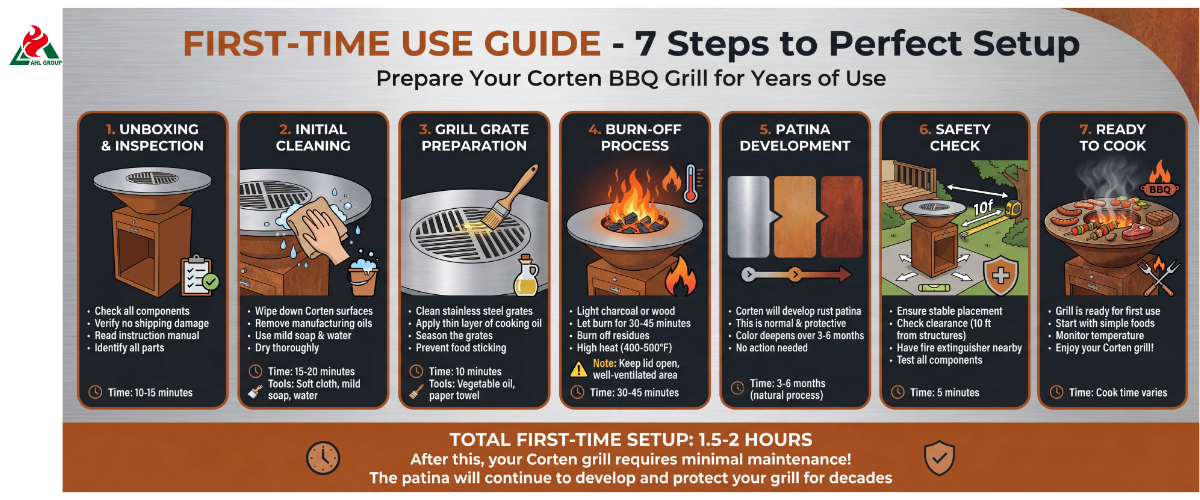
Like any new professional-grade appliance, a new barbecue grill may have small amounts of industrial oils, lubricants, and coatings from the manufacturing process remaining on the grates and internal combustion chamber components.
How to Remove Manufacturing Residues
Before using it for the first time, perform a “seasoning” process. Light the grill, heat it to its maximum operating temperature, and let it sit for 30 to 60 minutes. This process will evaporate any remaining manufacturing chemicals, ensuring your first meal doesn’t taste like an industrial factory.
Preparation Before Your First Cooking Session
Once the preheating is complete and the grill has cooled down completely, use a stiff-bristle wire brush to clean the grill, brushing away any loose carbon buildup. Wipe the grill with food-grade cooking oil, and you’re ready to start cooking.
4. Routine Cleaning After Each Use
Removing Ashes and Food Residue
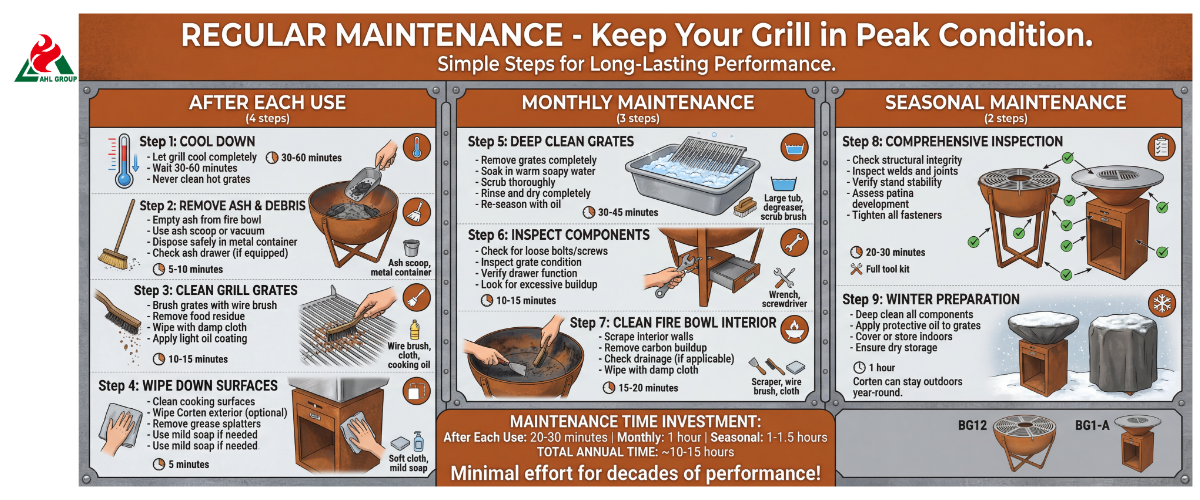
Ashes are hygroscopic—they absorb moisture. If left in the grill for several days, damp ashes can form a corrosive slurry that can damage even the sturdiest fireboxes. Be sure to remove cooled ashes after every 2–3 cooking sessions.
Wiping Down the Cooking Surface
While the Corten grill is still warm (but safe to touch), use a scraper or brass brush to remove burnt-on food residue. Preventing the buildup of carbonized grease is key to maintaining a non-stick surface.
Let the Grill Cool Before Cleaning
Never pour cold water onto a hot, rusty steel grill or its internal components. This causes thermal shock, which can stress metal joints or warp the grill. Patience is essential for proper grill maintenance.
Keep Vents and Airflow Channels Clear
Airflow is the lifeblood of a charcoal or wood-fired grill. Ensure that the intake and exhaust vents are free of debris. A grill that can breathe freely burns more efficiently.
5. Weekly and Monthly Maintenance Tasks
Inspect the Grill
Check the BBQ grill for severe dents or cracks. If you use a stainless steel or cast iron grill, make sure it has been properly seasoned to prevent food from sticking to the surface.
Inspect Joints, Bolts, and Fittings
Thermal expansion and contraction can cause hardware to loosen over time. Performing a quick monthly inspection and tightening all bolts or fasteners will ensure the grill remains sturdy and stable.
Clean Grease Buildup
Grease is the number one enemy of any open-flame appliance. Check the drip pan or grease trap. Accumulated grease not only poses a fire hazard but can also attract pests.
Check for Unusual Wear or Damage
Visually inspect the grill’s exterior. Although weathering steel (Corten) is extremely durable, make sure no heavy objects have caused localized dents or cracks in the protective rust layer.
6. Seasonal Maintenance
Spring Startup Inspection
After a winter of inactivity, please inspect the entire unit. Remove any debris that may have accumulated in the firebox. Check that the sliding vents move smoothly.
Summer Cleaning and Performance Check
During the peak grilling season, increase the frequency of deep cleanings. Frequent use leads to more carbon buildup.
Preparations Before the End of Frequent Use in Fall
Perform a final deep cleaning of the backyard grill before temperatures drop. This prevents grease from solidifying into hard, difficult-to-remove clumps during the colder months.
Winter Storage or Covering Recommendations
Although weathering steel (Corten) is weather-resistant, covering the grill during the winter helps prevent excessive moisture buildup inside the firebox, thereby avoiding premature wear on internal components. A breathable cover is preferable to a plastic tarp because it prevents condensation from forming.
7. What Does Not Need Regular Maintenance
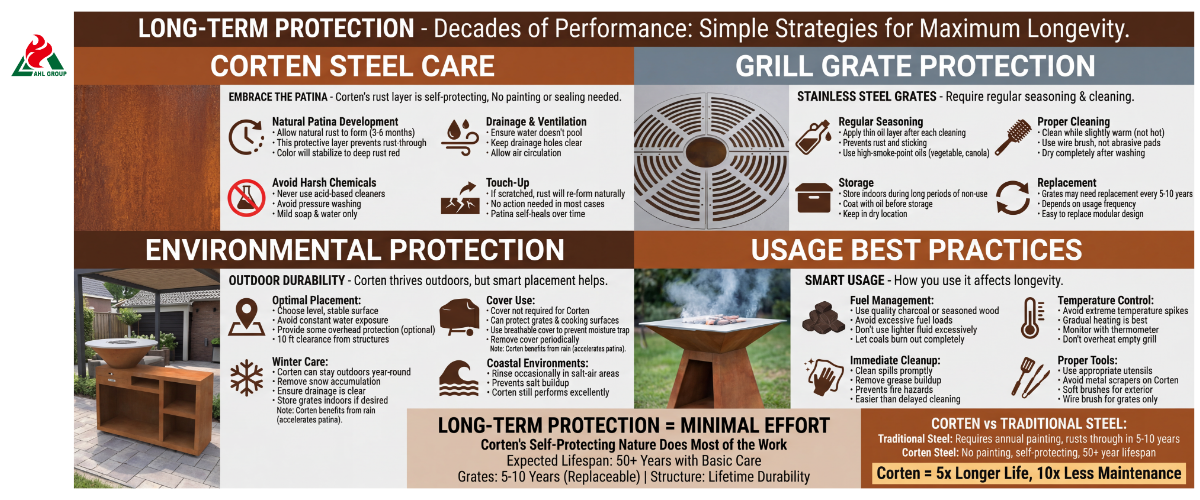
► No painting or sealing required: Corten steel derives its beauty from its natural state. Painting or sealing it would only create a maintenance burden, as these coatings will inevitably peel off over time.
► No rust removal required: Do not scrub the surface of the casing. The rust is a protective layer.
► No chemical treatment required: There is no need to use rust-preventive sprays or specialized metal polishes.
► No frequent refinishing required: This material is designed to develop a “patina” over time. It will only grow more distinctive with age, rather than losing its charm.
8. Common Problems That Need Attention
► Uneven heating: Usually caused by ash buildup or a clogged burner nozzle (gas grills).
► Food sticking to the grill: This is often a sign of improper preheating. After cleaning, apply a thin layer of high-smoke-point oil.
► Excessive smoke: Usually caused by excessive grease or burning unsuitable fuel (wood with high resin content).
► Loose hardware: Vibrations caused by high temperatures may loosen joints; keep a basic toolkit on hand for quick adjustments.
9. How to Protect the Grill Long Term
Choose the Right Outdoor Location
Place the modern grill on a flat, solid surface. Unless you’re using a heat-resistant mat, avoid placing it directly on wooden deck boards, and ensure the area is well-ventilated to prevent localized moisture buildup.
Use a Cover When Not in Use
A cover is the best investment for keeping your grill in good condition over the long term. It keeps the firebox dry and prevents wildlife or dust from getting into the grill.
Preventing Moisture Buildup
If you live in a high-humidity area, elevate the outdoor grill slightly by placing it on bricks or dedicated leveling feet to allow air to circulate beneath the firebox.
10. Maintenance Compared With Other Grill Materials
| Material | Exterior Maintenance | Cooking Performance |
| Corten Steel | Near Zero | Excellent |
| Painted Carbon Steel | High (Rust prevention) | Variable |
| Stainless Steel | Moderate (Polishing) | Excellent |
| Cast Iron | High (Seasoning required) | Superior Heat Retention |
Weathering steel far outperforms painted steel because it does not undergo the “peeling and rotting” cycle common to thin paint coatings. Although stainless steel has a cleaner surface, it may yellow or discolor at high temperatures, whereas weathering steel handles such conditions with ease.
11. When to Call a Professional
If you notice deep, structurally compromising cracks or deformation in the main body (i.e., the firebox), this is typically a sign of thermal fatigue. Although this is rare in thick-gauge weathering steel, it may require professional welding or structural reinforcement. Additionally, for complex gas burner systems, if you detect a gas leak or experience ignition failure, be sure to consult a licensed technician.
Conclusion: True Maintenance Requirements for Corten Steel Grills
Weathering steel grills represent a major triumph of materials science in the culinary world. They offer unmatched durability and virtually effortless upkeep—qualities that no other grill material can rival. By focusing your maintenance efforts solely on the internal cooking components—cleaning the grates, managing grease, and clearing away ash—you can fully appreciate the metal’s unique aesthetic appeal without constant worry about rust. For outdoor cooking enthusiasts, a Corten steel barbecue grill is more than just a piece of kitchen equipment; it is a durable, permanent fixture in your backyard, built to last a lifetime.

