


Corten steel planters are becoming increasingly popular in modern gardens, commercial landscapes, patios, rooftops, and outdoor construction projects. Their distinctive orange-brown rust patina gives them a natural yet modern look, while the Corten steel material ensures long-term durability and requires relatively little daily maintenance.
But are Corten steel planters really a good choice? For many outdoor applications, the answer is yes—but they aren’t suitable for every location or every budget. Their advantages include high durability, low maintenance costs, design flexibility, and a unique weathered surface effect. The main drawbacks are higher initial costs, heavy weight, drainage requirements, and rust-colored runoff during the early weathering stages.
Therefore, whether to choose Corten planters depends on the installation location, the types of plants being grown, how drainage is managed, and your expectations regarding the product’s long-term value.
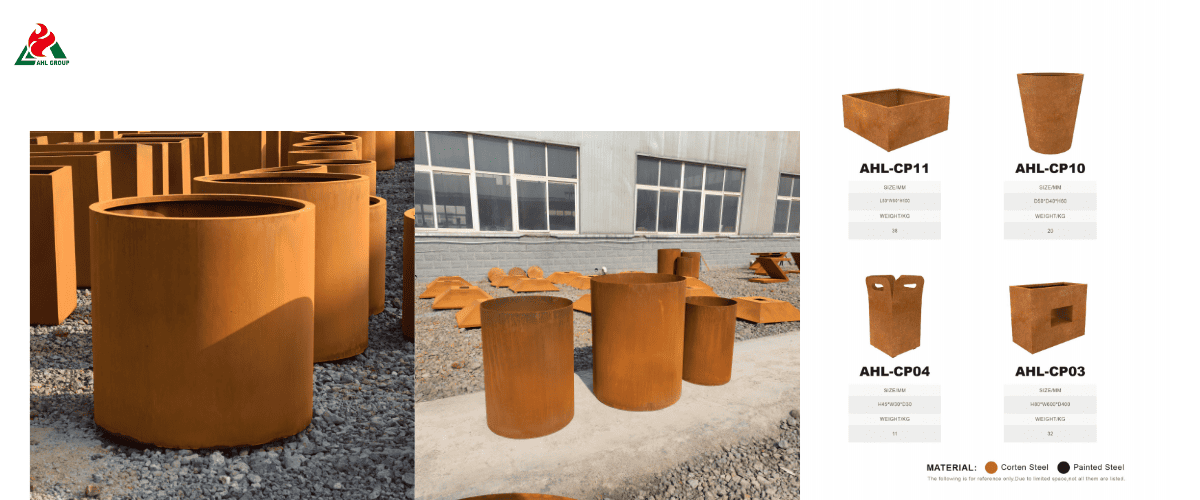
But are Corten steel planters really a good choice? For many outdoor applications, the answer is yes—but they aren’t suitable for every location or every budget. Their advantages include high durability, low maintenance costs, design flexibility, and a unique weathered surface effect. The main drawbacks are higher initial costs, heavy weight, drainage requirements, and rust-colored runoff during the early weathering stages.
Therefore, whether to choose Corten planters depends on the installation location, the types of plants being grown, how drainage is managed, and your expectations regarding the product’s long-term value.
1. Quick Answer
Are Weathering Steel Planters Good
Yes, weathering steel planters are among the best-performing and most durable options for outdoor planters in landscape architecture. These planters are manufactured from specialized weathering steel (ASTM A588 or ASTM A606-4), which forms a stable, self-regenerating layer of iron oxide rust on the surface. This effectively prevents corrosion from penetrating deeply into the material, resulting in a service life typically exceeding 25 to 50 years without structural failure.
Who Should Choose Corten Steel Planters
Corten planters are an ideal choice for landscape architects, commercial developers, property owners, and urban gardening enthusiasts who seek modern aesthetics and industrial-grade structural integrity without the need for ongoing painting or sealing maintenance. They are particularly well-suited for high-traffic commercial plazas, public parks, residential backyards, and harsh coastal environments—places where ordinary wood or thin sheet metal would deteriorate rapidly.
When to Choose Other Materials
If your project requires ultra-lightweight planters to accommodate balconies with weight restrictions (in which case aluminum or fiberglass planters perform exceptionally well), has a tight initial budget (in which case wooden or resin planters are more economical), or requires direct installation on light-colored sandstone or natural limestone pavers without any rust-preventive runoff management system, it is recommended to choose other materials.
2. What Is Corten Steel
How Does a Protective Rust Layer Form
Weathering steel is an alloy rich in copper, chromium, nickel, and phosphorus. When exposed to repeated wet-dry cycles in the atmosphere, the metal oxidizes, forming a dense, non-porous outer barrier known as a passivated rust layer.
Unlike ordinary rust, which continuously flakes off and erodes the metal core, this oxide film bonds tightly to the underlying steel substrate, forming a sealed layer that prevents the penetration of oxygen and moisture.
Comparison of Weathering Steel and Ordinary Steel
Standard carbon steel (such as Q235 low-carbon steel) lacks protective alloying elements. When exposed to a humid outdoor environment, it forms loose, porous iron oxide (rust), which continuously flakes off, causing the steel plate to thin, deform, and eventually rust through within a few seasons. The alloy composition of weathering steel stabilizes the rust layer, slowing the internal corrosion rate to a fraction of that of low-carbon steel.
Why Thickness Is Critical
Material thickness is the primary factor determining a structure’s service life and resistance to thermal deformation. Thinner weathering steel panels (1.0 mm to 1.5 mm / 16 to 18 gauge) are prone to the “oil drum effect” (buckling under soil pressure) and premature failure along wet joints. Heavy-duty planters manufactured from steel ranging from 2.0 mm (14 gauge) to 3.0 mm or more (1/8 inch / 11 gauge) ensure structural rigidity and truly deliver a service life spanning several decades.
3. Corten Steel Planters' Benefits
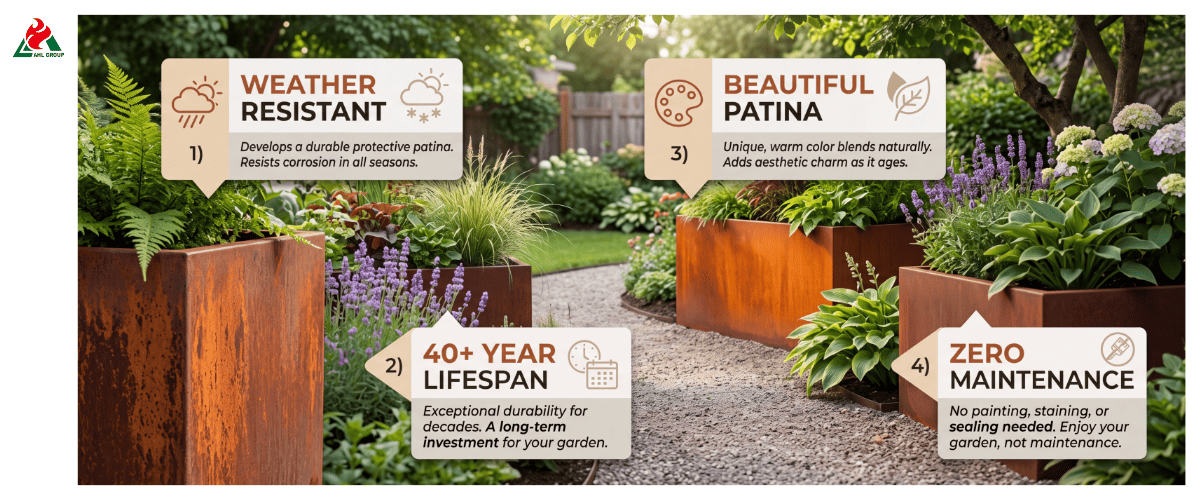
Long-Term Durability
Corten outdoor planters can withstand extreme environmental conditions, including harsh freeze-thaw cycles, high wind loads, intense UV exposure, and severe physical impact, without cracking, peeling, or rotting.
Low Maintenance
Unlike wood, which requires annual painting, or powder-coated metal, which needs touch-ups after scratches, weathering steel requires no chemical treatments, protective coatings, or painting throughout its entire service life.
Naturally Weathered Appearance
Within 6 to 18 months, the evolving rust patina takes on hues ranging from golden amber and warm orange to rich chocolate brown, creating a natural, rustic visual effect that complements lush greenery, stone, and architectural concrete.
Suitable for Harsh Climates
Weathering steel performs exceptionally well in a variety of environments—whether in regions where winter temperatures drop below freezing (where ceramic or terracotta planters crack due to frost heave) or in hot desert areas (where plastic ages under UV radiation).
4. Disadvantages
Higher Initial Cost
The initial purchase cost of authentic Corten metal planters is significantly higher than that of plastic, cork, or standard galvanized steel planters. This represents an investment in long-term performance rather than a pursuit of short-term savings.
Rust Leaching During Weathering
During the initial 3 to 12 months of active oxidation, rainwater washes away free iron particles from the untreated Corten steel surface. If left untreated, this yellow-orange rust water can permanently stain porous hardscape materials, such as light-colored concrete, natural limestone, and light-colored pavers.
Heavy Weight
Large Corten steel planters—especially when filled with moist soil—are quite heavy. Due to the material’s high density, floor load capacities must be carefully calculated when planning installations on rooftop gardens, elevated balconies, or wooden decks.
Proper Drainage Is Required
Corten steel must be allowed to dry completely between wet periods to maintain its passivation layer. If drainage holes are missing from the planter, causing water to pool, the wet-dry cycle will be disrupted, leading to continuous internal rusting and corrosion.
5. Rust Runoff and Staining
Why Runoff Occurs
Runoff occurs because the initial rust layer is loose and has not been passivated. Before the copper-chromium oxide matrix is fully stabilized, rainwater dissolves the unbound iron oxide on the outer surface and washes it onto the surrounding ground.
Protecting Concrete and Paving Bricks
To protect expensive hardscape features during the active weathering phase:
► Pre-weather the metal planters: In temporary, non-sensitive areas (such as lawns or gravel surfaces), use a spray solution of water, hydrogen peroxide, and salt to accelerate the formation of verdigris before placing the planters on light-colored pavers.
► Seal the pavers: Apply a solvent-based penetrating sealer to adjacent porous pavers to prevent them from absorbing rust pigments.
Use a Gravel Buffer Layer or Raised Supports
Install garden planters on rubber isolation pads or steel feet so that water can flow freely beneath the base; place the planters over a 4-inch-deep trench filled with dark river pebbles to collect runoff and prevent contamination of surrounding sidewalks safely.
6. Drainage Requirements
Why Drainage Holes Are Essential
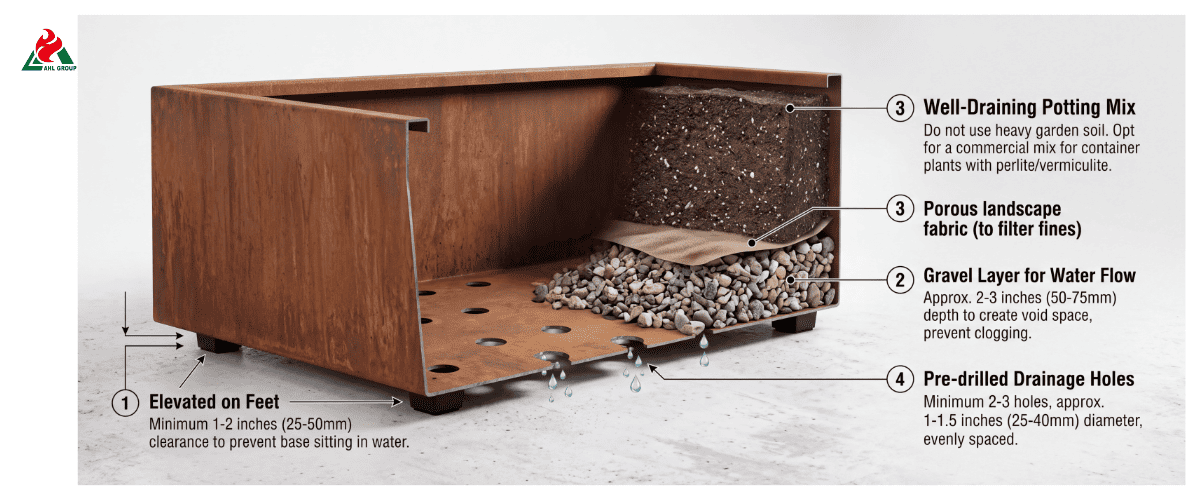
Proper drainage is crucial for the durability of flower pots and the health of plant roots. Standing water trapped inside a sealed steel container creates an anaerobic soil environment, leading to root rot; at the same time, the steel base of the container remains constantly damp, which hinders the formation and stabilization of a protective rust layer.
Use Legs or Spacers
By using built-in legs or rubber spacers to raise the bottom of the outdoor planter 1/2 inch to 1 inch (12 to 25 millimeters) off the ground, you can ensure that the drainage holes at the bottom are not blocked by soil, roots, or surface debris.
Avoid Waterlogging
Ensure the bottom of the raised bed has pre-drilled drainage holes (at least 3/4 inch in diameter) evenly distributed across the base. Laying a 2-inch-thick layer of fire-resistant volcanic rock or coarse gravel on top of the geotextile weed barrier as a base layer will prevent soil from clogging the drainage holes.
7. Best Applications
Elevated Planters and Statement Planters
Weathering steel excels in custom raised planters, retaining wall systems, and statement planters designed as visual focal points. Its clean geometric lines and slim-walled profile maximize internal planting space.
Permanent Outdoor Installations
Thanks to their high structural strength and exceptional durability, weathering steel outdoor planters are ideal for permanent street landscaping installations, commercial courtyard enclosures, outdoor dining areas, and public parks.
Modern and Coastal Landscapes
Their warm, rust-colored aesthetic blends seamlessly with modern minimalist architecture, industrial design concepts, rustic country estates, and high-salt-fog areas where ordinary painted metal struggles to survive due to severe salt corrosion.
8. When Not Ideal
Environments with Prolonged Moisture
Weathering steel is not designed for prolonged submersion in water, nor is it suitable for installation in permanently waterlogged soil without drying cycles. Prolonged saturation deprives the metal of oxygen, thereby hindering the stabilization of the rust layer and accelerating internal rust penetration.
Immediate Proximity to Unprotected Light-Colored Paving Surfaces
Placing raw, unweathered Corten modern planters directly on expensive white marble, light-colored sandstone, or unsealed decorative concrete—without drainage channels or outlets—will result in severe rust stain contamination.
Temporary or Budget-Constrained Projects
If a project is temporary (less than 3 years) or subject to budget constraints, low-cost plastic, resin, or wooden planters are more practical choices.
9. Compare With Other Materials
Compared to Wooden Planters
Although wooden planters have a lower initial cost, prolonged contact with moist soil causes the wood to rot, warp, and crack within 5 to 7 years. Weathering steel has a much longer service life and requires no chemical staining or replacement of panels.
Comparison with Plastic or Resin Planters
Plastic and resin planters are lightweight and inexpensive, but prolonged exposure to intense UV rays from the sun often causes them to become brittle, crack, and fade. The weight of the soil can also cause the plastic walls to bulge outward. Weathering steel offers far greater structural rigidity than plastic and resin and permanently maintains its material integrity.
Comparison with Ceramic and Galvanized Steel
► Ceramic: Features an attractive finish but is fragile and prone to cracking during winter freeze-thaw cycles.
► Galvanized Steel: Offers high corrosion resistance due to its zinc coating, but is susceptible to rapid white rust corrosion if the zinc surface is deeply scratched or comes into contact with acidic soil. The rust layer on weathering steel naturally self-heals after being scratched.
.png)
10. Choose the Right Planter
Dimensions, Shape, and Thickness
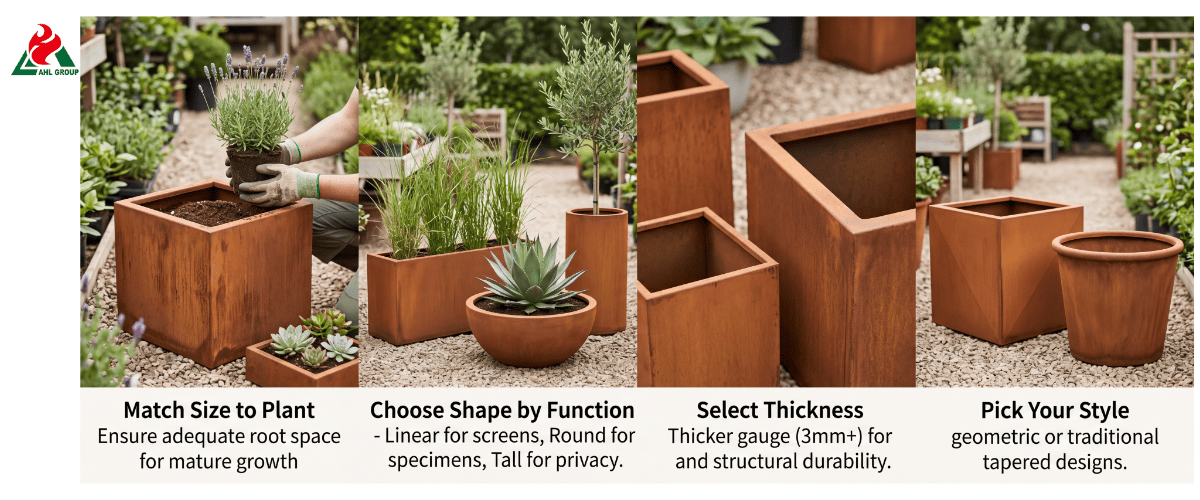
Select landscape planters whose dimensions meet the requirements for root depth. Ensure that rectangular planters (length > 4 in.) have internal cross-bracing welded between the side walls to prevent the planter from deforming under the weight of the soil. For residential projects, planter wall thickness should be no less than 2.0 mm (14-gauge steel); for large-scale commercial projects, wall thickness should be no less than 3.0 mm (11-gauge steel).
Drainage Design
Confirm that the bottom of the planter has sufficient drainage holes and is equipped with raised feet. For rooftop or indoor installations, select custom models equipped with internal drip pans or sealed drip pans.
Pre-weathered or Natural Finish
► Natural Finish: Deep gray rolled steel as shipped from the factory; initial cost is lower, but requires 3 to 12 months of outdoor exposure to develop a full rust patina.
► Pre-weathered Finish: Treated with a chemical aging solution at the factory to ensure a complete, stable rust patina is formed upon delivery, thereby reducing the risk of rainwater runoff on-site.
11. Plant Safety
Is Weathering Steel Safe for Plants
Yes. Weathering steel is completely non-toxic and safe for ornamental plants, shrubs, trees, and edible crops. The trace elements that leach into the surrounding soil—primarily iron, copper, and manganese—are naturally occurring micronutrients that are essential for chlorophyll synthesis and root development in plants.
Growing Vegetables
Edible vegetables, fruiting shrubs, and herbs thrive exceptionally well in Corten steel raised garden beds. The thick steel walls store heat during the day and gently radiate it to the root zone on cool nights, thereby promoting the activity of beneficial microorganisms and extending the early spring growing season.
Use of Liners for Root and Tuber Crops
Although iron leaching does not pose a safety risk, it is good practice to line the inner walls of Corten planter pots with dimpled high-density polyethylene (HDPE) drainage film or rigid foam insulation boards for delicate crops. This creates an air gap that protects the roots from direct heat transfer through the steel walls under direct sunlight in summer and prevents excessive soil moisture from coming into contact with the inner wall welds.
12. Maintenance
Let It Weather Naturally
For weathering steel, the best maintenance strategy is to let nature take its course. The continuous action of rain, wind, and sunlight constantly renews and strengthens its protective oxide layer.
Clear Debris and Check Drainage
Inspect the planter bases once or twice a year. Remove fallen leaves, soil, or mulch that has accumulated around the drainage holes at the bottom, and lift the legs to ensure proper drainage.
Avoid Painting or Sealing
Never apply oil-based paints, polyurethane, or varnish to the surface of weathering steel. Sealing traps trace amounts of moisture beneath the coating, causing the film to peel and crack, while also interfering with the metal’s natural self-healing process.
13. FAQs
Q1: How Long Is the Service Life of Weathering Steel Planters?
With proper drainage and a wall thickness of 2.0 to 3.0 mm, weathering steel planters typically have a service life of 25 to 50 years—or even longer—in outdoor environments.
Q2: Do They Need Drainage Holes?
Yes. Drainage holes are essential for draining excess water, preventing root rot, and allowing the inner steel base to dry thoroughly between rainstorms.
Q3: Are They Suitable for Growing Vegetables?
Yes. Weathering steel is non-toxic and perfectly suitable for growing vegetables, herbs, and fruit trees. The trace amounts of iron that leach into the soil are essential micronutrients for plants.
Q4: Is Weathering Steel Better Than Wood?
Yes, in terms of long-term use. Wood rots, warps, and requires regular staining every few years, whereas weathering steel offers greater structural strength, requires no maintenance, and has a lifespan of several decades.
Q5: How Can Rust Staining Be Prevented?
Rust staining can be controlled by pre-weathering the planters before final placement, laying a layer of dark-colored gravel beneath the containers to create a drainage channel, installing risers under the bottom of the planters, or choosing pre-oxidized planters provided by the manufacturer.
Final Recommendation: The Best Choice for Low-Maintenance Needs
For optimal structural performance and longevity, choose 3.0 mm (11 gauge) Corten landscape planters, which feature pre-drilled drainage holes, integrated bottom support feet, and internal cross-bracing. Weathering steel is the gold standard for zero-maintenance landscaping. Once installed on a properly drained base, it requires no painting, sealing, or chemical treatment for decades.

