


When designing luxury outdoor landscapes, selecting the right materials for architectural planters requires balancing current stylistic goals, local climate conditions, and long-term investment plans. Step into any upscale commercial plaza, boutique hotel courtyard, or luxury residential garden, and you’re likely to find Corten steel (weathering steel) planters serving as the visual focal point of the space.
Characterized by their unique velvety texture and a patina ranging from terracotta to deep chocolate brown, these metal planters infuse outdoor layouts with a bold, sculptural elegance. However, a glance at the price tag reveals that, compared to common retail planter materials, weathering steel is undoubtedly a significant investment. This comprehensive evaluation will delve into the material properties, life-cycle cost analysis, and functional performance of weathering steel planters, helping you determine whether they are worth the upfront cost for your next project.
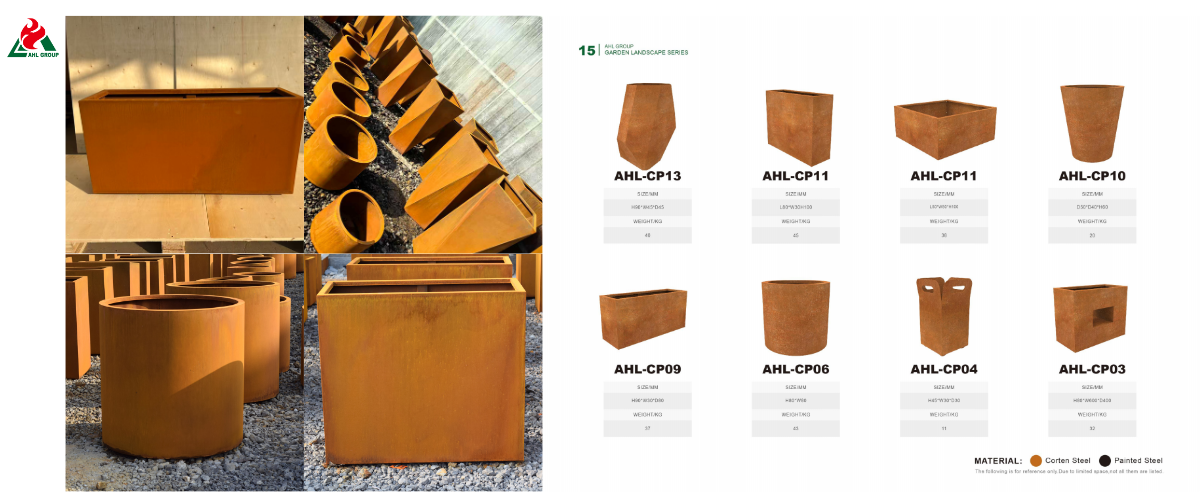
Characterized by their unique velvety texture and a patina ranging from terracotta to deep chocolate brown, these metal planters infuse outdoor layouts with a bold, sculptural elegance. However, a glance at the price tag reveals that, compared to common retail planter materials, weathering steel is undoubtedly a significant investment. This comprehensive evaluation will delve into the material properties, life-cycle cost analysis, and functional performance of weathering steel planters, helping you determine whether they are worth the upfront cost for your next project.
1. Introduction
Why Do People Question Whether Corten Planters Are Worth the Price
Questions about whether Corten outdoor planters are worth the price stem from their significantly higher cost in the commercial market. A professionally manufactured, heavy-duty weathering steel planter can cost three to five times as much as a wooden, plastic, or lightweight resin planter of the same size. For property owners and developers who must strictly control their landscaping budgets, it is crucial to determine whether this initial investment delivers genuine structural benefits or is merely a premium paid for a passing design trend.
The Difference Between Corten Steel and Other Planter Materials
Unlike traditional metals, which require continuous painting, powder coating, or galvanization to prevent structural damage, Corten steel fundamentally changes the way the structure interacts with oxygen and moisture. This copper-chromium-nickel-iron alloy is designed to allow the material to rust naturally in a controlled manner that does not compromise structural integrity. The rust layer that forms on its surface is not a sign of corrosion, but rather a dense, impermeable molecular barrier that completely seals the internal steel core, effectively halting structural degradation.
This Guide Will Help You Make Informed Decisions
Whether you are a landscape architect planning a public park, a general contractor budgeting for a commercial development project, or a homeowner planning to renovate your backyard patio, this guide will provide you with in-depth analysis. We will evaluate hidden structural variables, plot realistic life-cycle cost curves, compare different materials based on key performance indicators, and detail the specific scenarios in which investing in Corten steel delivers the greatest value.
2. Why Corten Planters Cost More
To assess the long-term value of weathering steel, one must first consider the complexity of its raw materials and manufacturing processes, as these factors drive up its initial purchase price.
Material Quality and Thickness
The primary cost driver is the raw material itself. Authentic, high-quality weathering steel (Corten steel) is an advanced alloy with a base price significantly higher than that of ordinary low-carbon steel. Furthermore, reputable landscape manufacturers do not use thin, brittle metal sheets. Architectural-grade Corten planters are typically made from thick-gauge steel plates—with thicknesses ranging from 2 mm to 3 mm or more (14 to11 gauge). This high-density material ensures that the walls can easily withstand the constant outward expansion pressure from moist soil and vigorous plant roots, preventing bending, warping, or buckling over decades of use.
Manufacturing and Surface Treatment Costs
Weathering steel requires specialized industrial manufacturing processes to transform hard industrial steel sheets into aesthetically pleasing and functional landscape structures. The manufacturing of high-end metal planters involves precision CNC laser or plasma cutting, mechanical deburring, and advanced structural welding. Since weathering steel requires specialized alloy welding wire (whose copper and chromium content must match the base material) and highly skilled technicians to ensure that the rusting rate and color of the welds perfectly match the panels, the labor costs for assembly are significantly higher than those for mass-market molded plastic or nailed wooden planters.
Why Are High-End Planters More Expensive
When you purchase a professional-grade Corten garden planter, the price you pay reflects its key structural details. High-end planters feature integrated folded edges (where the top edge is folded inward twice to create a smooth rim and provide exceptional structural rigidity), pre-drilled drainage holes, integrated feet (which lift the planter off the ground to ensure a balance of drainage and airflow), and internal structural reinforcement. These details prevent structural bulging and ensure the flower pot performs flawlessly during severe freeze-thaw cycles.
3. Long-Term Value
Evaluating materials based solely on their initial purchase price is a common misconception in project management. Only by analyzing the total lifecycle cost of landscape components over time can one truly understand their financial implications.
Long-Term Durability
Ordinary low-carbon steel, inexpensive plastics, and natural wood all have inherent material flaws that cause them to deteriorate rapidly when exposed to damp soil and outdoor weather conditions. Wood rots, cracks, and becomes infested with wood-boring insects; plastics become brittle and crack under prolonged UV exposure; and ordinary steel gradually corrodes until the framework develops holes. In contrast, weathering steel “thrives” in harsh environments. Once its protective oxide layer is fully formed, the corrosion rate drops to nearly zero, allowing the containers to maintain structural integrity for 30 to 50 years or more in the harshest outdoor conditions.
Reduced Replacement Frequency
Since mass-market wooden, plastic, or low-grade aluminum planters typically deteriorate or fade within 3 to 7 years, outdoor areas will undergo four to five complete replacement cycles over a 20- to 30-year lifespan. Replacing commercial planters involves far more than simply purchasing a new container—it also entails paying for new soil, hiring professional gardeners to carefully transplant mature plants, and covering the disposal costs of the old containers. Weathering steel eliminates this costly cycle.
Life-Cycle Costs vs. Initial Costs
When calculating life-cycle costs over a 15- to 20-year period, Corten steel consistently emerges as the most economically sound and cost-effective option on the market. Although the initial cost is higher, this is a one-time capital investment that more than offsets future expenses related to operation, maintenance, structural repairs, and replacement. Over time, the return on investment will far exceed the initial cost.
4. Maintenance and Convenience
In modern commercial and residential design, a material’s convenience and low-maintenance characteristics are key factors in determining its overall value.
No Painting or Sealing Required
Traditional metal structures require ongoing chemical maintenance, including regular wire-brushing, rust-preventive priming, and the application of specialized high-end exterior paints or powder coatings. Similarly, wooden planters must be repainted and waterproof-sealed every few seasons to prevent wood rot. Weathering steel completely eliminates these labor-intensive and repetitive tasks from property management schedules. It relies on natural rain and air to form and maintain its own protective layer.
Resistant to Rot, Cracking, and Warping
The interior of garden planters is constantly exposed to a damp and chemically active environment. Moist soil, organic fertilizers, and expanding plant roots subject the container walls to immense physical and biochemical stress. Weathering steel is completely immune to dry rot, mold, fungal growth, and wood-boring insects. Furthermore, due to its high tensile strength and matching coefficient of thermal expansion, it will not crack even in sub-zero temperatures during harsh winters, nor will it warp during intense summer heatwaves.
Easy to Clean and Maintain
Corten planters maintain their clean, structurally beautiful appearance with virtually no manual intervention. There is no need to scrub them with chemical cleaners, rinse them with a high-pressure water jet, or cover them with plastic sheeting for protection during seasonal changes. If dust, grass clippings, or mud splatter onto the exterior surface while mowing the lawn or during a storm, simply give them a quick rinse with a standard garden hose to restore the material’s natural mottled appearance.
5. Aesthetic Benefits
Beyond technical specifications, design aesthetics also play a crucial role in determining whether a high-end material is worth investing in. Weathering steel possesses unparalleled visual characteristics that cannot be replicated by imitations.
Natural Patina
The primary visual appeal of weathering steel lies in its vibrant, dynamic surface appearance. When first manufactured, weathering steel planters look like ordinary industrial-grade silver-gray metal. Once placed outdoors, it begins to transform atmospheric conditions. Over the course of several months, it sheds its gray exterior, undergoing a flash-rusting process that reveals a bright orange-gold hue. The color then gradually deepens, and the texture becomes richer, eventually evolving into rich, velvety tones of ochre, deep terracotta, and warm chocolate brown. This organic transformation ensures that every planter is one-of-a-kind.
How Weathering Steel Adds Visual Warmth
Many modern architectural landscape designs make extensive use of industrial concrete retaining walls, gray granite pavers, glass panels, and stark black-and-white metal structures. While these materials feature clean lines, they can easily make outdoor patios feel cold, rigid, and impersonal. In contrast, Corten metal planters, with their rich, fiery amber hues and deep earth tones, instantly infuse hardscapes with visual warmth and tactile texture, creating a welcoming, down-to-earth, and human-centered environment.
Incorporating Weathering Steel into Modern and Rustic Landscape Design
Weathering steel offers rare stylistic versatility, making it a popular choice across a wide range of design aesthetics:
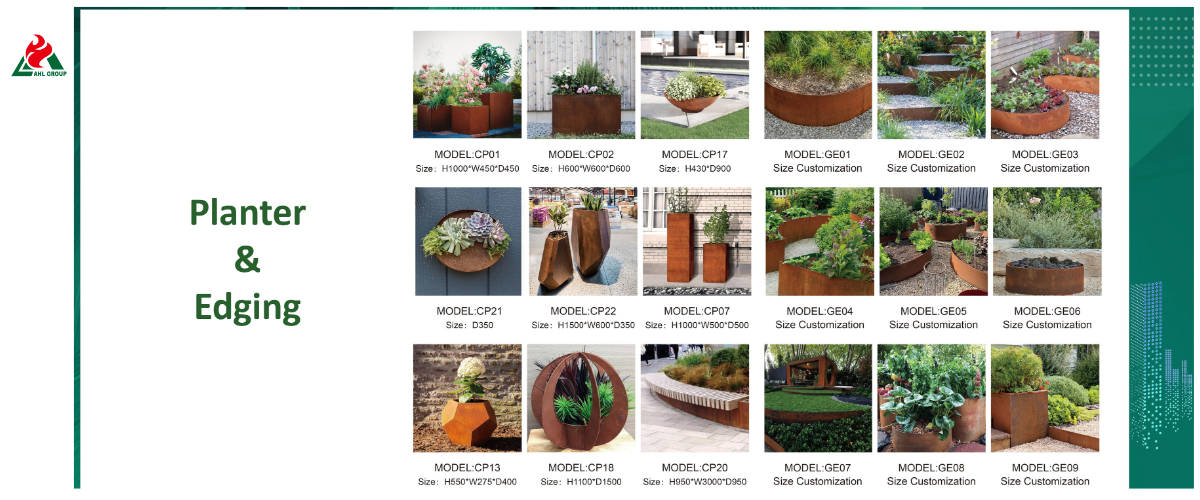
► In modern and minimalist designs: Its clean, laser-cut edges and sharp geometric shapes create a striking, industrial contrast against manicured lawns, boxwood hedges, and architectural glass.
► In rustic, natural landscapes: Its organic, earth-toned rusted surface blends seamlessly with rough-hewn stone walls, gravel paths, native ornamental grasses, and rustic wood elements.
6. When Corten Planters Are Worth the Cost
In specific high-risk installation scenarios, investing in high-quality weathering steel containers offers the highest return on investment.
Permanent Garden Installations
If you are designing a permanent outdoor layout—such as a series of substantial raised planter borders, embedded structural partitions, or structural anchors set along a permanent concrete patio—Corten steel is undoubtedly worth the investment. Its exceptional durability ensures you will never have to demolish finished masonry or stone hardscaping to remove rotted planters.
High-End Residential Landscaping
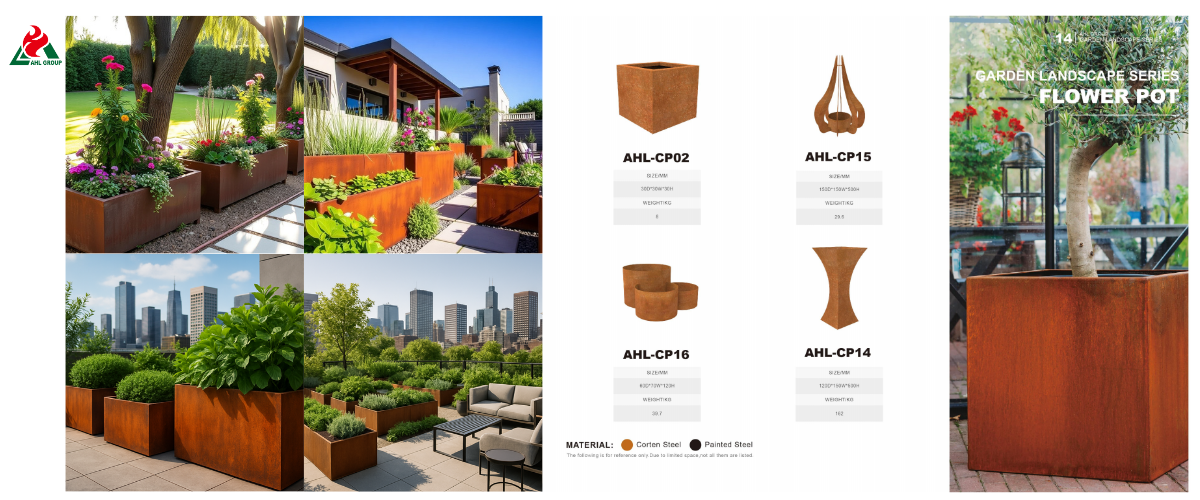
For luxury homeowners seeking to maximize their property’s long-term equity while minimizing outdoor maintenance, Corten landscape lanterns are an excellent choice. They instantly create a distinctive, custom architectural aesthetic, enhance the home’s curb appeal, and define elegant contours for entryways, outdoor kitchens, and poolside lounging areas with premium materials that complement high-end residential architecture.
Commercial and Hospitality Projects
In high-traffic public areas—such as outdoor restaurant patios, corporate campus courtyards, luxury hotel entrances, and urban streetscapes—planters are constantly subjected to physical contact from pedestrians, luggage carts, and maintenance equipment. In these demanding environments, inexpensive resin or fiberglass planters quickly become chipped, dented, or cracked. Heavy-gauge weathering steel panels can easily withstand intense public wear and tear, maintaining both structural integrity and a high-end appearance without the need for protective barriers or ongoing maintenance budgets.
7. When They May Not Be Worth It
Although weathering steel is an exceptional material, it is not the ideal choice for every landscape design or financial situation.
► Short-term or temporary uses: If you are renting a temporary property, setting up a seasonal pop-up retail store, or planning a complete overhaul of your backyard within the next three to five years, investing a significant amount of money in a material with a 50-year lifespan would be a waste of resources.
► Tight Current Budget: If your landscaping project faces severe short-term financial constraints, forcing the use of expensive weathering steel may result in insufficient funding for other critical design elements, such as plant quality or lighting systems. In this scenario, choosing low-cost materials allows you to implement your design immediately.
► Movable Layouts: Heavy steel planters filled with wet soil and drainage gravel are extremely cumbersome structures. If your garden layout requires regularly moving planters indoors during winter, relocating them on a rooftop terrace to accommodate event spaces, or frequently adjusting their positions, lightweight fiberglass or aluminum planters are clearly the better choice.
8. Corten Compared With Other Materials
A comparative evaluation of weathering steel against common alternative materials for shipping containers highlights the significant trade-offs between initial cost, structural durability, and maintenance requirements.
| Material Option | Initial Cost Profile | Expected Lifespan | Primary Operational Maintenance Needed | Primary Material Failure Mode |
| Corten Steel | High | 30 to 50+ Years | None (Completely Passive) | None (Self-protecting patina) |
| Natural Wood | Low to Moderate | 3 to 7 Years | Regular re-staining & sealing | Dry rot, splitting, and insect boring |
| Fiberglass | Moderate to High | 8 to 12 Years | Minimal (Occasional surface cleaning) | Brittle cracking from deep impacts |
| Molded Plastic / Resin | Low | 2 to 5 Years | None | UV bleaching, warping, cold cracking |
| Aluminum | Moderate to High | 15 to 25 Years | None | Cosmetic powder-coat scratching |
| Powder-Coated Steel | Moderate | 5 to 10 Years | High (Rust sanding & paint touch-ups) | Progressive rust when coating scratches |
9. Hidden Costs to Consider
To create an accurate and transparent budget for the installation of high-end metal planters, buyers must take into account several site-specific variables.
► Transportation and Logistics: Since authentic architectural-grade Corten planter pots are made from heavy, high-grade steel plates, their net weight—even when empty—is substantial. Bulk commercial shipping or oversized rectangular planters require meticulous transportation planning, delivery via freight routes, and additional on-site labor or machinery (such as forklifts or two-person lifting straps) to safely position them.
► Rust Runoff and Stains: This is the most critical hidden factor during installation. During the initial 6 to 12 months of atmospheric weathering, rainwater washes away loose iron oxide particles from the gray metal surface. If the planter is placed directly on porous light-colored concrete pavers, luxury marble pavers, or a natural wood deck, this rust runoff will cause deep and permanent terracotta-colored stains.
► Surface Protection and Runoff Management: To prevent rust runoff from staining high-end surfaces, a small portion of the budget must be allocated for protective measures. This includes placing temporary drip trays under the planters, treating adjacent stone surfaces with a professional penetrating sealant, or choosing to place the planters on dark basalt, river pebble paving, or a layer of soil—materials that absorb rust runoff without leaving marks until the planters’ surface oxide layer has fully stabilized.
10. How to Decide if a Corten Planter Is Worth It
Before making a final decision, evaluate your specific project layout based on the following four key criteria:
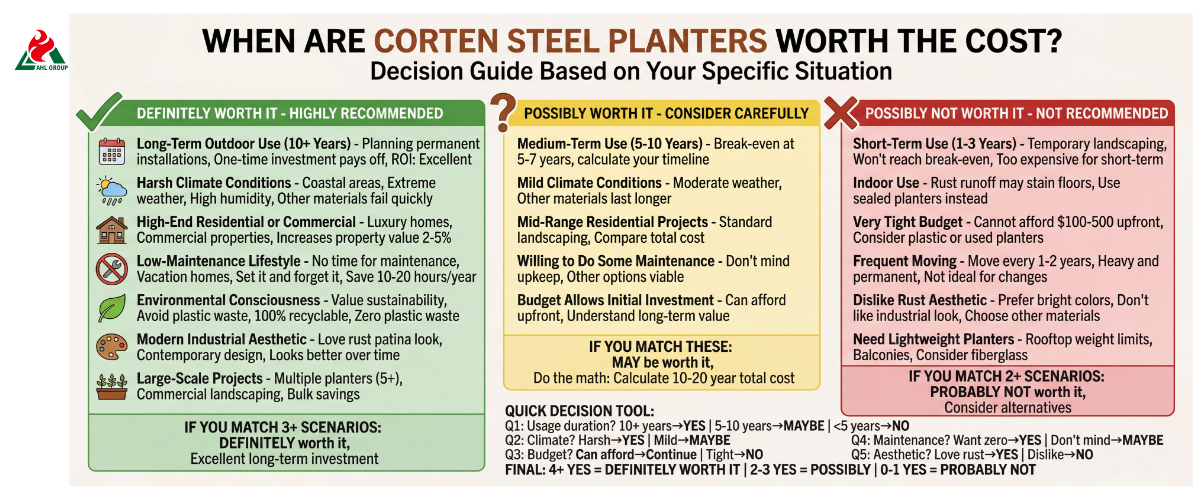
► Project Lifespan: Is the design intended to last more than 10 years? If so, Corten steel offers excellent value for its initial cost by eliminating the need for repeated replacements and replanting.
► Maintenance Requirements: Do you have dedicated staff or the personal time to sand, paint, and seal the planters every few years? Or do you need a low-maintenance material that naturally adapts to environmental changes?
► Hardscape Integration: Is your outdoor area paved with light-colored stone, high-end marble, or a light-colored wood deck, where rust runoff could pose a problem? If so, ensure you have sufficient space or budget to install appropriate drainage channels or a gravel buffer zone.
► Visual Style Compatibility: Does your architectural style lean toward rich, natural textures, mid-century modern lines, or a raw, industrial aesthetic? If your design calls for smooth, high-gloss finishes in pure white or neon colors, stainless steel or powder-coated aluminum is the ideal choice.
11. FAQ About Corten Planters
Q1: How Long Is the Lifespan of a Corten Steel Planter?
High-quality Corten steel planters, made from durable 2 mm or 3 mm thick steel sheets, can easily last 30 to 50 years or more in outdoor environments. Their specially formulated chemical composition forms a self-healing protective layer that permanently prevents deep structural corrosion.
Q2: Do Weathering Steel Planters Require Maintenance?
No. Weathering steel is a self-passivating material that requires no structural maintenance. It never needs sandblasting, wire brushing, chemical sealing, or painting. All it needs is the natural elements—wind, sun, and rain—to maintain its protective rust layer.
Q3: Will Weathering Steel Stain a Patio or Deck?
Yes. During the initial weathering phase of 6 to 12 months, loose rust particles may fall from the metal surface during heavy rain. To avoid leaving permanent marks on light-colored pavers or wooden decks, place the planters on a gravel bed, use a dedicated drip tray, or lay temporary protective material underneath until the color stabilizes.
Q4: Are Corten Planters Superior to Wooden or Fiberglass Planters?
If your design priorities are absolute long-term durability, structural strength, and low maintenance requirements, Corten steel is undoubtedly superior to rot-prone wood and plastic, which crack easily under UV exposure. However, if you need lightweight containers that can be moved frequently, fiberglass or aluminum planters are more practical choices.
Conclusion: Best Applications for Corten Steel Planters
Although the initial purchase price of high-end Corten modern planters may raise budget concerns, they are undoubtedly worth the investment for permanent outdoor installations. This is a classic example of “spending more upfront to save significantly in the long run”—not only does it yield substantial structural and operational savings, but it also effortlessly transforms repetitive maintenance tasks into permanent architectural highlights.
If you are looking for temporary, lightweight, or budget-friendly planters for short-term arrangements, standard wood or resin materials are suitable choices. However, if your goal is to create a permanent, high-end outdoor oasis that grows more resilient and visually appealing with the passage of time, thick-gauge weathering steel is an exceptional, high-performance investment. By choosing this material—which eliminates the need for frequent replacements and frees you from endless maintenance hassles—you’ll acquire a timeless architectural asset that will serve as a captivating visual focal point in your landscape for decades to come.
Expert Guide: Since plant health depends largely on drainage dynamics within dense metal containers, would you like to learn how to properly layer internal drainage aggregate and filter fabric to maintain soil aeration and prevent root rot in the long term?

