


For any outdoor building component, winter is the most severe test. While plastic planters become brittle and wooden planters face the risk of rot and fungal growth due to prolonged exposure to moisture, Corten steel planters are specifically designed to thrive in the harshest conditions. As a material favored by landscape architects and professional designers, Cor-Ten steel is naturally equipped to withstand winter thanks to its industrial-grade durability and “living” aesthetic.
However, “winter-ready” does not mean “indestructible without maintenance.” While the steel itself can withstand the cold, the survival of your plants and the integrity of your patio surface depend on how well you prepare for the winter. This guide will explore a series of technical and practical steps to ensure your Corten steel features remain a stunning focal point in your winter landscape.
However, “winter-ready” does not mean “indestructible without maintenance.” While the steel itself can withstand the cold, the survival of your plants and the integrity of your patio surface depend on how well you prepare for the winter. This guide will explore a series of technical and practical steps to ensure your Corten steel features remain a stunning focal point in your winter landscape.
1. Short Answer: Yes — With Some Precautions
For busy homeowners, the answer is yes. Weathering steel is one of the few materials whose structural strength actually increases when exposed to moisture and oxygen—two elements that are abundant in winter.
A Quick Takeaway for Busy Readers
When temperatures drop, you don’t need to haul heavy Corten outdoor planters into your garage or shed. Unlike ceramic or terracotta, which are porous and prone to “spalling” (surface flaking) caused by internal moisture freezing and expanding, Corten steel is a non-porous alloy. Physically speaking, it simply won’t crack in the frost.
When No Additional Action Is Needed
If your Corten planter has been in use for at least two years, has developed a complete, deep-brown patina, and is planted with hardy perennials in a well-draining soil mix, you likely need to do almost nothing. At this point, the steel has reached a state of chemical equilibrium, and its protective layer is at its thickest.
When Action Is Required
You should take action if any of the following apply:
► Your planter is in its first year of weathering (the rust layer is still bright orange and “powdery”).
► You live in a “severe cold” region where temperatures remain below freezing for several weeks.
► Your metal planter is placed directly on a high-value surface, such as light-colored marble or composite wood decking.
2. Why Corten Steel Handles Winter Well
To understand why Corten steel is the “king of winter” in flower pots, we must start with its metallurgical properties. Cor-Ten steel (also known as weathering steel) is a type of steel alloy that develops a stable, rust-like appearance after being exposed to wind and sun.
What the Corten Patina Does in Cold/Wet Conditions
In ordinary carbon steel, moisture and oxygen form porous, flaky iron oxide (rust). This rust traps moisture on the metal surface, leading to severe “pitting corrosion” and structural failure. In weathering steel, however, the added elements of copper, phosphorus, and silicon form a special oxide layer, known as the “rust layer.”
This rust layer is amorphous and dense. In winter, when humidity is high or snow adheres closely to the metal surface, the layer actually becomes even denser, thereby preventing oxygen from penetrating the steel. This chemical reaction can be simplified as the formation of a protective layer of FeOOH (goethite), which acts like a permanent self-healing sealant.
Corrosion Performance Compared to Ordinary Steel
Ordinary steel loses a significant amount of mass due to rusting during damp winters, whereas the corrosion rate of weathering steel slows dramatically once a rust protective layer forms. This makes it ideal for withstanding the alternating cycles of wet and dry conditions common in late winter and early spring.
Typical Service Life in Freeze-Thaw Climates
In environments with frequent freeze-thaw cycles, high-quality weathering steel planters (typically 2 to 3 millimeters thick) can easily last 25 to 50 years. Their metal thickness is sufficient to withstand the internal pressure generated by frozen ground without deforming.
3. Pre‑Winter Preparation (Do This Before First Freeze)
For Corten garden planters, the most dangerous time is when the first frost arrives.
Final Placement—Move While the Planter Is Empty
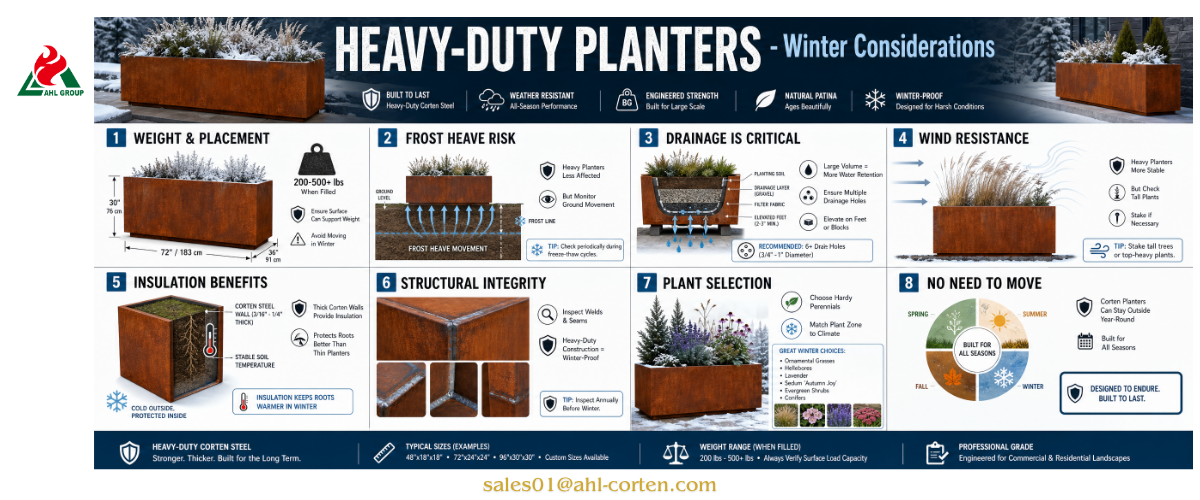
If you plan to move a planter pot to a more sheltered spot for the winter, do so before filling it with soil or while the plant is dormant. A large, Corten planter filled with moist, frozen soil can weigh hundreds of pounds. Moving a planter while the soil is frozen can damage the drainage feet or put excessive stress on the welded seams.
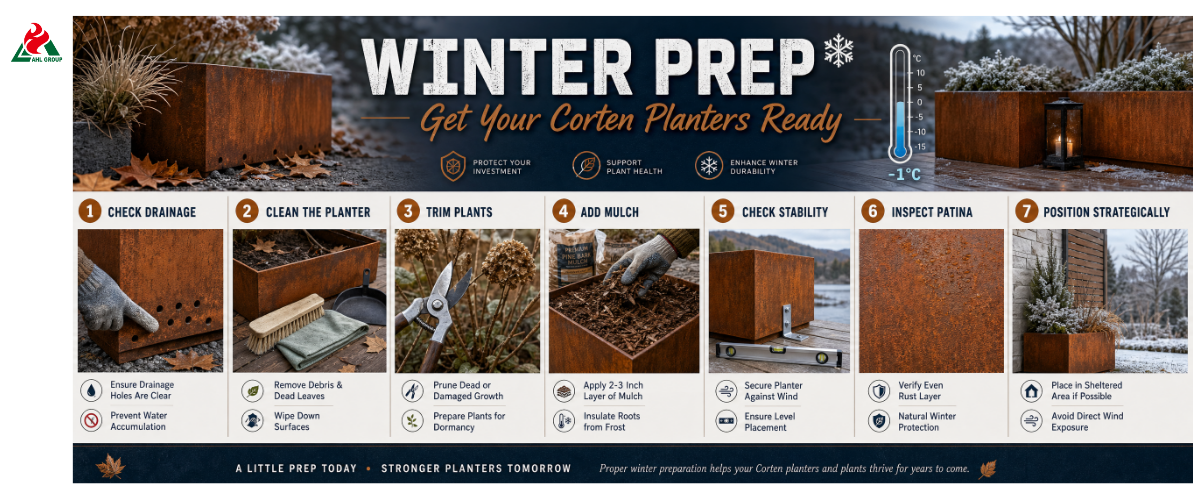
Clean and Test the Drainage Holes
The greatest threat to planters in winter is standing water. When water cannot drain, it freezes into ice. Since water expands by about 9% when it freezes, the outward pressure from a blocked drainage system can be strong enough to deform even thick steel walls. Make sure the drainage holes are not blocked by roots or debris.
Add Proper Drainage
Before the first frost arrives, make sure the bottom of the planter is lined with a layer of impermeable aggregate—such as volcanic rock, gravel, or expanded clay aggregate (Leca). This creates a “void space” where excess water can collect, preventing the soil from becoming waterlogged and keeping the root ball from freezing solid.
Elevate Planters with Stands or Spacers
Never allow Corten metal planters to sit directly on the ground during winter. Use a planter stand or rubber spacers instead. This ensures airflow beneath the planter, prevents the bottom from permanently “sticking” to the patio due to freezing, and keeps the drainage holes clear.
4. Protecting Plants and Soil
Steel containers are not a problem; it is the plants that are truly at risk. Metal containers conduct cold faster than wooden ones, so protecting the roots is crucial.
Reduce Watering and Adjust Irrigation
Plants require significantly less water in winter. Excess moisture in the soil can cause “freeze heave,” where the soil pushes the pot upward as it freezes. Turn off automatic irrigation systems and check the soil manually; water only when the soil is completely dry, and a thaw is expected.
Mulch and Root Insulation Tips
Apply a 2–3-inch layer of organic mulch (wood chips, straw, or pine bark) to the soil surface. This acts as an insulating blanket, slowing the rate at which the soil freezes and thaws, thereby reducing stress on the plant’s vascular system.
Choosing a Cold-Hardy Growing Medium
Avoid using heavy, clay-based soil that retains water easily. Opt for a professional-grade potting mix that contains a high proportion of perlite or vermiculite to ensure optimal aeration even when wet.
Which Plants to Bring Indoors vs. Leave Out
► Leave outdoors: Cold-hardy evergreens (boxwood, juniper), ornamental grasses, and certain perennials (foxglove, sedum).
► Bring indoors: Tropical plants, succulents, and tender herbs. If a plant’s hardiness zone rating is two zones lower than your current location (for example, if you are in Zone 6, choose plants suitable for Zone 4), it will likely survive the winter safely in a metal planter.
5. Snow, Ice and Surface Care During Winter
How you care for your garden planters during a snowstorm will determine how long they retain their beauty.
Safe Snow Removal
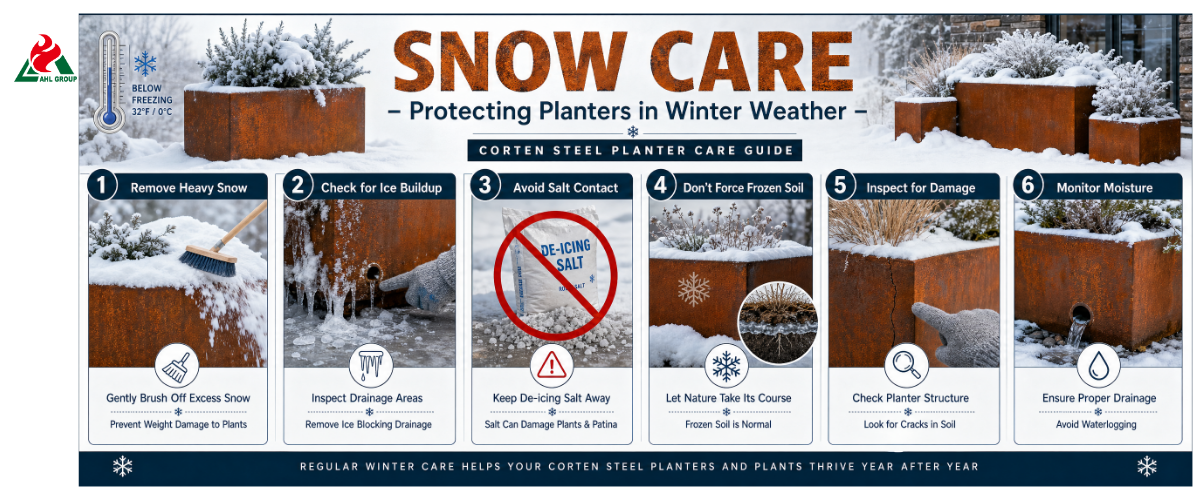
Use a soft-bristled brush or plastic shovel to clear snow from the top of the planter. Never use a metal shovel to scrape ice off the sides of a Corten steel planter. This will scratch the rusted surface, causing the exposed steel to develop uneven “bleeding” and unsightly streaks when the snow melts in the spring.
Why You Should Avoid Salt and Strong De-icing Agents
This is the most important rule. Road salt (sodium chloride) and other de-icing agents are highly corrosive to the patina on Corten steel. Salt destroys the protective oxide layer, causing the steel to corrode prematurely. If your planters are located near a sidewalk or driveway, take care to prevent “salt spray” from passing vehicles or snowplows from splashing onto them.
Dealing with Freeze-Thaw Heaving
If you notice the soil heaving upward, do not attempt to hammer it back into place. Please wait for it to thaw naturally. Forcibly compacting frozen soil can damage the delicate root hairs that are currently dormant.
6. Protecting Decks, Patios and Nearby Surfaces
Weathering steel is known for its orange “rust leachate,” a phenomenon that is most noticeable during the humid winter months.
Temporary Drip Trays and Liners
For the first two winters, we recommend using an inconspicuous drip tray. This will catch the iron-rich water before it splashes onto the ground.
Pads and Rubber Mats for Decks
If your planters are placed on composite or wooden decks, use rubber feet. This prevents “moisture trapping.” If metal planters sit directly on a damp wooden deck all winter, the wood underneath will rot, and the metal may also suffer from “wet rot” corrosion due to a lack of oxygen.
Preventing Stains on Light-Colored Paving
If you have light-colored limestone or marble paving, winter rain runoff can cause permanent orange stains. In addition to raising the height of your planters, you can apply a silane-based sealer to the stone around the planters before winter sets in. This will allow you to easily rinse away any residual rainwater come spring.
7. Special Considerations for Tall or Heavy Planters
Large weathering steel components present unique structural challenges in winter.
Structural Stability Under Wind and Snow Loads
Tall, narrow planters have a high center of gravity. In strong winter winds, they can act like sails, catching the wind. Be sure to place heavy stones at the bottom of tall planters to add weight, or physically anchor them to the foundation.
Safe Handling of Large, Partially Empty Planters
If a large planter is not fully planted, fill the bottom with 50% lightweight “filler” (such as recycled plastic bottles) to reduce weight and minimize the volume of water-retaining soil, making the planter easier to stabilize.
Roof Planters: Weight Limits and Waterproofing
For rooftop gardens, snow accumulation adds significant weight.
Snow load calculation formula: Weight = Thickness × Area × Density
Ensure your roof can support the total load of “saturated soil + steel + 2 feet of snow.” Be sure to check that the roof drainage membrane around the planter base is not blocked by ice.
8. First‑Year Patina and Runoff Management
If this is your first winter with this planter, be prepared for the “orange phase.”
Expect More Severe Orange Staining
New Corten planters are essentially “bleeding” iron oxide. Winter rain and melting snow will accelerate this process. This is actually a good sign—it means a protective layer is forming—but this is also the period when the risk of staining is highest.
Short-Term Stain Prevention Strategy
During the planter’s first winter, place it on a bed of river pebbles or gravel. The gravel will conceal any rust stains, and once the steel has stabilized, you can turn or replace the gravel.
When Does Rust Bleeding Typically Stabilize?
By the second winter, the rust will deepen to a dark plum or chocolate color, and the amount of bleeding will decrease by 90%.
9. Maintenance & Inspection Schedule for Winter
| Frequency | Task | Objective |
| Weekly | Drainage Check | Ensure no ice is plugging the outlets. |
| Monthly | Debris Removal | Clear leaves/twigs that trap moisture against the steel. |
| Post-Snow | Soft Brush Clean | Remove heavy snow to prevent "ice dams." |
| Spring | Full Wash-down | Remove winter salt/grime to reset the patina. |
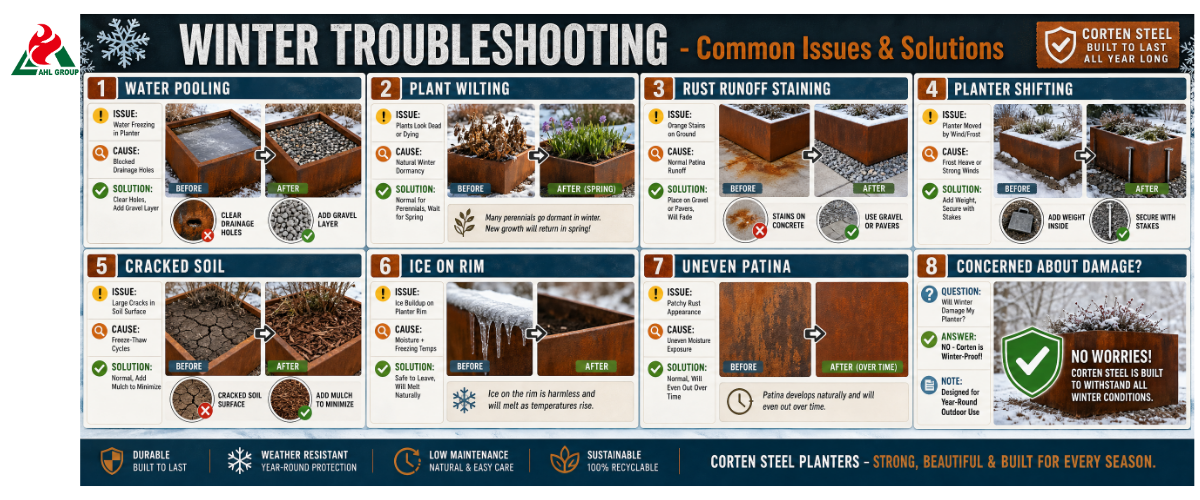
10. Troubleshooting Common Winter Issues
► Standing Water: If water on the soil surface does not drain away within an hour after thawing, it indicates that the drainage system has failed. You may need to use a thin stick to clear the drainage holes from the bottom.
► Soil Compaction: If the soil has shrunk away from the metal sides, fill the gaps with fresh compost to prevent cold air from coming into direct contact with the roots.
Corrosion Beyond Normal Rust Spots: If you notice large, thick patches of rust (over 2 mm thick) flaking off, the steel may be suffering from “waterlogging corrosion.” This usually means the landscape planter is sitting in standing water. Raise it immediately.
11. When to Bring Planters Indoors or Store Them
It is not always necessary to move plants entirely outdoors.
Criteria for Moving Plants vs Moving Only the Planter
Generally, only the plant needs protection; the pot itself does not. Consider moving the plant indoors if any of the following conditions apply:
► The plant is tropical
► Temperatures exceed its cold hardiness limit
► The pot is too large to move
Best Practices for Short-Term Indoor Storage
If storing temporarily:
► Keep the pot dry
► Ensure good air circulation
► Avoid using sealed plastic covers
► Store the plant above any standing water
Long-Term Off-Season Storage Recommendations
The best locations for long-term storage include:
► Covered outdoor areas
► Well-ventilated garages
► Dry sheds
► Covered patios
Avoid completely enclosed and damp environments.
Conclusion: Corten Is Winter-Ready When Prepared
Corten modern planters are extremely durable and can adapt well to winter conditions as long as they are properly prepared. The most critical factors include drainage, ventilation, surface protection, and preventing water accumulation during freeze-thaw cycles.
Weathering steel is specifically designed for harsh outdoor environments, and for well-designed planters, winter weather alone does not pose a problem. With thorough preparation and regular inspection, high-quality weathering steel planters can not only remain outdoors year-round but also continue to develop their distinctive architectural patina over decades.

