


In the design of building envelopes, the facade serves not only as the primary barrier against the elements throughout the seasons but also as the structure’s most distinctive aesthetic feature. Modern residential design is increasingly moving away from high-maintenance painted siding and synthetic composites in favor of expressive, natural, and raw materials that blend seamlessly with the environment. Among these premium options, weathering steel (Corten steel) exterior cladding has established its undisputed dominance.
Corten steel cladding is renowned for its ability to transform a home into an ever-evolving architectural canvas, moving away from stark industrial grays in favor of a vibrant, self-healing “skin” composed of warm amber, deep ochre, and rich reddish-brown tones. However, incorporating this striking material into residential architecture requires striking a balance between structural engineering solutions and geometric design parameters. This comprehensive industry analysis will evaluate the various profiles, functional properties, installation details, and material comparisons of Corten steel exterior cladding panels, helping you precisely determine which Corten steel exterior cladding profile is best suited for your home’s building envelope.
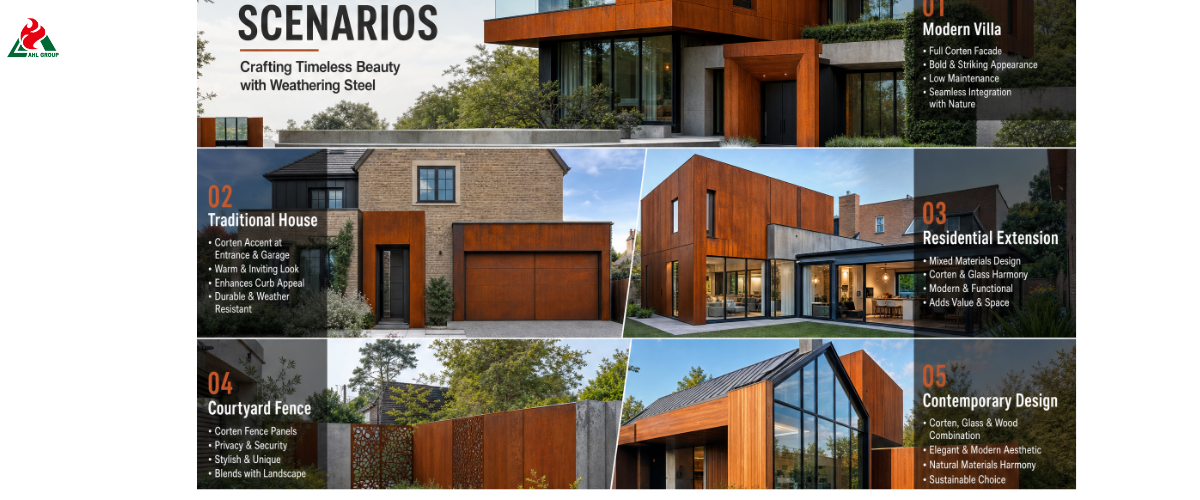
Corten steel cladding is renowned for its ability to transform a home into an ever-evolving architectural canvas, moving away from stark industrial grays in favor of a vibrant, self-healing “skin” composed of warm amber, deep ochre, and rich reddish-brown tones. However, incorporating this striking material into residential architecture requires striking a balance between structural engineering solutions and geometric design parameters. This comprehensive industry analysis will evaluate the various profiles, functional properties, installation details, and material comparisons of Corten steel exterior cladding panels, helping you precisely determine which Corten steel exterior cladding profile is best suited for your home’s building envelope.
1. Introduction
Why Homeowners Choose Weathering Steel Exterior Cladding
Homeowners choose Corten steel outdoor cladding because it perfectly bridges the gap between rugged structural durability and a warm, natural, and minimalist style. It offers a striking aesthetic that stands in stark contrast to typical suburban brick walls, stucco, or vinyl siding. In addition to its bold visual impact, it serves as a passive and indestructible protective shield that withstands harsh environmental conditions over the long term—a feature that directly appeals to homeowners seeking a unique home exterior and hoping for a finish that requires no painting or sealing after installation.
The Difference Between Corten Steel and Other Exterior Wall Materials
Traditional exterior building materials require ongoing maintenance to withstand environmental erosion: wood cracks and rots due to moisture buildup; stucco cracks under the effects of earthquakes or thermal expansion and contraction; and standard metal panels require heavy, labor-intensive coatings that eventually peel or fade under intense UV exposure. Weathering steel has completely transformed this situation thanks to its unique chemical composition. It utilizes the natural process of atmospheric oxidation to form its own protective layer, allowing homes to blend harmoniously with the surrounding natural landscape and grow more beautiful over time.
This Guide Will Help You Make Your Choice
Selecting the right type of metal exterior cladding is a process that requires careful consideration. A profile that complements a spacious, single-story desert ranch-style home may appear out of place when used on a compact, multi-story modern urban residence. This guide will provide you with guidance on both engineering and style. We will compare and evaluate the performance of flat and textured profiles, analyze the principles of rainwater management, explain the proper rules for substructure ventilation, and comprehensively examine various alternative exterior wall cladding options—all to help you determine the ideal weathering steel solution based on your specific location and budget.
2. What Corten Cladding Is
How Weathering Steel Works
Corten steel, commonly known by its general metallurgical classification as “weathering steel,” is an advanced iron alloy produced by precisely adding copper (Cu), chromium (Cr), nickel (Ni), and phosphorus (P). When ordinary carbon steel is exposed to rain and dew, it forms a porous and brittle layer of iron oxide. This layer continuously flakes off the surface, allowing oxygen to constantly corrode the metal from within, ultimately leading to structural failure. The special alloying elements in Corten steel completely halt this process.
Why Does Corten Steel Form a Protective Rust Layer
When Corten steel undergoes alternating cycles of wet weather and dry sunlight, an extremely dense, non-porous, and tightly adherent surface layer—known as the “rust layer”—forms on its surface. This outer oxide barrier seals off the underlying bare metal core, completely blocking the pathways through which oxygen and moisture would cause deep corrosion.
Because this rust layer forms naturally through chemical reactions within the steel, it possesses an extraordinary ability: complete self-healing. If a flying branch or loose stone scratches the exterior wall, the exposed area simply needs to be reoxidized during the next rainfall to regenerate the protective layer, without compromising structural integrity.
Common Applications in Residential Buildings
Weathering steel is exceptionally well-suited for use in the building envelope of residential structures. It can be used to clad the entire main structural frame of a house, creating a seamless, highly modern visual effect. In addition, it is often specified for prominent architectural focal points: defining striking entrances, accentuating second-story cantilevers, cladding structural chimney stacks, covering garage door frames, or forming a sturdy protective base along the ground line.
3. Main Types of Corten Cladding
The physical shape, joint design, and geometry of the cladding panels you choose determine how light, shadow, and water interact on the exterior walls of your home.
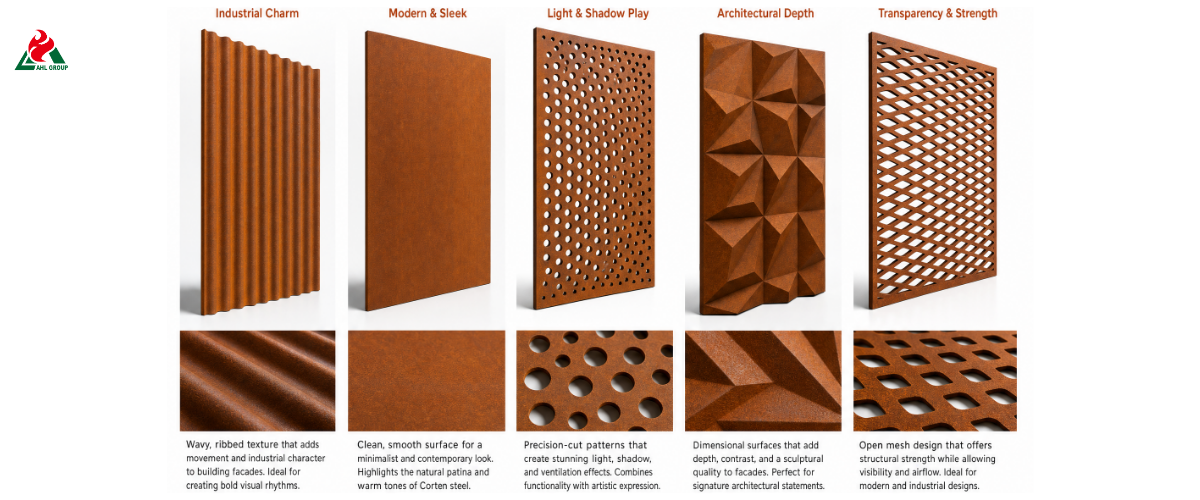
Flat Panel
Flat panel systems feature smooth, non-textured metal surfaces that highlight the natural color variations formed by a stable oxide layer. These panels can be installed as large, expansive panels using an exposed structural rivet framework or designed as refined architectural cladding systems equipped with concealed mechanical hooks. Flat panels create distinct shadow lines at the seams, resulting in a sophisticated, high-end appearance.
Corrugated Panels
Corrugated panels feature repeating sinusoidal waves or rigid, box-like trapezoidal ridges. This classic structural geometry not only captures the play of light and shadow throughout the day but also imparts tremendous mechanical strength to the metal panels. This added rigidity allows architects to use thinner steel sheets while maintaining excellent resistance to high wind loads, making them a highly cost-effective choice for large-scale applications.
Overlapping or Interlocking Panels
The interlocking system features precision-folded side tongues and grooves that snap together seamlessly during installation. This creates a clean, uniform exterior finish, with all structural screws and rivets concealed within the joints. Interlocking profiles can be installed horizontally or vertically to form crisp, linear grooves that echo the style of traditional wooden weatherboards while offering the long-lasting durability of alloy steel.
Custom Exterior Profiles
For custom architectural projects, manufacturers can use CNC bending machines to form weathering steel sheets into highly customized three-dimensional shapes. These include asymmetrical multi-faceted diamond-shaped scales, three-dimensional overlapping tiles, deeply recessed slat structures, or perforated screens—which filter sunlight into interior spaces while casting dramatic geometric shadows onto living areas.
4. Best Corten Cladding for a House
Which Type Is Best Suited for Modern Homes
For home designs featuring clean, minimalist, or mid-century modern styles, large flat box panels with grooved shadow joints or vertical interlocking shiplap profiles are the preferred choice. Their straight, clean lines and minimalist texture highlight the home’s primary geometric volumes, emphasizing the stark contrast between the industrial steel facade and large architectural glass panels.
Which Style Is Best Suited for Country-Style Homes
For log cabins, country vacation homes, converted barns, or mountain cabins, traditional corrugated Corten steel panels or overlapping horizontal shingle-style profiles work exceptionally well. The undulating ridgelines and stepped textures echo classic rural farmhouse architecture and weathered wood siding. This allows the home to blend harmoniously with the natural landscape, towering old-growth trees, and rustic stone masonry.
Which Type Is Best for Large Facades
Corrugated or trapezoidal structural panels are highly recommended for covering vast, multi-story exterior walls. Unless constructed from thick steel plates, large flat steel sheets may appear visually oppressive or exhibit slight surface warping. The repeating ridgelines of corrugated metal visually break up massive wall surfaces, efficiently manage rainwater runoff, and provide the structural rigidity necessary to withstand wind shear forces at high altitudes.
Which Style Is Best Suited for Accent Areas
For small accent walls, entryway niches, or areas around windows, custom polyhedral panels, diamond-shaped tiles, or perforated panels can create the greatest visual impact. Because accent areas are limited in size, designers can allocate their budget to crafting intricate custom elements and complex joint patterns, thereby drawing the eye and highlighting the home’s main entrance.
5. Design Factors to Consider
Dimensions and Proportions of Siding
The actual dimensions of the Corten siding must be in harmony with the overall dimensions of the house. If a small, single-story cottage is clad with massive 4-by-10-foot panels, the building may appear squat and visually cramped. Conversely, using tiny, highly repetitive siding panels on a grand building facade can create a visual effect that is overly cluttered and chaotic. One option is to use long, horizontal panels to visually elongate the building’s silhouette and enhance its sense of stability; another is to employ tall, vertical panels to accentuate the building’s height and grandeur.
Texture and Visual Depth
A building’s facade is a three-dimensional element that interacts with the changing sunlight throughout the day. Flat cladding panels feature a smooth, velvety texture, and their primary visual appeal stems from the natural, blended colors of weathered metal. In contrast, corrugated panels, standing seam panels, or deep tongue-and-groove panels create physical depth, casting distinct and profound shadows that shift hourly, keeping the building’s facade constantly dynamic and vibrant.
Horizontal vs. Vertical Installation
The orientation of exterior cladding has a profound impact on a home’s overall style. Installing interlocking or corrugated panels horizontally not only continues the tradition of residential exterior cladding but also emphasizes the building’s vertical extension, giving it a solid and sturdy appearance. Conversely, installing the same panels vertically creates a soaring, modern silhouette that draws the eye upward, emphasizes the roof’s pitch, and facilitates the rapid drainage of rainwater and snow.
6. Performance and Durability
Weather Resistance and Corrosion Resistance
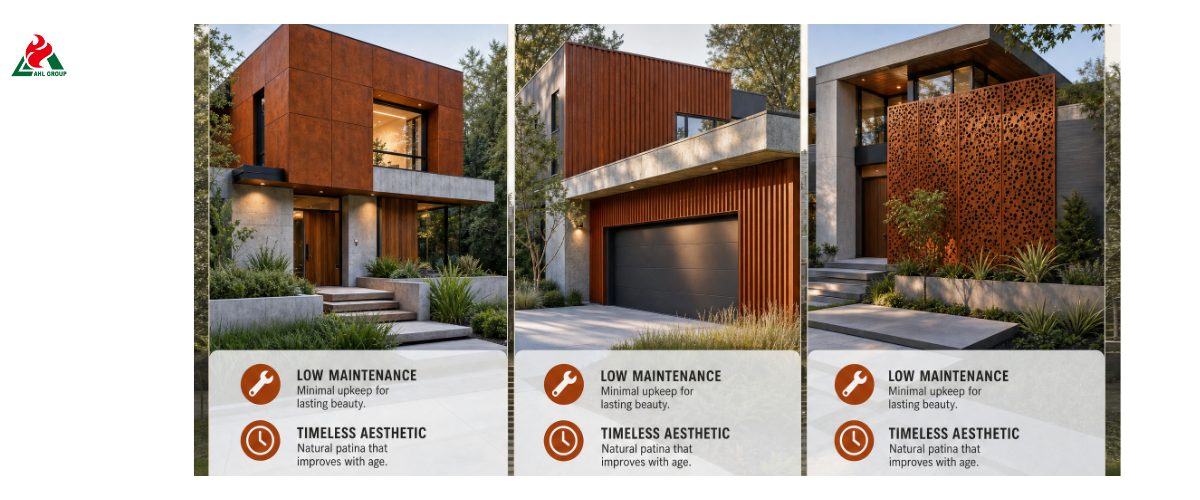
Weathering steel exterior wall panels offer exceptional atmospheric protection. Once a dense oxide layer seals the substrate, it forms an impenetrable barrier against torrential rain, intense desert heat waves, heavy ice accumulation, and prolonged UV radiation. Unlike traditional exterior wall panels that gradually deteriorate under continuous environmental exposure, weathering steel becomes more stable and structurally resilient over time.
Long-Term Maintenance Requirements
A key operational advantage of choosing Corten exterior wall panels is their completely passive maintenance model. It eliminates the recurring labor, material costs, and downtime associated with wire-brush cleaning, chemical high-pressure washing, re-priming, painting, or applying weather-resistant coatings. These exterior walls require no manual cleaning; natural wind and rain alone are sufficient to remove surface dust and preserve their natural texture.
Performance of Corten Steel Under Different Climatic Conditions
► Arid and Desert Climates: Due to low humidity, the rust layer forms slowly, allowing the material to retain its bright golden-orange hue for a longer period. This material exhibits excellent resistance to intense UV radiation and will not fade or warp.
► Humid and High-Precipitation Areas: Cycles of wet and dry conditions accelerate the stabilization of the patina, causing the steel to rapidly develop a deep, uniform chocolate-brown surface.
► Coastal Environments: High concentrations of sea salt chlorides in the air can compromise the integrity of the protective layer. For projects located within 1–2 miles of the shoreline, high-quality marine-grade stainless steel or aluminum treated with a special rust-mimicking coating should be specified.
Expected Service Life
Architectural-grade Corten decorative panels, manufactured to standard thickness specifications, boast an impressive service life of 50 to 100 years or more. The structural density of the alloy panels ensures that their facade service life far exceeds that of nearly all traditional residential building components, making them an asset that will be passed down through generations.
7. Practical Installation Considerations
Whether a Corten steel exterior wall can maintain its aesthetic appeal for its entire lifespan depends entirely on the structural components hidden behind the metal panels.
Substrate and Wall Surface Preparation
Corten steel panels must never be fastened directly to the building’s original plywood or drywall sheathing. The exterior wall substrate must first be sealed with a high-performance, UV-resistant, and tear-resistant breathable vapor barrier (building wrap). This specialized layer keeps strong winds and moisture out of the building’s frame while allowing indoor water vapor to escape safely, thereby keeping the wall structure dry and free from rot.
Fasteners and Support Systems
To prevent electrochemical corrosion (i.e., the destructive chemical reaction that occurs when dissimilar metals come into contact in a damp environment), all structural secondary cross-members, stringers, screws, and rivets must be chemically compatible with weathering steel. Installers must use stainless steel, weather-resistant steel, or specialized nitrile rubber-insulated fasteners. Standard galvanized or carbon steel screws will rapidly corrode and fail once they come into contact with ferrous efflorescence leaching from the exterior walls.
Drainage and Runoff Control
Managing rust runoff is a critical aspect of custom residential construction projects. During the first 6 to 18 months after rust formation, rainfall washes loose iron oxide particles off the exterior wall surfaces. If this water flows onto porous, light-colored concrete paths, limestone steps, or natural wood decks, it will cause deep and permanent rust stains.
To prevent staining, custom exterior walls should be equipped with integrated perimeter drip edges, concealed gutter systems, and dedicated drainage channels to divert iron-rich runoff away from walkways and into a gravel filter bed or soil area.
Ventilation Behind the Cladding
High-performance weathering steel façades must always be constructed as engineered ventilated cladding systems. Metal panels are mounted on a framework consisting of vertical aluminum or steel cap profiles, creating a continuous air gap of 20 to 40 millimeters between the back of the steel panels and the building’s insulated wall. This air channel generates a natural chimney effect; it uses convective airflow to dry out moisture that has penetrated the back of the panels, thereby preventing the core metal from corroding due to persistent moisture.
8. Common Mistakes to Avoid
Choosing the Wrong Type of Siding for Your Home’s Style
Installing industrial-style high-ridge trapezoidal siding on an elegant, historic-style cottage can create a jarring and incongruous visual effect. Be sure that the siding’s profile, visual texture, and seam lines complement your home’s primary architectural lines and design language.
Ignoring Staining and Rainwater Runoff Issues
Failing to plan for initial oxidation staining is a major mistake in any project. Installing weathering steel panels directly on an expensive, unsealed white marble tile entryway or a light-colored concrete driveway—without providing rainwater runoff management channels—will result in severe visual staining, and the cost of remediation will be extremely high.
Use of Sheets That Are Too Thin
Specifying low-grade, thin metal sheets (such as commercial-grade sheets ranging from 0.5 mm to 0.8 mm) for large, unsupported flat panel areas may result in a visual defect known as the “tank effect.” Under the effects of thermal expansion and contraction, as well as wind loads, the metal sheets may buckle, wrinkle, and warp, making the curtain wall appear crumpled and poorly crafted. For residential flat panels, heavy-gauge steel sheets with a thickness of 2 mm to 3 mm or greater should always be used.
Failure to Consider Local Climatic Conditions
If your home is built in a dense, shaded rainforest or in a low-lying valley where damp mist lingers for extended periods, the steel will remain in a persistently damp state. Without the necessary drying cycles, weathering steel cannot form a dense, protective oxide layer, which may lead to localized, premature corrosion failure.
9. Corten Cladding vs Other Materials
After comparing and evaluating weathering steel against popular exterior wall materials, it is easy to see why it has become the material of choice for high-end, low-maintenance buildings.
| Feature / Metric | Corten Steel Cladding | Natural Timber Siding | Aluminum Cladding | Fiber Cement Boards |
| Expected Lifespan | 50 to 100+ Years | 15 to 25 Years | 30 to 50 Years | 20 to 40 Years |
| Maintenance Need | None (Passive) | High (Staining/Painting) | Low (Occasional wash) | Moderate (Repainting) |
| Fire Performance | Class A1 (Non-combustible) | Poor (Combustible) | Class A1/A2 | Class A1 (Non-combustible) |
| Surface Finish | Living, self-healing patina | Prone to rot and fading | Static powder coat/anodized | Applied paint coating |
| Impact Resistance | Excellent (Resists dents) | Moderate (Scratches) | Low (Dents easily) | Brittle (Can crack/chip) |
10. How to Choose the Right Option
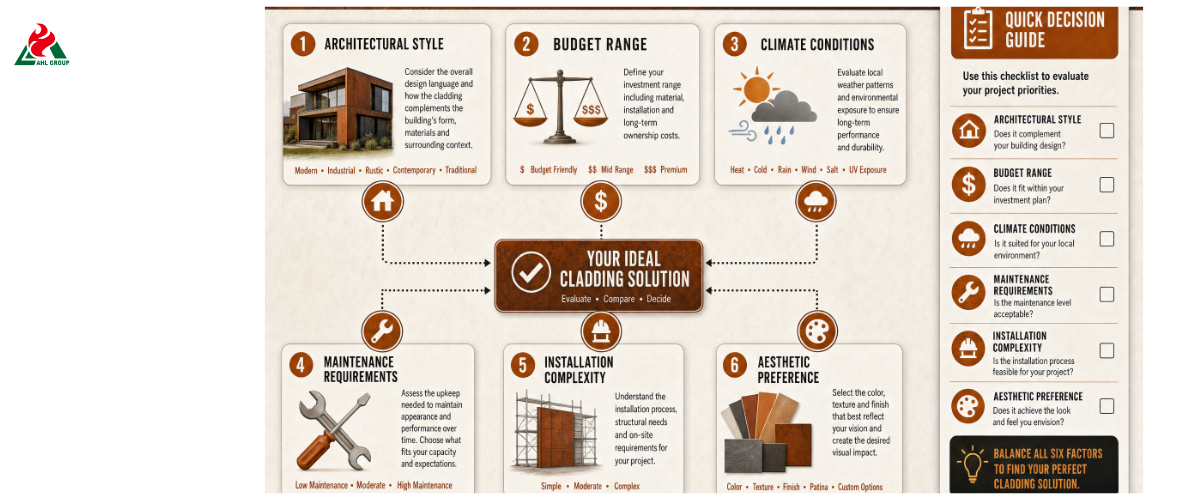
When finalizing your material selection, guide your planning team through the following four core design criteria:
► Architectural Style Match: Does your home lean toward a clean, crisp, geometric modern style, or a warm, rustic organic design? Modern-style homes may opt for flat modular panels or clean, interlocking lines; rustic designs are better suited to corrugated profiles or overlapping wood shingles.
► Balancing Budget and Lifespan: Strike a balance between your current construction budget and long-term property maintenance costs. Although thick, custom weathering steel panels have a higher upfront cost, their lifespan exceeds that of traditional siding by several decades and eliminates the expense of repeated repainting, making this investment well worth the cost.
► Rainwater Runoff and Drainage Space: Assess the layout of your hardscape. Ensure there is sufficient physical space to install a gravel drainage channel, a dark-colored river rock catchment area, or dedicated drainage flashing profiles beneath the cladding base.
► Local Microclimate Assessment: Confirm that your building site has a healthy cycle of alternating dry and wet conditions. Ensure there is sufficient spacing between the exterior walls and dense, consistently moist ground vegetation to allow the protective rust patina to form properly and stabilize.
11. Frequently Asked Questions About Corten Cladding
Q1: Is Weathering Steel Exterior Cladding Suitable for Residential Buildings?
Yes, weathering steel is very suitable for residential buildings. It forms a non-combustible building envelope, offers excellent thermal insulation when used in a ventilated rain screen system, provides a unique aesthetic appeal, and requires absolutely no maintenance.
Q2: Will Corten Steel Building Cladding stain nearby surfaces?
Yes, during the initial weathering phase—which lasts 6 to 18 months—iron oxide particles may leach from the panels when it rains. Staining can be easily controlled and prevented by using proper flashing details, concealed drip edges, or by laying a layer of gravel directly beneath the cladding panels.
Q3: Does Weathering Steel Need to Be Sealed or Painted?
No. Weathering steel is designed to remain in its completely natural state and be directly exposed to the elements. Applying artificial paints or transparent chemical sealants defeats the purpose of its design, hinders the natural formation of its self-healing rust layer, and leads to recurring maintenance cycles.
Q4: Which Weathering Steel Cladding Is Best Suited for Residential Use?
The ideal choice depends entirely on the design style of your home. Flat panels or vertical interlocking profiles create a clean, high-end look for modern homes, while corrugated profiles offer a timeless texture that complements rustic design styles.
Conclusion: Final Recommendations for Homeowners
For homeowners looking to move away from generic, mass-market siding and endless exterior maintenance, Corten steel siding is an excellent choice for upgrading their homes. By utilizing an advanced alloy composition that transforms environmental oxidation into a protective barrier, it creates striking residential facades whose beauty, texture, and durability only improve over time.
Expert Guide: Since high-performance custom exterior walls rely on maintaining healthy convective airflow behind the steel panels to prevent long-term moisture-related rot, would you like to learn how to correctly calculate the ventilation gap ratios at the top and bottom of a curtain wall system based on the total height of the wall?

