


In modern architecture, Corten steel exterior cladding has become a highly distinctive material thanks to its unique rust-colored appearance and exceptional durability. Architects and designers frequently choose weathering steel for building facades, landscape walls, and outdoor structures because it combines aesthetic value with long-term performance. However, as building safety regulations become increasingly stringent—particularly those addressing fire risks—many developers and building owners are raising a critical question: Do Corten steel cladding panels possess fire-resistant properties?
Fire safety is a critical factor in the design of any building envelope. Exterior cladding materials must not only protect the building structure from the elements but also minimize fire risk, particularly in densely populated urban environments or areas prone to wildfires. In recent years, several high-profile building fires around the world have heightened awareness of the importance of using non-combustible exterior cladding materials.
Weathering steel (also known as Corten steel) is often touted as a robust and durable choice for building facades. But how does it actually perform when exposed to high temperatures? Is weathering steel completely fireproof, or does it merely offer some level of fire resistance? Understanding these distinctions is crucial when selecting materials for safe and code-compliant architectural designs.
This article will examine the fire resistance of Corten steel façades, analyze how weathering steel performs under high temperatures, and explore whether it contributes to the overall fire safety of Corten steel cladding. Additionally, we will compare it with other façade materials and outline best practices for fire-safe installation.
.png)
Fire safety is a critical factor in the design of any building envelope. Exterior cladding materials must not only protect the building structure from the elements but also minimize fire risk, particularly in densely populated urban environments or areas prone to wildfires. In recent years, several high-profile building fires around the world have heightened awareness of the importance of using non-combustible exterior cladding materials.
Weathering steel (also known as Corten steel) is often touted as a robust and durable choice for building facades. But how does it actually perform when exposed to high temperatures? Is weathering steel completely fireproof, or does it merely offer some level of fire resistance? Understanding these distinctions is crucial when selecting materials for safe and code-compliant architectural designs.
This article will examine the fire resistance of Corten steel façades, analyze how weathering steel performs under high temperatures, and explore whether it contributes to the overall fire safety of Corten steel cladding. Additionally, we will compare it with other façade materials and outline best practices for fire-safe installation.
1. Understanding Corten Steel Cladding
What Is Corten Steel?
Weathering steel, commonly known as Corten steel, is a special steel alloy designed to form a protective rust layer when exposed to outdoor environments. Unlike traditional carbon steel, which continues to corrode over time, weathering steel forms a stable oxide layer that protects the underlying metal from further corrosion.
This protective rust layer not only enhances durability but also gives weathering steel its famous warm, reddish-brown appearance, which subtly changes over time as it reacts with environmental conditions. Due to its combination of strength, durability, and aesthetic appeal, weathering steel is widely used in architecture and landscaping.
Typical applications of weathering steel include:
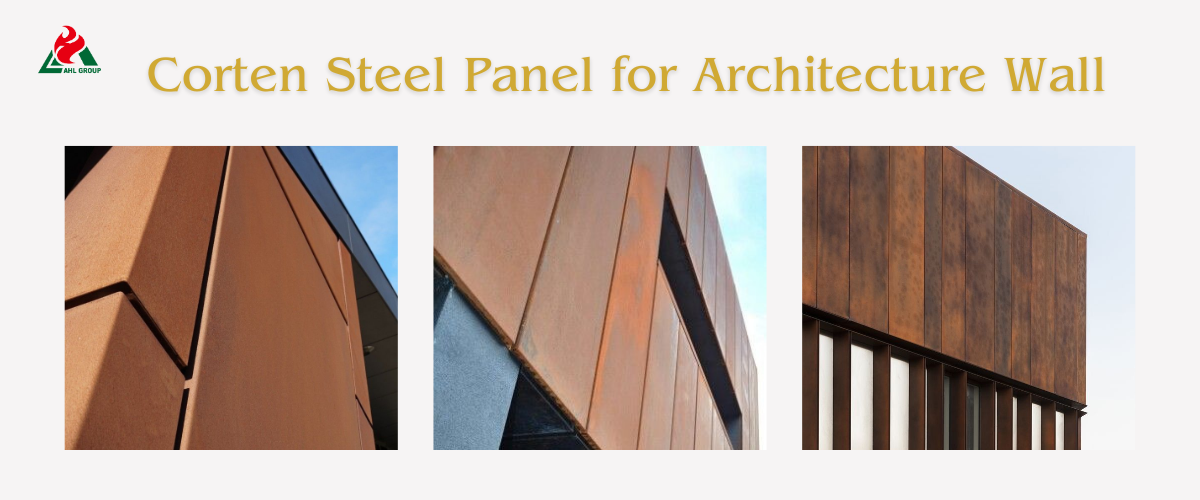
► Architectural exterior cladding panels
► Landscape retaining walls
► Garden planters and outdoor sculptures
► Privacy screens and fences
► Bridge structures and public infrastructure
In architectural facades, weathering steel cladding panels serve both functional and decorative purposes. The material requires virtually no maintenance and can last for decades even in harsh outdoor environments.
How Weathering Steel Forms a Protective Patina
The key difference between Corten steel and ordinary steel lies in its weathering process. When exposed to moisture and oxygen, a controlled layer of rust forms on the steel’s surface. This rust layer gradually stabilizes and acts as a protective barrier, thereby slowing further corrosion.
Unlike the flaking rust commonly seen on ordinary steel, the rust layer on Corten steel adheres tightly to the surface. This gives it exceptional resistance to environmental damage, including rain, wind, and temperature fluctuations.
While this natural oxidation process enhances the material’s durability, it has also raised questions about its performance in fires, as the outer rust layer interacts with heat differently than painted or coated metals.
Common Applications of Corten Cladding in Architecture
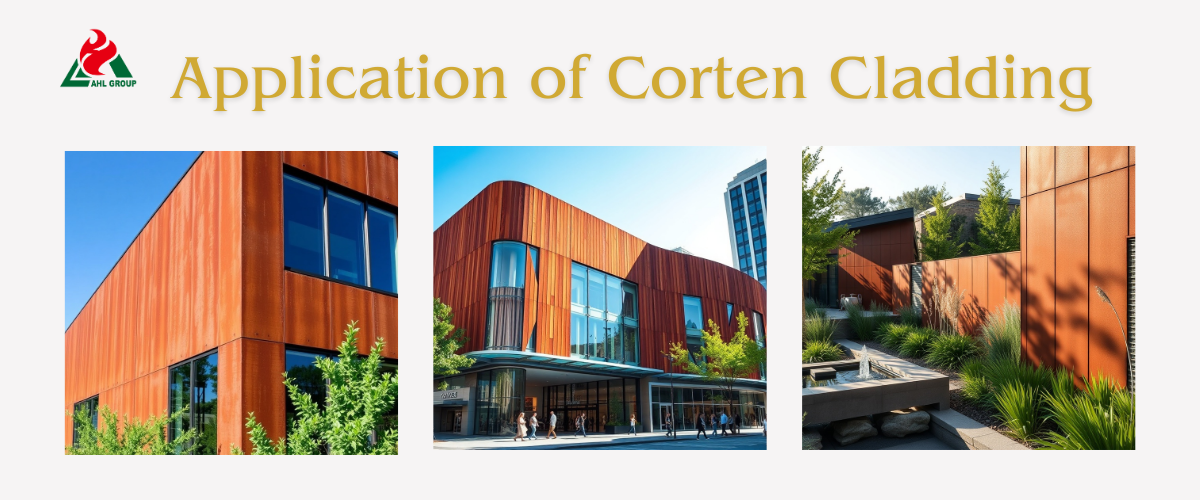
Architects frequently use Corten steel cladding in design projects that emphasize natural textures and industrial aesthetics. Its rustic tones complement materials such as concrete, glass, wood, and stone.
Common architectural applications include:
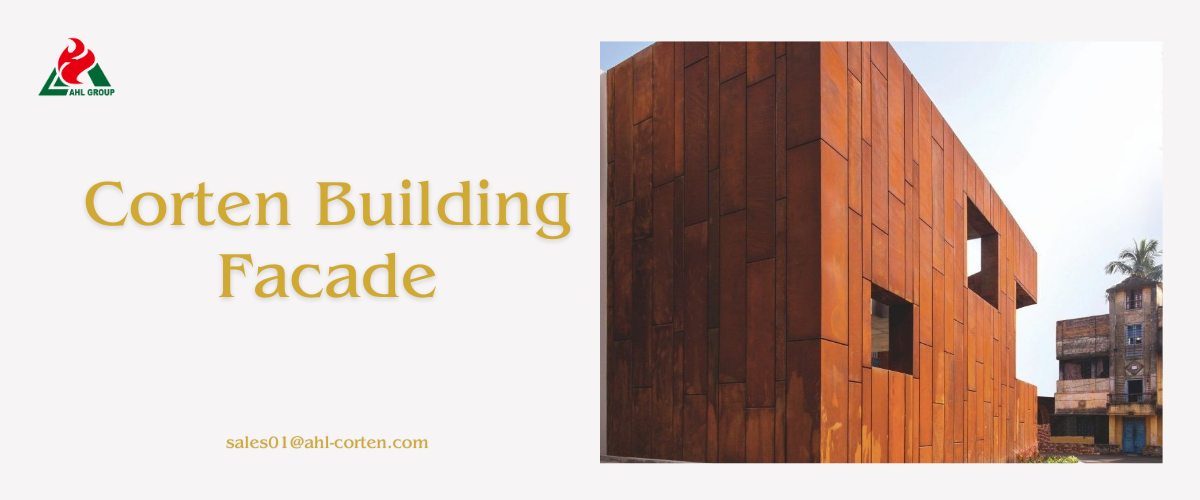
► Residential building facades
► Commercial office building exteriors
► Cultural and museum buildings
► Landscape walls and garden structures
► Urban infrastructure projects
Since these applications involve building exteriors, understanding the fire resistance properties of Corten steel curtain walls is essential to ensuring compliance with building safety codes.
2. Fire Resistance of Steel Materials
How Steel Behaves Under High Temperatures
Steel is widely recognized as a non-combustible material, meaning it does not catch fire and does not contribute fuel to a fire. This characteristic alone makes steel a highly attractive choice for construction compared to combustible materials such as wood or certain plastics.
However, although steel does not burn, it loses strength when exposed to high temperatures. As steel heats, its internal structure changes, causing it to soften and reducing its load-bearing capacity.
When temperatures reach approximately 400°C (752°F), steel begins to exhibit a noticeable decrease in strength. When temperatures rise to about 600°C (1112°F), its structural load-bearing capacity may be reduced by as much as half. This does not mean that the steel will melt, but it will deform under heavy loads.
Melting Point and Structural Limits of Steel
The melting point of steel typically ranges from 1,370°C to 1,510°C (2,500°F to 2,750°F), depending on the alloy composition. These temperatures are far higher than those encountered in most building fires.
However, fire safety concerns do not stem from melting, but rather from a loss of structural strength. If steel members are exposed to extreme heat while under significant load, they may bend or collapse.
For cladding systems, this is not a major concern, as the panels themselves are typically not structural members but rather serve as a protective and decorative outer layer.
Differences Between Fire Resistance and Fireproof Materials
When discussing the fire safety of Corten steel siding, it is essential to understand the distinctions between the following three key terms:
► Non-combustible materials—materials that do not burn or ignite.
► Fire-resistant materials—materials that can slow the spread of fire or withstand high temperatures for a certain period of time.
► Fire-resistant materials — Materials that are completely unaffected by fire; such materials are extremely rare in the construction industry.
Weathering steel is considered non-combustible and fire-resistant, but technically, it is not fireproof.
3. Does Corten Cladding Provide Fire Protection?
Natural Fire Resistance of Weathering Steel
Since weathering steel is essentially a steel alloy, it possesses the same non-combustible properties as structural steel. This material will not ignite, release flammable gases, or provide fuel for a fire.
This means that, compared to combustible exterior wall materials such as wood siding or plastic composite panels, a weathering steel curtain wall is a safer choice.
In the event of a fire, Corten steel exterior panels act as a protective barrier, helping to slow the spread of flames across the building’s exterior surface.
How Corten Cladding Performs During Fire Exposure
When exposed to high temperatures, weathering steel behaves similarly to other types of steel. At extremely high temperatures, this metal may expand and eventually weaken, but it will not burn or release toxic fumes.
Since cladding panels are typically thin sheets attached to a supporting framework, they are unlikely to bear the same structural stresses as load-bearing steel members. In most cases, these panels remain intact long enough to help prevent the rapid spread of fire along a building’s exterior walls.
Furthermore, compared to bare metal surfaces, the rust crust on weathering steel may provide a certain degree of thermal insulation.
Comparison with Other Cladding Materials
| Material |
Combustibility | Fire Performance |
| Wood siding |
Combustible | Can ignite and spread flames |
| Aluminum composite panels |
Can contain flammable cores | High fire risk if poorly designed |
| Vinyl siding |
Combustible | Melts and releases toxic fumes |
| Corten steel cladding |
Non-combustible | Does not burn or fuel fire |
Compared with these alternatives, Corten steel cladding offers significantly better fire safety characteristics.
4. Fire Ratings and Building Safety Standards
International Fire Safety Standards
Building codes in many countries classify materials based on their fire resistance properties. Steel products (including weathering steel) are typically classified as Class A or non-combustible materials.
These classifications indicate that the material will not ignite or contribute to the spread of fire.
When Fire Rating Systems Are Required
In certain buildings, particularly high-rise structures, exterior wall systems must meet strict fire rating requirements. This typically involves combining exterior wall panels with fire-resistant insulation, fire barriers, and structural framing systems.
Although weathering steel panels are inherently non-combustible, the entire exterior wall system must be specifically designed to meet regulatory requirements.
The Role of Substructures and Insulation
The fire safety of a curtain wall system depends not only on the exterior wall panels but also on the components behind them, including:
► Insulation materials
► Structural supports
► Air gaps and ventilation cavities
The use of fire-resistant insulation materials, such as mineral wool, can significantly enhance the overall fire resistance of a fire-rated panel curtain wall system.
5. Advantages of Corten Steel Cladding in Fire-Prone Areas
Properties of Non-Combustible Materials
Weathering steel does not burn or contribute to the spread of fire, making it ideal for buildings where fire safety is a top priority.
Structural Stability at High Temperatures
Although steel weakens at extreme temperatures, it generally performs better than many combustible materials in the event of a fire.
Limiting the Spread of Fire
Because the material does not ignite, weathering steel exterior cladding helps limit the spread of fire along the exterior surface.
6. Limitations of Corten Steel for Fire Protection
Heat Conduction in Metal Panels
One limitation of metal curtain walls is that steel is a good conductor of heat. In the event of a fire, heat can be conducted through the panels to the underlying structure.
The Importance of Fire-Resistant Backing Materials
To address this issue, architects typically combine Corten steel façades with fire-resistant insulation and fire-resistant barriers to protect the internal structure from heat damage.
7. Why Architects Choose Corten Steel for Exterior Cladding
Architects favor weathering steel because it offers a rare combination of aesthetic appeal, durability, and safety. The naturally formed rust patina of this material creates a dynamic façade that evolves, while its structural strength ensures long-lasting performance.
Furthermore, as a non-combustible exterior cladding material, weathering steel is particularly attractive for projects where fire safety is a priority.
Conclusion: Elevate Your Architectural Ambiance with Corten Steel Cladding
So, do Corten steel exterior wall panels offer fire resistance? The answer is YES—but only to a certain extent. Corten steel is a non-combustible material that neither ignites nor fuels a fire, making it safer than many traditional exterior wall materials.
Although it is not completely fireproof and may lose strength under extreme heat, Corten steel curtain walls help enhance a building’s overall fire safety by resisting ignition and delaying the spread of fire. When combined with appropriate thermal insulation measures, structural design, and compliance with building codes, it can serve as a vital component of an effective fire-resistant curtain wall system.
For architects, builders, and developers seeking durable materials with outstanding visual appeal, weathering steel curtain walls offer an excellent balance of performance, durability, and fire safety.

