


For homeowners looking to create a comfortable outdoor living space, backyard privacy has become a top priority. Whether you’re creating a quiet reading nook, an outdoor dining area, or a modern garden retreat, privacy screens can enhance the architectural aesthetic while defining spaces.
Among today’s most popular options, Corten steel privacy screens stand out for their unique rust-colored appearance, exceptional durability, and low-maintenance nature. Unlike traditional wooden screens that require regular painting or plastic panels that fade over time, Corten steel develops a beautiful, protective patina that becomes even more charming as time goes on.
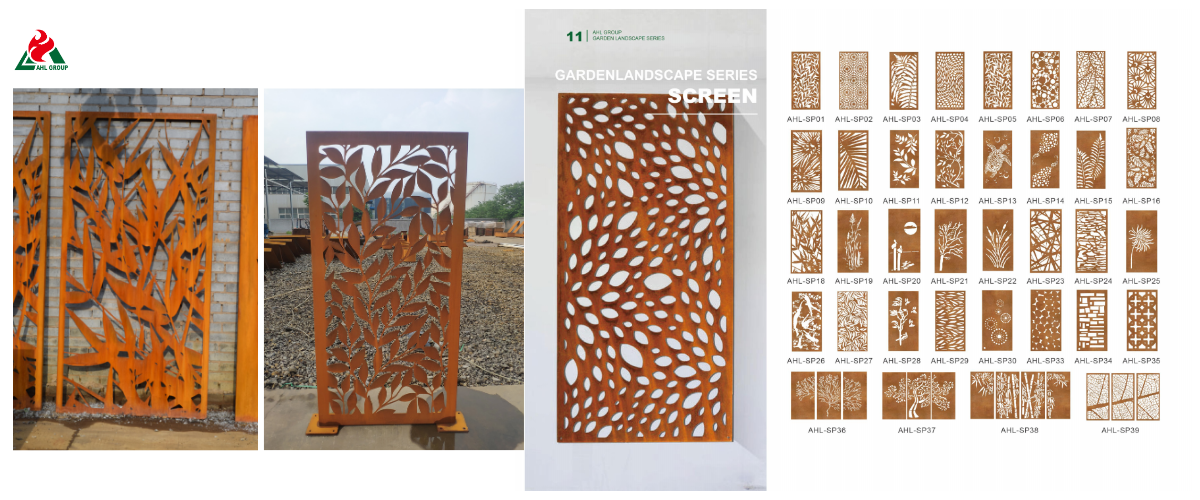
Among today’s most popular options, Corten steel privacy screens stand out for their unique rust-colored appearance, exceptional durability, and low-maintenance nature. Unlike traditional wooden screens that require regular painting or plastic panels that fade over time, Corten steel develops a beautiful, protective patina that becomes even more charming as time goes on.
1. Introduction
Why Corten Steel Privacy Screens Are So Popular in Backyards
As homeowners strive to make the most of their outdoor living spaces, creating a private sanctuary—shielded from neighbors’ view and free from visual distractions from utility areas—has become a top priority. Corten privacy screen panels have quickly gained popularity among landscape designers and modern homeowners precisely because they elegantly solve this spatial challenge. Unlike traditional wooden latticework or vinyl fencing—which often weather, warp, or rot within a few seasons—weathering steel boasts a rich, natural amber-brown aesthetic that only grows more captivating with exposure to the elements, transforming a functional boundary into a striking architectural statement.
The Appeal of the DIY Approach
Installing Corten garden screens yourself (DIY) allows homeowners to enjoy the aesthetic appeal of high-end landscape architecture without paying steep contractor markups. Since precision manufacturers readily provide prefabricated or laser-cut Corten steel panels, the installation process can be broken down into manageable steps. This enables anyone with basic carpentry, masonry, or mechanical assembly skills to design, install, and secure a custom privacy screen solution tailored specifically to the unique dimensions and soil conditions of their yard.
What This Guide Covers
This comprehensive DIY manual provides an in-depth look at the design considerations and structural steps required for installing Corten laser- cut screens. We’ll introduce creative design concepts, compare different panel profiles and mounting frames, analyze the mechanics of wind loads and structural anchoring, and provide field-proven techniques for managing rust runoff. By following these instructions, you’ll be able to create a safe and eye-catching outdoor decorative element designed to last for decades.
2. Why Choose Corten for a Privacy Screen
Decorative Appearance
The primary reason for choosing weathering steel is its ever-evolving, naturally textured visual character. When first unpacked, untreated Corten steel panels exhibit a standard factory finish of industrial slate gray. After several weeks of outdoor exposure, the metal transforms, developing a vibrant, flame-like orange-yellow patina that gradually deepens into a rich, velvety dark brown. This rich patina provides a stunning backdrop for garden elements and, when paired with laser-cut geometric or botanical patterns, casts intricate shadow patterns on the patio.
Outdoor Durability
Weathering steel is a high-strength, low-alloy structural steel originally developed for heavy-duty railroad cars, bridge construction, and shipping containers. This industrial heritage gives it remarkable tensile strength and exceptional dimensional stability. Weathering steel panels can withstand extreme freeze-thaw cycles, high wind loads, and intense UV exposure without warping, cracking, or bending—problems that often damage standard wood, PVC, or composite fences.
Low-Maintenance Rust Layer
A distinctive feature of weathering steel is that its characteristic rust layer is actually a precisely engineered protective coating. The precise addition of copper, chromium, nickel, and phosphorus to the alloy causes the initial surface rust layer to form a dense, non-porous crystalline structure known as goethite. This microscopic film seals off the raw steel core beneath it, preventing the penetration of moisture and oxygen. Once this rust layer has matured, it no longer actively flakes off, eliminating the need for routine painting, staining, scraping, or chemical rust prevention treatments.
Complements Both Modern and Natural Landscapes
Corten steel offers exceptional design flexibility, bridging the gap between vastly different landscape styles. In minimalist, mid-century modern, or industrial-urban designs, its clean, crisp edges and bold metallic texture provide a solid foundation for the architecture. Conversely, in traditional country gardens, rustic farmhouses, or lush tropical landscapes, its warm earth tones blend harmoniously with slate paths, log decks, organic mulch, and lush greenery.
3. Best DIY Corten Privacy Screen Ideas
Freestanding Laser-Cut Panels
If you’re looking to create eye-catching, sculptural designs, freestanding laser-cut Corten steel panels are undoubtedly an excellent choice. These metal screens are created using precision computer-controlled cutting techniques to form abstract geometric grids, organic branching structures, or plant leaf patterns. These panels can be mounted on thick steel posts or bolted to a structural concrete base, serving as standalone works of art that both divide open lawns and provide excellent wind filtration and partial visual screening.
Panels Mounted on Wooden or Steel Posts
One of the most structurally sound and straightforward DIY installation methods involves securing pre-cut Corten screen panels directly to a series of vertical support posts. Homeowners can use heavy-duty, ground-contact-rated wooden posts (4×4 or 6×6 pressure-treated pine or cedar) or industrial-grade square hollow structural steel posts. By mechanically fastening the steel panels between these posts using stainless steel brackets, a sturdy and secure boundary fence or privacy wall can be created.
Sliding or Movable Privacy Screens
If you have a versatile patio or balcony where you sometimes want privacy and other times want to enjoy an unobstructed view, a sliding or movable Corten garden screen system is the ideal solution. By mounting lightweight (1.5 mm to 2 mm) weathering steel panels within a sturdy steel frame—equipped with heavy-duty, outdoor-rated roller tracks or casters—you can easily slide the screens back and forth. This design allows you to block out the sun or shield yourself from neighbors’ view when needed, while opening up the space to enjoy unobstructed views when entertaining guests.
Stacked Screens Combined with Planters
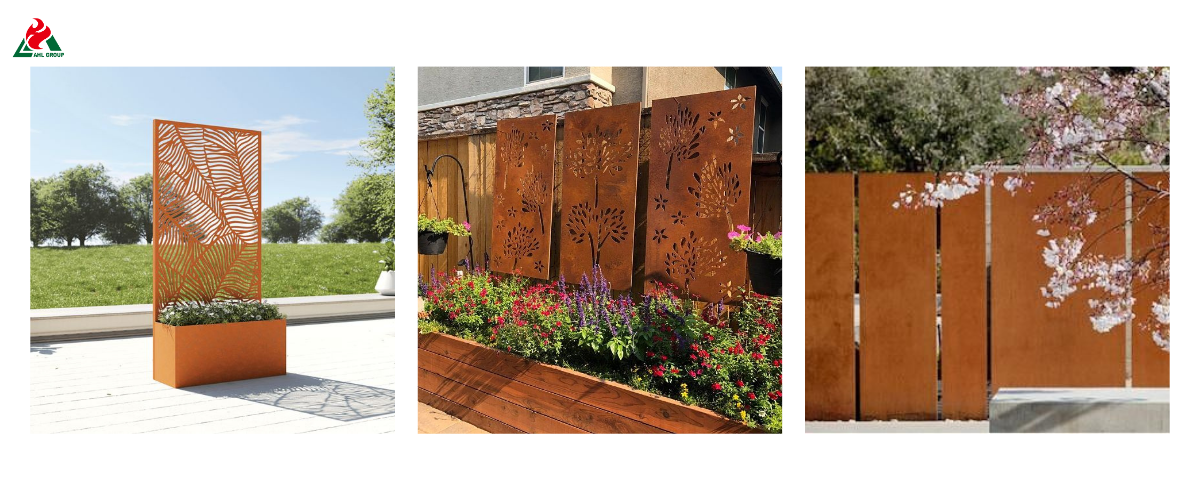
Combining Corten steel privacy screens with matching elevated Corten steel planters creates an exceptionally clever and self-contained DIY project. In this setup, the vertical privacy screens are bolted directly to the structural back wall of the planter. The weight of the moist potting soil, gravel, and plant roots inside the planter acts as a natural and substantial counterweight, keeping the vertical screen stable in windy conditions. Since this design requires no deep digging or concrete foundations, it is ideal for concrete patios, rental properties, and wooden decks.
Mixed-Material Screens Combining Wood and Metal
If you want to soften the bold, industrial look of an all-metal screen, a mixed-material screen that combines wood and metal can create the perfect design balance. By embedding laser-cut weathering steel panels into high-quality hardwood—such as ipe, kumara, or horizontal cedar slats—you can create a rich contrast between the warm, natural grain of the wood and the rugged, industrial texture of the weathering steel. This design approach helps the screen blend seamlessly with existing wooden decks or pergolas.
4. Simple Design Options
Geometric Patterns
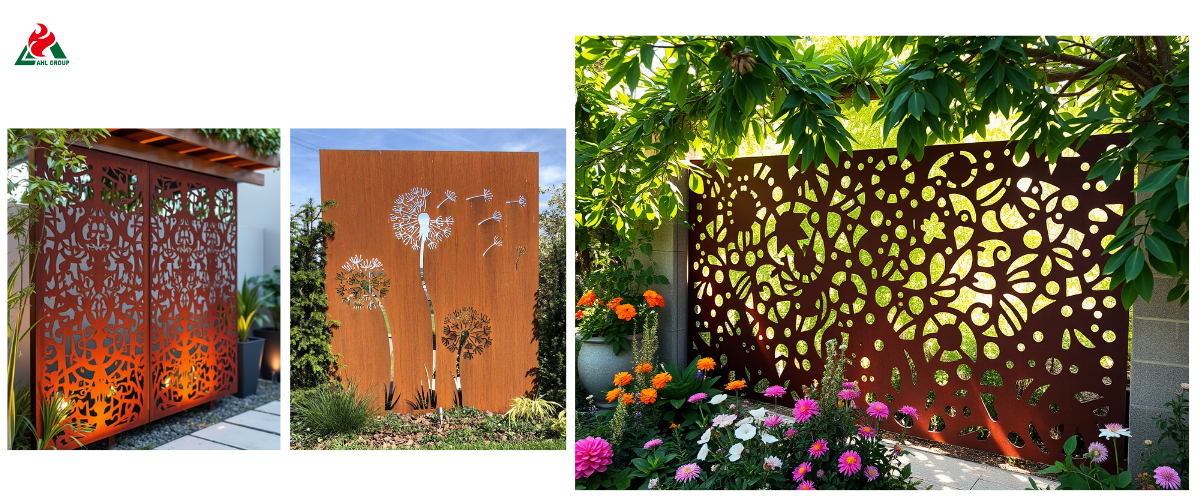
Geometric patterns feature clean lines, repeating grids, laser-cut herringbone patterns, or abstract linear matrix shapes. These designs are ideal for modern homes and urban courtyards, complementing contemporary outdoor furniture and structured hardscape elements. The clean, openwork design allows bright sunlight to filter through, casting dramatic and ever-changing patterns of light and shadow on your patio at different times of the day.
Nature-Inspired Patterns
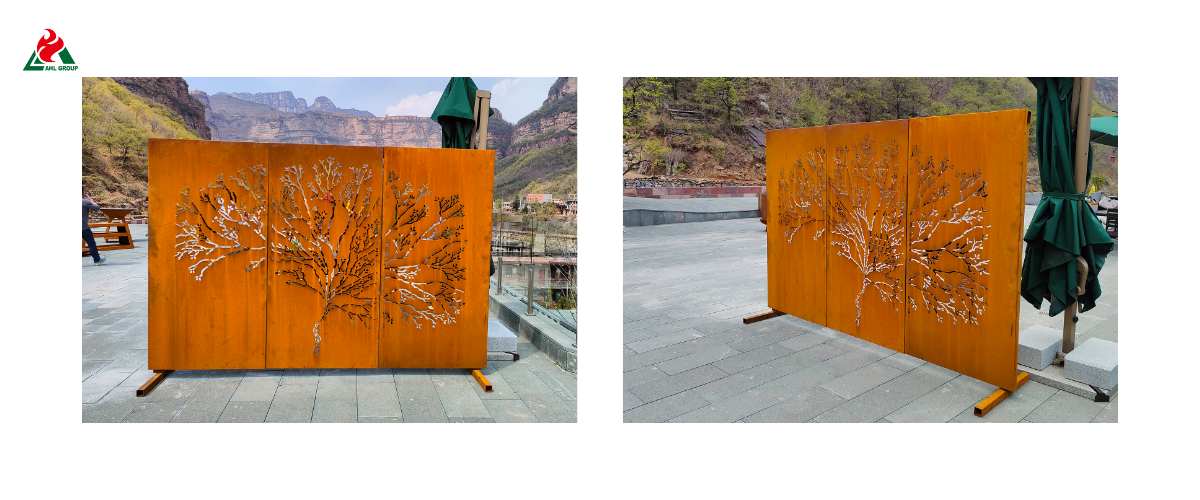
Nature-inspired patterns feature intricate laser-cut designs, such as flowing branches, delicate fern fronds, bamboo stalks, or abstract leaf veins. These organic designs help privacy screens blend naturally into the surrounding garden landscape. They soften solid metal boundaries, making them appear as a natural extension of your trees and shrubs while providing effective privacy protection.
Solid or Semi-Solid Panels
If your primary goal is to achieve complete privacy or to block unsightly views—such as a neighbor’s trash cans or an unattractive commercial alleyway—solid or semi-solid weathering steel screens are the best choice. Solid panels block the view 100% and provide effective wind protection. Semi-solid panels can be designed with narrow vertical or horizontal slits, allowing gentle breezes to pass through while ensuring complete privacy and preventing wind turbulence.
Half-Height Screens
To create a comfortable, private space, you don’t necessarily have to build a full 6-foot-high wall. Half-height Corten metal screens (typically 3 to 4 feet tall) are ideal for defining boundaries without making a courtyard feel cramped. They look particularly striking when installed atop low concrete retaining walls or along the edges of elevated decks—providing privacy for seated guests while maintaining an unobstructed view of the sky.
Curved or Custom-Shaped Screens
Since industrial manufacturers can roll and form thick metal sheets, Corten steel garden screens are not limited to flat, rectangular profiles. Curved or polygonal, undulating panels can be installed to encircle a circular fire pit, frame a semicircular garden bench, or follow the natural curves of a winding stone path, adding a dynamic and fluid touch to your landscape design.
5. Where to Use Corten Privacy Screens
Patio Privacy
The patio is a primary gathering spot for outdoor dining and relaxation, but it’s often completely exposed to the view from neighbors’ two-story homes. Installing a 6-foot-tall rusted steel screen along the exposed edge of the patio instantly creates a cozy and private outdoor living room. The warm metallic tones provide a comforting backdrop for the outdoor sofa set, dining table, café-style table, and chairs.
Side Yard Screening
Side yards are typically narrow and irregularly shaped spaces that are easily overlooked, yet they are fully visible from the front street or neighbors’ windows. By arranging a series of Corten screen fences in a staggered pattern along the side yard path, you can transform a monotonous walkway into an elegant display space. This layout blocks unwanted views while leaving passageways for air circulation, utility meters, and lawn equipment.
Poolside Screen
The pool area demands a high degree of privacy, but standard wooden fences quickly rot when exposed to splashing water, pool chemicals, and constant high humidity. Weathering steel is completely unaffected by pool splashes and looks particularly striking next to water features. Its rich amber patina creates a striking visual contrast with the deep blue pool water, making it a popular choice for high-end pool fencing.
Privacy Protection for Balconies or Patios
For urban apartments and townhouses where neighbors are right next door, Corten screens offer an excellent privacy solution for balconies and rooftops. Since deep concrete foundations cannot be installed in these spaces, you can create a safe, private retreat in a cramped urban setting by using compact panels integrated with heavy-duty planters or by mounting slim steel frames to structural masonry walls.
Backyard Retreats
With Corten modern screens, you can easily create a private, secluded retreat in a quiet corner of your yard—such as a reading nook, a hot tub enclosure, or a yoga platform. By arranging two or three panels in an L- or U-shaped layout, you can instantly create a quiet, private space that’s separated from the main house and completely shielded from outside noise.
Hiding Utility Areas
Every backyard has some necessary but unsightly utility areas, such as bulky HVAC units, pool pump and filter systems, compost bins, or firewood piles. Solid or semi-solid Korten steel fencing can completely conceal these eyesores. This metal material easily withstands the heat and vibrations of mechanical equipment, providing a neat and attractive appearance that keeps your yard looking tidy at all times.
6. How to Build a DIY Corten Screen
Selecting Screen Dimensions
When planning your DIY project, start by choosing a standard panel size to simplify the ordering process and minimize material waste. The most common pre-cut sizes available from steel suppliers and garden centers include 2x4 feet, 3x6 feet, and 4x8 feet. Choosing a standard size ensures you can easily find matching pre-cut post brackets, mounting tracks, and framing systems.
Selecting Panel Thickness
Choosing the correct metal thickness (gauge) is critical for structural safety and helps prevent the landscape screen from experiencing a “tank effect” or making creaking noises in the wind.
► 1.5 mm (16-gauge) – Suitable only for small decorative panels or panels embedded within thick wooden frames.
► 2.0 mm (14-gauge) – The minimum standard for small freestanding garden screens.
► 3.0 mm (11 gauge): The gold standard for commercial and structural DIY installations. 3.0 mm-thick panels offer sufficient structural integrity to maintain rigidity without the need for bulky outer frames.
Preparing the Posts or Frame
The support posts form the backbone of the privacy screen. If you choose wooden posts, select 4×4 or 6×6 pressure-treated lumber that meets standards for direct ground contact. If you prefer steel, use 2×2-inch or 3×3-inch square structural steel tubing. Attach the mounting brackets to the posts by welding or bolting, and apply a high-zinc anti-rust primer to ensure the support structure lasts as long as the weather-resistant steel panels.
Securely Anchoring the Screen
Since solid or semi-solid panels act like giant sails in strong winds, properly anchoring the support structure is critical to preventing the screen fence from toppling over. For ground installation, dig a foundation pit at least one-third the total height of the posts above ground (for example, for a 6-foot-tall screen, dig a 2-foot-deep pit). Fill the pit with high-strength structural concrete and compact it tightly around the posts to form a solid foundation.
Allow for Drainage and Ventilation
When installing the Corten panels onto the frame, never allow the bottom edge of the weathering steel to come into direct contact with mud, standing water, or damp ground cover. Leave a 2- to 3-inch gap between the bottom of the metal panel and the ground. This gap allows rainwater to drain freely, ensures adequate air circulation to help the metal dry, and prevents the steel from sitting in standing water, thereby avoiding premature corrosion.
7. Pairing Corten with Other Materials
Corten Steel and Wood
Combining Corten steel with wood creates an excellent design balance. The warm, rustic orange tones of Corten steel provide a perfect contrast to the rich, natural grain of hardwoods such as ipe, cedar, or teak. This combination is highly practical: using wood for the primary structural columns and framework, and Corten steel for interior decorative screens, ensures the project remains lightweight and facilitates construction.
Corten Steel and Stone
Installing dark, weathered Corten steel screens directly onto natural stone retaining walls or flush against gabion walls filled with river stones creates a striking and rustic visual effect. The clean, crisp metal panels provide a striking contrast to the rough, irregular texture of the stone, making this a highly sought-after design combination for high-end modern and industrial-style landscape projects.
Corten Steel and Concrete
The minimalist appearance of smooth architectural concrete provides the perfect backdrop for the rich texture of Corten steel. Installing a vibrant orange-brown Corten outdoor screen against a minimalist light-gray precast concrete wall creates a striking visual focal point. Concrete also safely collects early-stage rust runoff, containing it within the designed layout.
Corten Steel and Plants
Plants and Corten steel are a perfect match. This rich, amber-brown metal serves as a beautiful canvas, making the vibrant green and yellow-green leaves of ornamental grasses, as well as the deep purple maple leaves, stand out strikingly. You can also use laser-cut screens with an open lattice design as sturdy yet elegant trellises for climbing vines such as clematis, jasmine, or wisteria.
Corten Steel and Fencing
Incorporating a few decorative Corten steel panels into a standard wooden or horizontal composite fence is a simple way to break up long, monotonous boundary lines. Replacing a section of traditional fencing with a laser-cut steel screen featuring lighting effects not only adds depth and visual interest but also infuses your backyard layout with a high-end design aesthetic.
8. Common Mistakes to Avoid
Choosing a Screen That’s Too Open
If your main goal is to block the view into your hot tub or relaxation area, be sure to exercise caution when selecting laser-cut patterns. Many decorative screens feature wide, openwork designs with a visual opacity of less than 50%. Before purchasing, carefully check the pattern’s privacy rating or opacity to ensure it provides sufficient solid coverage to meet your privacy needs.
Setting the Screen Height Too Low
It’s easy to miscalculate the required height of a screen if you forget to consider the slope of your yard or the height of your patio furniture. A screen that appears tall enough when you’re standing may not provide sufficient coverage when a neighbor looks down from a higher patio. Before finalizing the screen’s dimensions, use a long-handled broom or a cardboard model to test the privacy line from the seated position on your furniture.
Ignoring Wind Loads
Failure to account for wind loads can lead to structural failure. A solid 4x8-foot metal privacy screen acts like a giant sail in the wind. If installed with posts that lack sufficient strength or shallow concrete foundations, strong storms can easily bend the support structure or even uproot the concrete foundation from the ground. When installing solid screens in open, windy areas, be sure to use thick-walled posts and deep foundations.
Neglecting Rainwater Drainage Protection
During the first 12 to 18 months of outdoor exposure, as the panels develop a patina, rainwater will wash away loose iron oxide particles. If this water flows onto light-colored concrete, limestone pavers, or wooden decks, it will leave permanent orange rust stains. Be sure to plan drainage paths to direct this rainwater onto a gravel bed, soil, or dark-colored pavers until the patina has matured and is no longer leaching.
Using Inferior Mounting Hardware
Using thin, flimsy hardware or substandard screws to save a few dollars can ruin an otherwise excellent project. Over time, the weight of the heavy steel panels can cause substandard screws to snap or thin metal brackets to sag. Be sure to use marine-grade 316 stainless steel fasteners or heavy-duty structural bolts, which provide sufficient strength to ensure your steel panels remain securely installed for decades.
9. Maintenance Tips
Surface Cleaning
Although the Corten landscape screen itself does not require painting, it is still highly beneficial to give it a simple rinse with clean water once or twice a year. Use a standard garden hose fitted with a gentle nozzle to rinse away accumulated bird droppings, sticky tree sap, and dry dust. This simple rinse helps remove contaminants that could cause uneven water retention, ensuring your screen develops a clean, even patina over time.
Handling Rust Water
To safely manage rust runoff during the initial weathering phase, dig a trench lined with small gravel or river stones directly beneath the privacy screen’s base. This allows rust runoff to seep directly into the ground without staining your clean patio pavers. Alternatively, you can pre-weather the screen panels with a mild saltwater spray in a safe area before permanently installing them on expensive hardscape surfaces.
Check Fasteners and Support Structures
Make it a habit to inspect the joints of your privacy screen structure during your seasonal garden cleanup. Check the mounting brackets to ensure all bolts are tight, and look for signs of electrochemical corrosion. Rapid corrosion can occur if steel panels come into direct contact with incompatible metals—such as aluminum or galvanized steel—without a non-conductive rubber gasket in between.
Protecting Surrounding Surfaces
If a weathering steel screen must be installed directly over light-colored stone or concrete pavers, apply a breathable, UV-resistant concrete sealer to the stone surface before installing the metal screen. This sealer fills the pores in the stone, making it easier to rinse away any residual iron oxide stains during the initial weathering phase.
Seasonal Inspections
Each spring and fall, conduct a quick inspection of your screen wall. Remove any wet leaves, grass clippings, or weeds that have accumulated along the bottom edges of the panels. Keeping this area clear ensures that the steel dries completely after rain or wind, preventing trapped moisture from hindering the natural rusting process.
10. Budget and Planning
Cost Factors to Consider
When budgeting for your DIY project, remember not to focus solely on the cost of the panels themselves. A complete budget should include expenses such as heavy-duty support posts, bagged structural concrete, stainless steel mounting hardware, and gravel for drainage. Although purchasing thicker 3-millimeter panels involves a higher upfront cost, it eliminates the need for an expensive structural frame, saving you money in the long run.
When a Simple Design Is Sufficient
If your outdoor screen is installed in a quiet, sheltered backyard—simply to block the view of a pool pump or trash can area—then a simple design is ideal. Using standard-sized semi-solid panels mounted between pressure-treated wood posts creates a clean, functional barrier while keeping material costs low and ensuring a quick and easy installation process.
When Is It Worth Choosing Custom Fabrication
If your project faces high structural demands—such as a rooftop terrace exposed to strong winds, installation on a steep slope, or a prominent commercial entrance—then investing in custom fabrication is definitely worth the cost. Having a professional welder directly weld a sturdy perimeter frame to thick steel plates ensures that your privacy screen will easily meet strict local building codes and safely withstand harsh weather conditions.
Planning for Long-Term Use
A well-crafted DIY weathering steel privacy screen is a permanent fixture on your property, with a lifespan that can easily reach 40 to 60 years or more. Precisely because it is so durable, be sure to take the time to plan its layout carefully. Ensure that the screen’s location won’t interfere with future backyard projects—such as building a new pool, expanding a deck, or redesigning the landscaping—so you can fully enjoy this outdoor retreat for decades to come.
11. Frequently Asked Questions
Q1: Can You Build a Corten Steel Privacy Screen Yourself?
Absolutely! Installing a Corten steel privacy screen is a great DIY project. Since panels are commercially available that are pre-cut to standard sizes and pre-drilled with mounting holes, the assembly process mainly involves securing sturdy support posts in concrete and fastening the panels in place using stainless steel hardware.
Q2: Do Corten Screen Panels Need to Be Sealed?
No, authentic Corten Screen Panels do not require any varnish or chemical sealants. This metal is designed to naturally develop a unique, protective patina. Applying a clear sealant may trap moisture beneath the coating, causing it to peel and crack within a few seasons, resulting in a mottled, uneven appearance and accelerating corrosion.
Q3: Can Corten Screen Panels be cut to size?
Yes. If you need to cut panels to fit a specific space, you can easily cut Corten steel using a standard angle grinder equipped with a high-quality metal cutting blade. Be sure to wear appropriate safety gear, including safety goggles and gloves, and remember to deburr the cut edges to ensure they are smooth and safe.
Q4: Does Weathering Steel stain the ground?
Yes. During the initial 12 to 18 months of active weathering, the steel will leach trace amounts of iron oxide when it rains, which may leave orange stains on porous stone or wooden decks. To prevent staining, be sure to lay a gravel drainage layer beneath the screens, or pre-weather the panels in a safe area before final installation.
Conclusion: Top DIY Corten Steel Privacy Screen Ideas
Building your own backyard privacy screen is a highly rewarding project that adds both high-end style and durable functionality to your outdoor space. Whether you choose elegant, laser-cut freestanding panels, a rich combination of wood and metal frames, or a practical screen integrated directly into a sturdy raised garden bed, weathering steel serves as an excellent and long-lasting alternative to traditional fencing materials.
To ensure the best results for your DIY project, be sure to choose genuine weathering steel with a thickness of 2 to 3 millimeters to guarantee that the screen panel remains straight and sturdy when subjected to wind loads. Take the time upfront to dig deep foundations, securely anchor the support posts in concrete, use high-quality stainless steel hardware, and leave sufficient drainage clearance at the base. By following these simple steps, you’ll create a beautiful, maintenance-free outdoor retreat that will provide privacy and style for your home for decades to come.

