


Due to their unique rust-colored appearance and exceptional durability, Corten steel planters are becoming increasingly popular in modern gardens, commercial landscapes, and outdoor architectural spaces. Unlike traditional steel, Corten steel is designed to form a protective weathered surface known as “patina,” which helps slow further corrosion and allows the material to age naturally.
However, many homeowners and designers eventually ask an important question: Do Corten steel planters need to be sealed?
The answer depends on the project requirements, installation location, and the desired aesthetic. In some cases, leaving Corten steel untreated is the best option, as natural weathering creates a surface effect unique to this material, enhancing its charm. In other cases, sealing helps reduce rust bleed, protect surrounding surfaces, and maintain a more uniform appearance.
This guide will explain in detail when it makes sense to seal Corten planters, which products to consider, how to prepare the surface, and how to properly apply the sealer.
However, many homeowners and designers eventually ask an important question: Do Corten steel planters need to be sealed?
The answer depends on the project requirements, installation location, and the desired aesthetic. In some cases, leaving Corten steel untreated is the best option, as natural weathering creates a surface effect unique to this material, enhancing its charm. In other cases, sealing helps reduce rust bleed, protect surrounding surfaces, and maintain a more uniform appearance.
This guide will explain in detail when it makes sense to seal Corten planters, which products to consider, how to prepare the surface, and how to properly apply the sealer.
1. Introduction
Why Some Corten Steel Planters Require Sealing
Corten planters are highly regarded in modern landscape design for their structural strength and the deep, warm, earthy tones of their rust patina. However, the natural weathering process that gives Corten steel its unique aesthetic also presents a practical challenge: the loss of iron oxide. During the first 12 to 24 months of outdoor exposure, rainwater washes loose rust particles off the surface of the planters. If the planters are placed on light-colored concrete patios, high-end stone patios, or decorative brick walkways, this rust runoff can leave permanent and unsightly orange stains. Therefore, sealing—a targeted preventive measure—is commonly employed to control this “bleeding” and protect expensive hardscape surfaces.
The Role and Limitations of Sealing
It is important to note that chemical sealants alter the way weathering steel interacts with its environment. Applying a specialized clear coating or penetrating sealant creates a physical barrier that prevents water and oxygen from contacting the metal surface, effectively pausing the oxidation process. Although sealants are effective at temporarily locking in specific color characteristics and preventing active rust spots from appearing on the floor, they do not alter the chemical properties of the underlying metal. Without regular maintenance, they cannot permanently “freeze” the steel at a specific point in time, nor can they repair structural defects caused by manufacturing flaws or improperly installed drainage systems.
What This Guide Covers
This engineering-grade manual provides you with everything you need to know about sealing weathering steel landscape planters. We’ll explore the mechanical advantages and disadvantages of sealing, help you choose between matte polyurethane coatings and penetrating sealants, explain how to properly prepare metal surfaces, and walk you through the application process step by step. By following these instructions, you’ll not only successfully protect your hardscape but also keep your outdoor space looking its best.
2. Do Corten Steel Planters Need to Be Sealed
When Sealing Is Not Necessary
In many traditional landscape designs, sealing Corten outdoor planters is completely unnecessary. If the planters are placed directly on bare soil, gravel driveways, dark slate gravel beds, or integrated into natural lawn areas, the iron oxide leachate will naturally seep into the soil—a process that is safe and causes no visual harm. In these exposed soil environments, it is best not to seal the steel so that it can breathe naturally, undergo cycles of drying and wetting, and form a protective, self-repairing crystalline goethite rust barrier without interference.
When Sealing Is Recommended
Sealing is strongly recommended—and often essential—when garden planters are placed directly on high-end, porous, or light-colored hardscape surfaces. Light gray architectural concrete, high-end travertine, limestone pavers, and premium composite or natural wood deck flooring are particularly susceptible to iron oxide stains. Additionally, urban commercial spaces, luxury rooftop terraces, resort pool areas, and indoor commercial lobbies require sealing to protect high-traffic walkways from unsightly rust stains and discoloration.
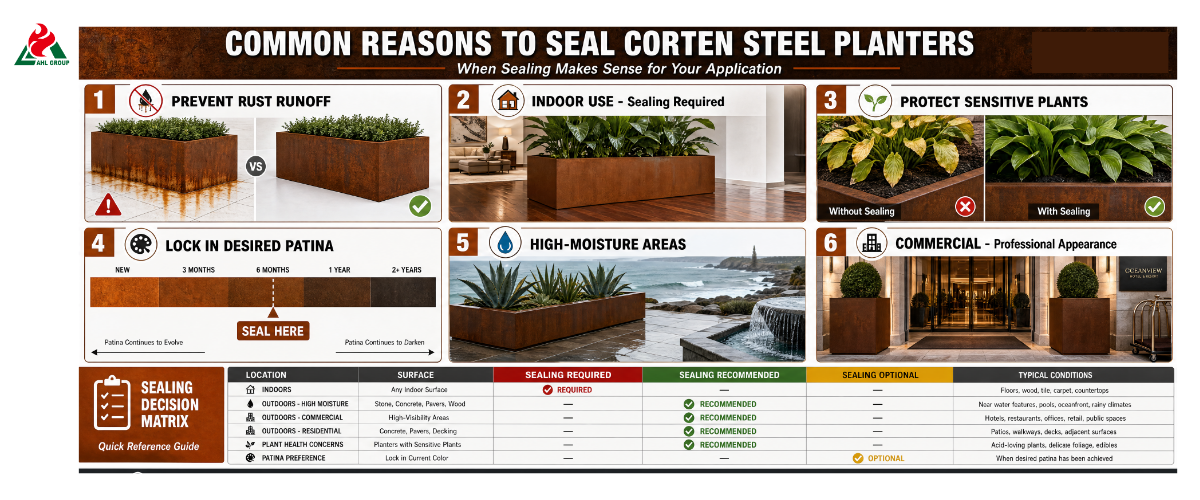
Common Reasons for Sealing Weathering Steel Planters
Preventing Damage to Hardscape: Completely prevent early rust from seeping into expensive stone, tile, or wooden decking.
► Lock in the Color: Pause the metal’s natural patina process to preserve a specific vibrant fiery-orange hue or deep chestnut tone.
► Protect Indoor Spaces: When planter pots are used in commercial entrances or indoor lobbies, prevent rust stains from transferring to clothing, skin, or indoor flooring.
► Limit Industrial Dust: Eliminate dry, powdery iron oxide dust that may blow off the planters in windy conditions.
3. What Sealing Can Help With
Reduce Rust Stains
The main benefit of using a high-quality sealant is that it significantly reduces the leaching of loose iron oxide. By sealing the microscopic pores in the forming rust layer, this chemical coating prevents rainwater from washing away loose rust particles and carrying them down the sides of the planter. This way, even during heavy rain, the surrounding ground remains clean and stain-free.
Protecting Nearby Patios and Decks
Porous building stones act like hard sponges; once rust-laden water seeps into their mineral pores, removing rust stains requires aggressive acid washing or deep mechanical grinding. A high-quality sealer safely locks iron oxide onto the metal surface, ensuring your premium granite, high-quality bluestone, or natural cedar deck always remains spotless.
Slows Surface Staining
Even when metal planters are placed on dark-colored hardscaping, concentrated rainwater runoff can leave uneven dark streaks on the ground over time. Applying a uniform coat of surface sealer ensures that water flowing out of the planters remains completely clear, keeping the surrounding ground looking uniform and neat.
Maintain a More Controlled Appearance
Unsealed weathering steel is constantly exposed to local humidity fluctuations, direct sunlight, and air pollution, which can sometimes result in uneven, mottled marks on different sides of the planter. A sealant helps standardize the surface’s interaction with the external environment, helping the flower pot maintain a clean, consistent, and controlled appearance.
4. What Sealing Cannot Do
It Will Not Stop Corten From Weathering Entirely
No retail-grade chemical coating can permanently prevent the natural oxidation of steel when exposed to the outdoors. Over time, intense UV exposure, extreme freeze-thaw cycles, and temperature fluctuations will inevitably cause microscopic cracks to form in the sealant layer. Once moisture seeps through these tiny cracks, the underlying steel will resume its natural rusting process beneath the sealant coating.
This Does Not Make Planters Maintenance-Free
It is a common misconception to believe that sealed planters will never require maintenance, and this often leads to premature project failure. Transparent sealants installed outdoors will continue to degrade under intense sun and rain, meaning regular inspections and routine touch-ups are needed every 1 to 3 years to maintain their effectiveness.
This Does Not Solve Drainage Issues
If the outdoor planter was not constructed with proper drainage holes, or if the soil mixture inside becomes dense, muddy, and compacted, water will accumulate inside the container. This persistent saturation creates a permanently damp environment that corrodes the steel from the inside out, leading to structural rust-through—a condition that no external clear coating can prevent.
5. Best Time to Seal a Corten Planter
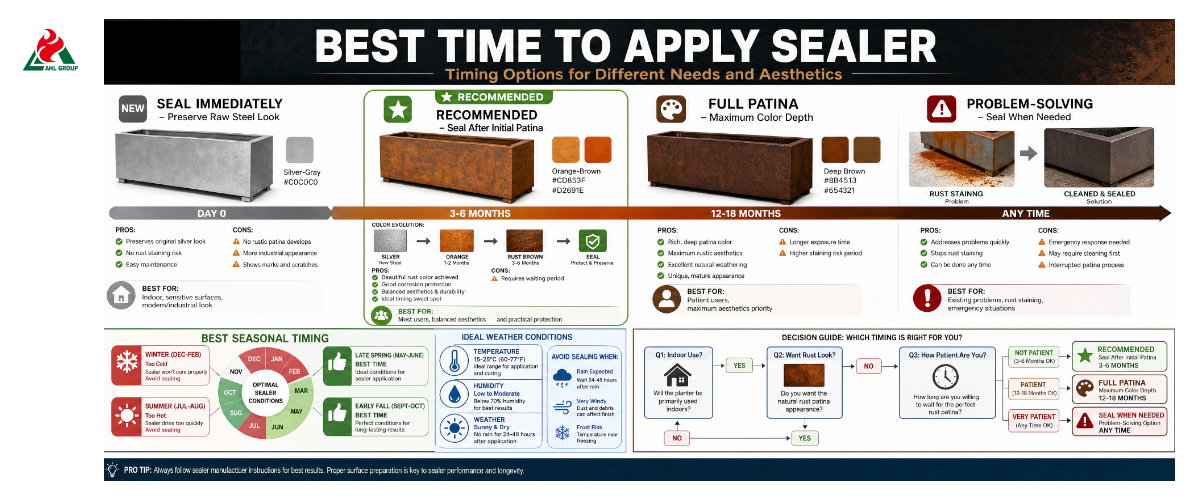
Before Weathering Begins
Although it is possible to seal natural-colored slate-gray Corten steel directly after removing it from its factory packaging, this requires the use of a specialized rust-preventive primer or a clear coat applied directly to the metal surface (DTM). This method permanently locks in its clean, deep-gray industrial appearance and prevents the formation of orange rust spots. However, most buyers choose not to do this, as it would deprive the metal planter of its signature weathered look.
After Rust Has Formed
The optimal time to apply a sealer is after the planter has undergone 3 to 6 months of natural weathering, by which point a dense, relatively stable, and uniform orange-brown rust layer has formed on the surface. At this stage, the loose, powdery surface rust has stabilized, providing the sealer with a clean and textured surface to adhere to, thereby locking in the classic weathered aesthetic.
The Impact of Climate on Timing
The rate at which rust forms depends largely on the local climate. Weathering steel requires cycles of wet and dry conditions to form a protective coating. Planters located in humid coastal areas or rainy regions will develop mature rust quickly, while those in dry, arid desert environments will take longer to rust, thereby delaying the optimal time for sealing.
6. Choosing the Right Sealer
Transparent Sealants
High-performance transparent topcoats—such as exterior-grade acrylic paints, marine polyurethane coatings, or specialized transparent DTM coatings—form a protective film on metal surfaces. These film-forming sealants excel at trapping loose rust particles and completely blocking out moisture, but they are prone to peeling or cracking if the underlying metal undergoes significant thermal expansion and contraction under extreme weather conditions.
Penetrating Sealants
Penetrating sealants—including specialized silane/siloxane mixtures or clear drying oils such as Penetrol—penetrate deep into porous rust layers rather than merely adhering to the surface. They protect steel from the inside out while allowing the metal to retain slight breathability. This deep bond provides exceptional resistance to peeling and cracking under intense UV exposure.
Matte and Glossy Finishes
The finish you choose will completely transform the appearance of the planter:
► Glossy/Semi-Gloss: Creates a shiny, reflective surface that significantly deepens the rust tones. This can sometimes make the steel look like plastic or wet paint, thereby detracting from the original industrial texture.
► Matte/Flat Matte: The preferred choice of design professionals. A flat matte finish provides discreet protection for the steel while preserving the dry, velvety texture of the original rust and its natural earthy tones.
Products to Avoid
Never use cheap, standard indoor clear coatings, low-grade wood varnishes, or all-purpose craft paints on outdoor steel. These products will rapidly degrade when exposed to UV light, forming a cloudy, milky-white film that will crack and peel within months, leaving you with an uneven surface that is extremely difficult to clean up.
7. How to Prepare the Surface
Remove Dirt and Debris
Before applying any sealant, you must thoroughly clean the flower pot. Use a stiff-bristled nylon brush and clean water to scrub away dried soil, accumulated dust, bird droppings, and sticky tree sap. Any dirt left on the metal surface will be permanently sealed underneath, preventing the sealant from bonding properly and causing it to peel off prematurely.
Removing Loose Rust
Although mature patina is stable, a layer of loose, dry, powdery rust may still adhere to the surface. Use a dry cloth, soft-bristled brush, or a soft scouring pad to gently wipe away this loose powder. Be careful not to use wire brushes or highly abrasive grinding wheels, as these tools will scratch through the protective patina, exposing the white bare metal underneath and ruining the overall uniform appearance.
Make Sure the Flower Pot Is Completely Dry
Moisture is the number one enemy of successful sealant application. If sealant is applied to a damp surface, trapped water will evaporate under the hot sun, creating pressure bubbles that cause the varnish to crack and peel. After cleaning, place the landscape planter in direct sunlight for at least 24 to 48 hours until it is completely dry.
Check for Damage or Residue
Conduct a final, thorough inspection of the planter’s corners, welded seams, and drainage edges. Check for stubborn oil stains, grease left over from the manufacturing process, or chemical residues. If you find any oil stains, wipe them off with a clean cloth dampened with a mild solvent (such as isopropyl alcohol), then allow the area to dry completely before proceeding to the next step.
8. Step-by-Step Sealing Process
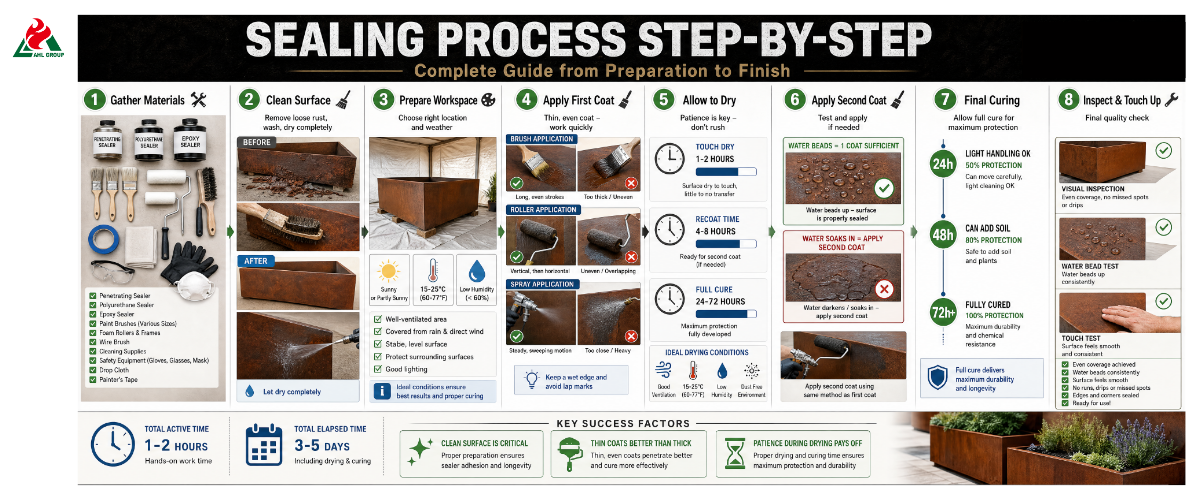
Step 1: Clean the Flower Pot
Carefully scrub the entire outer surface of the planter pot with clean water and a stiff nylon brush to remove all surface dirt. If you encounter stubborn stains, add a drop of mild, plant-safe dish soap, then thoroughly rinse the metal surface with a garden hose until the water runs completely clear.
Step 2: Allow the Surface to Dry Completely
Move the planter to a dry, sunny, and dust-free area. Let it air dry naturally for 24 to 48 hours to ensure that all moisture trapped in the textured rust pores has completely evaporated.
Step 3: Apply the Sealer Evenly
Stir your chosen matte sealer thoroughly—never shake it, as shaking will create air bubbles that will remain permanently in the coating once dry. Using a high-quality natural-bristle brush, a short-pile roller, or an HVLP spray gun, apply a thin, even coat to the metal surface. Always use long, continuous strokes from top to bottom to prevent drips and uneven coverage.
Step 4: Allow the First Coat of Sealer to Cure
Follow the manufacturer’s instructions and allow the first coat of sealer to dry completely (this usually takes 4 to 8 hours, depending on temperature and humidity). While the sealer is curing, protect the durable planter from sudden rain, strong winds, and flying dust.
Step 5: Apply a Second Coat, If Necessary
If the planter is placed on a high-end stone patio, apply another thin coat of sealant to ensure long-term protection. The second coat ensures complete coverage and seals any tiny pinholes that may have been missed during the first application. Wait 24 to 48 hours for the entire project to cure completely before filling the outdoor planter with soil and planting your plants.
9. Safety and Installation Tips
Work in a Well-Ventilated Area
Many professional-grade exterior sealants and drying oils contain high concentrations of volatile organic compounds (VOCs) and emit strong chemical odors as they dry. Be sure to use these products outdoors or in a well-ventilated, open workshop, and wear an appropriate respirator certified by the National Institute for Occupational Safety and Health (NIOSH) to protect your lungs.
Protect Surrounding Surfaces
Before opening the sealant can, lay down a thick drop cloth, heavy-duty cardboard, or a plastic tarp to protect the work area. If clear polyurethane is accidentally splashed or dripped, it may leave permanent, glossy stains on concrete driveways or wooden workbenches—stains that are extremely difficult to remove.
Dealing with Spills and Drips
Keep a clean, dry microfiber cloth handy while working. If sealant accumulates heavily in the bottom corners, around structural rivets, or near drainage holes, wipe away the excess immediately. Large amounts of sealant take a long time to dry and often harden into unsightly, cloudy white clumps.
Test on a Small Area First
Any chemical sealant will cause rust stains to darken slightly. Before applying the product to the entire planter, apply a small amount to a hidden test area—such as the inner rim or the base—to see how it looks. Once it’s completely dry, you can preview the exact color change and ensure you like the final matte or glossy finish.
10. Mistakes to Avoid
Sealing Over Dirt or Moisture
Applying a clear coat over hidden moisture or dust particles traps these contaminants on the steel surface. Trapped moisture quickly compromises the sealant’s adhesion, leading to blistering, cracking, and premature failure—at which point you’ll have to completely strip the entire project and start over.
Using the Wrong Product
Using cheap interior varnish or ordinary metal primer is a recipe for failure. These products lack the advanced UV blockers needed to withstand outdoor conditions, causing the coating to break down, turn yellowish-white, and peel off after just a few months of intense sunlight.
Applying Too Much Sealant
With high-quality sealants, less is more. Applying a single, heavy coat traps solvents beneath the surface, which hinders proper curing and results in a coating that feels soft, tacky, or appears cloudy. Be sure to apply two thin coats rather than one thick coat.
Neglecting Drainage and Overflow
Never apply sealant over the drainage holes at the bottom of the planter. Additionally, ensure the inner walls are lined with a heavy-duty dimpled drainage membrane or a thick pond liner. This step prevents moist, acidic potting soil from coming into direct contact with the exposed internal metal, effectively preventing internal corrosion while maintaining an aesthetically pleasing exterior seal.
11. Maintenance After Sealing
How Often to Inspect Your Planters
Each spring and fall, take a few minutes to inspect the condition of your sealed planters. Carefully examine the base, heavily worn corners, and edges exposed to sunlight, looking for fine cracks, areas of chalking, or early signs of peeling varnish.
When to Reapply Sealant
Depending on the amount of direct sunlight and exposure to harsh weather in your yard, outdoor sealant typically needs a maintenance coat every 1 to 3 years. When water no longer beads on the surface and small patches of new rust begin to appear on the steel, it’s time to clean the surface and quickly apply a fresh coat of sealant.
How to Safely Clean Weathering Steel That Has Been Sealed
To clean sealed planters without damaging the protective coating, simply rinse them with a garden hose and then dry them with a soft microfiber cloth. Never use a pressure washer, abrasive pads, or harsh chemical cleaners, as these will immediately strip away the varnish layer.
Precautions for Long-Term Use
Watch for white, milky discoloration on the sealant layer, as this indicates that moisture has penetrated beneath the coating. If you spot these small spots early, gently sand the area before the moisture spreads, wipe it clean, and quickly apply a touch-up coat to repair it.
12. Frequently Asked Questions
Q1: Can Corten Steel Be Sealed Before It Rusts?
Yes, you can apply a clear, direct-to-metal (DTM) polyurethane coating or clear powder coating directly to the raw, unweathered slate-gray steel. This completely blocks out oxygen, preventing the steel from rusting and permanently locking in its original deep gray, modern industrial look.
Q2: Will Sealing Prevent the Rust Stain Transformation?
No. If you wait until rust stains have formed on the planter before sealing it, the sealant will simply lock in the existing orange-brown tones. Although this may slightly deepen the hue (similar to how water darkens dry soil), it preserves the beautiful, rustic appearance while preventing further discoloration.
Q3: Do Corten Steel Planters Require Sealing?
No, sealing is entirely optional. Sealing is only necessary if you place the modern planter directly on light-colored, porous stone, a concrete patio, or a wooden deck, as iron oxide seepage can leave permanent stains on these surfaces. If placed on gravel, soil, or grass, sealing is not required.
Q4: How Long Does the Sealant Last on Weathering Steel?
For outdoor planters exposed to normal sunlight and rain, a high-quality clear sealant will last 1 to 3 years. Planters placed in full shade will have longer-lasting sealant, while containers exposed to intense desert sunlight all day will require more frequent re-coating.
Conclusion: Key Points on Sealing Corten Steel Planters
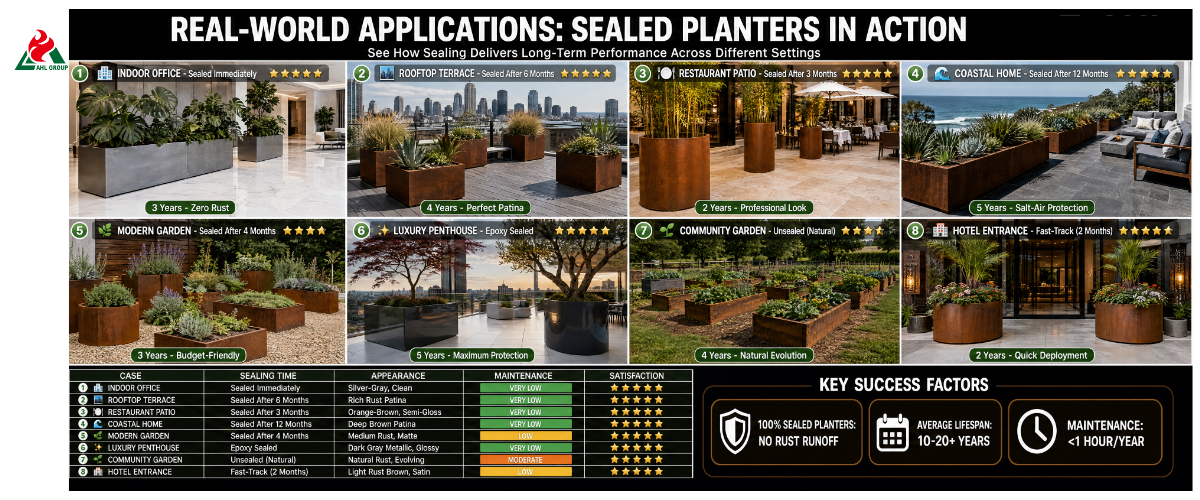
Sealing Corten metal planters is a highly effective and practical solution for controlling iron oxide leaching and protecting high-end hardscape features. Although weathering steel is durable enough to last for decades even when placed directly on bare soil without any sealing, applying a specialized clear sealant allows you to place these aesthetically pleasing architectural planters on clean concrete patios and high-end wooden decks without worrying about leaving permanent stains.
Whether you’re incorporating the planters into a sleek modern space, a luxurious commercial entrance, or an upscale residential patio, the time and effort required to seal them are well worth it. Taking the time to apply a high-quality matte sealer not only protects your expensive stone surfaces but also saves you hours of tedious acid-washing work, while keeping your entire outdoor living area looking neat and professional.
For best results, allow your new planters to weather naturally for several months until a beautiful, even patina forms. Once the surface has stabilized, thoroughly clean the metal surface, let it dry completely for 48 hours, and then apply two thin coats of a high-quality, UV-resistant, outdoor matte penetrating sealer. By following this simple process, you can enjoy the gorgeous, warm style of weathering steel while maintaining a perfectly clean, stain-free patio.

