


The convergence of industrial metallurgy and high-end landscape architecture has given rise to a dominant and enduring aesthetic: weathering steel. Once reserved for heavy infrastructure such as bridges and shipping containers, weathering steel has undergone a dramatic transformation, emerging as a luxurious material for outdoor lighting. As the field of landscape design continues to evolve, Corten steel garden lights are no longer viewed as mere functional accessories; they have become sculptural pillars of modern outdoor living spaces.
This article will delve into the cutting-edge trends, scientific resilience, and architectural philosophy behind the rise of Corten steel in the realm of landscape lighting.
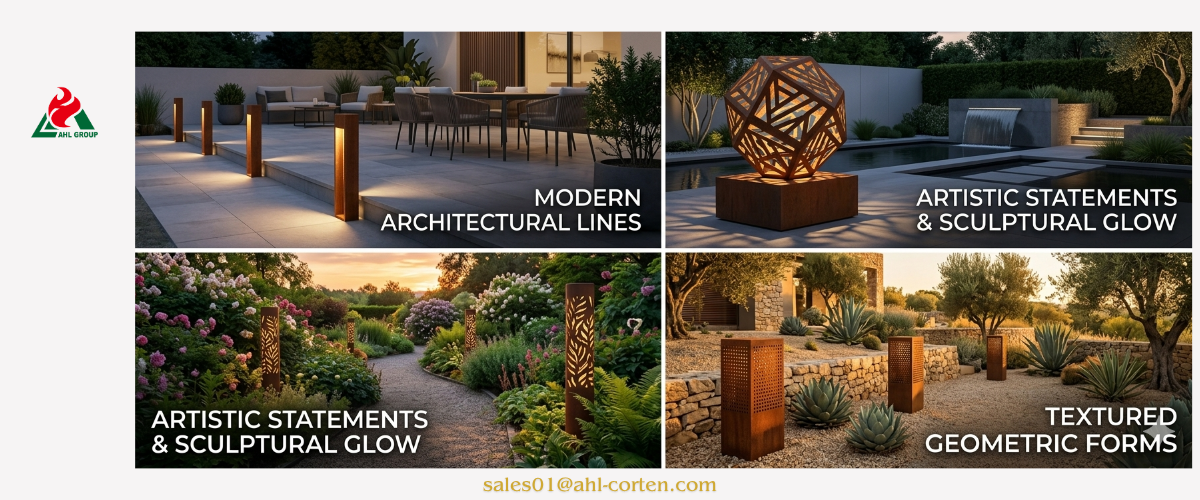
This article will delve into the cutting-edge trends, scientific resilience, and architectural philosophy behind the rise of Corten steel in the realm of landscape lighting.
1. Introduction: The Cultural and Aesthetic Shift in Outdoor Lighting
The Evolution of "Rust" as a Luxury Finish
For decades, oxidation on metal surfaces has been viewed as a sign of neglect and structural failure. However, contemporary design trends have embraced the concept of “wabi-sabi”—finding beauty in imperfection and the passage of time. Weathering steel (commonly known by its generic name, “Corten steel”) epitomizes this shift. It forms a stable, velvety-smooth oxide layer, transforming it into a “living material” that matures alongside the garden in which it resides.
Why Designers Are Moving Away from “Invisible” Lighting
The past decade was marked by “invisible” lighting—fixtures hidden beneath eaves or buried underground to create an ethereal glow. The current trend is the exact opposite: “declarative lighting.” Designers are now opting for Corten steel bollards, columns, and wall sconces that serve as striking industrial sculptures by day and reshape the ambiance at night.
The Role of Weathering Steel in “Biophilic” Urbanism
As city centers grow increasingly crowded, architects are using biophilic design to reconnect residents with nature. The rustic tones of weathering steel—ranging from burnt orange to deep brown—mimic the colors of a forest floor, allowing man-made fixtures to coexist harmoniously with organic elements like wood, soil, and stone, rather than clashing with them.
2. Technical Excellence: Why Corten Outperforms Alternatives
To understand these trends, one must first understand the material itself. Weathering steel is an alloy composed of iron, copper, phosphorus, silicon, manganese, and chromium.
A Protective “Rust Layer”
When exposed to the atmosphere, weathering steel forms a dense “rust layer” that acts as a barrier, preventing oxygen from penetrating the steel. In traditional carbon steel, the rust layer is porous and flakes off, leading to “rust-through.” In weathering steel, however, the rust layer itself serves as a sealing layer. This makes it virtually maintenance-free, with a service life of 50 to 100 years, depending on environmental conditions.
Thermal Stability and Durability
Unlike plastic components that become brittle under UV exposure or powder-coated aluminum that is prone to peeling and flaking, weathering steel offers excellent dimensional stability. It can withstand extreme temperature fluctuations—from bitterly cold winters to scorching summers—without losing its structural integrity. This makes it a cost-effective, long-term investment for both residential and commercial projects.
3. Trend 1: Geometric Minimalism and "The Totem" Aesthetic
The Rise of the Monolith
Modern architecture is strongly embracing “monolithic minimalism.” In courtyard lighting, this trend manifests as tall, slender, square, or rectangular columns. These architectural totems serve as visual anchors within the landscape, creating a sense of order and rhythm.
“Concealed Lighting” and Glare-Free Design
A major trend in high-end lighting is the elimination of light pollution and direct glare. Today, Corten steel bollard lights are designed with internal baffles. LED light sources are concealed at the top of the internal cavity, projecting light downward so that it first reflects off the rusted surface inside before illuminating the ground. This creates a soft, “golden hour”-like glow that is neither glaring nor harsh, while highlighting the texture of the steel.
Micro-Chamfers and Precision Craftsmanship
Despite the material’s rugged appearance, manufacturing processes are moving toward high precision. Manufacturers utilize five-axis laser cutters and CNC bending technology to create seamless joints and micro-chamfered edges. These subtle details ensure that even industrial materials like steel can exhibit a jewel-like finish when placed in a garden setting.
4. Trend 2: Parametric Perforations and Shadow Art
Beyond Simple Cut-outs: The Science of Parametric Design
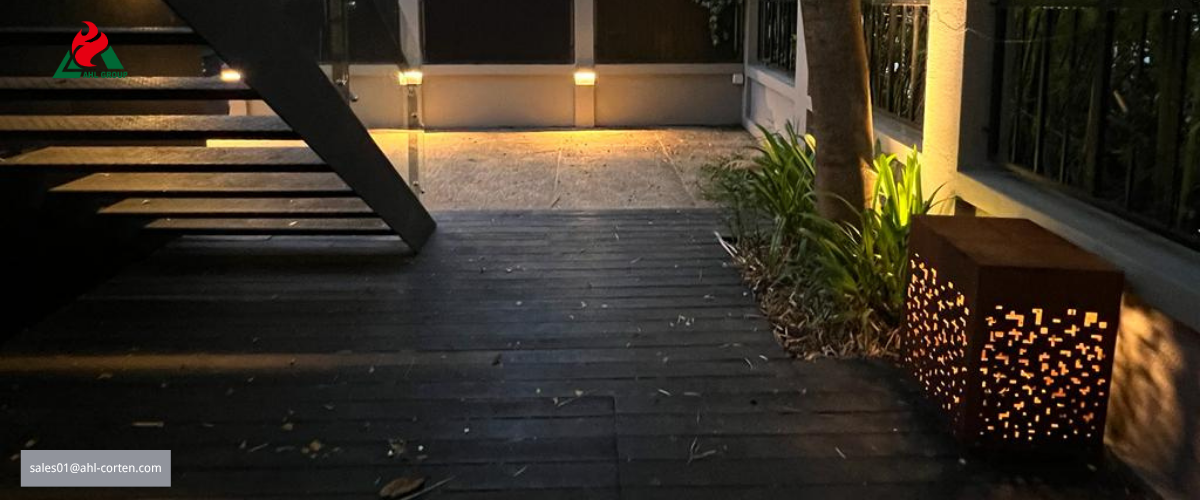
Parametrism refers to the use of algorithms to create complex, fluid patterns. In Corten steel lighting design, this trend is replacing traditional floral or geometric openwork patterns. These patterns may begin as tiny dots at the base of a light pole and gradually “bloom” toward the top into large, intricate mesh structures, creating a sense of dynamic flow.
Light as a Projector: “Shadowscapes”
Perhaps the most striking trend is the use of light to “paint” the surrounding environment. When light sources are placed inside perforated Corten steel screens or bollards, they project patterns onto sidewalks, walls, and greenery.
► “Starry Night” Effect: Randomly distributed small holes create a constellation-like visual effect on the ground.
► “Forest Path” Effect: Organic, branch-like openwork designs transport viewers to a moonlit forest, even in the heart of the city.
Custom Branded Signage for the Hospitality Industry
Luxury hotels and wineries are increasingly adopting laser-cut Corten steel lights to integrate their brand identities. Thanks to the extreme durability of their patina, these branded lights can maintain their appearance for decades, offering a higher return on investment compared to traditional signage.
5. Trend 3: Hybridization and Multi-Functional Fixtures
The "Light-Planter" Synergy
As urban green spaces continue to shrink, outdoor furniture and amenities are being called upon to play a greater role. Integrating lighting into Corten steel planters has become an increasingly popular trend. By adding recessed light strips to the corners of large Corten steel planters or incorporating built-in lampposts, designers can save space while creating a cohesive design aesthetic.
Integrated Seating and Streetlight Poles
In public parks and commercial plazas, “illuminated benches” made of weathering steel have become a major trend. The robust nature of this steel allows it to serve as the structural base for the benches, while integrated LED lights provide safe illumination for pedestrian areas.
6. Trend 4: Sustainable Technology and Smart Control
High-Performance Solar Integration
In the past, solar-powered garden lights were often viewed as “cheap” or “dim.” Today, that has changed. Premium Corten steel lamps now feature integrated monocrystalline silicon solar panels, which are concealed within the top of the fixture. When paired with high-capacity lithium-ion batteries, these fixtures provide over 12 hours of continuous lighting without any wiring, making them ideal for remote areas or historic sites where trenching is prohibited.
RGBW Smart Rust-Effect Lighting
Smart lighting allows users to change the color of their outdoor spaces via an app. While cool blue tones often clash with the warmth of rust, designers are utilizing amber and warm red RGBW modes to enhance the natural hues of Corten steel. In winter, slightly cool white light makes the frost on the steel surface sparkle; in autumn, deep orange makes the rust effect appear to “burn.”
Motion-Sensing Features Compliant with Dark Sky Standards
To reduce light pollution, there is a strong demand for “dark sky-compliant” lighting fixtures. Today’s smart weathering steel fixtures are equipped with PIR (passive infrared) sensors that maintain a 10% “dim” state when no one is present, and boost brightness to 100% when someone passes by. This not only saves energy but also protects local wildlife from the effects of excessive artificial light.
.png)
7. Installation Mastery: Best Practices for Modern Projects
Managing the "Bleeding" Phase
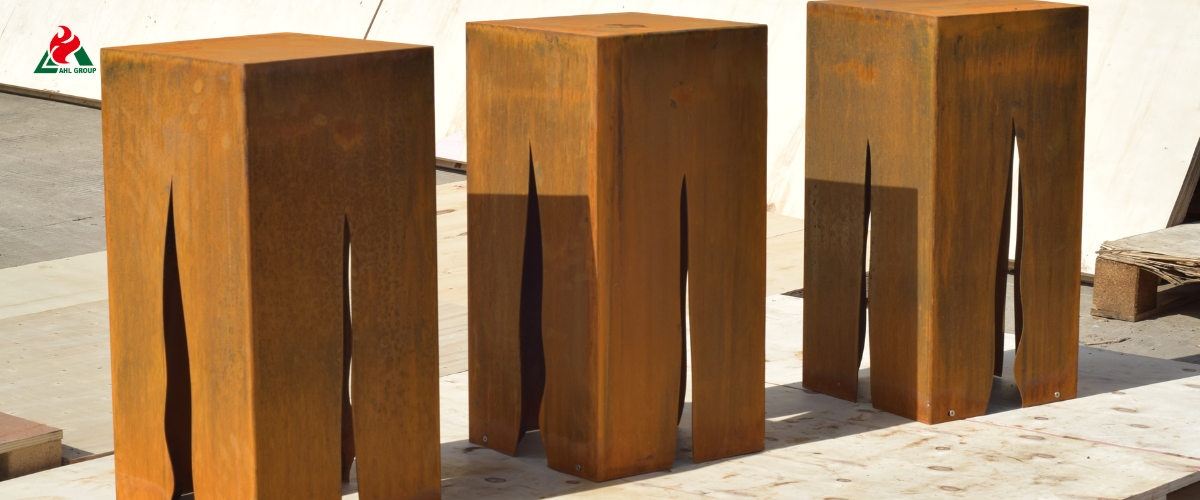
All weathering steel will “bleed” or develop rust during the first few months of exposure to the air. A major trend in professional installation is the use of pre-weathered finishes. Manufacturers can now accelerate the rusting process in-house using proprietary chemical treatments, meaning the garden lights arrive on-site in a stable condition, significantly reducing the risk of staining expensive stone patios.
Strategic Layering of Light and Shadow
The “golden rule” for 2024 is layering. Professionals do not rely on just one type of fixture.
► Pathway Layer: 30-centimeter-high bollards to ensure safety.
► Middle Layer: 60- to 90-centimeter-high posts to define flower bed boundaries.
► Sculptural Layer: Perforated columns over 120 cm tall, serving as visual focal points.
The Right Color Temperature
For weathering steel, the only acceptable color temperature is 2700K to 3000K (warm white light). Anything above 4000K (cool white light) makes rusted steel appear “cold” and dull, robbing it of its natural warmth and unique character.
8. Maintenance and Long-term Care Myths
Myth 1: You Need to Oil Corten Lights
Fact: Never oil weathering steel. Oiling interrupts its natural oxidation process, resulting in blotchy, unsightly marks on the surface. If the steel becomes dirty, simply rinse it with clean water.
Myth 2: Rust Will Eat Through the Fixture
Fact: With a minimum thickness of 2 to 3 millimeters (AHL Corten steel standard), it would take over a century for atmospheric corrosion to affect the structural integrity of the luminaire.
Recommendations for Cleaning Perforated Patterns
In dusty environments, spiders or insects may spin webs within the laser-cut patterns. A soft-bristle brush and compressed air are the best tools for keeping the “shadow art” clear and sharp.
Conclusion: The Future of Corten Steel in Landscape Design
Looking ahead, trends in Corten steel garden lighting are moving toward greater “personalization” and “technological integration.” We are witnessing the rise of “custom manufacturing”—architects send CAD files to manufacturers like AHL Group to have unique patterns laser-cut for individual private estates.
Corten steel’s enduring popularity stems from its raw, authentic character. This material never hides the marks of time; instead, it embraces them as a badge of honor. By combining this timeless material with modern laser technology, smart control systems, and sustainable solar power, we are creating a new generation of outdoor spaces—spaces that are equally beautiful and captivating at 2 a.m. as they are at 2 p.m.
Whether you’re a homeowner seeking a unique accent piece or a landscape architect planning a city park, the message is clear: weathering steel is the gold standard for outdoor lighting, combining durability, artistry, and contemporary style.
Are you ready to transform your landscape with the latest weathering steel lighting technology? AHL Group specializes in precision fabrication and custom design. Browse our highly sought-after catalog of streetlight poles, columns, and wall sconces today, or contact our engineering team to bring your unique vision to life.

