


Landscape edging is the unsung architect of the garden. Although often overlooked during the initial conceptual phase, it is a key element in maintaining the structural integrity and visual hierarchy of the landscape over the long term. In this highly sophisticated field of landscape architecture, selecting the “best” edging is no longer merely an aesthetic issue, but an engineering decision involving materials science, water management, and long-term financial strategies.
If borders are poorly managed, they can lead to “border creep”—where invasive roots fill the gaps between lawns and groundcover, resulting in hundreds of hours of manual labor. Conversely, high-performance border systems serve as permanent barriers that define spaces, regulate soil pressure, and enhance property value. This guide provides a comprehensive technical analysis of all major border materials currently available on the market.
If borders are poorly managed, they can lead to “border creep”—where invasive roots fill the gaps between lawns and groundcover, resulting in hundreds of hours of manual labor. Conversely, high-performance border systems serve as permanent barriers that define spaces, regulate soil pressure, and enhance property value. This guide provides a comprehensive technical analysis of all major border materials currently available on the market.
1. Introduction: The Technical Necessity of Boundaries
Why Landscape Edging Matters
From an ecological perspective, a garden is a place of constant conflict. Grasses, especially varieties with creeping rhizomes such as Bermuda grass or Kentucky bluegrass, are survivors that have evolved to thrive in open, bare soil environments. Without a physical underground barrier, these plants will inevitably invade flower beds, competing with flowers for nutrients and water. While garden edging serves to contain root spread, its benefits extend far beyond that. It helps manage surface runoff during extreme weather events, ensuring that expensive decorative gravel or organic mulch stays in place rather than being washed onto sidewalks or into drainage systems. Additionally, it creates a “mechanical buffer zone.” By providing a solid vertical surface, edging allows lawn mowers and trimmers to operate at peak efficiency while avoiding damage to delicate perennials or the trunks of ornamental trees. Essentially, edging is an insurance policy for your landscape investment.
What Makes Edging "Best" for Different Projects?
To determine the “BEST” edging, it is essential to shift the focus from “initial price” to “total cost of ownership” (TCO). Material performance must be evaluated based on three criteria: structural rigidity, chemical stability, and aesthetic durability. In high-traffic commercial plazas, the “best” curbstone is one that can withstand being run over by a 500-kilogram commercial lawn mower without deforming. In coastal residential settings, the “best” edging material should possess chemical inertness to resist salt spray corrosion. Designers must also consider the “lifecycle carbon footprint”—that is, the energy consumption required for the production, transportation, installation, and eventual replacement of the material. A material with a 50-year lifespan (such as weathering steel) often has a lower environmental impact than plastic alternatives that need to be replaced every 36 months.
Popular Materials Overview
The market can be divided into two segments: synthetic/short-term materials and permanent/structural materials. In the low-end market, we see recycled plastics and rubber, which prioritize ease of initial use and low entry-level prices. In the mid-range market, pressure-treated wood and aluminum strike a balance between warmth and weight. In the high-end structural materials segment, we find natural stone and weathering steel. Each material possesses its own unique “design DNA.” For example, metal can achieve the ultra-thin profiles required for modern minimalism, while stone creates a substantial, timeless visual impact for traditional or rustic-style estates. Understanding these differences is the first step toward avoiding buyer’s remorse in landscape construction.
2. Stone Edging: The Heritage Approach
Natural Stone (Flagstone, River Rock, Granite)
Natural stone is the gold standard in landscape design. It possesses unique geological characteristics that synthetic materials cannot replicate. Slate is typically quarried from sandstone or limestone quarries; due to its flat surface and ease of stacking, it is often used in formal garden border designs and can be employed to construct low retaining walls or “double-layered” borders. In contrast, river pebbles are used to create a more fluid, natural transition. From a technical standpoint, stone borders excel at temperature regulation; the stone absorbs heat during the day and slowly releases it at night, which helps improve the microclimate for sensitive plant varieties. However, the installation process requires a high level of craftsmanship. Natural stones vary in size, which means each stone must be fitted by hand—a process known as “dry-stone masonry.” Without a deep, compacted gravel base, natural stones are prone to “heaving” in climates with frequent freeze-thaw cycles, leading to uneven edges and a disorganized appearance over time.
Concrete Pavers and Blocks
The precast concrete curbing industry has undergone a technological revolution. Today’s high-performance paving stones are made with high-density additives, making them water-resistant and salt-resistant. For many professionals, concrete paving stones are the “best” functional edging material because they can be installed as “mowing strips.” By laying a row of level pavers flush with the lawn, homeowners create a stable path for the mower’s wheels. This allows the blades to cut every blade of grass right to the edge, requiring virtually no subsequent trimming. Structurally, modern concrete pavers typically feature an “interlocking” design that prevents lateral movement under soil pressure. Despite these advantages, concrete pavers can appear “bulky,” and their horizontal footprint—typically 100 to 150 millimeters—is significantly larger than that of metal pavers, which are only 3 millimeters thick. Consequently, they are less suitable for narrow urban courtyards.
Pros and Cons: The Reality of Masonry
The primary advantage of masonry (stone or concrete) lies in its “timeless durability.” Granite curbs can even outlast the house itself. Furthermore, it is the only material that can significantly enhance a home’s “curb appeal” and resale value, as it is considered a permanent improvement rather than a temporary landscaping feature. Its drawback, however, is the “total installation cost.” Due to the high cost of materials per foot, combined with labor-intensive tasks such as digging deep trenches, laying leveling sand, and potentially “embedding” the stone in concrete, masonry projects typically cost 5 to 10 times more than other options. Furthermore, stone “lacks flexibility”—once installed, altering the shape of a flower bed requires complete demolition and reconstruction, making it unsuitable for homeowners who prefer to frequently redesign their landscapes.
3. Metal Edging: The Modern Engineering Standard
Steel and Aluminum Landscape Edging
Metal edging is the top choice for contemporary “high-definition” landscaping. Standard steel edging is typically powder-coated in black or forest green, forming a high-strength vertical barrier that appears nearly invisible from a distance. Its unmatched strength-to-thickness ratio allows for the creation of straight lines that remain rigid even under the pressure of moist soil. Aluminum, on the other hand, is the “queen of curves.” Because aluminum is inherently softer and more malleable than steel, it can be bent into complex arcs with extremely tight radii without specialized tools and without leaving “creases.” Furthermore, aluminum possesses natural rust-resistant properties, making it the default choice for coastal properties where the air is laden with corrosive salts. However, aluminum is more susceptible to “impact deformation”—a heavy blow from a lawnmower could leave a permanent dent that is difficult to repair.
Corten Steel Edging: The "Architect’s Darling"
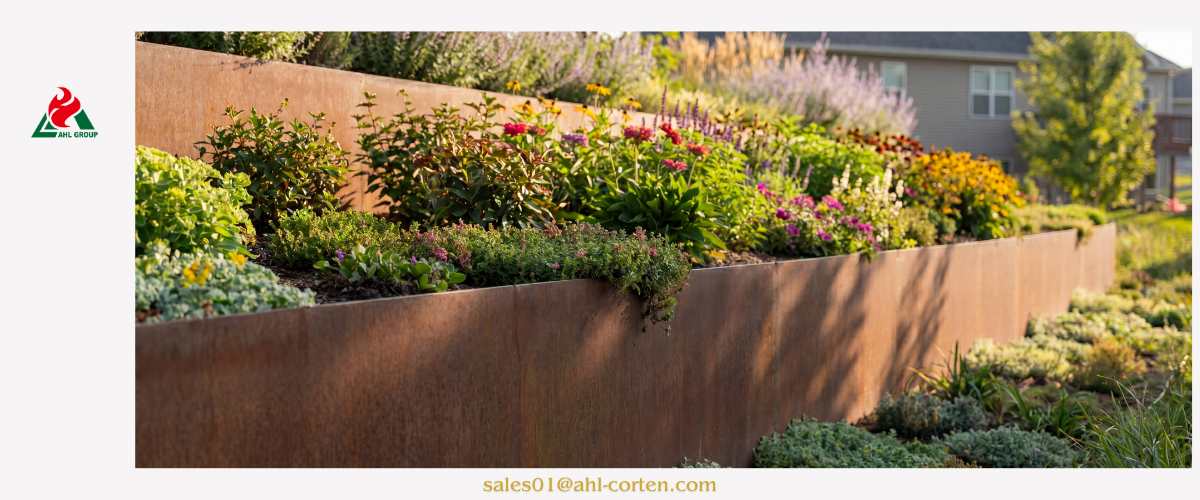
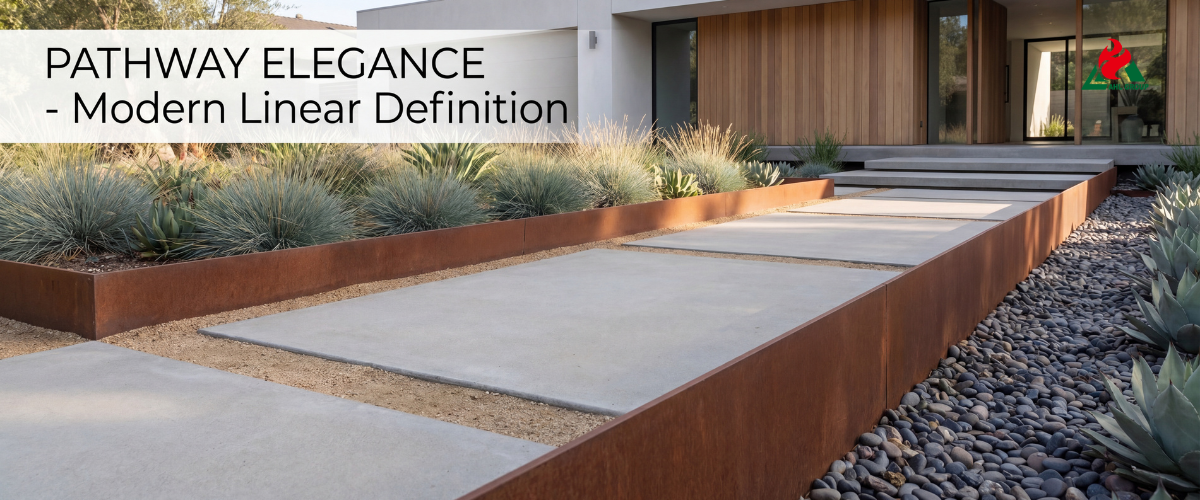
Weathering steel edging (Corten steel) has become the most popular material in high-end landscape design. This material is a copper-chromium-nickel alloy with properties distinct from those of ordinary low-carbon steel. When exposed to the natural environment, it does not develop “rust” in the traditional sense, but instead forms a stable, amorphous oxide layer known as “patina.” This patina isolates the underlying steel from oxygen and moisture, effectively halting the corrosion process. From a design perspective, weathering steel exhibits warm, rustic orange-brown tones that complement lush greenery while also harmonizing with modern building materials such as glass and concrete. It is a “site-specific” material, meaning its color evolves differently based on local humidity and rainfall, thereby imparting a unique regional character to the landscape.
Pros and Cons: Precision vs. Practicality
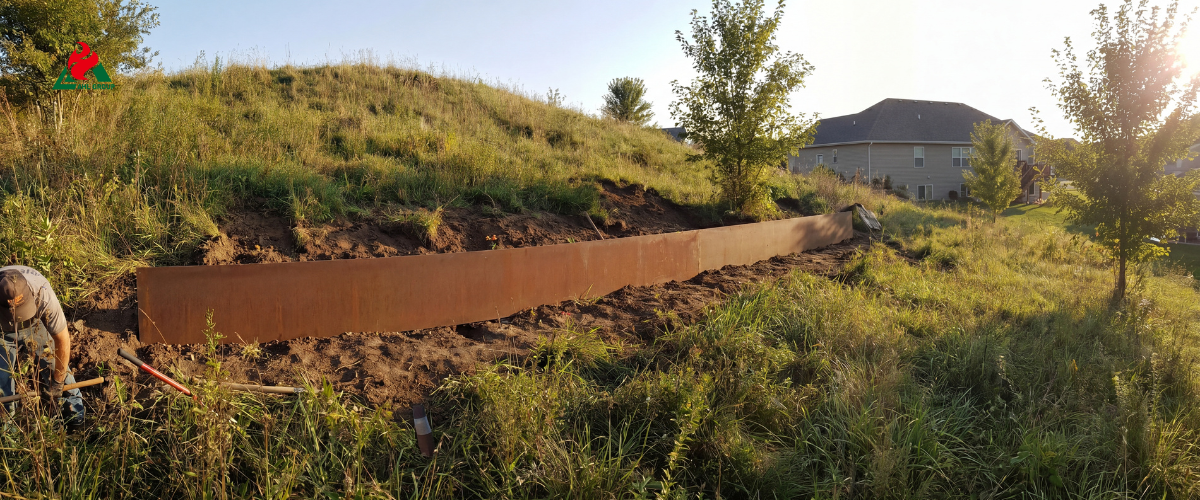
The primary advantage of metal landscape edging lies in its architectural precision. No other material can provide a 3- to 6-millimeter profile that remains perfectly vertical year after year. For professional installation teams, metal edging is also relatively easy to install, as it uses a “tongue-and-groove” system that allows for quick assembly. Its disadvantages are primarily related to temperature and on-site safety. Under extreme weather conditions, metal borders can become hot enough to scorch delicate groundcover plants that come into direct contact with them. There are also safety concerns: if the edges are installed too high, or if the top edges are not “fabricated” or deburred, they may pose a risk of cuts to children or pets. Finally, weathering steel undergoes a “bleeding” phase during the first 12 months; if drainage buffer zones are not properly planned, the iron oxide runoff may stain light-colored concrete or stone.
4. Plastic and Rubber Edging: The Entry-Level Solution
Flexible Plastic Rolls (HDPE and PVC)
Most DIY landscaping projects use high-density polyethylene (HDPE) or PVC rolls. These products are designed for ease of access and are typically sold in 20-foot-long rolls that can be transported in a standard passenger car. The primary engineering challenge with plastic lies in its coefficient of thermal expansion. As temperatures fluctuate, plastic undergoes significant expansion and contraction. Because soil is a dense and rigid medium, this expansive force often pushes the plastic upward, causing it to “bulge” out of the ground after a single winter. To prevent this, professional-grade plastic edging typically features a “V-shaped base” or “dome-shaped” flange design intended to anchor it in the soil, but these designs are only partially effective. In 2026, to cater to environmentally conscious consumers, industry trends are shifting from virgin plastic to “ocean-bound plastic,” although structural limitations remain.
Recycled Rubber Edging
Recycled rubber edging is typically made from shredded car tires and serves as a softer alternative to hard plastic. It is commonly used in commercial playgrounds and residential “soft landscaping” because it poses no risk of injury even if children fall on it. Rubber is naturally more UV-resistant than inexpensive plastics and does not become as brittle at freezing temperatures. However, rubber edging has significant aesthetic drawbacks: its appearance often seems “utilitarian,” lacking the crisp, clean lines required for high-end residential design. Furthermore, the gardening community is still debating the issue of tire chemicals “leaching” into the soil, particularly in vegetable gardens, making rubber more suitable for purely decorative areas or play zones.
Pros and Cons: Accessibility vs. E-Waste
The “advantages” of plastic and rubber undoubtedly lie in their cost and convenience. For homeowners on a tight budget, plastic edging can instantly define flower beds at a fraction of the cost of metal or stone. Installation requires no special tools—typically just a flat-bladed shovel and a pair of heavy-duty shears. The “drawbacks” lie in their environmental impact and outdated aesthetics. The typical lifespan of plastic edging is only 3 to 7 years. Once it begins to crack or “bulge,” it not only becomes a tripping hazard but also loses its ability to contain grass roots. This leads to a cycle of “tear down and replace,” which both increases landfill waste and requires repeated labor costs. In the context of “sustainable landscape design,” plastic is increasingly viewed as a suboptimal choice for any project intended to last beyond a few seasons.
5. Composite and Wood Edging: The Naturalist’s Mid-Tier
Pressure-Treated Wood and Cedar
Wooden borders create a natural, warm atmosphere that complements traditional, pastoral, or rustic-style gardens. Pressure-treated wood (typically pine or fir) is infused with copper-based preservatives to resist rot and insect damage. Cedar and redwood are excellent natural alternatives; they contain “camphor”—a natural oil that repels termites and fungi without the need for chemical treatment. Wooden edging is particularly effective when creating raised garden beds. Because wood provides a distinct vertical profile, designers can use it to elevate the soil level, creating deeper planting spaces and better drainage conditions for vegetables or ornamental plants. However, wood is a “perishable” material. Even the best-treated wood will eventually rot when exposed to damp soil over time, with a typical lifespan ranging from 8 to 15 years.
Composite Lumber Edging (WPC)
Wood-plastic composites (WPC) offer a modern solution to the problem of rot. Made by blending recycled wood fibers with thermoplastic resins, these products combine the aesthetic appeal of wood with the weather resistance of plastic. Today’s high-end composites feature a “coating” technology—a protective outer layer that prevents UV-induced fading and resists scratches from gardening tools. Composite materials are an excellent “mid-range” choice: they are more durable than plastic, yet more economical and easier to install than stone. Their main drawback is structural warping. Lacking the internal structural strength of solid wood, composite decking may “snake” or arch when installed over long distances unless secured with heavy-duty ground anchors every 18 to 24 inches.
Pros and Cons: Aesthetics vs. Maintenance
The advantages of wood and composite materials lie in their ease of installation and cohesive, unified visual appeal. Wood can be easily cut with a standard miter saw and secured with galvanized screws, making it a favorite among DIY enthusiasts who seek a “rustic” look. It also blends seamlessly with wooden fences, decks, and pergolas. Its drawbacks include maintenance requirements and the risk of eventual deterioration. Wood requires regular inspection for “soft spots” and may need to be resealed every few years to maintain its color. Once the base (the area “in contact with the ground”) begins to rot, the entire section must be replaced. Additionally, organic gardeners are concerned that copper-based preservatives may leach into the soil in vegetable-growing areas, so many opt for untreated cedar, which is more expensive but safer.
6. Comparison Table: The Structural Matrix
| Material Category |
Structural Rigidity | 25-Year TCO | Design Compatibility | Eco-Impact Score |
| Corten Steel |
Highest | Lowest | Modern / High-End | High (Recyclable) |
| Natural Stone |
High | Medium | Traditional / Rustic | Medium (Quarrying) |
| Aluminum |
Medium | Medium | Minimalist / Coastal | High (Recyclable) |
| Wood (Cedar) |
Medium | High | Cottage / Organic | High (Biodegradable) |
| Composite |
Medium | High | Suburban / Deck-Match | Medium (Plastic) |
| Plastic Rolls |
Lowest | Very High | Temporary / Budget | Low (Petroleum) |
7. Strategic Selection: Matching Material to Site Typology
Flower Beds and Intricate Garden Borders
For flower beds featuring “S-curves” or organic, flowing shapes, the best choices are aluminum or 3-millimeter-thick weathering steel. These materials can be shaped into smooth, continuous curves, avoiding the “segmented” effect commonly seen with brick and stone. Aluminum is particularly suitable here because its flexibility allows for on-site adjustments during planting to accommodate changes in the garden layout.
Separating Lawns from Pathways
Lawn borders require materials capable of withstanding the “vibration stress” from commercial mowing equipment. Heavy-duty steel (typically 5 mm or thicker) is the gold standard here. It creates a clear, sharp, “razor-thin” boundary that neither obstructs the view of the lawn nor provides a sufficient vertical barrier to prevent grass roots from crossing the gap and invading adjacent groundcover or gravel paths.
Driveways and Hardscape Perimeters
Driveways are high-stress zones. When vehicles turn on gravel or paver-stone driveways, they generate immense lateral forces. Ordinary plastic or thin aluminum sheets will deform immediately. The only suitable edging materials for driveways are concrete curbs, Belgian pavers, or 6-millimeter steel plates. These materials provide the necessary “reaction force” to prevent the driveway surface from spreading outward and to maintain its shape.
8. Installation Best Practices: The Engineer’s Checklist
The "Hydraulic Base" and Trenching
The primary cause of landscape border failure is inadequate drainage. If water is allowed to pool at the bottom of the border, it will lead to soil saturation and cause “hydrostatic heave.” The best practice is to dig a trench 50 mm deeper than the height of the edging and backfill it with 50 mm of compacted sharp sand or crushed stone with a particle size of 1/4 inch or smaller. This creates a stable “drainage layer” that allows water to flow away from the edging material, thereby preventing wood rot and excessive metal corrosion.
“Two-thirds Rule” (Burying Depth)
To prevent “popping up” (i.e., the edging strips springing up from the ground), professionals use a 2:1 ratio. At least two-thirds of the total height of the edging strip should be buried underground. For example, with a 150-millimeter steel strip, 100 millimeters should be buried, leaving 50 millimeters exposed. This ensures that the weight of the soil acting on the buried portion provides sufficient support to keep the exposed section perfectly vertical at all times, even when stepped on.
9. Trending Choices: The Future of the Boundary
Dark Modernism: The "Black-Out" Trend
This design season, black anodized aluminum and black powder-coated steel have replaced the traditional green and brown. Designers are using black borders to create high-contrast “picture frames” around lawns. This visual technique makes the colors of the plants appear more vibrant and gives the garden a “high-definition” effect reminiscent of professional photo retouching.
Biological Integration and Solar Edging
A niche but emerging trend is “biological” edging—a composite material embedded with beneficial fungi (mycorrhizae) that slowly permeate the flower beds, thereby improving soil health. Meanwhile, integrated solar edging is also gaining popularity: ultra-thin, flexible solar threads are laminated onto weather-resistant steel or aluminum strips, emitting a subtle, “runway-like” glow at night without the need for additional lighting fixtures.
.png)
Conclusion: Assessing the “Best” Edge Treatment
Ultimately, there is no one-size-fits-all “best” edge treatment solution, but there is a “right” choice for every specific situation.
► For homeowners who value historical heritage: If you plan to live in your current home for more than 20 years and prioritize the integrity of the architecture, weathering steel or natural granite is undoubtedly the best choice. The high initial cost will gradually be offset by decades of maintenance-free use.
► For professional landscape architects: Aluminum and structural steel strike the best balance between installation speed and client satisfaction.
► For temporary solutions: If you’re staging a home for sale or managing rental properties, high-quality composite materials deliver the best visual impact with the lowest short-term investment.
The evolution of landscape design proves that “boundaries” are just as important as the “garden” itself. By selecting materials based on budget, climate, and maintenance tolerance, you can ensure your landscape remains a place of beauty rather than a constant chore.
At AHL Group, we manufacture the industry’s most durable and architecturally refined Corten steel edging. From custom laser-cut heights to pre-weathering services, we provide the technical foundation for the world’s most exquisite landscapes. Contact our engineering team today to request technical submission documents or a custom project quote.

