


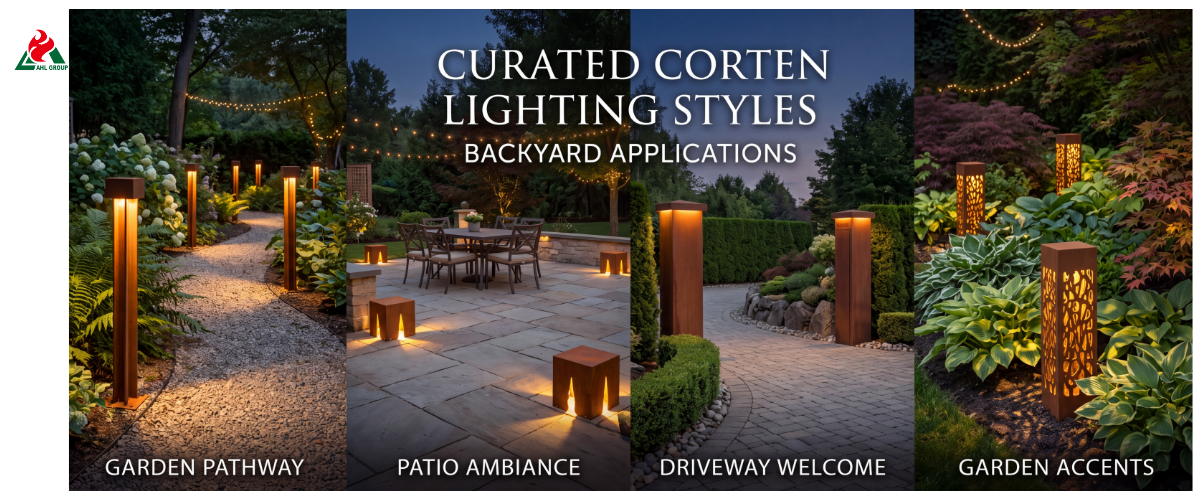
Corten outdoor lights are widely popular because they seamlessly blend functional lighting with architectural design. They not only illuminate a space but also become part of the landscape itself. The natural rust-colored patina of weathering steel creates a warm contrast with greenery, stone pathways, concrete surfaces, and wooden structures. During the day, the lights themselves serve as decorative elements. At night, the light casts shadows, highlights the textures of materials, and enhances the overall ambiance of the backyard. For landscape designers, Corten steel lighting is particularly appealing because it seamlessly blends the built environment with the natural surroundings. This rustic hue makes outdoor spaces appear more natural and visually harmonious.
1. Introduction
Why Corten Steel Outdoor Lights Are So Popular in Backyards
In modern landscape architecture, outdoor lighting has evolved from a basic security need into a key design element. Corten steel path lights have surged in popularity among high-end landscape designers and discerning homeowners who seek a balance between functionality and exceptional style. Unlike the stark, commercial-looking black or metallic silver fixtures that look out of place during the day, weathering steel lights present an organic and architecturally aesthetic texture. Their warm, earthy tones blend naturally into the garden landscape, transforming basic path markers into exquisite design highlights—even when the lights are off.
How Do They Differ from Other Outdoor Fixtures
The key distinction lies in the unique metallurgical properties of weathering steel. Standard aluminum or plastic landscape lighting relies on painted or powder-coated surfaces, which are prone to chipping, cracking, peeling, and fading when exposed to constant sun and rain. Weathering steel, however, is specifically designed to form a dynamic, self-healing layer of iron oxide rust when exposed to the elements. This beautiful amber-brown outer layer protects the underlying structural steel core from moisture and oxygen, eliminating the risk of structural failure due to corrosion while creating a rich and ever-evolving surface effect that becomes increasingly charming as the years go by.
This Guide Will Help You Make Your Choice
Selecting the perfect outdoor light involves balancing design preferences with the practical realities of structural engineering. This guide is a comprehensive, code-compliant purchasing manual designed to walk you through the technical selection process. We’ll explore the various types of Corten steel lights available on the market, provide a detailed analysis of key performance metrics such as color temperature and lumen output, examine the principles of lighting layout and spacing, and evaluate how to match specific light geometries with the unique layout of your yard.
2. What Types of Corten Lights Are Available
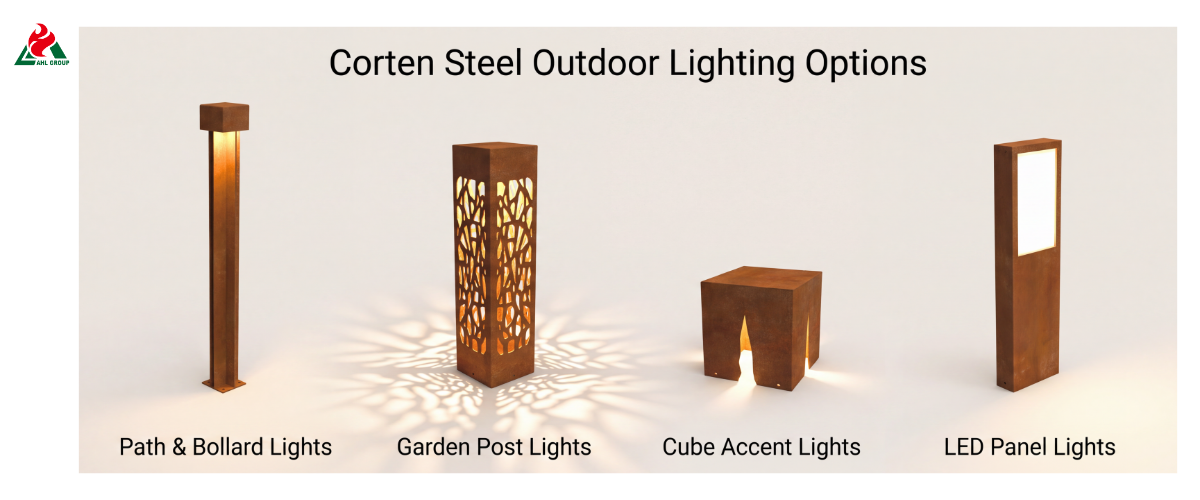
Path Lights
Path lights are low-profile, downward-facing fixtures designed specifically to illuminate sidewalks, stepping stones, and entrance steps. They typically feature a top cover or a shade that directs light straight down toward the ground, thereby preventing upward glare. This downward-focused design makes them ideal for enhancing safety along garden paths while precisely directing light to the areas underfoot that need illumination.
Pole Lights
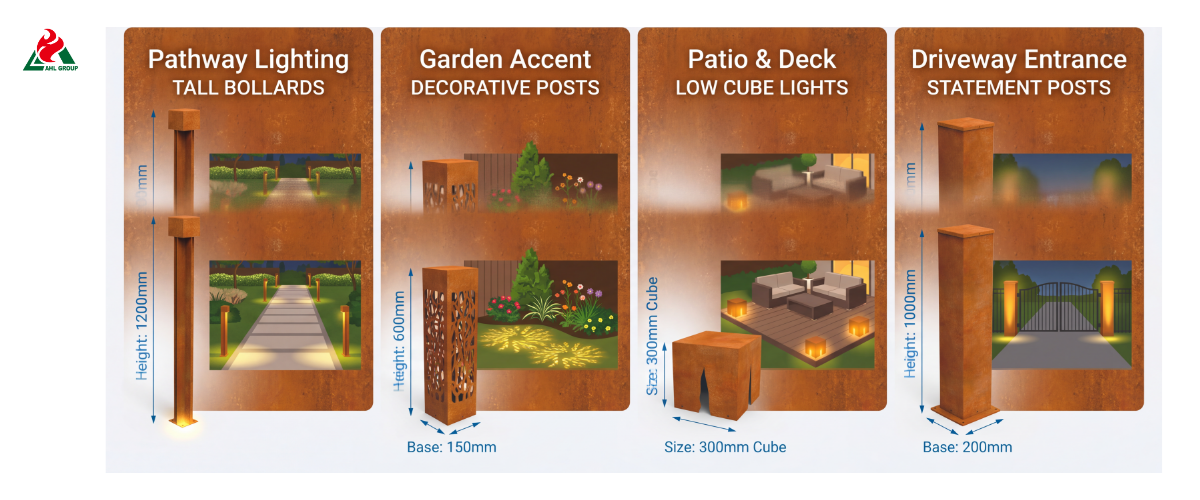
Pole lights are tall, sturdy, vertical fixtures that serve as striking architectural landmarks. Ranging in height from 18 to 36 inches, they are widely used to outline long driveways, accent the corners of large patios, or add structural interest to commercial sidewalks. Due to their large surface area, they perfectly showcase the rich texture of Corten steel’s patina, making them highly artistic sculptural design elements during the day.
Wall Sconces
Corten steel wall sconces and wall-mounted step lights are specifically designed for direct installation on vertical surfaces, such as residential exterior walls, brick retaining walls, or wooden privacy fences. These fixtures typically feature a dual-directional lighting design that casts warm light both upward and downward onto the surface. This design highlights the texture of the wall while illuminating surrounding pathways with a radiant glow.
Decorative Garden Lights
Decorative garden lights are creative and highly artistic fixtures, often featuring intricate laser-cut geometric grids, abstract plant branches, or leaf patterns. When the internal light source shines through these laser-cut patterns, it casts beautiful and delicate shadow patterns onto the surrounding lawns, flower beds, and patio walls, transforming dim corners of the garden into magical nighttime spaces.
In-Ground Lights or Accent Lights
In-ground lights, also known as well lights, are recessed fixtures installed directly into the ground, lawn, or wooden deck. Although the main body of the fixture is hidden beneath the surface, they feature a sturdy, weather-resistant steel decorative ring that can easily withstand foot traffic and the weight of a lawnmower. These fixtures are ideal for upward illumination of structurally beautiful trees, large outdoor sculptures, or imposing architectural columns.
3. What Makes a Corten Light Good for a Backyard
Luminous Flux and Brightness
In the realm of high-end landscape lighting, higher brightness isn’t necessarily better. For backyard paths and garden walkways, it’s recommended to choose fixtures with a luminous flux of 100 to 300 lumens per fixture that emit soft, glare-free light. Keeping the luminous flux within this range ensures safe path illumination without dazzling guests or disrupting the tranquil, natural atmosphere of the garden at night.
Warm vs. Cool Color Temperatures
The color temperature of LED bulbs (measured in kelvins, or K) can completely transform the visual appeal of your yard. Never use cool white light (4,000K to 6,000K) on weathering steel, as it will make this textured metal appear cold, pale, and industrial. Instead, always opt for an ultra-warm color temperature between 2,200K and 2,700K. This golden, amber light complements the warm orange-brown hues created by rust, creating an exceptionally cozy, high-end resort-like atmosphere.
Durability and Weather Resistance
Garden lighting must be able to withstand extreme temperature fluctuations, lawn sprinklers, heavy rain, and winter frost. Choose fixtures made of sturdy, thick weather-resistant steel (at least 2 to 3 millimeters thick) rather than thin, inexpensive steel. Additionally, ensure that the internal electrical components have an Ingress Protection (IP) rating of IP65 or higher, which guarantees that the electronic components are completely sealed against heavy dust and splashing water.
Size and Visual Proportions
The size of the light fixture must harmonize with the surrounding plants and hardscape. A small 12-inch path light will quickly appear insignificant among dense, tall ornamental grasses; conversely, a massive 36-inch commercial streetlight pole placed alongside a narrow, delicate flagstone path will look bulky and out of place. Before purchasing, measure the mature height of nearby plants to ensure the fixture is installed at the ideal height.
Ease of Installation
For a smooth DIY installation, choose fixtures that offer flexible mounting options. High-quality Corten steel garden lights should come with interchangeable mounting systems: these include heavy-duty reinforced nylon or aluminum ground stakes that can be driven directly into garden soil, as well as pre-drilled solid steel flange plates for secure bolting to concrete bases, stone steps, or wooden decks.
4. Best Corten Light by Use Case
Best for Pathway Lighting
The ideal pathway lighting solution features low-profile pathway lights between 14 and 18 inches in height, with downward-directed light and an asymmetrical reflector. This clever geometric design projects light forward and downward toward the ground, clearly illuminating stepping stones and the edges of the path while keeping the light source hidden from view to prevent glare.
Best for Patios
For outdoor entertainment areas, such as dining patios, fire pit areas, and outdoor kitchens, we recommend medium-sized square or cylindrical post lights (24K ultra-warm-toned LEDs, approximately 200 lumens). Placing them at the outer corners of the patio space creates a clear visual boundary while casting warm ambient light, making your seating area feel cozy and private.
Best for Garden Edges
When illuminating the boundary between the lawn and raised beds, we recommend slender, minimalist post lights or laser-cut decorative posts. These fixtures provide ample yet soft light that outlines the garden’s contours while highlighting the rich textures of flowers and low shrubs, creating a beautiful sense of depth along the garden’s edges.
Ideal for Accent Lighting
To highlight visual focal points such as multi-trunked Japanese red maples, massive rocks, or architecturally styled fountains, choose powerful, directional well lights or adjustable accent spotlights equipped with heavy-duty, Corten steel housings. This allows the fixtures to be concealed beneath mulch or in a gravel bed, ensuring that the visual focus remains entirely on the beautifully illuminated landscape.
Best for Modern Landscapes
For modern, minimalist-style backyards, choose geometric, standalone streetlight poles with sharp lines and clean, simple forms, featuring recessed LED light strips embedded within. These clean, structured designs complement the minimalist style of modern homes perfectly, while the rich, weathered patina of weathering steel softens the sharp lines of modern architecture.
5. Design and Style Considerations
Choosing Lighting Fixtures Based on Garden Style
Lighting fixtures should complement the architectural style of your home. Minimalist, block-shaped Corten steel lamp posts are ideal for Mid-Century Modern, Industrial Urban, and Contemporary landscapes. In contrast, soft, rounded organic columns and rustic, open-shade designs blend perfectly into traditional English country gardens, rural farmsteads, and natural woodland retreats.
Choosing Between Minimalist and Sculptural Designs
► Minimalist Lighting: Featuring concealed light sources and clean, crisp lines, these fixtures create a soft, unobtrusive glow that blends seamlessly into the background, drawing the eye to pathways and plants.
► Sculptural Lighting: Characterized by bold forms, artistic contours, and intricate laser-cut patterns. These fixtures are designed to attract attention—during the day, they resemble striking metal sculptures, and at night, they cast bold patterns of light and shadow throughout the garden.
How a Weathered Surface Changes the Visual Effect at Night
The matte, textured surface of weathering steel interacts with light to create a captivating effect. Unlike polished stainless steel or polished brass, which produce sharp, bright reflections, the rough iron oxide surface of weathering steel gently absorbs and diffuses light. This creates a soft, deep amber glow that eliminates glaring spots while beautifully distributing light throughout your patio.
How the Shape of Light Affects Shadow Patterns
The solid or openwork design of an outdoor light determines how light is projected onto the patio floor. A solid rectangular streetlight pole with open slits at the bottom casts crisp, clean bands of light along the path. Meanwhile, a pole featuring an intricate laser-cut botanical lattice pattern projects a vast network of flowing, forest-like shadows across the lawn, creating a captivating and artistic atmosphere.
6. Performance Factors
Weather Resistance
Genuine Corten steel performs exceptionally well under harsh weather conditions. The addition of copper and chromium to the alloy allows the metal to cycle between wet and dry states, thereby forming a dense, self-healing layer of goethite crystals. This microscopic protective layer effectively prevents corrosion of the underlying structure, enabling the luminaire to easily withstand heavy rain, winter snow, and scorching summer heat.
Outdoor Service Life
High-quality, heavy-gauge weathering steel light fixtures have a service life of 40 to 60 years or more. Unlike aluminum fixtures, which may oxidize and flake after ten years, or plastic fixtures that become brittle and crack under intense UV exposure, Corten steel bollard lights are virtually indestructible, making them a true lifetime investment for your property.
Heat Dissipation Management
High-brightness LEDs generate internal heat, which must be efficiently dissipated to prevent premature bulb failure. Solid Corten steel possesses excellent thermal conductivity, acting as a massive natural heat sink. The thick metal base rapidly draws heat away from the sensitive internal LED drivers, keeping electronic components cool and ensuring they reach their rated service life of 50,000 hours.
Maintenance Requirements
Once a Corten lamp has developed a mature patina, it requires virtually no further maintenance. Since this metal does not require regular painting, staining, or chemical rust-proofing, the only maintenance needed is a brief annual inspection: clear away wet leaves from the base, wipe dirt from the lampshade, and ensure that the ventilation openings remain unobstructed.
Energy Efficiency
To reduce utility bills and minimize environmental impact, be sure to choose fixtures equipped with modern, low-voltage 12V or 24V DC integrated LED modules. Compared to older halogen bulbs, these systems save up to 85% on electricity, remain cool to the touch and safe during operation, and allow for long-distance wiring using slim, easily concealable low-voltage landscape cables.
7. Installation Tips
Choosing the Right Installation Location
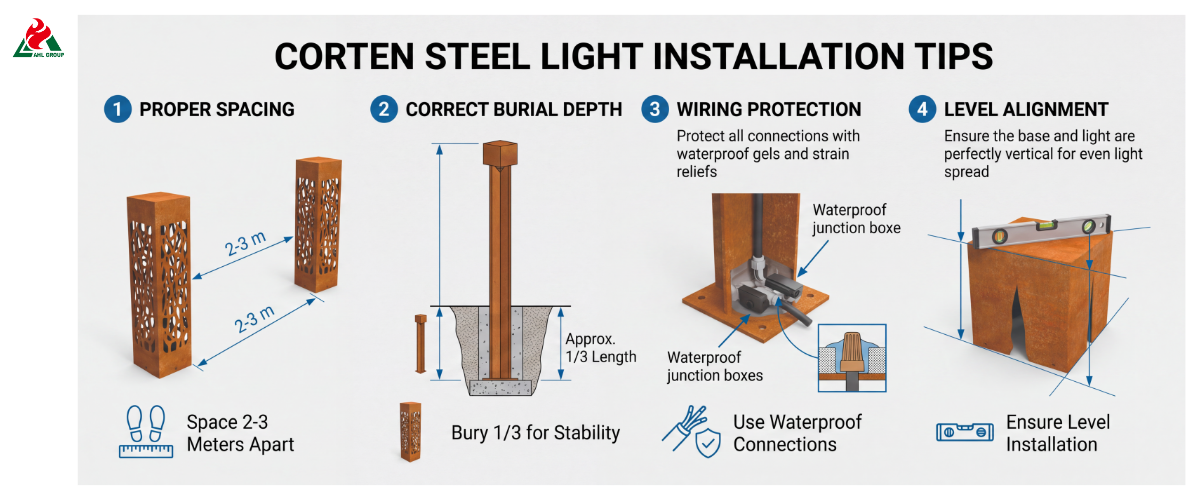
When planning the layout, position the lights slightly away from the outer edge of the walkway. Set the lights back about 6 to 12 inches toward the garden beds; this not only prevents them from being accidentally struck by bulky lawn mowers or trimmers but also allows nearby low-growing vegetation to perfectly frame the warm glow.
Planning Light Spacing
A common design mistake is placing lights too close together, which creates a bright, commercial “runway effect” that disrupts the tranquil atmosphere of the backyard. To achieve a professional and balanced design, space path lights 6 to 10 feet apart and arrange them in a staggered pattern, alternating between both sides of the path. This creates soft, overlapping pools of light that naturally guide the eye forward.
Prepare the Base or Installation Surface
When installing on soft soil, drive long, sturdy, heavy-duty ground stakes deep into the ground and lay a layer of fine gravel beneath them to ensure proper drainage. For structural bollards installed on hard-paved surfaces, pour a small, solid concrete foundation block, embed stainless steel anchor bolts into the concrete, and securely fasten the luminaire’s bottom flange plate to prevent sagging or shifting over time.
Avoid Glare and Light Spill
To maintain a relaxed and comfortable atmosphere in your outdoor space, prevent light pollution and direct glare. Choose path lights equipped with fully shielded light sources, recessed LED chips, or downward-tilting louvers. This clever design hides bright bulbs from your direct line of sight, ensuring guests see only the beautifully illuminated path—not the glaring bulbs.
Blend with Existing Landscape Elements
Use the natural layout of your garden to guide your lighting design. Hide accent spotlights behind existing low boulders to highlight a beautiful retaining wall; mount slim wall sconces directly onto the posts of a wooden gazebo to illuminate the dining patio; or place fixtures beneath large, overhanging tree canopies to capture and reflect warm ambient light.
8. Corten Lights vs Other Outdoor Lights
Corten vs Aluminum
Powder-coated aluminum is lightweight and inexpensive, but it is highly susceptible to environmental erosion. Over time, scratches from gardening tools or chips from flying rocks can expose the underlying aluminum, causing white oxidation blisters to form and leading to cracking and peeling of the coating. Weathering steel, on the other hand, easily withstands impacts and naturally heals scratches through continuous weathering.
Corten Steel vs. Stainless Steel
Stainless steel offers excellent structural strength and corrosion resistance, but its bright, reflective silver surface creates a cold, ultra-modern industrial aesthetic. Stainless steel requires constant cleaning to remove unsightly fingerprints, oil stains, and water marks, whereas the matte, textured rust patina of weathering steel completely conceals dust and dirt.
Corten Steel vs. Plastic or Resin
Inexpensive plastic or composite resin light fixtures are common in big-box stores, but they deteriorate quickly in outdoor environments. Prolonged exposure to intense UV rays from the sun causes them to fade, makes the plastic brittle, and leads to cracks in the fixture within just a few seasons. Weathering steel can withstand intense sunlight, heavy snow, and extreme cold while maintaining consistent structural strength.
Corten Steel vs. Painted Metal
Standard painted carbon steel lighting fixtures, while initially strong, fail quickly when used outdoors. Once moisture seeps through pinholes in the paint finish, it triggers deep and destructive rust that corrodes the metal core, causing the fixture to sag and fail. In contrast, the controlled rust layer on weathering steel acts as a permanent protective barrier, preventing deep corrosion before it begins.
Comparison Table: Landscape Lighting Materials
| Performance Metric | Corten Weathering Steel | Powder-Coated Aluminum | Stainless Steel (316) | Polyplastic / Resin |
| Average Lifespan | 40+ Years | 8–12 Years | 25+ Years | 2–4 Years |
| Maintenance | Virtually Zero | Touch-up painting | Frequent wiping | Replacement |
| UV Resistance | Excellent (Immune) | Prone to fading | Excellent | Poor (Turns brittle) |
| Visual Quality | Organic / Living | Solid / Static | Modern / Cold | Cheap / Synthetic |
| Self-Healing | Yes (Via Patina) | No (Bubbles/Peels) | No | No |
9. Common Mistakes to Avoid
Inappropriate Lighting Fixture Sizing
Installing small, low-profile streetlights alongside a wide, imposing concrete driveway will look out of place; conversely, placing bulky, large industrial light poles along a narrow, winding garden path will make the space feel cramped. Be sure to sketch out a layout first and select lighting fixtures whose size matches the scale of the hardscape elements.
Using the Wrong Color Temperature
For weathering steel, purchasing cool white (4000K+) or standard daylight-colored LED bulbs is a major design mistake. Cool blue light clashes severely with the earthy orange tones created by rust, making the fixtures appear cold and unattractive. Be sure to carefully review the packaging instructions and select warm-toned LED bulbs with a color temperature between 2200K and 2700K to highlight the rich beauty of the metal.
Excessive Lighting
Turning your backyard into a brightly lit commercial parking lot will ruin the tranquil atmosphere of your garden at night. Resist the urge to install lights along every inch of the sidewalk. Leave unlit spaces between the lights to highlight the beauty of soft shadows and subtle contrasts, creating a refined and layered design.
Neglecting Drainage or Environmental Conditions
Although weathering steel can easily withstand heavy rain, it must never be left submerged in standing water for extended periods. If a light fixture’s base is buried in a low-lying, poorly drained clay depression where water remains for weeks, the metal will be deprived of the oxygen needed to dry out and cannot undergo the natural wet-dry cycle, leading to premature structural corrosion.
Focusing on Appearance Over Performance
It’s easy to be captivated by beautiful laser-cut metal designs online, but it’s easy to overlook the internal electrical design. Never sacrifice quality for style; before purchasing, be sure to verify that the luminaire is equipped with a high-quality internal LED driver, premium waterproof seals, and a verified IP65+ waterproof rating.
10. Frequently Asked Questions
Q1: Are Corten Outdoor Lights Suitable for Backyards?
Yes, Corten lights are an excellent choice for backyards. Their high-strength structural core can easily withstand extreme weather, and their warm, natural amber-brown hue blends more naturally into flower beds and modern landscapes than standard painted metal or plastic lights.
Q2: Do Corten Steel Lights Rust Too Much When Used Outdoors?
No. Although Corten steel sheds a small amount of loose iron oxide powder during the initial 12- to 18-month weathering process, this process slows significantly once the rust layer matures. The rust layer shrinks and hardens, forming a stable, permanent crystalline protective layer that prevents the steel core from rusting further.
Q3: What Color Temperature Is Best for a Backyard?
An ultra-warm color temperature between 2200K and 2700K works best. This warm, golden-yellow light complements the rich orange and deep espresso tones of weathering steel, creating a soft, cozy, and upscale resort-like atmosphere for your outdoor living space.
Q4: Which Weathering Steel Lights Are Easiest to Install?
Low-voltage (12V or 24V DC) weathering steel path lights equipped with heavy-duty ground stakes are undoubtedly the easiest to install. Simply insert them directly into loose garden soil and connect them to a safe, low-voltage landscape wire—no need to dig deep trenches or use professional electrical conduit.
Conclusion: Core Considerations for the Best Corten Steel Backyard Path Lights
The weathering steel path lights best suited for your backyard should combine a sturdy, durable, thick-walled structural design with an elegant aesthetic. By selecting high-quality lamps crafted from 2- to 3-millimeter-thick weathering steel, paired with warm-toned LED modules with a color temperature of 2200K to 2700K, and ensuring they have a certified IP65+ waterproof rating, you can guarantee that your lighting system will remain both aesthetically pleasing and reliable for decades to come.

