


Corten steel fire pits can serve as a durable visual focal point in an outdoor living area, but the bottom of the fire pit is most susceptible to heat and moisture. Therefore, selecting the appropriate base material is a critical step in protecting the fire pit and ensuring its safe operation.
The choice of the best lining depends on the fuel type, fire pit structure, steel plate thickness, drainage design, and the manufacturer’s specifications. For many wood-burning fire pits, laying a layer of suitable fire-resistant volcanic rock or refractory material provides effective thermal protection. Gas fire pits, on the other hand, require closer attention to burner clearances, drainage, ventilation, and approved combustion media.
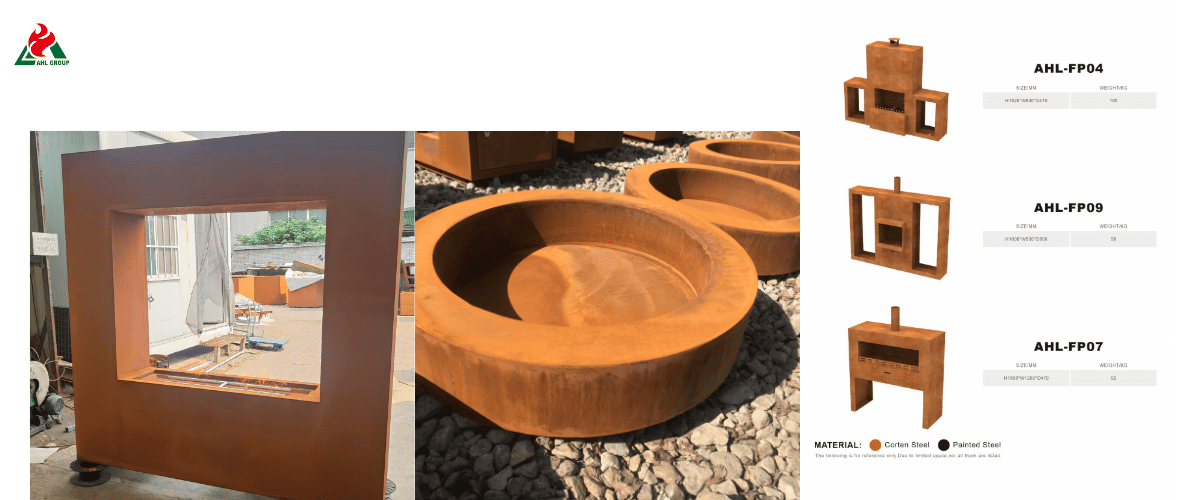
The choice of the best lining depends on the fuel type, fire pit structure, steel plate thickness, drainage design, and the manufacturer’s specifications. For many wood-burning fire pits, laying a layer of suitable fire-resistant volcanic rock or refractory material provides effective thermal protection. Gas fire pits, on the other hand, require closer attention to burner clearances, drainage, ventilation, and approved combustion media.
1. Introduction
Why Is the Fire Pit Liner Important
The bottom lining of a Corten fire pit serves as the primary barrier between the intense heat of the fire and the metal structure of the pit. Although Corten steel is renowned for its high tensile strength and resistance to atmospheric corrosion, the bottom of the fire pit must still withstand concentrated thermal shock, localized hot spots from embers, and prolonged chemical exposure from damp wood ash.
How the Lining Protects the Corten Steel Pit
A protective base layer isolates the steel from extreme direct-fire temperatures that can exceed 1,200°F (650°C). It distributes heat evenly across the entire base surface, preventing localized metal deformation or stress fractures. Additionally, a non-porous or well-draining layer prevents damp wood ash from adhering directly to the steel plate, thereby halting the acid corrosion cycle during rainy weather or periods of high humidity.
In Short: Which Material Is Best
The best material depends on your fuel type:
► For wood-burning fire pits: Medium-sized fire-resistant volcanic rock (1 to 2 inches) or firebricks provide the best insulation and drainage.
► For gas/propane fire pits: Fire-rated volcanic rock or specialized tempered fire-resistant glass, paired with a stainless steel burner tray, provides the best flame diffusion and safety.
This Guide Will Help You Make Your Choice
This technical guide evaluates lining materials, thickness ratios, thermodynamic properties, and installation procedures. Whether you have a compact patio fire bowl or a heavy-duty commercial fire pit made of Corten steel, this guide provides practical, code-compliant recommendations.
2. Do You Need to Line the Bottom of a Corten Fire Pit
When Can You Use a Weathering Steel Fire Pit Without a Liner
Heavy-duty weathering steel fire pits—particularly those made from weathering steel (ASTM A588 or ASTM A606-4) that is 5 mm to 6 mm thick or thicker—can technically be used without a bottom liner when burning wood at low intensities. Their substantial material thickness provides sufficient structural margin to withstand thermal cycling without structural failure.
When Is a Protective Bottom Liner Recommended
If your Corten outdoor fire pit meets any of the following conditions, installing a bottom liner is strongly recommended:
► It is made of standard 3-millimeter or 1/8-inch steel plate.
► It is used frequently, or is often subjected to prolonged, high-heat (BTU) burning.
► It is placed directly on patio pavers, deck flooring, or fragile ground surfaces with poor heat resistance.
► No ventilation grate is installed above the fire pit.
What Effects Do Ashes and Moisture Have When in Direct Contact with Steel
Wood ash contains high concentrations of potassium carbonate and calcium oxide. When mixed with rainwater or ambient moisture, the ash forms a strongly alkaline solution (lye). If damp ash is left on an untreated weathering steel surface for an extended period, it will destroy the protective copper-chromium patina, leading to severe pitting corrosion over time.
Why the Fire Pit’s Design Is More Important Than the Lining Itself
The lining must work in tandem with the built-in design elements. Proper ground elevation, integrated drainage holes, and removable firewood grates ensure that heat radiates outward rather than being directly conducted to the structural subfloor.
3. Best Materials for Lining a Corten Fire Pit
Refractory Lava
This naturally porous volcanic rock is lightweight, affordable, and virtually unaffected by thermal shock. It allows water to permeate freely while also serving as a heat source, helping to dissipate heat beneath a blazing charcoal fire.
Volcanic Rock and Fire Pit Filler
Specially crushed volcanic basalt chunks or tumbled fire stones provide a clean, neat appearance. They remain sturdy and durable even at high temperatures, without cracking or shattering.
Refractory Bricks
High-density refractory bricks (composed of alumina and silica clay) are specifically designed for kilns and wood-burning stoves. They can withstand extremely high direct heat and provide complete thermal insulation for the steel base plate beneath.
High-Temperature Ceramics or Refractory Panels
Precast refractory cement panels or ceramic blankets provide an ultra-thin thermal barrier. They are ideal for custom-shaped Corten steel fire tables where weight and space are strictly limited.
Fire-Rated Gravel and Stone
Porous expanded shale or crushed lava gravel (dust-free) can serve as a cost-effective, well-draining base fill beneath kindling or a burning tray.
Stainless Steel or Specialized Metal Liners
Built-in, embedded liners made of 304 or 316 marine-grade stainless steel form a physical barrier. This completely isolates the flames from the Corten steel body and prevents direct contact with ash.
4. Lava Rock: A Popular Choice for Corten Fire Pits
Why Lava Rock Is Ideal for Wood-Burning Stoves
Lava rock contains thousands of tiny air pockets formed as the volcanic rock cooled. These air pockets act as a natural insulating layer, preventing intense heat from the fire from transferring to the base of the Corten steel fireplace while allowing air to circulate beneath the embers.
Heat Resistance and Thermal Stability
Genuine volcanic lava can withstand sustained operating temperatures exceeding 2,000°F (1,093°C) without melting, flaking, or deteriorating.
Lava and Drainage
Unlike soil or sand, lava does not absorb moisture, nor does it compact into a hard, layered structure. Water drains quickly through the gaps between the rocks, keeping the bottom drainage holes clear and dry.
Recommended Layering Thickness
For optimal protection, maintain an even layer of lava rock across the entire bottom of the fire pit, with a thickness of 2 to 3 inches (50 to 75 millimeters).
Advantages and Disadvantages of Volcanic Rock
► Advantages: Excellent drainage, affordable, superior thermal insulation, lightweight, and long service life.
► Disadvantages: Over time, ash may accumulate in the gaps between the rocks, requiring regular seasonal rinsing or sifting.
When Volcanic Rock Is Superior to Solid Liners
In outdoor wood-burning applications, volcanic rock outperforms solid floor liners because it does not retain rainwater or block the bottom ventilation channels.
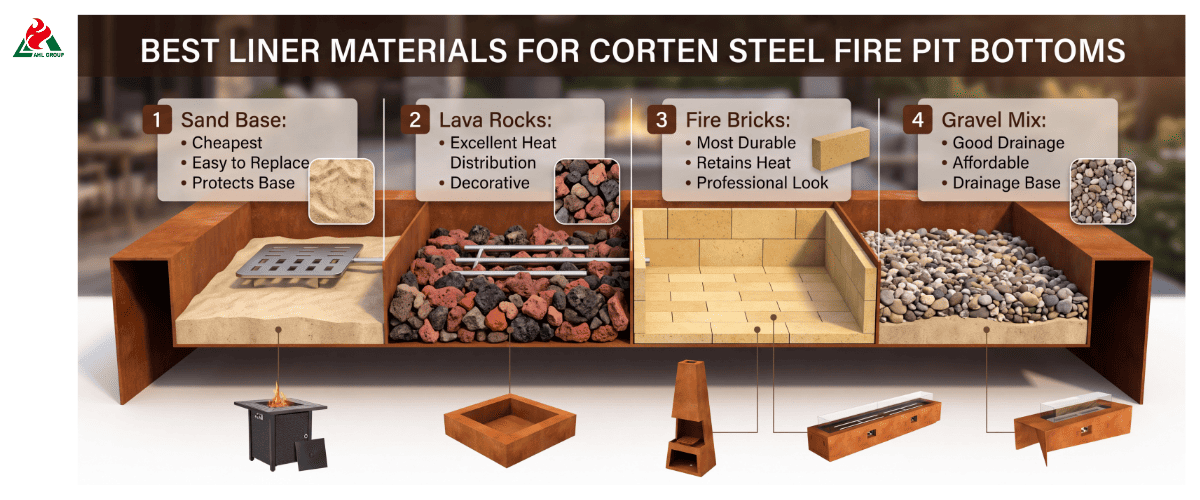
5. Fire Bricks and Refractory Liners
What Are Refractory Materials
Refractory materials are dense ceramic minerals designed to maintain structural strength and low thermal conductivity even when in direct contact with flames.
How Refractory Bricks Protect the Steel Base Plate
Refractory bricks act as a complete thermal barrier. By reflecting heat into the combustion chamber, they improve combustion efficiency while keeping the steel base plate cool.
Recommended Applications for Refractory Linings
► Deep, box-shaped fire pits made of weathering steel.
► Heavy-duty wood-burning fire pits built near wooden decks or patio floors.
► Custom outdoor fireplaces requiring high internal thermal insulation.
Refractory Bricks vs. Volcanic Rock
Although refractory bricks offer excellent thermal insulation, they are heavy. If sufficient drainage gaps are not left at the base during installation, moisture may accumulate beneath the joints.
Installation Precautions and Thermal Expansion
Be sure to lay refractory bricks loosely, leaving a 1/8-inch expansion joint between each brick. Never bond firebricks directly to a weathering steel base plate with mortar, as steel and ceramic have different rates of thermal expansion.
When to Opt for a Professional-Grade Lining
For fire pits that are used 6 to 10 hours a day—such as those in high-traffic commercial settings, hotels, or restaurants—a firebrick lining is the ideal choice.
6. Choosing the Right Lining for Wood-Burning Fire Pits
The Effect of Wood Fire on the Bottom of the Griddle
A wood fire creates a bed of hot embers that lies directly on the griddle’s base. These embers generate continuous radiant heat, which can cause stress on steel griddles that have not been insulated.
Dealing with High Temperatures and Hot Embers
Use a 2-inch-thick volcanic rock base with an elevated steel firewood rack mounted on top. This allows oxygen to flow beneath the embers, ensuring a clean burn and keeping temperatures within a manageable range.
Preventing Localized High Temperatures
Without a bottom lining, intense localized heat can cause thin steel plates (3 mm or thinner) to warp downward or become misaligned due to bending.
Preventing Ash and Moisture Buildup
Accumulated wood ash should be scooped out regularly. Leaving wet ash in the firebox for extended periods will accelerate corrosion, even in high-quality weathering steel.
Optimal Base Materials for Frequent Wood Burning
► Option A: 2- to 3-inch-thick coarse-grained fire-resistant volcanic rock (1-inch particle size).
► Option B: Lay split refractory bricks without mortar on top of a 1-inch-thick drainage layer of volcanic rock.
7. Choosing the Right Lining for Gas Fire Pits
Why Gas Fire Pits Have Different Requirements for Lining Materials
Gas fire pits (natural gas or liquefied propane) burn cleaner than wood, but require a precise air-to-fuel ratio. They do not produce ash, but require a filler material that will not clog the gas ports or air mixers.
Fire-resistant Glass and Volcanic Rock
► Volcanic rock: Best suited as a deep base layer beneath the gas combustion ring to minimize the amount of filler material needed.
► Fire glass: Best suited for laying on top of the volcanic rock base as a decorative top layer (1 to 2 inches) to create a modern play of light and shadow.
Burner Clearance and Ventilation Requirements
A clearance of at least 1 inch must be maintained between the burner nozzle and dense decorative fill material. Propane burners require an air-mix valve, which must remain unobstructed and must not be blocked by loose stones.
Why Drainage Around Gas Burners Is Critical
Standing water inside a gas fire pit can flood the burner nozzles or damage the ignition module. Ensure the base fill allows for proper drainage away from gas lines and drain holes.
Use Manufacturer-Approved Fill Materials
Be sure to use fill material that is explicitly labeled as suitable for gas fire pits. Ordinary landscape stones may retain moisture, which can cause them to burst when heated by the gas burner.
Why Ordinary Stones May Be Unsafe Around Gas Burners
Non-porous river pebbles contain tiny, enclosed pockets of water. When rapidly heated by a gas flame, the trapped water vapor expands, causing the stones to explode violently.
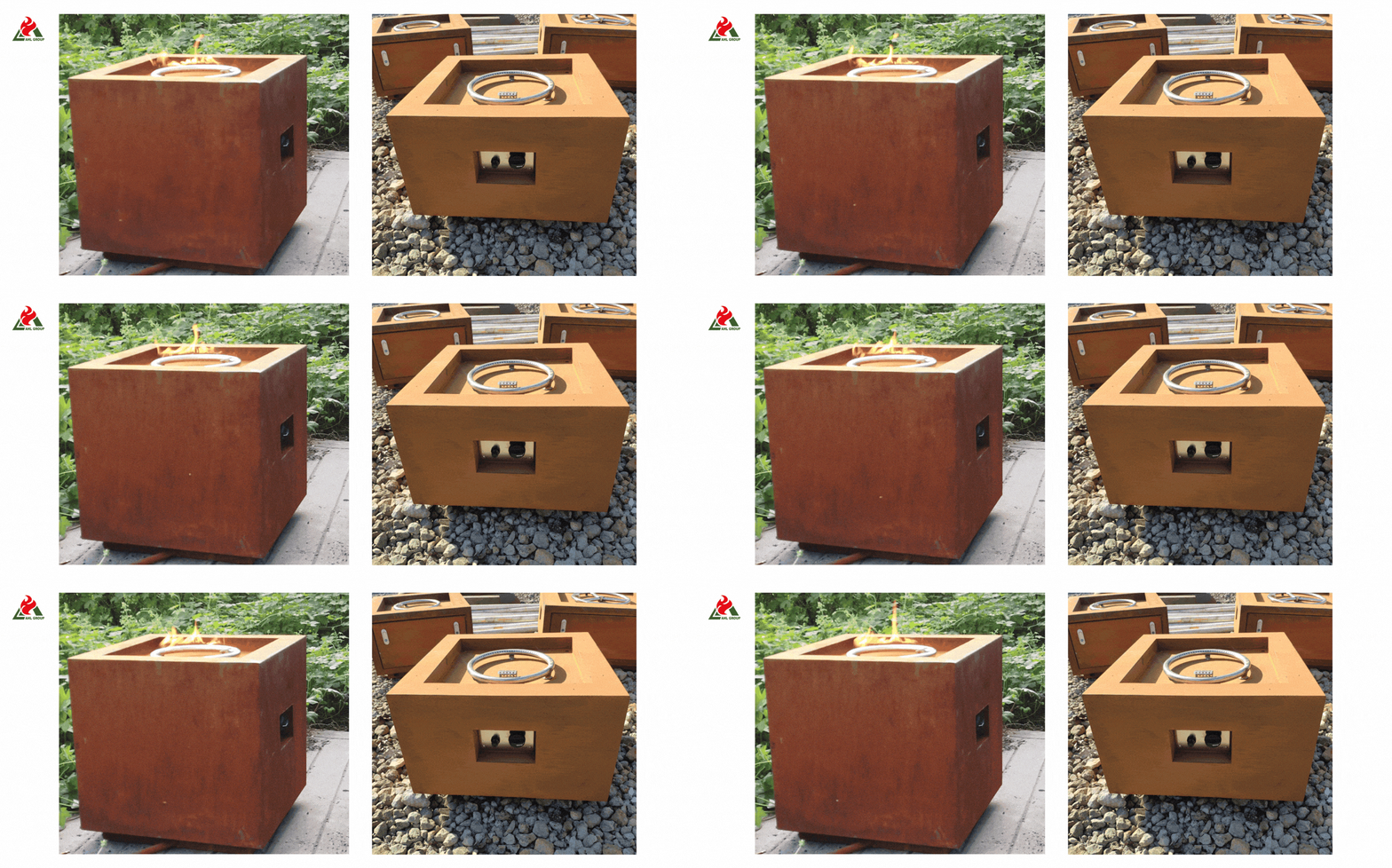
8. How Thick Should the Bottom Lining Be
Typical Lava Layer Thickness
► Wood-burning fire pits: 2 to 3 inches (50 to 75 millimeters).
► Gas-fired fire pits: Total thickness of the bottom fill layer is 2 to 4 inches (50 to 100 millimeters).
Recommended Firebrick Thickness
Standard split firebricks are 1.25 inches (32 mm) thick, providing ideal thermal insulation without adding unnecessary weight.
Effect of Lining Thickness on Heat Conduction
As shown in the heat conduction model, thermal insulation increases with layer thickness. Adding a 2-inch layer of porous lava rock can significantly reduce the contact temperature of the base plate, thereby alleviating the overall thermal stress on the underlying metal.
Avoid Excessive Material Around the Burner
Overfilling a gas fire pit can smother the flame, leading to incomplete fuel combustion and excessive soot buildup on the decorative fire-resistant glass.
Selecting Lining Thickness Based on Fire Pit Size and Fuel Type
Please refer to this guide to select the appropriate lining thickness based on your backyard fire pit design:
| Fire Pit Type | Corten Gauge | Recommended Base Material | Total Media Depth |
| Compact Wood Bowl | 3 mm | Coarse Lava Rock | 2 Inches (50 mm) |
| Heavy Wood Pit | 4 mm – 5 mm | Fire Bricks over Lava Bed | 2.5 Inches (63 mm) |
| Propane Fire Table | 3 mm – 4 mm | Lava Base + Top Fire Glass | 3 to 4 Inches (75–100 mm) |
| Commercial Gas Pit | 5 mm+ | Expanded Volcanic Aggregate | 3 Inches (75 mm) |
9. Corten Steel Thickness and Bottom Protection
Why Thicker Weathering Steel Cannot Replace Good Design
Thicker weathering steel offers more durable resistance to corrosion and thermal deformation, but without proper drainage holes and heat dissipation measures, even thick steel will eventually develop surface flaking over time.
3mm Weathering Steel for Small Fire Pits
Standard 3mm weathering steel, when lined with 2 inches of volcanic rock, can significantly prevent thermal deformation and extend its service life.
4mm Weathering Steel for Medium-Sized Residential Fire Pits
It offers high structural rigidity. Under normal use, a single layer of 1.5 inches of volcanic rock or volcanic stone is sufficient to adequately protect the base plate.
5–6 mm and Thicker Weathering Steel is Suitable for Large and Heavy-Duty Fire Pits
Heavy-gauge commercial-grade steel can directly withstand high heat loads. In this case, the lining material is primarily used for drainage and aesthetic filling, rather than structural protection.
Synergy Between Steel Thickness and Lining
Pairing 3-millimeter weathering steel with a 2-inch layer of fire-resistant volcanic rock provides the same effective heat resistance and service life as an unlined 6-millimeter metal fire pit—at a fraction of the weight and cost.
Preventing Warping and Premature Burn-Through
Suspending the embers above a well-drained fill layer prevents localized “tank effect” (bouncing, warping) on the flat bottom of the steel plate.
10. How to Install a Lining in a Corten Fire Pit
1. Clean and Inspect the Fire Pit
Remove dirt, residual oil from manufacturing, or standing water.
Wipe down the inner base with a dry cloth or stiff-bristled brush. Be sure to remove all manufacturing dust and loose metal debris.
2. Check Drainage Before Laying the Lining Material
Verify that the bottom drain holes are completely unobstructed.
Confirm that there are at least 1 to 3 pre-drilled drain holes (at least 1/2 inch in diameter) at the bottom of the fire pit. Remove any obstructions from the holes.
3. Install the Fireproof Base (Optional for Wood-Burning Fire Pits)
Lay split bricks without mortar, leaving expansion joints.
If using firebricks, lay them flat on the base plate. Leave a 1/8-inch gap between the bricks to accommodate thermal expansion and ensure proper drainage.
4. Lay Volcanic Rock or Fire-Resistant Stone
Evenly cover the floor with fire-resistant stone.
Spread clean, dust-free 1-inch fire-resistant volcanic rock over the base plate and level it with a hand trowel to achieve a uniform thickness of 2 inches.
5. Maintain Clearance Around the Burner (Gas Fire Pits Only)
Keep Gas Outlets and Air Mixers Unobstructed
Ensure there is at least a 1-inch gap between the fill material and the burner outlets and ignition devices to ensure unobstructed gas flow and proper ignition.
6. Check the Final Layer Thickness
Verify the thickness with a straightedge
Measure the thickness of the fill material at multiple points within the fire pit to ensure even coverage across the surface.
7. Allow the System to Dry Thoroughly Before Lighting the Fire
Ensure that all moisture in the filling materials has completely evaporated.
If you are using volcanic rock that has just been unpacked and feels slightly damp to the touch, place it in direct sunlight for 24 hours to dry before lighting the fire for the first time.
11. What Should You NOT Put in the Bottom of a Fire Pit
River Pebbles and Water-Containing Stones
Smooth river pebbles, sandstone, limestone, and gravel collected from damp environments store water in the non-porous mineral voids within them. When heated, the trapped water turns into steam, creating internal pressure that can cause the stones to burst or explode violently.
Standard Landscape Gravel
Standard landscape pea gravel consists of a mixture of river quartz and limestone; therefore, it should not come into direct contact with open flames.
Pea Gravel and Small Loose Stones
Fine-grained gravel compacts tightly, blocking the drainage holes at the bottom and trapping wet ash on the Corten steel base plate.
Concrete and Non-Fire-Resistant Masonry
When exposed to the high temperatures of a direct wood fire, cinder blocks, standard building bricks, and concrete pavers will rapidly deteriorate, crack, and spall.
Sand: When to Use It and When Not to Use It
► Never use sand in a fire pit with a sealed bottom: Sand absorbs moisture like a wet sponge, trapping damp ashes against the steel plate and causing rapid corrosion.
► Use sand only in open-bottomed, ground-level circular fire pits: Sand is suitable only for open-bottomed, ground-level circular fire pits installed directly on well-drained soil.
Painted or Galvanized Metal
Never line the bottom of a fire pit with galvanized steel. When exposed to high temperatures, the galvanized coating releases toxic zinc oxide fumes.
Household or Construction Waste
Plywood, pressure-treated wood scraps, plastic, and trash release harmful toxins that not only damage the interior of the fire pit but also pollute the air.
12. Corten Fire Pit Lining vs No Lining
Heat Protection
A lined fire pit protects its base plate from sudden spikes in extreme temperatures, ensuring that the metal at the bottom remains below the structural fatigue threshold at all times.
Drainage and Moisture Management
Porous materials such as volcanic rock allow rainwater to drain quickly while keeping wet ash above the drainage holes at the bottom.
Lifespan Considerations
Using a 2-inch-thick protective layer of volcanic rock can double or even triple the lifespan of a 3mm-thick Corten fire bowl.
Maintenance Requirements
► Lined Type: Simply sift through the volcanic rock each season to remove ash and dust.
► Unlined Type: Ash must be removed promptly after each use to prevent corrosion caused by damp ash.
Cost and Installation Difficulty
Laying a lava rock lining takes only 10 minutes, making it one of the most cost-effective ways to protect your fire pit.
Which Method Is Best for Your Fire Pit
Except for high-strength steel fire pits with a thickness of 6 millimeters or more, installing a fire-resistant lining for a Corten modern fire pit is the wiser and more durable choice.
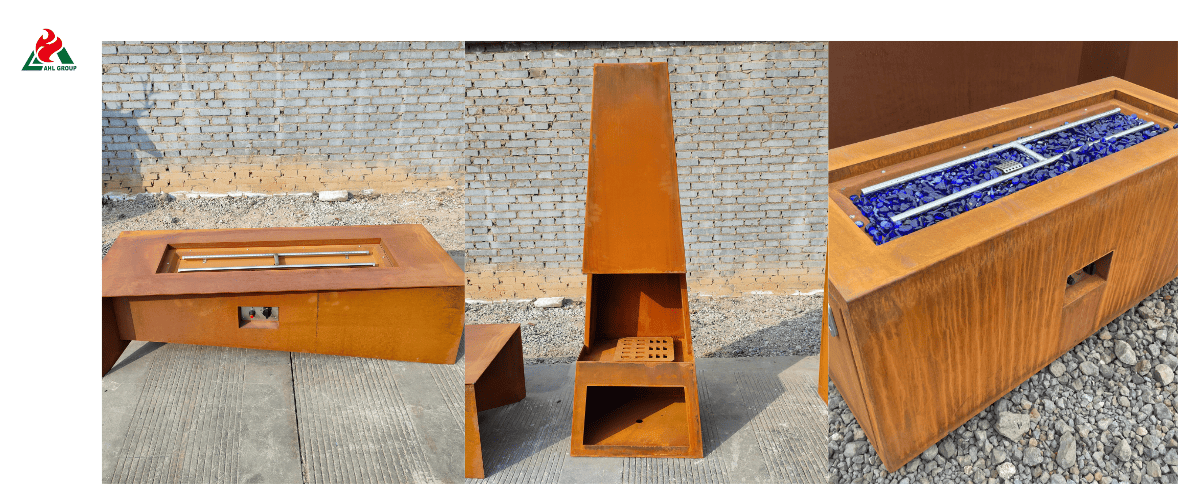
13. Frequently Asked Questions
Q1: What is the Best Material for the Bottom of a Corten Fire Pit?
The ideal general-purpose material is 1- to 2-inch fire-rated volcanic rock. When in direct contact with charcoal or a gas burner, it provides good thermal insulation, excellent drainage, and long-term durability.
Q2: Do Corten Steel Fire Pits Need a Lining?
While thicker Corten steel fire pits (5 mm and above) can withstand flames without a lining, for 3 mm-thick fire pits, it is strongly recommended to lay a 2-inch-thick layer of volcanic rock to prevent warping and corrosion from wet ash.
Q3: Can Firebricks Be Used in Corten Steel Fire Pits?
Yes. Split firebricks (1.25 inches thick) offer excellent thermal insulation. Lay them without mortar, keeping them loose to allow for thermal expansion and facilitate drainage.
Q4: Can Regular Gravel Be Used at the Bottom of a Fire Pit?
No. Regular river gravel and pea gravel contain residual moisture and minerals that may cause them to explode at high temperatures. Be sure to use certified fire-resistant volcanic rock or volcanic basalt.
Q5: Should the Bottom of a Corten Steel Fire Pit Have Drainage Holes?
Yes. The bottom of a durable steel fire pit must have drainage holes. Without them, rainwater will accumulate and mix with wood ash to form a corrosive alkaline solution that will damage the steel plate.
Q6: Can a Fire Pit Liner Prevent Corten Steel from Rusting?
No, it cannot—nor should it. Corten steel needs to be exposed to the atmosphere to develop its protective rust patina. However, a liner can prevent destructive pitting corrosion caused by wet ash and direct thermal stress.
Conclusion: The Best Overall Lining Material for Weathering Steel Fire Pits
To ensure your weathering steel outdoor fire pit performs at its best and has a long service life, use 1 to 2 inches of fire-rated volcanic rock as a protective base layer. For fire pits primarily used to burn large amounts of wood, combining a raised steel firewood grate with a 2-inch-thick layer of volcanic rock provides the optimal balance between thermal insulation and moisture protection.
To enjoy decades of warmth outdoors, ensure your Corten fire pit has open drainage holes at the bottom, lay a 2-inch-thick layer of volcanic rock, regularly remove wood ash, and allow the natural weathering process to form a rich, protective layer of rust.

