


Selecting the best materials for outdoor cooking equipment requires striking a critical balance between structural durability, thermal efficiency, and long-term aesthetic appeal. Outdoor cooking equipment faces the destructive combined effects of various environmental factors: intense thermal cycling from raging fires on the inside and relentless exposure to moisture, humidity, and UV radiation on the outside.
Although the market is flooded with traditional grills made from standard painted carbon steel or thin stainless steel, an increasing number of landscape architects and high-end culinary designers are turning to weathering steel (Corten steel) to create heavy-duty outdoor cooking facilities. This comprehensive analysis compares the architectural, chemical, and functional performance of weathering steel versus standard low-carbon steel, elucidating why Corten steel is the ideal base material for outdoor grilling equipment.
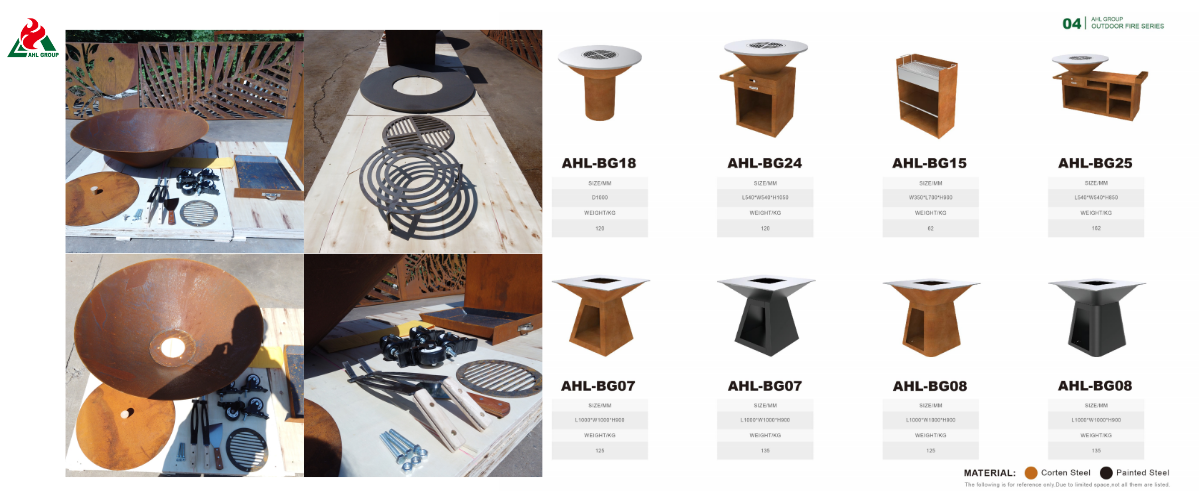
Although the market is flooded with traditional grills made from standard painted carbon steel or thin stainless steel, an increasing number of landscape architects and high-end culinary designers are turning to weathering steel (Corten steel) to create heavy-duty outdoor cooking facilities. This comprehensive analysis compares the architectural, chemical, and functional performance of weathering steel versus standard low-carbon steel, elucidating why Corten steel is the ideal base material for outdoor grilling equipment.
1. Introduction
Why Compare Weathering Steel with Ordinary Steel
When selecting steel for an outdoor BBQ grill, the key consideration is how the metal reacts to oxygen and moisture. Ordinary low-carbon steel is highly susceptible to atmospheric oxidation, meaning it requires constant surface protection to prevent the formation of structurally weak rust spots. Weathering steel, as an advanced engineered alloy, has completely redefined how metal structures interact with the natural environment, transforming the oxidation process into a defensive advantage rather than a destructive failure mode.
This Guide Will Help You Make an Informed Decision
Whether you are a custom outdoor kitchen contractor, a high-end landscape designer, or a homeowner looking to create a permanent cooking area in your backyard, this guide will provide you with clear technical insights. We will delve into structural lifespan, maintenance requirements, thermal performance, and hidden costs to help you determine whether investing in a high-quality Corten steel grill is a wiser choice than purchasing a standard painted alternative.
Scenarios Where Outdoor Grill Materials Are Critical
In open-air cooking spaces lacking a roof or seasonal covers, material selection is particularly crucial. Whether installed in coastal areas affected by corrosive salt spray, northern regions experiencing harsh winter freeze-thaw cycles, or humid climates with extremely high environmental moisture, barbecue grills must be constructed from commercial-grade metallurgical materials to withstand these conditions without internal structural damage.
2. What Makes Corten Steel Different
To understand the value of weathering steel, we need a brief overview of its unique metallurgical composition.
How Weathering Steel Forms a Protective Rust Layer
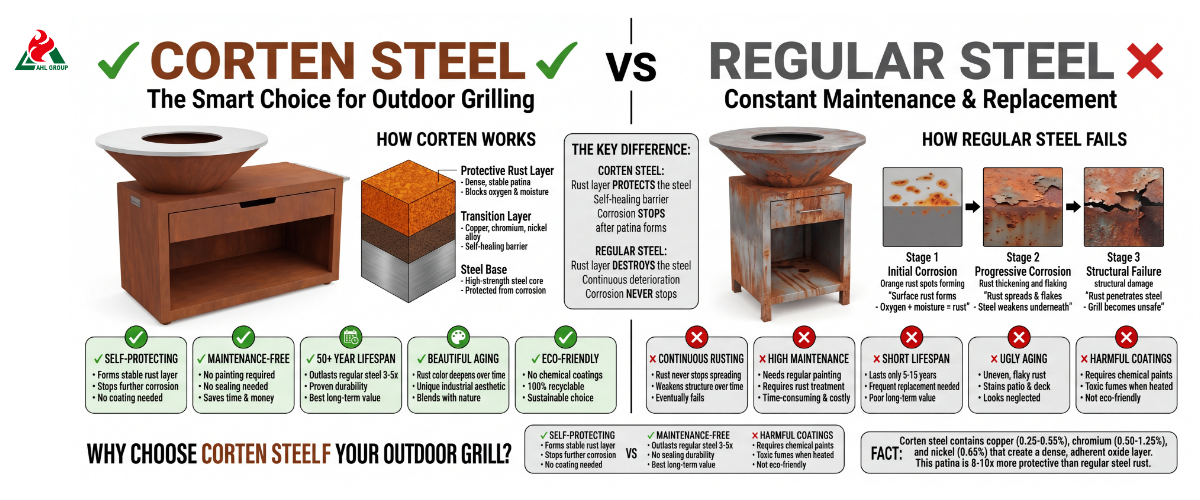
Weathering steel is a special alloy that contains precise amounts of copper, chromium, nickel, and phosphorus. When ordinary steel comes into contact with moisture, it forms a porous and flaky layer of iron oxide. This layer allows water and oxygen to continuously penetrate deeper, eventually leading to corrosion of the metal core. However, when weathering steel undergoes cycles of wet and dry conditions, an extremely dense, non-porous protective layer forms on its surface—known as the “rust skin.” This barrier seals the underlying steel, completely blocking the deep penetration of oxygen.
Why is Weathering Steel More Durable Than Ordinary Steel
Because the protective rust skin of weathering steel is formed by its alloying elements at the molecular level, this steel possesses an extraordinary ability: it can completely self-repair. If the outer surface of a Corten steel grill is scratched by cooking utensils, chipped by moving firewood, or scraped during deep cleaning, the exposed metal will not begin to flake off. Instead, when it comes into contact with rain and dew, it will re-oxidize, rebuild its protective surface layer, and maintain its structural integrity.
How Its Appearance Changes Over Time
At first glance, a brand-new Corten steel BBQ grill looks just like an ordinary industrial-grade silver-gray metal sheet. Once placed in the backyard, however, it begins to undergo environmental changes. Within just a few weeks, a bright, powdery layer of neon-orange flash rust covers the entire structure. Over the next 6 to 18 months, this flash rust gradually crystallizes, darkens, and develops a unique texture, eventually transforming into a highly stable, velvety-smooth architectural finish in shades of deep terracotta, warm ochre, and dark chocolate brown.
3. What Happens to Regular Steel Outdoors
In outdoor cooking environments, if ordinary carbon steel is not treated with a protective coating, the rusting process is highly predictable and often frustrating.
How Untreated Steel Rusts
Untreated or standard low-carbon steel offers no inherent resistance to moisture. As soon as bare carbon steel comes into contact with water and oxygen, a continuous electrochemical reaction is immediately triggered. This process converts the iron in the structure into loose, brittle hydrated iron oxides, which expand, blister, and peel away from the base material, exposing new layers of steel to the same destructive cycle.
Why Ordinary Steel Ages Faster
For outdoor grills, high-temperature cooking accelerates this gradual cycle of corrosion. When the body of a standard grill expands due to the heat of open charcoal flames and then cools in the humid night air, the surface paint, powder coating, or galvanized layer will crack, peel, or blister and flake off. Once these protective coatings crack, deep rust spreads rapidly, leading to structural weld fractures and even burning through thin metal walls.
Common Maintenance Challenges with Standard Steel Barbecue Grills
Owning a traditional low-carbon steel barbecue grill requires ongoing maintenance to prevent structural failure. Users must regularly sand down blistered rust spots, clean peeling metal seams with a wire brush, and repaint the grill seasonally with expensive high-temperature-resistant coatings. If this intensive maintenance routine is neglected, the bottom of the firebox will rapidly corrode under the corrosive pressure of wet ash and accumulated rainwater.
4. Benefits of Corten Steel for Outdoor Grills
Choosing a weathering steel base offers unique structural and functional advantages that far surpass standard options.
Superior Weather Resistance
Corten BBQ grills are designed specifically for outdoor environments and do not require protective vinyl covers or covered patios. They can withstand heavy rain, scorching summer heat, and winter snow without suffering from severe blistering or structural decay, unlike ordinary metal grills.
Longer Lifespan in Outdoor Environments
Standard painted low-carbon steel grills typically last only 3 to 6 years before becoming unsafe or unsightly due to structural corrosion; in contrast, architectural-grade Corten grills easily last 30 to 50 years or more. The structural density of heavy-gauge weathering steel ensures that the grill frame will become a lasting asset in your backyard design.
Lower Maintenance Requirements
The most significant advantage of weathering steel lies in its passivation properties. It eliminates recurring labor and material costs associated with wire-brushing, priming, surface coating, and weatherproof sealing. This grill requires no external cleaning agents; it relies on natural exposure to wind and rain to maintain its clean, rustic texture.
A Unique, Rustic Aesthetic
In addition to its exceptional engineering performance, weathering steel offers a bold and modern architectural aesthetic. Its rich, ever-changing rust-brown tones complement natural backyard elements such as lush green lawns, natural wood decks, and rough-hewn stone walls, adding a warm, mid-century modern or naturalistic visual focal point to your outdoor dining space.
5. Drawbacks of Corten Steel
To gain a comprehensive and objective understanding of the situation, buyers must take into account the unique processing characteristics and design parameters of weathering steel.
► Higher upfront costs: The use of high-quality alloy weathering steel and professional welding techniques means that the initial investment in a Corten steel barbecue grill is significantly higher than that of inexpensive mass-market alternatives.
► Rust-stained water runoff: During the initial 6 to 12 months while the rust layer forms, rainfall washes loose iron oxide particles from the grill’s surface. Without proper drainage, this rust-laden water can permanently stain porous light-colored stone pavers, concrete patios, or natural wood decks.
► The rusting process takes time: A brand-new Corten grill initially appears dull and rough. Users must endure a mottled, uneven “flash rust” transition period lasting several months before the grill eventually develops a deep, uniform, and velvety-smooth mature patina.
► Not suitable for all components: While Corten steel is ideal for the main frame and structural components, it is not suitable for cooking surfaces that come into direct contact with food; these areas still require the use of dedicated cooking grates.
6. Is Corten Better for Cooking Performance
To ensure optimal food safety and heat transfer, it is essential to distinguish between the grill’s structural base and the actual cooking surface.
Grill Body and Cooking Surface
Weathering steel is the material of choice for the outer shell, log storage base, structural canopy, and firebox shell. However, it should not be used to manufacture grates or griddle plates that come into direct contact with food. Areas that come into contact with food should always be made of heavy-duty cast iron, food-grade stainless steel, or high-density carbon steel. These materials can be properly maintained with organic cooking oil to create a safe, non-stick surface.
Heat Retention and Durability
Professional-grade Corten outdoor grills are typically constructed from thick, industrial-grade steel plates, usually ranging from 3 to 6 millimeters (1/8 to 1/4 inch) in thickness. This substantial thermal mass absorbs the significant heat released by burning wood or charcoal and radiates it evenly across the entire cooking surface. This eliminates the temperature spikes and cold spots commonly found in thin, inexpensive metal grills.
When to Choose Stainless Steel or Carbon Steel Instead
If your cooking setup requires a highly portable grill—such as one that needs to fit into a vehicle for tailgate parties or be pushed into a storage shed after each use—the extreme weight of thick weathering steel plates will make it impractical. For portable or lightweight applications, we recommend opting for thinner stainless steel or lightweight carbon steel alternatives.
7. Corten Steel vs Regular Steel
An evaluation of these two metals based on key performance indicators highlights the long-term value advantages of Corten steel.
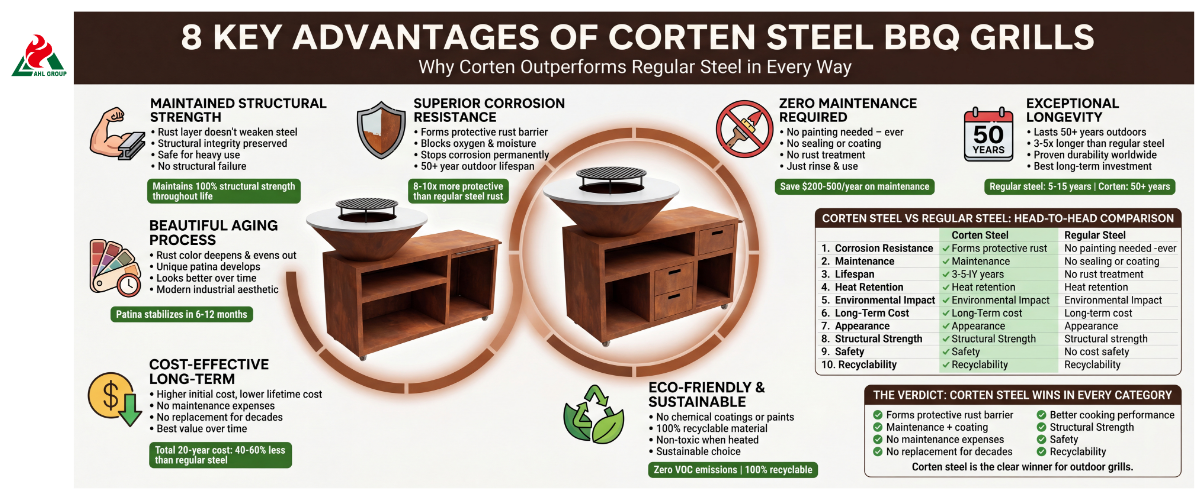
| Feature / Metric | Corten Steel Grills | Regular Mild Steel Grills |
| Expected Lifespan | 30 to 50+ Years | 3 to 6 Years (Before structural burn-through) |
| Surface Coating | Self-healing natural iron oxide patina | High-heat artificial paint or powder coating |
| Ongoing Maintenance | None – Completely passive | High – Requires periodic sanding and re-painting |
| Structural Stability | Excellent – Thick plate resists warping | Poor – Thin sheet prone to heat distortion |
| Initial Investment | High – Premium material and fabrication | Low to Moderate – Mass-manufactured retail goods |
8. Best Uses for Corten Steel Grills
Backyard Cooking Area
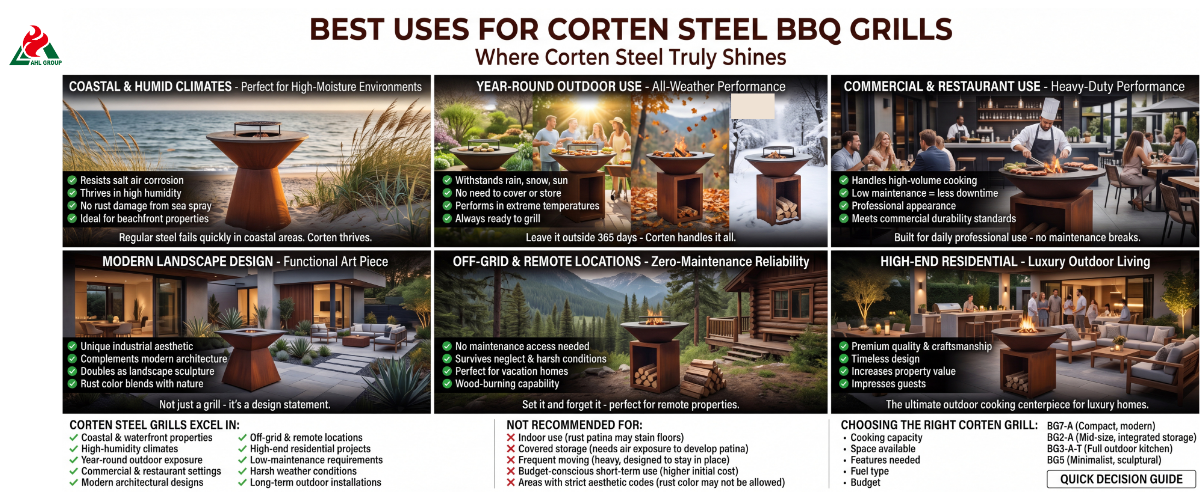
For homeowners designing high-end outdoor living spaces, a Corten steel barbecue grill serves as a highly artistic visual focal point. It blends elegantly with the changing seasons, becoming a sculptural centerpiece that complements wood-fired and stone outdoor entertainment areas.
Garden and Patio Arrangements
Weathering steel blends seamlessly with lush garden spaces. Placing a weathering steel wood-fired griddle or fire pit grill among ornamental grasses, neatly trimmed shrubs, or gravel paths creates a natural, organic landscape that exudes a natural, rather than commercial, atmosphere.
Permanent Outdoor Kitchens
When building a built-in outdoor kitchen island, replacing rusted components can become a costly, time-consuming, and labor-intensive nightmare. Opting for a permanent weathering steel structural framework ensures that rotted fireboxes can be replaced without dismantling the masonry framework, thereby protecting the structural integrity of your hardscape investment.
Decorative Fireplaces and Grilling Facilities
Many modern weathering steel installations are designed as dual-purpose structural works of art: during dinner parties, they function as wide-rimmed cooking pans; once the grill is removed, they seamlessly transform into high-end outdoor wood-burning fireplaces, extending the warmth and comfort of patio gatherings well into the night.
9. When Regular Steel May Be Enough
Although weathering steel offers superior structural performance, standard low-carbon steel remains a suitable choice in specific, low-risk scenarios.
Budget-Conscious Projects
If you’re equipping temporary rental units, setting up a casual cooking area for a short-term campground, or working with an extremely tight short-term budget, an affordable, mass-market painted carbon steel grill allows you to start cooking right away without a massive upfront investment.
Sheltered Locations
If your barbecue is intended for long-term placement in a fully enclosed outdoor kitchen pavilion, a screened porch, or a detached garage—and will never be directly exposed to rain, snow, or morning dew—standard low-carbon steel will not face the intense environmental oxidation that can cause rapid deterioration of outdoor equipment.
10. How to Choose the Right Material
To ensure that the metal material you ultimately select aligns with your property’s objectives, please evaluate your project layout based on the following four key criteria:
► Environmental Exposure: Is your property located within 5 miles of a salt-air coastline, or in an area with high rainfall? If so, you must use the protective alloy elements found in Corten steel to prevent rapid structural corrosion.
► Maintenance Commitment: Do you prefer spending a spring weekend scrubbing rust with a wire brush and applying chemical coatings, or would you rather choose a low-maintenance, durable material that ages naturally in the elements?
► Design Aesthetics: Does your outdoor living space lean toward clean modernism, industrial minimalism, or warm, organic textures? Weathering steel blends perfectly with earth tones and stone, while painted steel typically features a standard black finish.
► Life-Cycle Cost Assessment: Amortize your purchase cost over 20 years. Purchasing a high-quality, lifetime-use weathering steel product costs far less than buying, shipping, and disposing of four or five inexpensive, mass-market low-carbon steel grills over the same timeframe.
11. Frequently Asked Questions About Corten Grills
Q1: Does Corten Steel Rust?
Yes, but the rusting process is controlled and does not damage the material. The rust layer that forms on its surface is dense and compact, acting as a molecular barrier that protects the inner steel core from further oxidation. This is in stark contrast to the flaking, progressively worsening rust found on ordinary steel.
Q2: Will Corten Steel stain nearby surfaces?
During the initial 6 to 12 months of outdoor exposure, heavy rain will wash away loose iron oxide particles from the grill body. To prevent permanent rust stains on high-quality concrete, marble, or wooden deck surfaces, place the BBQ grill on a layer of gravel or dark river pebbles, or lay down temporary protective mats until the rust layer has fully formed.
Q3: Is Corten Steel Safe for Outdoor Grilling?
Absolutely safe. The grill body, firebox, and base transfer heat only through radiation, making them completely safe. As for the cooking surfaces that actually come into contact with food—such as the grill grates or flat griddle rings—reputable manufacturers use thick, food-grade carbon steel or cast iron to ensure the cooking surfaces are clean, safe, and perform exceptionally well.
Q4: Is Regular Steel Sometimes a Better Choice?
Regular steel is a better choice only under the following circumstances: if you need a low-cost, lightweight grill that you plan to store indoors or replace every few seasons, or if you prefer a pure, uniform black finish rather than the rustic, ever-changing texture.
Conclusion: Why Corten Steel Is Often the Better Choice for Outdoor Applications
For permanent outdoor installations, Corten steel represents a significant engineering upgrade over standard low-carbon steel. By utilizing an advanced chemical composition that transforms atmospheric oxidation into a protective barrier, it requires no manual painting, prevents deep structural corrosion, and offers an unmatched service life of over thirty years.
If you’re looking for a quick, seasonal, or portable cooking solution, standard painted low-carbon steel will suffice at an affordable price. However, if you’re planning to create a permanent backyard oasis, a luxury patio renovation, or a high-end commercial outdoor kitchen, heavy-gauge weathering steel is undoubtedly the superior choice. By choosing this material—which grows more resilient and visually striking with the passage of time—you’ll acquire a timeless, maintenance-free culinary centerpiece that elevates outdoor cooking into a compelling architectural statement.

