


The combination of a rugged, weathered texture with high-voltage electrical safety often surprises landscape architects and clients alike. When people see the “rust-stained” surface of weathering steel (Corten steel), their first reaction is often to associate it with decay, fragility, and—more dangerously—the potential for electrical failure in damp environments. However, in the realm of high-end landscape architecture, weathering steel is by no means a symbol of neglect; rather, it serves as a meticulously engineered protective armor.
In short, the answer is yes—as long as the design incorporates the proper internal protective measures, Corten steel outdoor lighting is completely safe in damp environments. In fact, thanks to the material’s unique metallurgical properties, they often outlast traditional aluminum or plastic fixtures in harsh weather conditions. This guide will dispel the myths surrounding “rusty” lights and delve into the relevant technical standards to reveal why these lamps are a safe, durable, and stunning choice for rain gardens, seaside terraces, and poolside lounges.
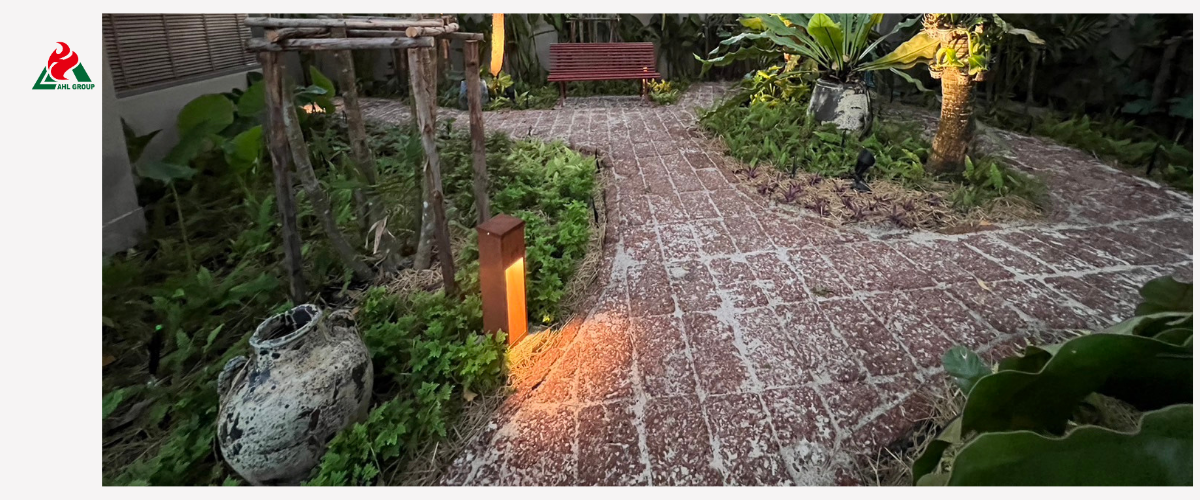
In short, the answer is yes—as long as the design incorporates the proper internal protective measures, Corten steel outdoor lighting is completely safe in damp environments. In fact, thanks to the material’s unique metallurgical properties, they often outlast traditional aluminum or plastic fixtures in harsh weather conditions. This guide will dispel the myths surrounding “rusty” lights and delve into the relevant technical standards to reveal why these lamps are a safe, durable, and stunning choice for rain gardens, seaside terraces, and poolside lounges.
1. Short Answer: YES (With Proper IP Rating)
To understand safety in humid environments, we must look beyond the limitations of the metal housing and focus on its Ingress Protection (IP) rating. The safety of outdoor lights is not primarily determined by whether the housing “rusts,” but rather by the extent to which the internal electrical components are protected against moisture. A Corten steel light is essentially a sturdy protective enclosure: the steel provides structural impact resistance, while internal gaskets and seals ensure its waterproof performance.
IP65+ = Rain and Splash Safe
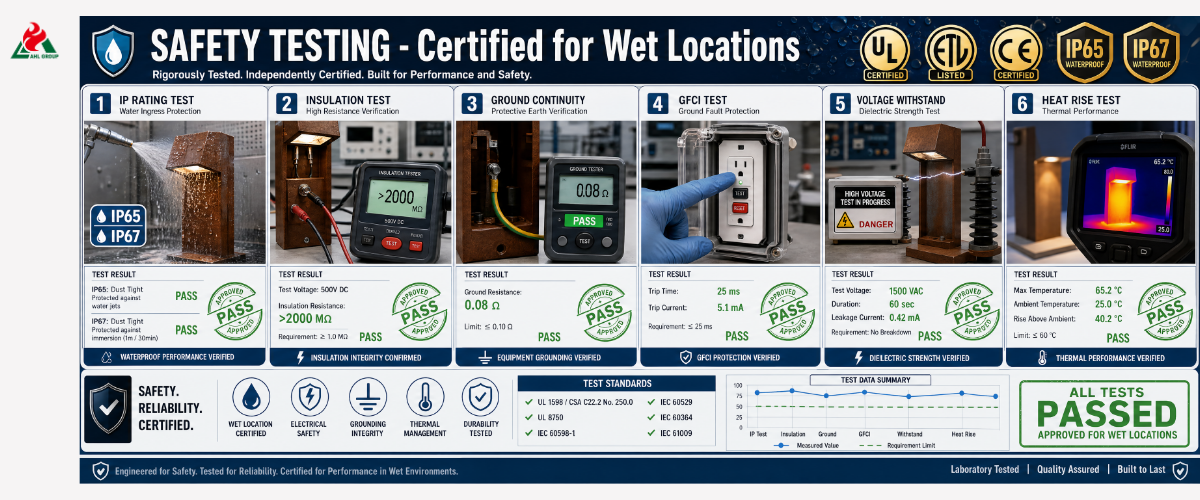
The IP65 protection rating is the industry standard for safety in outdoor “humid environments.” The first digit (6) indicates that the luminaire is completely dust-tight, which is essential for preventing fine sand particles from interfering with the LED driver. The second digit (5) indicates that the luminaire can withstand water jets from any direction. In fact, IP65-rated Corten steel lamps will never allow a single drop of water to penetrate the circuitry, even when exposed to tropical downpours or accidentally sprayed directly by a high-pressure garden sprinkler system.
For most backyard bollard lights, path lights, and wall sconces, IP65 is the “best choice.” It ensures that while the weathering steel housing undergoes natural wet-dry cycles to form a protective rust layer, the “core” of the fixture—the LED module and driver—remains in a completely dry, controlled environment. At AHL Group, we ensure our lighting product line meets or exceeds these standards because we know that a fixture that fails during the first heavy rain is a liability to a building, not an asset.
IP67+ = Submersion Safe (Coastal and Poolside)
For environments where water not only splashes but may even pool—such as low-lying garden paths during the rainy season or lights installed near the splash zone of a saltwater pool—an IP67 protection rating is required. Corten steel lighting that meets the IP67 standard is designed to withstand brief submersion (up to a depth of 1 meter for 30 minutes) without leaking. This performance is made possible by advanced “potted” drivers and vacuum-sealed lens assemblies.
If your landscape design includes “uplighting” at the base of retaining walls or recessed “well lights” in driveways, an IP67 rating is essential. Because weathering steel is a heavy, dense material, these fixtures can be securely anchored to the ground and withstand the physical pressure of saturated soil. When you combine the structural density of a 3-millimeter-thick weathering steel housing with an IP67-rated internal seal, you create a luminaire that is virtually impervious to “waterlogged” environments—conditions that typically destroy cheaper, thin-walled aluminum alternatives.
Corten Body + Sealed Electrics = Dual Protection
The true safety of Corten lighting stems from its dual-layer protection strategy. The first layer is the Corten steel housing itself. Unlike ordinary steel, which flakes and thins when exposed to moisture, Corten steel forms a dense, amorphous oxide layer (commonly known as patina) that becomes nearly completely waterproof once matured. This ensures the structural integrity of the fixture’s housing for decades.
The second layer is the internal electrical “sealed compartment.” High-quality Corten outdoor lights do not rely on intermetallic contact within the shell to achieve waterproofing. Instead, they utilize internal silicone gaskets, threaded cable glands, and often feature a secondary internal housing for the LED chips. This means that even if the Corten steel shell is dented by a severe impact, the electrical system remains encapsulated within a separate, waterproof protective space. It is precisely this “box-within-a-box” engineering design that makes Corten steel lighting one of the safest choices for environments with year-round humidity, such as public parks and high-traffic residential areas.
2. Corten Steel Itself is Moisture-Proof
One of the biggest misconceptions in metallurgy is the belief that rust is a sign of moisture. While this is true for ordinary carbon steel, for weathering steel (Corten steel), this “rust” is actually its protective layer. Weathering steel contains alloying elements such as copper, chromium, and nickel. When this steel comes into contact with moisture, it reacts with oxygen in the air to form a dense layer of iron oxide.
Unlike the flaky, porous rust found on car bumpers, the rust layer on weathering steel is airtight and waterproof. Once it reaches maturity (typically after 12 to 24 months of wet-dry cycles), the underlying metal is sealed off from the external environment. This means that although the luminaire appears to be affected by moisture, water cannot actually penetrate beyond the surface layer of a few micrometers. This fundamentally makes the lamp housing moisture-resistant, ensuring that the structural walls will never thin or “rust through,” exposing the wiring.
3. Critical: Electrical IP Rating
While the steel housing serves as “armor,” it is the electrical IP rating that provides the “seal.” Even if the housing were made of pure gold, the luminaire would still fail if the sealing gaskets were of poor quality. In Corten garden lights, the joints are the key to ensuring safety. This includes the seal between the lens and the housing, as well as the cable entry points.
Superior weathering steel lights employ marine-grade silicone gaskets that can withstand the thermal expansion and contraction of steel without cracking. Additionally, nylon or stainless steel cable glands should be used at the cable entry points to create a liquid-tight seal by securing the power cables. When selecting Corten lights, be sure to verify their IP protection rating certification. Safety luminaires intended for use in damp environments must have a clearly stated and tested IP65 or higher protection rating. At AHL Group, we go a step further by testing our luminaires in a “salt spray” chamber to ensure that the chemical reactions occurring during moisture exposure and verdigris formation do not cause any damage to the electrical seals.
4. Humidity-Specific Concerns
A humid environment refers not only to rain but also to invisible moisture in the air. High humidity presents a whole new set of challenges for outdoor lighting, particularly in terms of condensation and chemical reactions.
Coastal Salt: Patina Blocks Corrosion
In coastal environments, the air is saturated with salt (chlorides), which is highly corrosive to most metals. Ordinary painted steel or low-grade aluminum will develop “blistering” and peeling once salt penetrates beneath the paint layer. However, weathering steel (Corten steel) performs exceptionally well in such environments. Salt actually accelerates and enhances the formation of a rust layer. The resulting oxide layer acts as a barrier, preventing further chloride penetration. While we recommend rinsing with fresh water every few months in coastal areas to prevent “runaway” corrosion, in salt-fog environments, weathering steel luminaires are inherently safer and more stable than almost any other metal material.
Tropical Humid Environments: Sealed Wiring Is Critical
In tropical regions where humidity rarely drops below 80%, “internal condensation”—or moisture buildup inside the luminaire—is a major risk. LED lights generate heat when turned on; when turned off, if the seal is not tight, cool, humid air may be “drawn” into the luminaire. This leads to moisture accumulation on the circuit board. To address this issue, safety-rated weathering steel luminaires designed for humid environments are typically equipped with pressure-balanced vents (Gore-Tex vents), which allow the luminaire to “breathe” and expel air while preventing liquid water from entering. This effectively prevents the “vacuum effect” that causes internal condensation.
Poolside Splash: IP67 Minimum Required
Pool water is not just water; it is actually a chemical mixture containing chlorine or bromine. These chemicals can corrode metal surfaces. If your Corten steel bollard lights are located within the splash zone of a pool, you must ensure they meet the IP67 protection rating, and the light fixture bases must not be placed in recessed “grooves” to prevent the accumulation of chlorinated water. Although weathering steel develops beautiful dark rust patinas when exposed to pool water, the internal components must be 100% sealed to prevent chemicals from eroding the wire insulation over time.
Winter Freeze-Thaw: Expansion Joints Required
In climates where “wet” means ice and snow, freeze-thaw cycles pose a physical threat. Water can seep into microscopic cracks, freeze, and expand, causing the luminaire body or lens to crack. Here, Corten steel’s strength is an advantage; its high tensile strength helps it withstand the pressure generated by ice expansion. However, the design must include “expansion zones”—flexible gaskets that can compress as the metal housing contracts in the cold. Weathering steel luminaires suitable for northern climates must be specifically designed to “move” with temperature changes while maintaining the integrity of the waterproof seal.
5. Heat + Moisture Reality Check
A common question is: “Do metal housings get too hot in humid environments?” Although LED lighting is highly efficient, it still generates heat. In humid environments, weathering steel housings actually act as highly effective heat sinks. Moisture on the exterior surface of the luminaire helps dissipate heat from the internal LED modules, thereby extending the luminaire’s service life.
However, the real “real-world test” lies in the dew point. If the internal air temperature is higher than the temperature of the humid outside air, the lens will fog up. High-quality Corten landscape lighting features an anti-fog coating on the inner surface of the glass or polycarbonate lens. This ensures that your light output remains clear and bright, even during cold, heavy rain. Safety here isn’t just about electricity—it’s about maintaining good visibility in outdoor environments.
6. Installation for Wet Environments
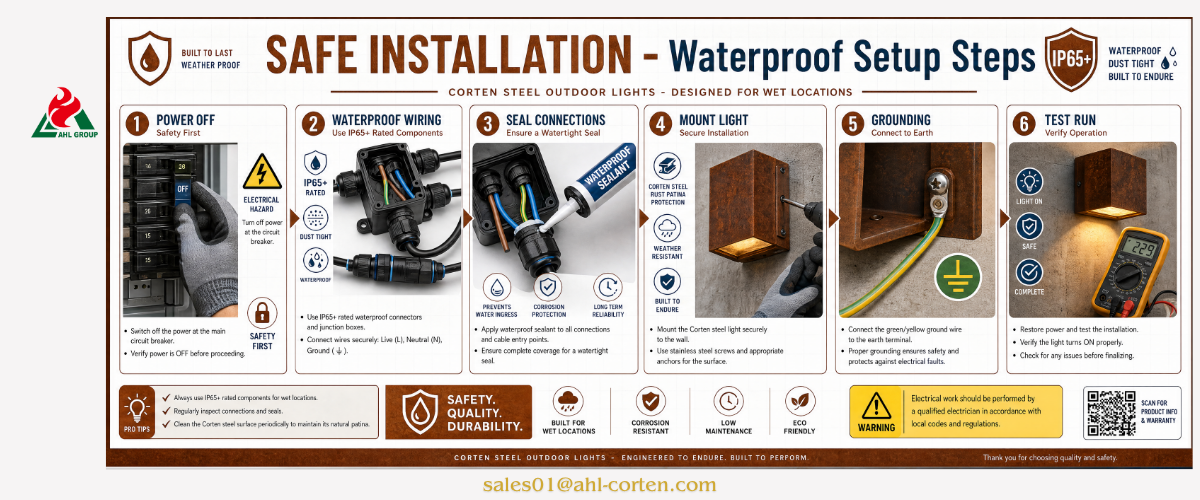
Even the safest fixtures can become safety hazards if installed improperly. In damp environments, drainage and grounding are the two cornerstones of safe installation.
► Gravel Base: Never bolt Corten steel lamps directly into the soil. In wet weather, the soil turns to mud and clogs the fixture’s drainage holes. When installing, be sure to place the fixture on a 4- to 6-inch-thick layer of gravel or a concrete base. This ensures that rainwater can flow away from the bottom of the fixture.
► “Drip Loop”: When wiring, be sure to create a “drip loop”—where the wire hangs down in a U-shape—before the wire enters the fixture. This ensures that rainwater running down the cable drips off the bottom of the loop rather than flowing directly into the cable connection.
► Proper Grounding: Since weathering steel (Corten) is a conductive metal, the fixture must be properly grounded in accordance with local electrical codes. This ensures that in the unlikely event of internal wire wear, current is safely conducted to the ground rather than through the steel housing.
7. Corten vs. Other Materials (Wet Safety)
| Material | Water Resistance | Longevity in Wet Soil | Maintenance in Wet Climate |
| Corten Steel | High (Self-Protective) | 50+ Years | Zero (Let it weather) |
| Stainless Steel | High (Grade 316) | 30+ Years | Requires cleaning to avoid tea-staining |
| Powder-Coated Alum. | Medium | 10-15 Years | Paint will eventually peel/bubble |
| Plastic/Resin | High | 5-10 Years | Brittle under UV and freeze/thaw |
Weathering steel performs exceptionally well in terms of “moisture resistance” because it does not rely on a surface coating. If a painted aluminum light fixture is scratched in a humid climate, the metal beneath the paint will immediately begin to corrode. However, if a weathering steel light is scratched, it will simply form a new protective layer of rust.
8. Warning Signs (Replace Immediately)
Although Corten steel is highly durable, you should still inspect your outdoor lighting fixtures after a severe storm. Watch for the following four “warning signs”:
► Condensation Inside the Lens: This indicates a failed seal. Moisture will eventually cause the LEDs to short-circuit.
► Visible Pitting: If you see deep “pits” (pitting) rather than smooth, dusty rust spots, this may be “runaway” corrosion caused by high concentrations of chemicals.
► Flickering Light: This usually indicates that moisture has penetrated the driver or junction box.
Ground Fault Circuit Interrupter (GFCI/RCD) Tripping: If your outdoor circuit breaker trips every time it rains, it indicates a “ground fault”—meaning a live wire somewhere in the system has come into contact with water.
9. Maintenance in Wet Climates
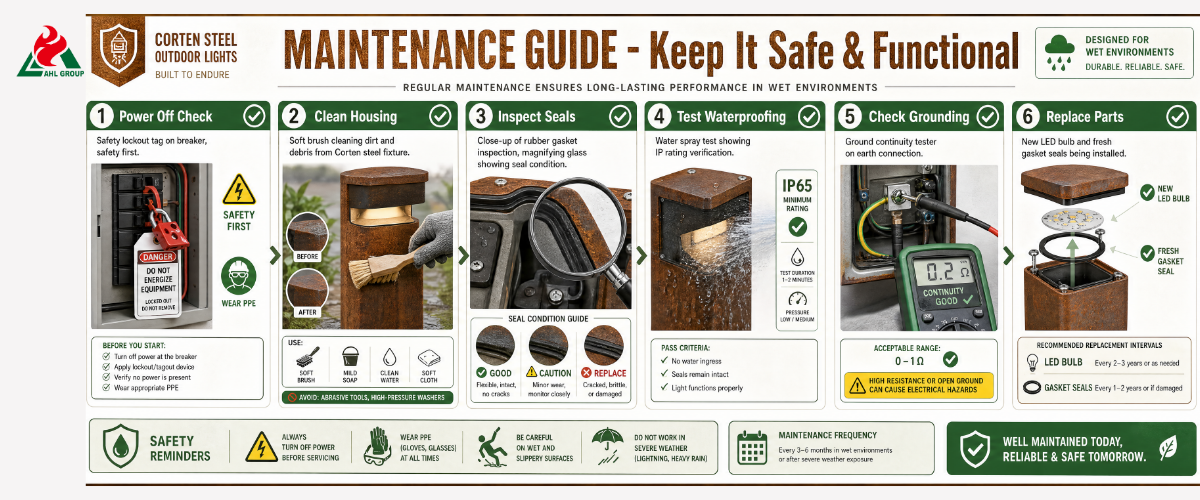
In humid climates, “maintenance” of weathering steel light fixtures primarily involves cleaning the surrounding area.
► Remove Damp Leaves: Do not allow damp leaves to accumulate at the base of the fixture. Damp leaves trap moisture and tannins, causing rust stains to turn black and appear “soggy” rather than a healthy brown.
► Check the Seals: Every two years, unscrew the lampshade (if removable) and check that the silicone seals are still pliable and have not been chewed by insects or dried out by the sun.
► Rinse After Storms: In coastal areas, a quick rinse with fresh water after a major storm can remove salt deposits and help the rust retain a vibrant, healthy appearance.
Conclusion: Choose the Right Corten Lights for Your Garden
In summary, the seemingly “rusty” appearance of weathering steel is not a defect, but rather a sophisticated chemical protective layer that ensures unparalleled structural durability even in the harshest environments. When this metallurgical resilience is combined with rigorous IP65 or IP67-rated electrical engineering design, the result is a lighting solution that performs exceptionally well where traditional materials fail due to corrosion. Whether facing relentless coastal salt spray, heavy tropical humidity, or the harsh freeze-thaw cycles of northern winters, Corten outdoor lights provide safe, reliable, and architecturally beautiful illumination that grows with your landscape. By prioritizing certified ingress protection and adhering to professional installation standards, you are not merely adding lighting to your garden—you are investing in a masterpiece where industrial artistry and electrical safety are permanently fused, creating a durable beacon that will be passed down through generations.

