


Weathering steel—commonly known as “Corten steel”—has become the material of choice for landscape designers and homeowners looking to add a touch of industrial chic to their landscape edging. Renowned for its distinctive, rich rust patina ranging from orange to chocolate brown, it strikes a perfect balance between aesthetic elegance and exceptional structural performance. However, because weathering steel is a “living” material, many users are confused about the level of maintenance it requires. Does this material require constant attention, or is it truly a low-maintenance option, as advertised?
In short, while weathering steel is extremely durable, it is not a “set-it-and-forget-it” solution. Understanding its unique chemical properties—and how to facilitate its natural patina formation—is key to ensuring your garden border remains both beautiful and functional for decades to come.
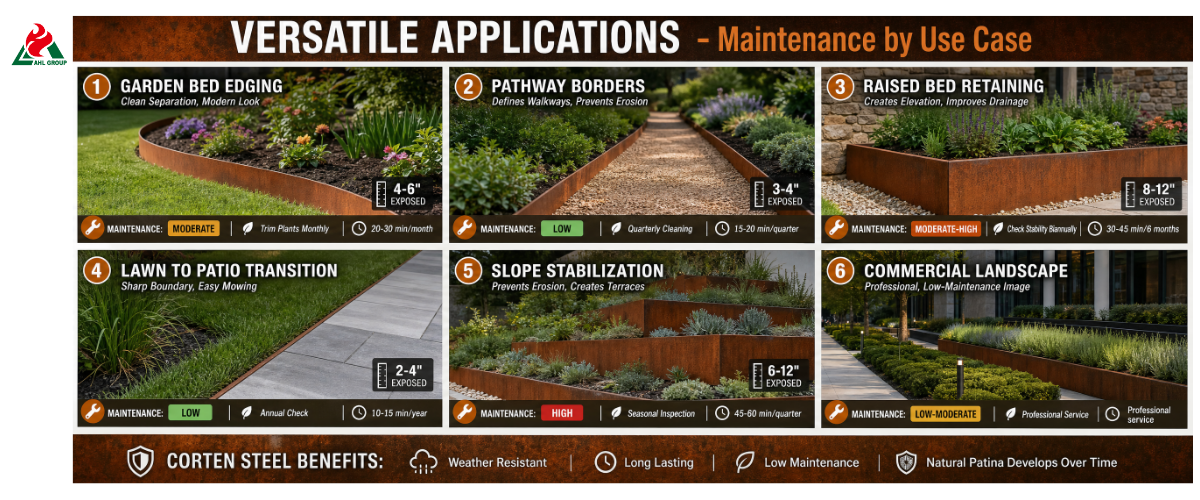
In short, while weathering steel is extremely durable, it is not a “set-it-and-forget-it” solution. Understanding its unique chemical properties—and how to facilitate its natural patina formation—is key to ensuring your garden border remains both beautiful and functional for decades to come.
1. Short Answer: Yes, but Very Little
Corten steel landscape borders are characterized by their self-protective properties, but this does not mean they are completely immune to the stresses of a garden environment.
The True Meaning of “Low Maintenance”
When it comes to weathering steel, “low maintenance” means you no longer need to perform the traditional maintenance tasks typically required for other materials. You don’t need to paint, stain, seal, or apply rust-preventive coatings. The material does this work for you automatically, transforming surface rust into a sturdy protective armor.
What You Don’t Need to Do
You can put away your paintbrushes, pressure washers, and chemical sealants. In fact, applying sealants or paint often does more harm than good, as it prevents the steel from “breathing” and hinders the formation of a stable oxide layer.
What You Still Need to Check Regularly
Maintaining weathering steel relies primarily on observation and prevention. Your main goal is to ensure the material’s surface is free of excessive water accumulation and debris buildup, which can cause the steel to oxidize prematurely rather than form the ideal protective rust layer.
2. Why Corten Landscape Edging Is Different
To properly handle weathering steel, it is essential to understand how its metallurgical properties differ from those of ordinary low-carbon steel.
The Protective Rust Layer Effect
Weathering steel is an alloy containing copper, chromium, and nickel. When exposed to the atmosphere, these elements form a dense layer of iron oxide (i.e., a rust layer) on the surface. Unlike the flaky, harmful rust found on ordinary steel, this rust layer is dense and adheres firmly to the metal surface.
The Weathering Process of Corten Steel Outdoors
Over a period of 6 to 24 months, the color of your frame will gradually change. It will initially appear as a bright industrial silver, then transform into a vivid, high-contrast orange, and eventually mature into a deep, dark reddish-brown. This transformation is not a sign of decay, but rather an indication that the material has reached its final, stable state.
Why It Is More Durable Than Ordinary Steel
Ordinary steel continues to rust until it is completely corroded away. Weathering steel, however, is designed to reach a “steady state” where the corrosion rate is negligible. Therefore, when properly installed, its lifespan will far exceed that of other metal alternatives.
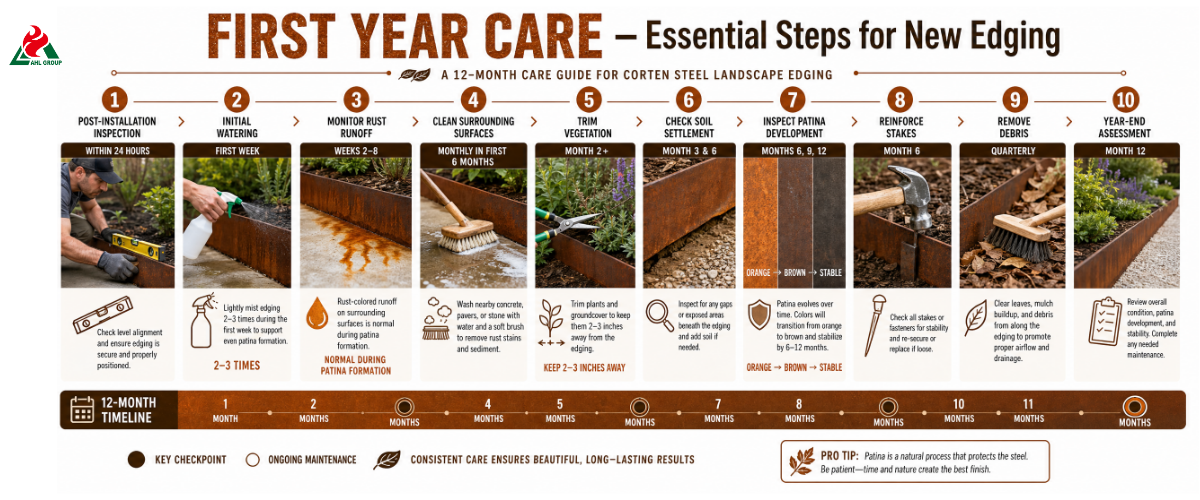
3. First-Year Care for Corten Edging
The first 12 months after installing metal edging are the most critical period in its lifespan.
Watch for Staining and Color Changes
During the first year, especially in humid climates, garden edging releases iron oxide as they develop a patina, causing “staining.” This may stain surrounding light-colored pavers, concrete, or light-colored gravel. Exercise caution during installation and consider laying temporary drainage gravel to absorb any runoff.
Keep Curbstones Clean During Patina Formation
Ensure that plastic, fallen leaves, or garden fabric do not come into direct contact with the curbstones. These materials trap moisture and block airflow, leading to “wet spots” and uneven oxidation.
Avoid Premature Surface Disturbance
When the material changes color, do not rush to scrub or polish it. Loose dust on the surface is a natural part of the patina formation process. Once the patina has set, this flaking will stop naturally.
4. Routine Maintenance Tasks
A few simple cleanings of your Corten garden edging each year will help maximize the lifespan of the steel.
Remove Accumulated Debris, Soil, and Grass Clippings
Organic matter traps moisture. If leaves or grass clippings accumulate around the edging stones, they create a constantly damp environment that prevents the steel from drying out. Remove this debris to ensure natural airflow.
Check Drainage Around the Edging
If your edging is located in a low-lying area of the garden, ensure water does not pool around it. While weathering steel (Corten) is very durable, it is not designed for prolonged immersion. If the edging remains submerged for extended periods, it will be unable to form a protective rust layer, and the metal will eventually weaken.
Check for Shifting or Tilting
Over time, freeze-thaw cycles or extreme weather may cause the soil to shift. If the outdoor edging appears tilted, gently backfill soil on both sides to keep it vertical and level with the ground.
Rinse Off Debris When Necessary
If the landscape border becomes covered in dirt or garden debris, simply rinse it off with a garden hose. Do not use overly abrasive brushes, as this may scratch the developing rust layer.
5. What Can Damage Corten Edging
Although weathering steel (Corten) is extremely durable, it remains susceptible to certain chemical and physical factors.
Standing Water and Poor Drainage
As mentioned earlier, prolonged exposure to standing water is the greatest enemy of weathering steel. Be sure to design your garden layout so that water flows past the edging lawns rather than pooling around them.
Soil Accumulation on the Surface
If your garden design requires piling up thick mounds of soil next to the Corten edging, consider using a thicker gauge of weathering steel. Prolonged contact with damp, acidic soil can cause oxidation over the years that penetrates deeper than the standard protective rust layer.
Salt, Fertilizers, and Highly Corrosive Chemicals
Salt (including rock salt used for de-icing) is highly corrosive and can damage the rust layer. Avoid using strong chemical fertilizers near edging stones, as high nitrogen content can react with the steel.
Physical Impact from Tools or Lawn Mowers
Although steel is hard, it can still dent. Be sure to exercise caution when operating a lawn mower or weed trimmer close to the edges. Laying down mulch as a buffer layer or choosing a slightly recessed edge design can effectively prevent such impacts.
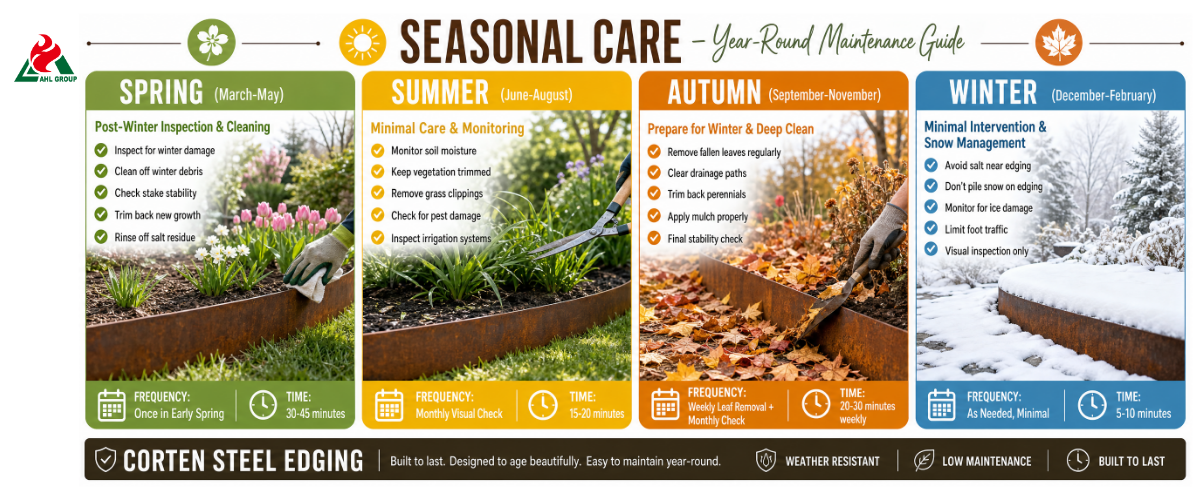
6. Seasonal Maintenance Tips
Incorporate maintenance tasks into your regular gardening schedule.
► Spring cleanup: Check for soil displacement caused by winter frost and remove debris that has accumulated during the cold months.
► Summer inspection: Check for overgrown plants. Dense foliage can sometimes cause excessive moisture to accumulate on metal surfaces; prune overhanging branches if necessary.
► Fall Leaf Cleanup: Ensure there are no piles of fallen leaves in the perimeter areas, as decaying leaves are the most common source of moisture buildup.
► Winter Precautions: If you live in an area with heavy snowfall, avoid piling snow directly on steel surfaces. More importantly, ensure that de-icing salt is not used near metal surfaces.
7. When Corten Edging May Need Extra Attention
Certain environmental factors may accelerate the weathering process or present unique challenges.
Coastal or High-Humidity Areas
Salty, humid air is naturally corrosive. In coastal areas, the “bleeding” phase may last longer, and metal surfaces will need to be rinsed with fresh water more frequently to remove salt deposits.
Areas with Heavy Irrigation
If your sprinklers spray water directly onto the garden metal edging, it creates a cycle of constant dampness. Please adjust the spray pattern to prevent the garden border from remaining saturated for extended periods.
Edging Stones Installed in Shaded, Damp Soil
Shade prevents rapid drying. If the edging stones are located in a corner that remains damp and shaded for long periods, the time required for them to stabilize will be significantly extended. Please ensure the soil has good drainage.
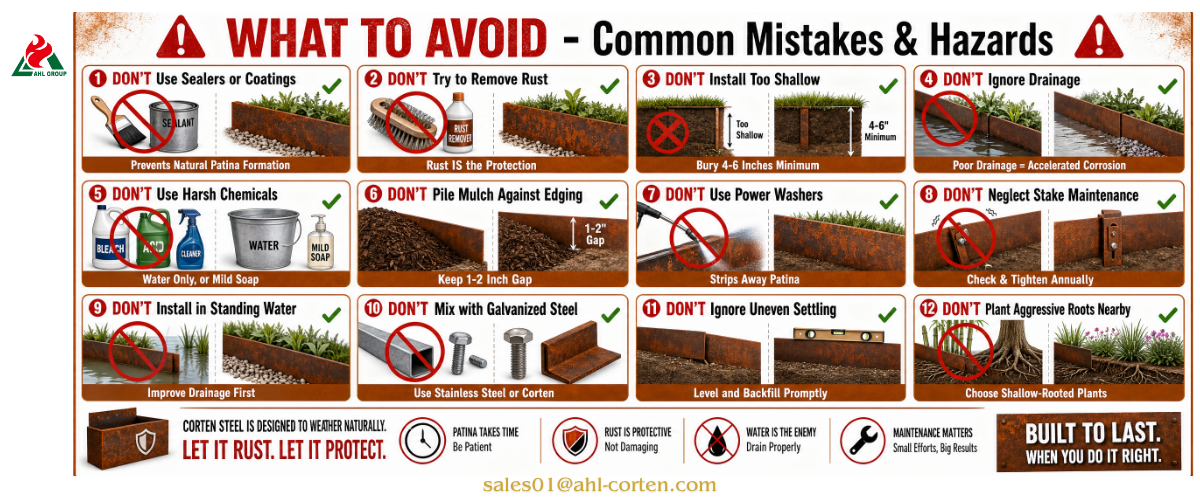
8. Common Maintenance Mistakes to Avoid
► Unnecessary Sealing: Never paint or seal weathering steel. This will compromise the material’s inherent structural properties.
► Brushing off rust: Do not use wire brushes. The rust that forms in the first year is very fragile and requires gentle handling.
► Allowing debris to accumulate: Ignoring accumulated grime is the quickest way to turn a beautiful feature into a rusty eyesore.
► Neglecting drainage: Make sure water flows away from the steel surface.
9. How Long Does Corten Landscape Edging Last
Weathering steel is a long-term investment, typically lasting longer than most other gardening materials.
Typical Expected Lifespan
In a well-maintained standard residential garden, weathering steel edging typically lasts between 20 and 50 years.
Factors Affecting Long-Term Performance
The thickness (gauge) of the steel is the most critical factor. Thicker steel offers significantly greater resistance to the long-term oxidation process and is therefore better suited for areas with high humidity or heavy foot traffic.
When Replacement Is Necessary
Replacement is only necessary when the metal is structurally compromised due to deep, localized pitting—a condition typically caused by poor drainage or prolonged exposure to salt or chemicals.
10. Maintenance Comparison With Other Edging Materials
| Material | Maintenance Level | Longevity |
| Corten | Low | High |
| Wood | High (Rot/Stain) | Low/Moderate |
| Plastic | Low (But fades/cracks) | Moderate |
| Aluminum | Very Low | High |
| Concrete | Moderate (Cracks/Cleaning) | Moderate |
Conclusion: Enhancing Your Garden Design
For homeowners who value durability and the natural beauty that develops over time, weathering steel landscape edging is the top choice. It requires virtually no routine maintenance and is one of the lowest-maintenance options on the market.
Simply ensure the metal surface is free of organic debris, avoid standing water, and prevent contact with highly corrosive chemicals, and your garden borders will gradually develop a rich, deep brown patina, serving as the perfect structural framework for your plantings. For the discerning gardener, weathering steel is not merely a border material—it is a lifelong asset.

