


.png)
1. Introduction: The Fundamental Question of Longevity
In the modern landscape architecture industry, the “fundamental question” regarding any material is no longer merely its appearance after installation, but its performance fifty years down the line. For practitioners seeking a balance between raw organic aesthetics and industrial-grade durability, Corten steel landscape edging has emerged as the ultimate solution. As environmental awareness grows and maintenance labor costs rise, the longevity of landscape edging has become a core concern for municipal developers and high-end property owners. This section explains why the “lifecycle” of edging is the most critical variable in project planning and clarifies how weathering steel emerges as the permanent solution amidst a market flooded with temporary alternatives.
Why Lifespan Matters: Investment, Maintenance, and Landscape Permanence
Landscapes are living entities that mature over decades. Using garden edging materials that fail within ten years disrupts root systems, incurs costly site excavation, and generates landfill waste. Selecting materials with lifespans exceeding 50 years ensures the garden's “skeleton” remains intact, allowing biological elements to thrive undisturbed by structural interference.
The Short Answer: 50-100+ Years of Functional Service Life
Under standard atmospheric conditions, a 3mm-thick weathering steel edging can maintain structural integrity for at least 50 years. In ideal “inland/mild” environments, its service life can easily exceed a century, potentially outlasting the very building structures it encloses.
2. The Science of Longevity: How Corten Steel Defies Decay
To understand why weathering steel is more durable than ordinary low-carbon steel, one must analyze its oxidation process at the molecular level. Ordinary steel forms a porous, flaky rust layer that traps moisture, accelerating the conversion of iron to iron oxide until the material is completely corroded. Weathering steel—particularly alloys like ASTM A588—contains precisely balanced proportions of copper (Cu), chromium (Cr), and nickel (Ni). This section details weathering steel's “self-preserving” mechanism: during initial weathering, it forms a dense, non-porous crystalline layer—the goethite layer. This layer effectively “seals” the steel's internal grain structure, reducing subsequent corrosion rates to near zero.
Self-Protective Rust Layer: Nature's Corrosion Barrier
The rust layer is not merely a coloration but a functional protective shield. Once stabilized, it blocks the ingress of oxygen and moisture—the essential catalysts for rust formation. This metabolic “shutdown” of the corrosion process is precisely what grants Corten steel its legendary longevity.
Corrosion Rate Data: Quantified Annual Material Loss (microns/year)
Field data from ISO 9223 indicates that in C3 (urban/industrial) environments, weathering steel loses approximately 2 to 5 microns of thickness annually once the rust layer stabilizes. Consequently, 3-millimeter (3000-micron) thick steel panels can endure decades of exposure without significant structural thinning.
Why Corten Does Not Rot, Splinter, or Degrade Like Other Materials
Unlike wood, weathering steel resists fungal decay and insect infestation. Unlike plastics, it remains unaffected by ultraviolet radiation and heat embrittlement. It retains ductility and strength even under extreme frost heave and mechanical stress.
3. Critical Factors That Determine Actual Lifespan
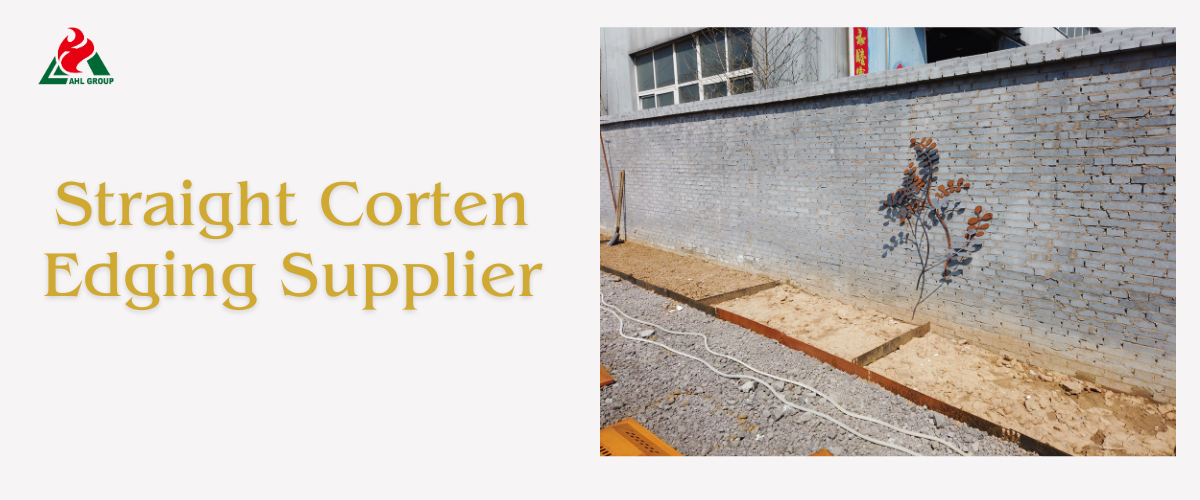
Although Corten steel inherently possesses durability, its actual “service life” depends on the synergistic interaction between material specifications and on-site environmental conditions. By 2026, professional code writers adopted the “Field Durability Matrix” to determine appropriate steel plate thickness for projects. This section explores environmental and mechanical stress factors that may extend or shorten the service life of Corten steel border structures. Soil pH, frequency of “wet-dry cycles,” and chloride ion (salt) presence are critical factors. Mastering these variables enables “precision material selection”—matching material thickness to anticipated environmental loads to ensure boundary components achieve their maximum potential lifespan.
Material Thickness: The Direct Link Between Specification and Lifespan
Thickness serves as a project's “insurance policy.” A 1.5mm garden border may suffice for a 20-year residential garden, but a 5-6mm specification is required for a century-long municipal park to withstand prolonged atmospheric corrosion.
Environmental Exposure: Coastal Salt Spray, Industrial Pollution, and Urban Settings
High-chloride (coastal) environments are more corrosive. While these areas develop glaze faster, they exhibit higher porosity. Designers must add a “corrosion allowance” (+1 to +2 mm) to maintain an equivalent 50-year service life.
4. Lifespan by Environment: Real-World Performance Data
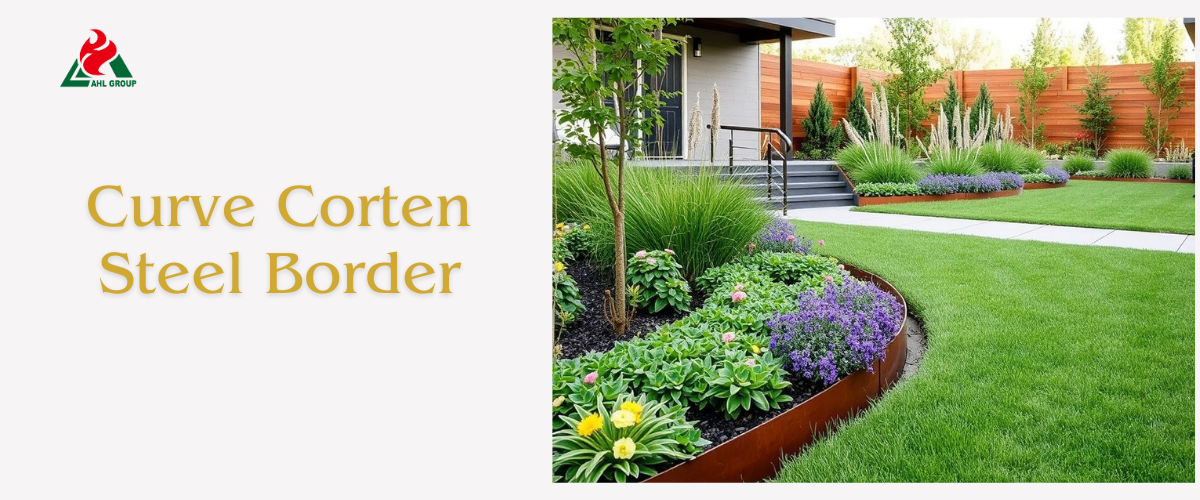
Atmospheric environment classification serves as the most precise indicator for predicting weathering steel performance. By 2026, engineers will provide clients with validated service life estimates based on ISO 12944 corrosion categories (C1 to C5). This section details the expected performance of Corten steel garden edging across all environmental classifications. From “Mild Inland” regions showing only micrometer-level loss over a decade to more reactive atmospheres in “Heavy Industrial” and ‘Coastal’ zones, we deliver critical data for informed decision-making. By determining service life through environmental classification, we shift from “marketing promises” to “engineering certainty,” enabling precise long-term maintenance planning.
Mild Inland/Suburban Environments: Expected 75-100+ Year Lifespan
In low-pollution, moderately humid regions, weathering steel will steadily develop a near-perfect deep ochre patina. Material loss is negligible, making boundary components effectively “permanent” installations.
Coastal and High-Salt Environments: Expected Lifespan 50-70 years
Salt acts as a catalyst for corrosion. While weathering steel significantly outperforms ordinary steel in coastal zones, its rust layer may remain relatively “active.” The standard for ensuring a 50-year lifespan in these areas is a minimum thickness of no less than 4 millimeters.
5. Comparative Lifespan: Corten Steel Edging vs. Alternative Materials
To truly grasp the value of weathering steel, it must be evaluated against competing materials. Most landscape edging materials are chosen for their low initial cost, overlooking the “replacement cycle” expense. This section comprehensively compares weathering steel with wood, plastic, concrete, and powder-coated materials. We analyze failure modes across materials—such as pressure-treated wood's susceptibility to decay and polymers' UV-induced brittleness. Calculating “failure frequency” reveals: Despite its higher initial cost, weathering steel is the only material requiring no replacement after 3,650 days, ultimately delivering the lowest average annual cost on the market.
Pressure-treated wood: 5–15 years
Wood represents a “temporary” solution. Even ACQ-treated wood will rot when ground-contacting or be damaged by lawnmowers and edgers.
Powder-coated steel: 15–30 years
Powder-coated steel relies on its plastic coating for protection. Once this coating is scratched by a lawnmower or shovel, underlying corrosion can “lift” the coating, causing rapid localized failure. Weathering steel, with its “self-healing properties,” does not exhibit this flaw.
Plastic/Polymer Edging: 10-25 Years (UV Brittleness, Cracking, Color Fade)
The primary failure mode for plastic or polymer-based frame materials is “photodegradation.” Even with UV stabilizers added, prolonged exposure to solar radiation causes polymer chain breakage, resulting in loss of elasticity. In the climate-variable conditions of 2026, with more extreme temperature fluctuations, plastic frames will suffer significant thermal expansion and contraction effects. Over a 10- to 15-year service life, this physical stress triggers “environmental stress cracking” (ESC). Additionally, as pigments progressively leach out, the material's appearance rapidly deteriorates, developing a powdery, brittle state. Unlike weathering steel, which develops a distinctive patina over time, plastic frames ultimately become structural hazards, fracturing into microplastic pollutants that pose complex challenges for future soil remediation efforts.
Concrete Edging: 20-50 Years (Cracking, Spalling, Efflorescence)
Concrete is often regarded as a permanent material, yet in landscape border applications, it is highly susceptible to freeze-thaw cycle erosion. Due to its inherent porosity, water infiltrates into capillary pores; when this water freezes and expands, it generates internal water pressure, leading to surface spalling and deep structural cracking. Additionally, concrete borders frequently exhibit efflorescence—where salts migrate to the surface, forming unsightly white stains that are difficult to remove. Over a 20- to 50-year service life, ground displacement and root pressure inevitably cause rigid concrete components to buckle and fracture. Unlike the flexible, ductile properties of weathering steel, concrete cannot adapt to the dynamic topographical shifts of living landscapes, ultimately leading to catastrophic failure.
Corten Steel: 50-100+ Years (Stable Patina, No Coatings Required)
Weathering steel transforms the environment from foe to ally through its unique properties. Its service life of 50 to 100+ years stems from atmospheric passivation. While other materials require repeated applications of costly paints, sealants, or zinc-rich coatings, weathering steel's protective layer maintains biological stability and self-regenerates. When surfaces are scratched or worn by maintenance equipment, the steel automatically re-oxidizes to form a “self-healing” layer, maintaining barrier integrity. This maintenance-free characteristic significantly reduces the total cost of ownership (TCO) after a decade. In terms of engineering durability, Corten metal edging is the only solution offering a predictable century-long lifespan while eliminating risks of chemical leaching or structural fatigue.
6. Maximizing Lifespan: Best Practices for Specification and Installation
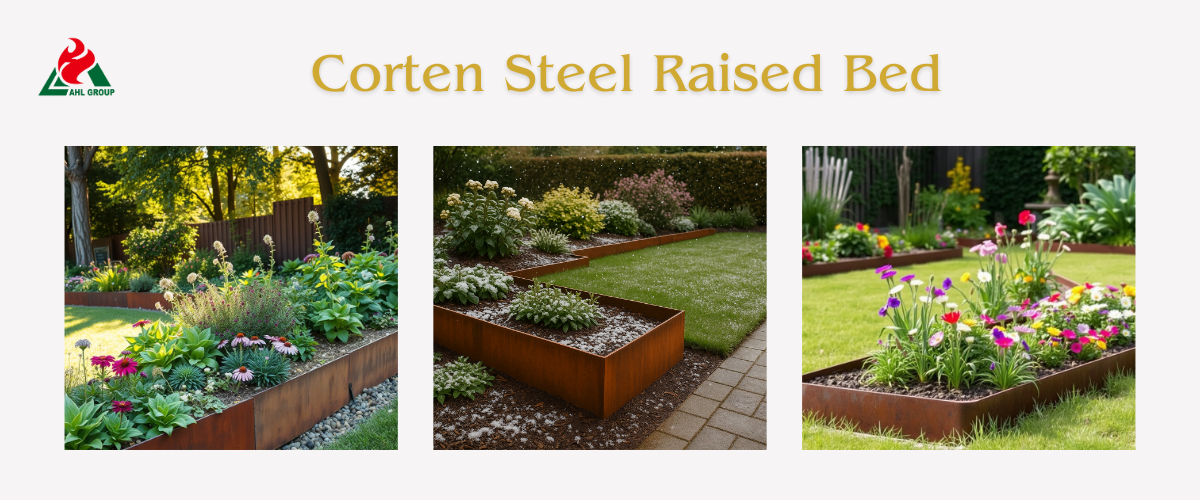
Durability is not achieved solely through purchase but requires careful installation. Even the highest-grade weathering steel may have its lifespan shortened by improper on-site detailing. This section outlines the engineering “best practices” necessary to achieve a century-long service life. The most critical factor is the “wet-dry cycle.” Weathering steel must be completely dry to form its protective layer. If bordering components are installed in permanent marshes or underwater environments, the patina cannot form, leading to premature failure. This article explores the importance of foundational drainage systems, the application of non-reactive fasteners, and the critical role of “air gap” detailing—ensuring the steel can “breathe” and perform its intended protective function.
Determining Appropriate Thickness Based on Expected Service Life
For commercial tender projects, we recommend the “L+1” rule: calculate the anticipated material loss over the project cycle and add an extra 1 millimeter as a structural safety buffer.
Ensuring Drainage and Preventing Water Accumulation
Avoid installing weathering steel in low-lying areas prone to water pooling. Install a 50-millimeter gravel “moisture-conducting layer” along the bottom edge to facilitate rapid drying of the steel surface after rainfall.
7. Signs of Aging: What “End of Life” Looks Like for Corten Edging
Distinguishing between “healthy” natural rusting and ‘destructive’ corrosion is critical for facility managers and owners. As weathering steel ages, its color deepens from a vibrant orange to a rich purple-brown, developing a distinctive textured surface. This section guides readers in performing a “physical health check” on edging components. We define “end of life” not by color change, but by structural section loss. We will clarify signs requiring attention—such as “flaking” (thick rust scales) or “perforation” (holes)—and advise when localized repairs are feasible versus when complete replacement is necessary. In the vast majority of cases, properly designed weathering steel border structures will remain structurally sound well beyond the career of their original designers.
Distinguishing Stable Rust Layers from Active Corrosion
A stable rust layer appears as a fine, powdery texture; active, destructive corrosion manifests as thick, large rust scales that peel off easily with a fingernail.
When to Consider Localized Repair
Since weathering steel is weldable, damaged sections (such as those caused by heavy vehicle impacts) can be cut out and replaced with new steel plates. The new plates will naturally weather and blend seamlessly with the original edges within 18 months.
8. The Economic Case: Calculating Lifetime Value and ROI
The “economic value” of weathering steel lies in avoiding recurring costs. By 2026, savvy developers will employ life cycle cost analysis (LCCA) to justify premium materials. This section breaks down the calculation method: initial material cost plus installation divided by service life. Compared to wood (which may require 4-5 replacements over a 50-year cycle), weathering steel's return on investment is indisputable. We also examine the “labor inflation” factor—the cost of replacing boundaries in 2040 will far exceed the cost of proper installation in 2026. By choosing weathering steel, property owners effectively “lock in” landscape infrastructure costs at today's levels, maintaining them unchanged for a century.
Zero Maintenance Costs vs. Ongoing Expenditures
Weathering steel requires no painting, oiling, or chemical treatments. Its “maintenance budget” over a 50-year service life is effectively zero.
Permanent Infrastructure Enhances Property Value
In the high-end real estate sector, weathering steel is regarded as a “premium asset.” Its presence signals to buyers a commitment to “zero compromise on quality and durability” in landscape construction.
Conclusion: Lifetime Performance, Minimal Intervention
Corten steel landscape edging represents the ultimate expression of sustainable engineering. By selecting materials with a century-long lifespan, we reduce demand for new steel, eliminate the carbon footprint of frequent replacements, and create landscapes with a sense of timelessness. As this guide demonstrates, the longevity of weathering steel is no accident—it stems from metallurgical science and expert installation. Whether you're a designer crafting a 2026 municipal master plan or a homeowner creating a legacy garden, weathering steel edging offers peace of mind—knowing your vision will endure for generations.
【Partner with AHL Weathering Steel for certified, enduring landscape edging solutions.】

