


Mastering the art of outdoor cooking begins long before you place that first steak on the grill. When using a Corten steel grill (commonly referred to as a “Corten” grill), you’re working with a material renowned for its remarkable heat capacity and aesthetic evolution. Unlike thin, stamped aluminum grills that lose heat the moment you open the lid, a Corten steel BBQ grill is a sturdy, durable, construction-grade cooking appliance.
Preheating serves as the bridge between cold steel and a professional grilling machine. Because weathering steel has a higher density and is designed to withstand extreme temperature fluctuations, its heating process differs significantly from that of a typical backyard grill. This guide will delve into the “methods” and “principles” of preheating a weathering steel grill, ensuring consistent quality, rich flavor, and safety with every cook.
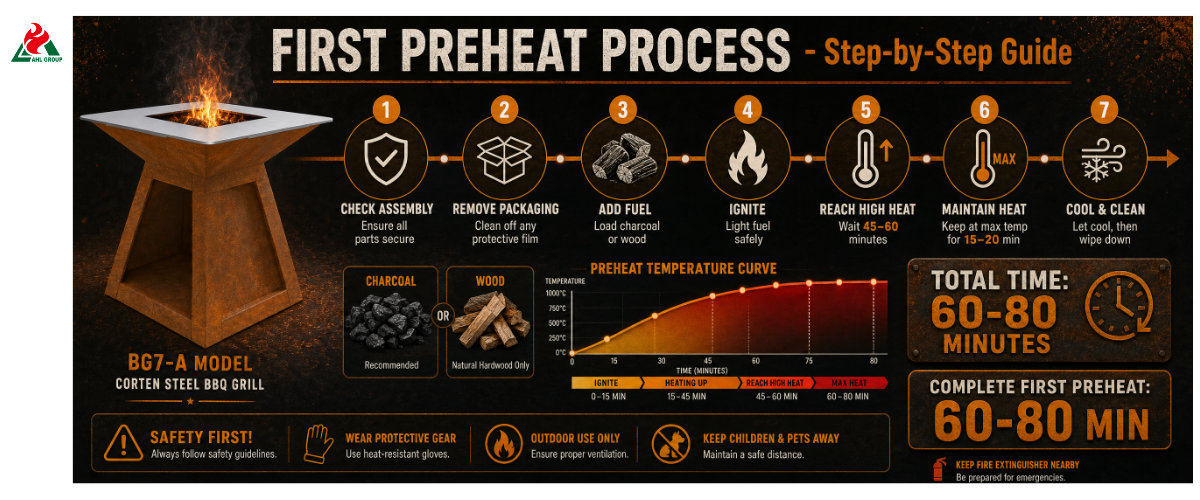
Preheating serves as the bridge between cold steel and a professional grilling machine. Because weathering steel has a higher density and is designed to withstand extreme temperature fluctuations, its heating process differs significantly from that of a typical backyard grill. This guide will delve into the “methods” and “principles” of preheating a weathering steel grill, ensuring consistent quality, rich flavor, and safety with every cook.
1. Introduction
For many people, a barbecue is ready when the flames are visible. However, with professional-grade materials like weathering steel (Corten), “fiery flames” don’t necessarily mean a “high-temperature cooking surface.” Preheating is the most critical step in the entire grilling process.
Why Preheating Is Essential for Corten Steel Grills
Corten steel (a steel alloy developed to eliminate the need for painting) is highly regarded for its excellent heat retention capabilities. Preheating allows the metal to expand evenly and reach thermal equilibrium. Once the BBQ grill is fully preheated, the surface temperature remains stable even when cold meat is placed on the grates. Without this stable “heat reservoir,” the surface temperature will drop sharply as soon as cooking begins, resulting in poor cooking results.
What Happens If You Skip Preheating
If you skip the preheating step, you’re essentially “steaming” the food rather than grilling it.
► Sticking: Cold metal reacts chemically with proteins.
► Uneven heating: The center may be hot, while the edges remain cold.
► Lack of the Maillard reaction: You won’t get that crispy, caramelized crust—the very element that gives high-end grilling its signature “umami” flavor.
What This Guide Covers
We’ll explore specific preheating times for different fuels (wood, charcoal, gas), how to use visual cues to determine if the grill is ready, special requirements for “first-time use,” and expert tips for maintaining the flatness of your Corten steel outdoor grill and extending its lifespan.
2. How Long Should You Preheat a Corten BBQ?
The time required depends primarily on the thickness of the steel plate and the amount of fuel used. Since most weathering steel grills feature top plates made of 10- to 12-millimeter-thick carbon steel or stainless steel, they require a longer preheating time compared to grills with thin metal grates.
Short Answer
For standard Corten grills equipped with thick top plates, the preheating time is typically 20 to 45 minutes. Although the flames may be quite intense within 10 minutes, the thick metal plate requires more time to absorb heat, thereby creating an even cooking surface across the entire diameter.
Recommended Preheating Times by Cooking Method
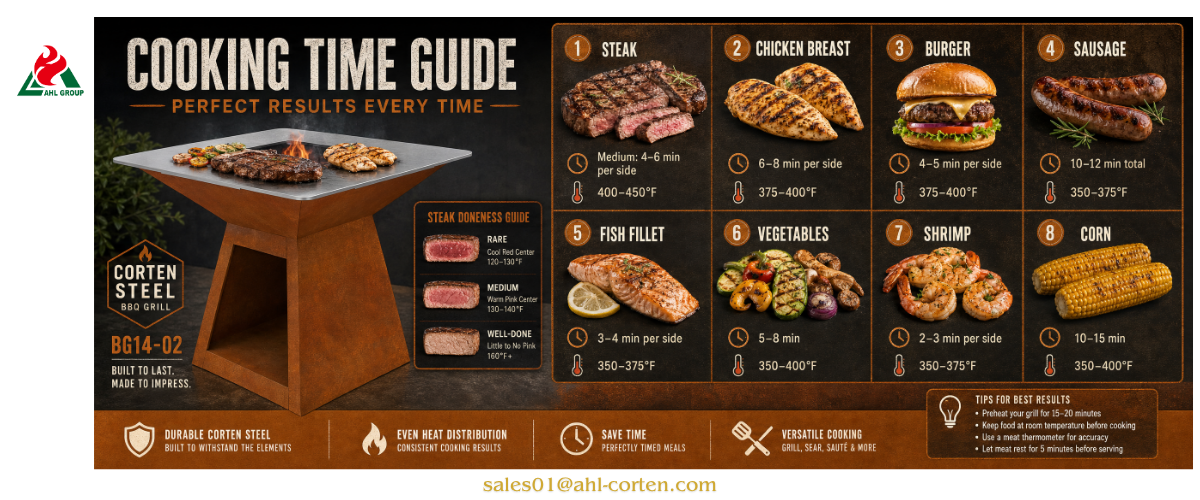
► High-Heat Searing (Steaks/Burgers): 35–45 minutes. At this stage, the cooking surface should reach very high temperatures (250°C–300°C).
► Low-temperature slow cooking (vegetables/fish): 20–25 minutes. A moderate heat (150°C–180°C) is sufficient.
► Baking with the lid on: 30 minutes. This allows the internal air and steel walls to reach a uniform temperature.
What Affects the Preheat Time
The main factors affecting performance are ambient temperature and wind speed. A Corten steel barbecue grill essentially acts as a heat sink. On cold, windy days, the steel continuously loses heat to the atmosphere. In such cases, you may need to add 10 to 15 minutes to the standard preheating process or use a windscreen to aid combustion.
3. Why Preheating Is Important
Preheating is not just about temperature; it’s about creating the ideal “environment” for grilling.
More Even Heat Distribution
A thick steel griddle acts like a heat reservoir. During the preheating phase, heat spreads from the center (closest to the heat source) to the edges through conduction. A fully preheated griddle develops a predictable “heat gradient”—hotter in the center and cooler at the edges—allowing you to move food between different heat zones without unexpected results.
A Cleaner Cooking Surface
High temperatures have a natural sanitizing effect. Preheating to 200°C or higher carbonizes organic residues from previous cooking, making them easy to scrape off. This essentially “resets” the cooking surface for new ingredients.
Better Searing Results and Crispy Crusts
The “Maillard reaction”—a chemical reaction between amino acids and reducing sugars—requires surface temperatures of at least 140°C to 165°C. To achieve professional-grade searing results, the griddle’s temperature must be significantly higher than the surrounding air temperature. Only through prolonged preheating can the griddle accumulate enough “thermal energy” to sear the meat the moment it comes into contact with it.
Reduced Sticking and Uneven Heating
When cold meat comes into contact with cold metal, proteins “grab” onto the microscopic pores on the steel surface. However, when the meat touches a preheated, oiled surface, the moisture within the meat evaporates instantly, forming a tiny cushion of steam that prevents the meat from sticking (the Leidenfrost effect).
4. Preheat Time by Fuel Type
The energy density of the fuel determines how quickly the steel heats up.
Charcoal Grill Preheating Time: 40–50 minutes
Charcoal takes the longest because you’re not just waiting for the steel to heat up—you’re also waiting for the charcoal to burn down to a stable bed of embers. The intense “blaze” at the start of the burn is too fierce for cooking. What you need is the deep, steady infrared heat emitted by glowing embers.
Charcoal Corten BBQ Preheating Time: 25–35 minutes
Charcoal is a fuel that concentrates heat more effectively. Once the surface of the charcoal is “ash-covered” (covered with a thin layer of gray ash), it releases very stable heat. This typically heats the Corten steel plate faster than using firewood.
Gas Corten BBQ Grill Preheating Time: 15–20 minutes
Gas is the king of speed. Thanks to the precise placement of the burners and consistent heat output, the metal surface reaches cooking temperature faster. However, because gas lacks the “embers” produced by charcoal or wood, its heat retention is slightly less reliable once you start placing cold food on the grill.
Which Fuel Heats Up Fastest
Gas heats up significantly faster, but wood offers the highest “peak” temperatures and the best flavor. For most Corten steel barbecue enthusiasts, the ritual of lighting a wood fire—which can take up to 45 minutes—is part of the experience itself.
5. How to Know When Your BBQ Is Ready
You don’t always need a laser thermometer to know when to start cooking. Just look for these four signs:
Visual Signs
If your Corten grill comes with a carbon steel grate, its color will change as it heats up. As surface oils “polymerize,” the color will gradually shift from dark gray to a deeper, almost blue-black hue. If you see white ash appearing on the coals, or if the wood stops producing thick smoke, it means it’s almost ready.
Surface Temperature Signs
A properly prepared grill will “glow.” If you look at the surface of the grate, you should be able to see heat waves (convective airflow) causing the air to distort.
Smoke and Flame Behavior
In the early stages of charcoal burning, smoke is typically thick and white (unburned particles). Once the outdoor grill is preheated and burning efficiently, the smoke should be “light blue” or nearly invisible. This indicates a clean burn and high temperatures.
Simple Test Before Cooking
► Water Drop Test: Fling a few drops of water onto the grill grate.
► Slow evaporation: Not yet ready.
► Sizzling and disappearing quickly: Suitable for medium-heat cooking.
Water droplets bounce and “dance” (Leidenfrost effect): Ideal for high-heat grilling.
6. First Use vs. Regular Use
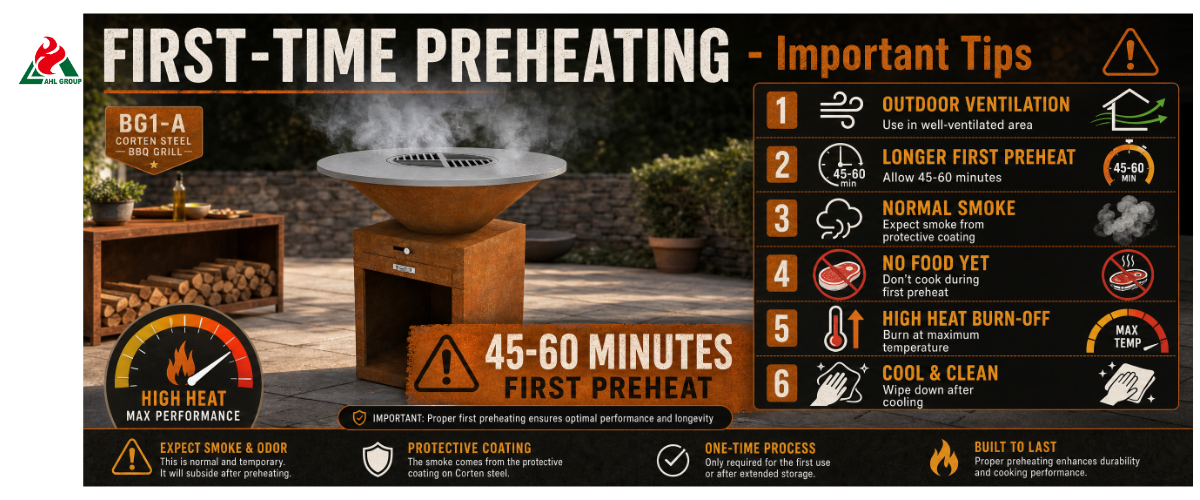
Firing up your Corten barbecue grill for the first time is a unique experience that requires a little patience.
Why the Initial Seasoning Takes So Long
During manufacturing, the steel surface is typically coated with a thin layer of “scale” or protective oil to prevent premature rusting before the grill reaches you. The initial seasoning requires a longer duration and higher temperatures to completely remove these substances.
Burning Off Manufacturing Residues
You must let the barbecue grill run at high heat for at least 60 minutes without any food on it. You may notice an odor or see light smoke rising from the metal surface—this is normal and simply indicates that the factory coating is burning off.
Seasoning the Cooking Surface
After removing any residue, you must “season” the griddle—a process similar to seasoning a cast-iron skillet. While the griddle is still hot, coat the surface with a high-smoke-point oil, such as canola or grapeseed oil. The oil will smoke, then form a hard, non-stick black protective layer. It is this protective layer that makes using a Corten metal grill such a pleasure.
Easier to Use in the Future
After seasoning, the durable grill will preheat slightly faster and be easier to clean. This “protective layer” also protects the cooking surface from rust when the grill is not in use.
7. Factors That Affect Preheat Time
A 30-minute preheat cycle does not always yield the same results.
Grill Size and Thickness
A small 600-millimeter grill heats up faster than a large 1,000-millimeter grill. Additionally, a 12-millimeter-thick griddle takes longer to heat up than an 8-millimeter-thick one, but once you start grilling a dozen steaks at once, the 12-millimeter-thick griddle retains heat much better.
Outdoor Temperature and Weather
In the dead of winter (0°C), the grill’s starting temperature is much lower than in summer (30°C). For every 2 degrees below room temperature, preheating time increases by about 1 minute.
The Effect of Wind
Wind is the enemy of preheating. It “carries away” heat from the grates through forced convection. If your grill is located in a windy area, preheating time may double. Try to place the grill in a sheltered spot.
Fuel Type and Quantity
Using high-density hardwoods like oak or hickory results in longer preheating times and higher temperatures; softwoods like pine, while burning quickly, lack the heat energy needed to heat a thick steel griddle.
Has the Grill Been Cleaned Recently?
A thick layer of old ash on the bottom of the grill can block the airflow (oxygen) to the fire. A fire deprived of oxygen will burn weakly. Be sure to remove all old ash before preheating.
8. Common Mistakes to Avoid
Avoid these four common mistakes to ensure your weathering steel BBQ grill lasts for years.
Starting to Cook Too Early
This is the most common mistake. If the grill surface is only 100°C, the meat will turn gray and cook in its own juices. Please be patient. If you’re in a hurry, don’t use a weathering steel grill—use your kitchen stove instead.
Using Too Much Fuel
To speed up heating, people often can’t resist packing the entire bottom of the grill with wood. However, too much fuel can cause “flare-ups,” and if heat becomes too concentrated in one spot, it may even warp the steel. It’s best to build a moderate-sized, efficient fire and let the metal conduct the heat naturally.
Improper Use of Air Vents
Flames need oxygen. If you close the air vents too early, the temperature will plateau. During the preheating phase, keep the vents fully open to encourage a vigorous fire. Only when you’re ready to maintain a stable temperature for cooking should you “tighten” the vents.
Ignoring Hot and Cold Zones
No grill can provide 100% even heat distribution. During preheating, identify the location of the “hot zone.” Typically, the hot zone is directly above the fire source. Use the edge areas to warm bread or slowly cook delicate fish.
9. Tips for Faster, More Even Preheating
Start with a Clean Grill
Clean the air vents and ashtray. Good airflow is key to reducing preheating time from 20 to 40 minutes.
Use the Right Amount of Fuel
When using firewood, use a “top-down” lighting method (place larger logs at the bottom and kindling on top). This ensures a clean burn, heats the grill from top to bottom, and improves efficiency.
Maintain a Steady Airflow
Avoid adding too many large logs at once, which can “smother” the fire. Add fuel gradually to maintain a steady burn rate.
Ensure the Lid or Hood Is Positioned Correctly During Preheating
If your Corten outdoor grill is equipped with a “smoker lid” or grill lid, leave it slightly ajar to create a “chimney effect,” allowing heat to rise more quickly to the cooking grate.
Allow the Grill to Reach a Stable Temperature Before Cooking
Once the cooking surface is hot, stop adding fuel and let it rest for 5 minutes. This allows the heat to fully “penetrate” the entire thickness of the steel plate, ensuring no cold spots remain.
10. Safety Tips During Preheating
Keep the surrounding area clear
Weathering steel can become extremely hot. The entire body of the grill emits heat. Please ensure there are no flammable items (or children/pets) within 1.5 meters of the grill.
Wear heat-resistant gloves
When adjusting firewood or the grill grate during the preheating process, be sure to use barbecue gloves made of high-quality leather or aramid fiber. The radiant heat emitted by the rusty steel grill can cause “instant burns” to exposed skin.
Never Leave the Grill Unattended
Especially during the first 15 minutes after lighting the wood fire, sparks and embers can be unpredictable.
Be Aware of Smoke and Odors During First Use
As mentioned earlier, the initial burn will produce smoke. Ensure you are in a well-ventilated outdoor area and avoid standing directly in the path of the smoke.
Conclusion: Caring for Your Weathering Steel Grill
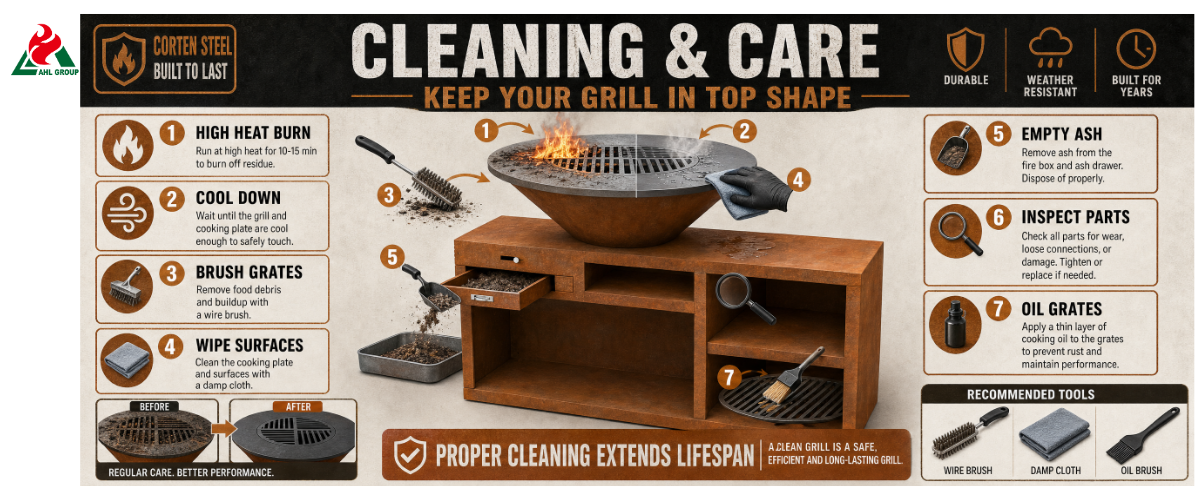
In today’s fast-paced world, a Corten modern grill is a “slow” piece of equipment—and that is precisely its greatest strength. The 20- to 45-minute preheating process is not a tedious chore—it is an essential part of the cooking process, designed to prepare the steel for efficient cooking. By respecting the thermal mass of the weathering steel and allowing it to reach thermal equilibrium, you ensure that food is perfectly seared, the grill surface remains non-stick, and your grill serves as a practical work of art that will accompany you for decades.
For your first use, we recommend starting with high-fat meats such as ribeye steak or bacon. This helps “season” the griddle by building up a protective layer after preheating and allows you to experience firsthand how heat conducts through the steel. Happy grilling!

