


Corten steel planters are widely popular in rooftop projects because they offer a warm architectural aesthetic that complements modern outdoor design. Their weathered surfaces lend a unique charm, making them particularly suitable for urban spaces where a striking visual impact is desired.
However, composite decking differs from stone pavers or concrete slabs. Composite decking is more sensitive to moisture, rainwater runoff, and surface contact, so the placement of planters requires more careful planning. For this reason, the short answer is “YES,” but precautions must be taken.
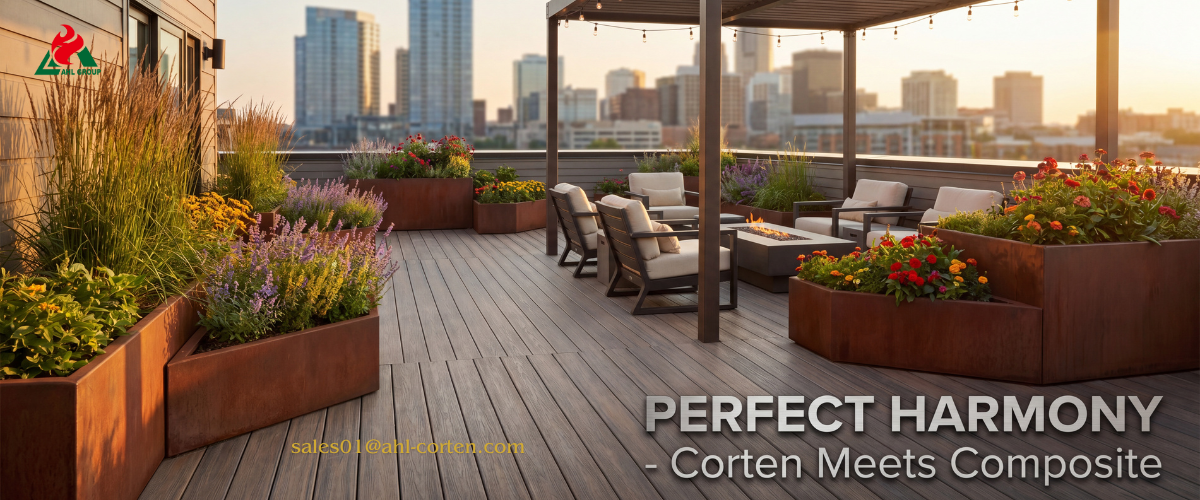
However, composite decking differs from stone pavers or concrete slabs. Composite decking is more sensitive to moisture, rainwater runoff, and surface contact, so the placement of planters requires more careful planning. For this reason, the short answer is “YES,” but precautions must be taken.
1. Introduction
Why This Question Matters for Rooftop Projects
Roof terraces are increasingly being transformed into fully functional outdoor living spaces, particularly in urban environments where ground-level landscaping is limited. However, unlike traditional gardens, rooftop structures involve strict load restrictions, waterproofing systems, and sensitive surface materials such as composite decking. Placing heavy, weather-sensitive materials—such as Corten planters—directly on these surfaces raises significant concerns regarding safety, durability, and long-term performance.
Why Corten Steel Planters Are So Popular
Corten garden planters are widely popular due to their unique rust-like patina, exceptional durability, and minimal maintenance requirements. Their texture, which blends industrial and natural aesthetics, complements modern architecture, making them the top choice for designers creating visually striking rooftop gardens.
What Readers Will Gain from This Guide
This guide provides a comprehensive and practical answer to the question: “Can Corten steel planters be used on composite decking rooftops?” It delves into the associated risks, best practices, material compatibility, and professional installation techniques to help you make an informed decision that protects both your rooftop and your investment.
2. What Are Corten Steel Planters?
What Corten Steel Is
Weathering steel, also known as Corten steel, is an alloy that forms a protective oxide layer when exposed to the natural environment. Unlike ordinary steel, which continues to corrode, weathering steel gradually stabilizes over time, thereby preventing further deterioration of the structure.
Why Does a Rust-Like Patina Form
This distinctive rust-like layer is formed through repeated cycles of wetting and drying, creating a self-sealing surface layer. This process not only protects the steel but also produces its signature warm, rustic tones.
Common Applications in Rooftops and Urban Landscapes
Weathering steel planters are widely used in rooftop gardens, patios, commercial plazas, and urban courtyards. Their strength and design flexibility make them suitable for both decorative and structural landscape applications.
3. Can Corten Steel Planters Be Used on Composite Rooftop Decks?
The Short Answer
Yes—but only with proper planning, protection, and installation techniques.
Why Compatibility Depends on Design and Installation
Composite decking is designed for durability, but it is not intended to withstand direct contact with heavy, moisture-absorbing metal objects. Without protective measures, issues such as staining, heat transfer, and structural stress may arise.
When Is It Safe to Use Corten Steel Planters
Corten steel garden planters are safe under the following conditions:
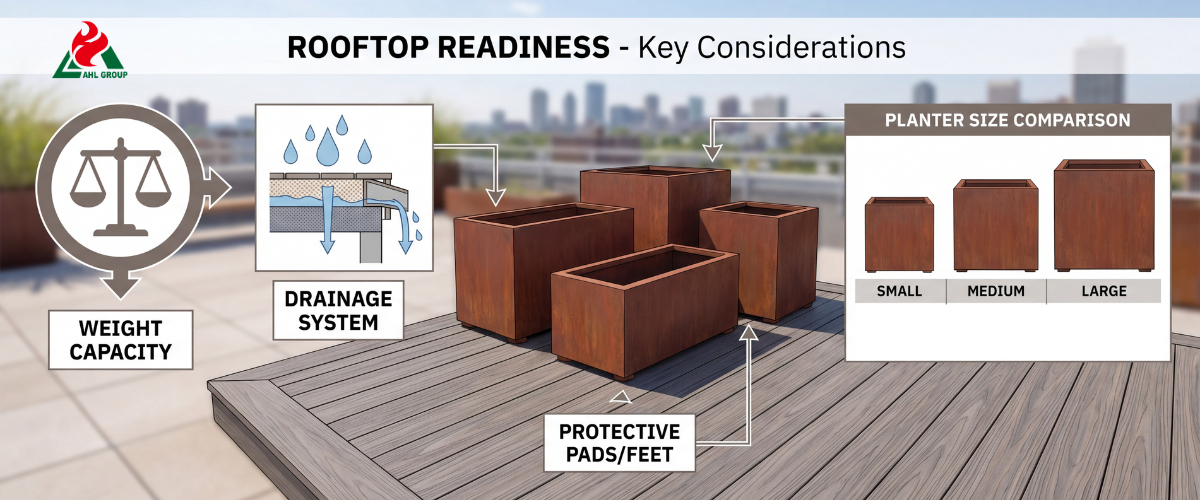
► The weight is within the structural load-bearing limit
► The planter is suspended above the deck surface
► An appropriate drainage system is installed
► Surface runoff is effectively managed
When Additional Precautions Are Required
► Additional precautions are required in the following situations:
► Large or deep planters containing wet soil
► Roof environments with poor drainage or enclosed spaces
► Light-colored composite wood decks prone to staining
4. Main Risks to Consider
Staining from Runoff or Moisture
One of the most commonly underestimated risks when using Corten outdoor planters on composite rooftop terraces is the shedding of iron oxide, particularly during the initial 3 to 6 months of the weathering process. This shedding occurs when rainwater or irrigation water reacts with the developing rust layer, causing fine rust particles to be carried onto surrounding surfaces. Composite decking—especially light-colored or textured surfaces—absorbs these particles, resulting in deep, permanent stains that are difficult to remove even with specialized cleaners.
This risk is further exacerbated when water flow cannot be controlled. For example, if flower pots are placed on a slope or near drainage channels, the runoff of iron oxide particles may spread across large visible areas. Over time, repeated exposure leads to uneven discoloration, thereby compromising the aesthetic integrity of the entire deck area.
Excess Weight on Rooftop Structures
Weight is not merely a structural issue; it is also a matter of dynamic loads. A Corten metal planter filled with moist soil can weigh hundreds of kilograms, and this weight fluctuates with moisture content, plant growth, and seasonal changes. Roof terraces are typically designed with specific load limits (e.g., 250–500 kg/m²), and exceeding these limits may result in structural deflection, cracking, or long-term structural fatigue.
Furthermore, point loads (i.e., weight concentrated over a small area) pose a greater risk than uniformly distributed loads. This makes the design of the planter base just as important as the total weight.
Drainage and Water Accumulation
Inadequate drainage can create a persistently damp microenvironment beneath the planter. This not only accelerates the wear and tear of composite materials but may also compromise the performance of the waterproofing membrane beneath the roof deck. Over time, accumulated moisture can lead to mold growth, material degradation, and even leaks into the underlying building structure.
In roof drainage systems, drainage designs are typically carefully planned. Introducing obstacles, such as planters, without considering the flow of water, can disrupt the normal operation of the entire system.
Heat, Thermal Expansion and Contraction, and Surface Damage
Weathering steel efficiently absorbs solar radiation, causing its surface temperature to rise under direct sunlight. Heat is then transferred downward, which may affect composite decking. Prolonged exposure to high temperatures can lead to localized thermal expansion and contraction, fading, or deformation of the decking material.
Furthermore, steel and composite materials have different rates of thermal expansion and contraction. If appropriate gaps are not left or isolation measures are not taken, friction points may develop, leading to surface wear or structural stress over time.
Wind Effects and Planter Stability
Roof environments are inherently more susceptible to wind forces. Large or tall planters can act as sails, especially when filled with dense vegetation. Without proper anchoring or weight distribution, planters may shift, tilt, or even overturn during extreme weather conditions. This not only poses a safety hazard but may also damage the deck surface and surrounding structures.
5. How to Protect a Composite Deck
Use Planter Feet or Risers
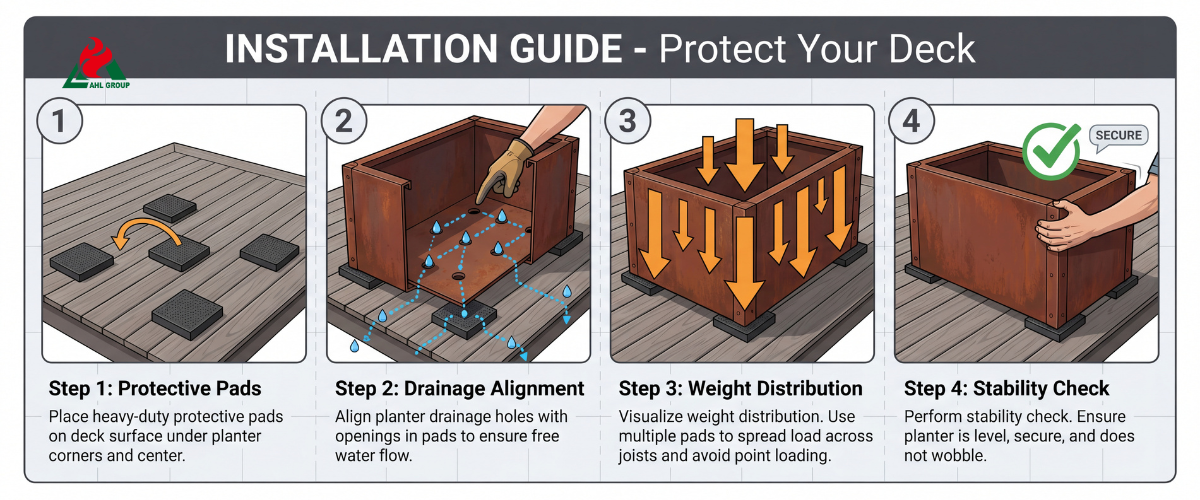
Raising planters is one of the most effective protective strategies. By creating a 10–30 mm air gap, planter stands or risers allow air to circulate beneath the planter pot, reducing moisture buildup and minimizing heat transfer. This also prevents direct contact, which is crucial for preventing stains and surface damage.
Add a Waterproof Liner or Tray
A high-quality waterproof tray serves as a secondary spill containment system, collecting overflow and preventing it from seeping into the patio. For best results, the tray should be slightly larger than the planter base and feature controlled drainage holes to safely channel water away.
Improve drainage at the bottom of the planter
Laying a drainage mat or a layer of gravel at the bottom of the planter enhances water flow and prevents waterlogging. These systems create a capillary barrier, ensuring that moisture does not remain trapped between the planter and the patio surface.
Avoid Direct Contact with the Deck Surface
Direct contact increases the risk of chemical staining, heat transfer, and mechanical wear. Even brief contact during installation can leave marks, so be sure to always use protective pads.
Divert Surface Runoff Away from Visible Deck Areas
Proper layout plays a critical role in protection. Planters should be placed near drainage areas or in inconspicuous locations to minimize visual impact. In high-end projects, designers often incorporate concealed drainage channels or gravel strips to manage surface runoff discreetly.
6. Choosing the Right Corten Planter
Size and Weight Considerations
Choosing the right size is not just about aesthetics; it also involves load-bearing capacity and practicality. Smaller, modular planters distribute weight more evenly and are easier to move when necessary. While large, monolithic planters make a striking visual impact, they require careful structural evaluation.
Base Design and Drainage Holes
A well-designed base is essential. Outdoor lanters should feature multiple drainage holes to prevent waterlogging. Poor drainage design can lead to root rot, excessive weight, and increased runoff.
Raised Bases and Support Structures
Integrated raised bases provide built-in height, eliminating the need for additional risers. These designs typically include load-bearing frames that reduce pressure on specific points of the deck.
Lined vs. Unlined Planter Options
A liner creates a barrier between the soil and the steel, helping to regulate moisture and reduce internal corrosion. It also minimizes the amount of water in direct contact with the steel, which may reduce runoff during the initial weathering phase.
Optimal Planter Shapes for Rooftop Use
Wide, low-profile planters offer greater stability and lower wind resistance. In contrast, tall, narrow designs may require additional anchoring measures. The choice of shape should balance aesthetic goals with environmental considerations.
7. Best Practices for Rooftop Installation
Check Structural Load Capacity First
Before installing any planters, the most critical step is to verify the load-bearing capacity of the roof structure. This involves not only the total weight but also understanding how that weight is distributed across the roof deck. Structural engineers typically calculate dead loads (permanent weights) and live loads (temporary or variable weights).
For example, a large planter filled with saturated soil may generate a concentrated load that exceeds local limits, even if the roof deck’s overall load-bearing capacity appears sufficient. In such cases, using load-distribution plates or spacing out multiple smaller planters is a safer approach. Neglecting this step could lead to long-term deformation, damage to the waterproofing membrane, or even structural failure in extreme cases.
Plan the Placement Before Installation
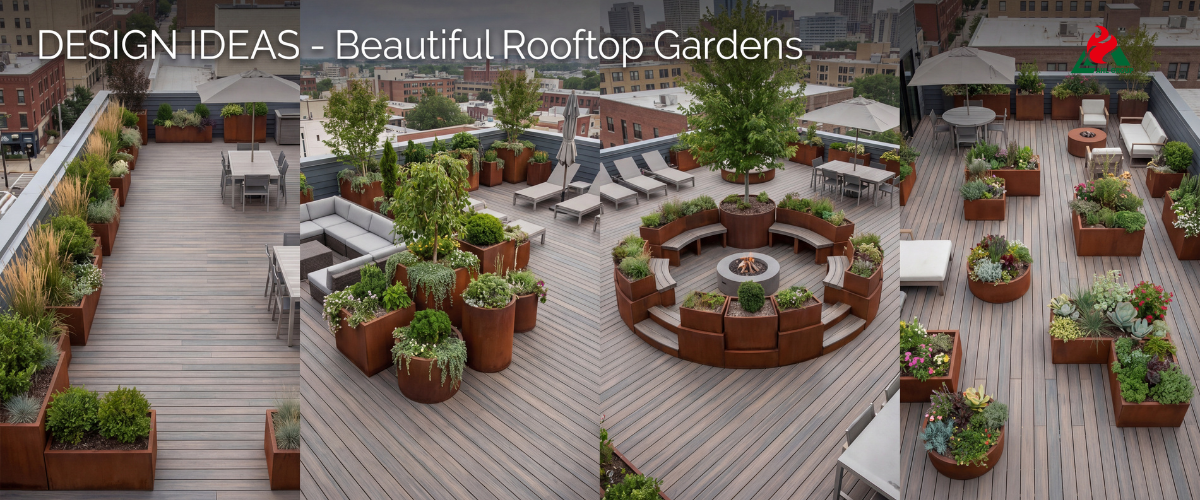
Corten steel landscape planters become extremely heavy when filled, making adjustments after installation difficult. A detailed placement plan should consider the following factors:
► Drainage flow
► Sunlight requirements for plant health
► Areas exposed to wind
► Ease of maintenance
Professional designers typically create a scaled-down roof layout diagram before installation to ensure that the planters enhance functionality while maintaining visual balance. Improper initial placement can lead to issues such as clogged drains, uneven wear, or inefficient use of space.
Allow for Ventilation and Maintenance Space
Leaving sufficient clearance (typically 20–50 mm) around the base of the planters serves multiple purposes. This facilitates air circulation, thereby accelerating drying times and reducing moisture buildup. It also allows for easy daily inspection and cleaning, which is crucial for preventing long-term damage.
In densely laid-out rooftop designs, poor air circulation can create microclimates where moisture stagnates, accelerating wear on the roof deck and corrosion of the planter bases.
Preventing Water Pooling
Roof terraces are designed with a slight slope to direct rainwater toward the drain. If this slope is not taken into account when placing planters, it may obstruct water flow, leading to localized pooling beneath or around the planters.
To prevent this:
► Place metal planters away from the drain
► Use risers or drainage mats to ensure water flows freely
► Avoid placing planters in low-lying areas prone to water accumulation
Prolonged water accumulation not only damages the terrace surface but also increases the risk of rainwater seeping into the building below.
Secure Large Planters Against Wind
Wind uplift is a serious hazard in rooftop environments, particularly in high-rise buildings. Large planters can act as aerodynamic obstacles, blocking airflow and generating lateral forces.
To mitigate this risk:
► Choose low-profile designs with wide bases
► Add ballast (such as a layer of gravel) inside
► If necessary, anchor the planters discreetly to the structure
In exposed locations, improperly secured planters may shift, tip over, or even be completely dislodged during extreme weather events.
8. Maintenance Tips for Long-Term Use
Monitor Staining and Runoff
The first year after installation is the most critical period for monitoring runoff. During this stage, patina is still forming, and iron-rich water may seep into surrounding surfaces.
Conducting routine inspections after rain helps detect signs of staining early. Addressing the issue immediately, before stains penetrate the composite surface, will significantly increase the chances of successful removal.
Regularly Inspect the Planters’ Bases
The joint between the planters and the deck is often hidden and easily overlooked. However, this area is precisely where most long-term issues originate.
Regular inspections should focus on the following:
► Water pooling
► Accumulation of debris
► Signs of uneven pressure or sinking
Early detection of these issues can prevent more serious problems, such as structural stress or surface damage.
Clean the Deck Surface as Needed
Composite decking requires gentle but regular maintenance. Use non-abrasive cleaning methods to remove dirt, organic matter, and any early stains.
Avoid using harsh chemicals, as they may react with the composite material and residual iron particles, potentially exacerbating discoloration.
Check for Shifts After Heavy Rain or Strong Winds
Environmental forces may gradually cause planters to shift out of position, especially if the base is not perfectly level or the deck has shifted slightly. After a storm or heavy rain, be sure to:
► Confirm that the planters remain stable
► Readjust any units that have shifted
► Check that drainage channels are clear
Even slight shifts can alter load distribution and cause long-term stress.
Regularly Reassess the Drainage System
Drainage performance may change due to seasonal debris, plant growth, or gradual foundation settlement. Regularly reassessing how water flows around and beneath the planters ensures that the system continues to operate as intended.
In high-end rooftop designs, this may involve conducting routine maintenance inspections every 6 to 12 months to ensure the system maintains optimal performance.
9. When to Ask a Professional
Rooftop Structural Concerns
If there are any doubts regarding load-bearing capacity, it is essential to consult a structural engineer. A professional can perform detailed calculations and recommend safe installation configurations to ensure compliance with building codes.
Waterproofing and Drainage Issues
Roof waterproofing systems are complex and highly sensitive. Improper installation of planters can damage these systems, leading to leaks, which are not only costly to repair but also difficult to address.
Professionals can assess the interaction between outdoor planters and drainage systems and recommend solutions, such as protective membranes, drainage layers, or separation systems.
Large-Scale Commercial Roofing Projects
In commercial settings, risks are heightened due to increased scale and frequency of use. Coordinated planning among architects, engineers, and contractors ensures that all aspects—including structure, aesthetics, and functionality—are properly addressed.
Installation Requirements for Custom Planters
Custom planters typically involve unique dimensions, materials, and installation requirements. Professional manufacturers and installers can provide:
► Custom-designed support systems
► Integrated drainage solutions
► Precise positioning and securing
This level of expertise ensures that the final installation is both safe and aesthetically pleasing.
Conclusion: Why Planning Matters More Than the Planters Themselves
Corten modern planters can be used on composite rooftop terraces—but only if proper precautions are taken, careful planning is carried out, and the correct installation methods are employed. Ultimately, success depends more on how well they integrate into the environment than on the material itself. When done right, weathering steel planters can transform rooftop spaces into durable, functional, and visually stunning landscapes that stand the test of time.

