


For outdoor enthusiasts and landscape designers, the fire pit is the heart of the garden—a gathering place that must withstand one of nature's most destructive elements: the test of extreme heat. Among the many material options, weathering steel stands out as the preferred choice, seamlessly blending raw industrial aesthetics with unparalleled metallurgical resilience. This guide thoroughly examines how weathering steel reacts under extreme heat conditions, explaining why it remains the gold standard for high-performance outdoor heating systems.
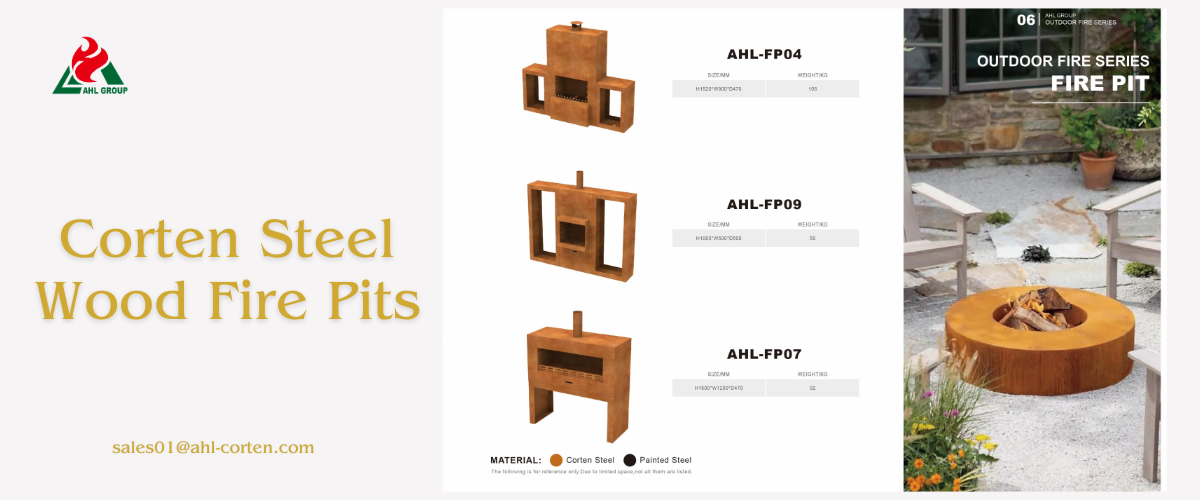
1. Introduction: The Heat Challenge Every Fire Pit Faces
Why Temperature Resistance Matters for Long-Term Durability
Outdoor Fire pits are not merely decorative vessels but thermal engines. Continuous cycles of intense heating and rapid cooling generate internal stresses that cause ordinary metals to fatigue, deform, or oxidize, ultimately leading to structural failure. For a fire pit to endure for decades, it must possess metallurgical “memory” to resist open-flame erosion and surface stability.
Concise Answer: Weathering Steel is Engineered for High-Temperature Environments
Weathering steel (Corten steel) was originally developed for industrial applications like smokestacks and coal cars. Its chemical composition is specifically engineered to remain stable at temperatures where ordinary steel would peel and thin.
What This Guide Reveals: Science, Data, and Real-World Performance
This guide delves into the intersection of metallurgy and thermodynamics. We explore why the alloy “skin” of weathering steel demonstrates superior performance under flame exposure compared to other common outdoor materials.
2. Understanding Corten's Metallurgical Composition
Alloying Elements: Copper, Chromium, Nickel, and Phosphorus
Unlike ordinary carbon steel, weathering steel contains precisely proportioned alloying elements. Copper forms the foundation for corrosion resistance, while chromium and nickel significantly enhance the metal's oxidation resistance in high-temperature environments. Phosphorus acts as a catalyst, ensuring the uniform formation of the protective rust layer.
How Alloys Influence High-Temperature Behavior
At elevated temperatures, ordinary steel forms “scale”—thick, flaking iron oxide deposits that cause metal thinning. Weathering steel's alloy composition ensures its oxide layer remains tightly bonded to the base metal even as its crystalline structure expands during heating.
Chemical Differences Between Weathering Steel and Ordinary Steel
Ordinary steel lacks the characteristic chromium content (0.50%–1.25%) found in weathering steel. This chromium deficiency makes iron molecules vulnerable to oxygen “capture” at high temperatures, significantly accelerating material loss in fire pits.
ASTM A588 and EN 10025-5 Standards: Guaranteeing Heat Resistance
These international standards verify that steel meets specific yield strength and atmospheric corrosion resistance requirements. Regarding heat resistance, the standards ensure the steel does not become brittle after repeated exposure to temperatures between 500-800°C.
3. The Science of Heat Exposure in Fire Pits
Temperature Zones: Fire Bowl vs. Outer Wall vs. Base
The fire bowl is the “high-temperature zone,” directly exposed to charcoal or flames. The outer wall is the “heat dissipation zone,” where thermal energy radiates outward. The base is the “support zone,” which must remain sufficiently cool to maintain structural integrity while bearing the weight of fuel.
Peak Temperatures: Actual Heat Levels in Wood-Burning vs. Gas Stoves
► Wood Burning: Local temperatures can reach 800-900°C (1472-1652°F).
► Gas Fire: Typically operates stably within the 400-600°C (752-1112°F) range.
Thermal Cycling: Repeated Heating and Cooling Over Time
The most destructive factor isn't the high temperatures themselves, but the transition between them. Thermal cycling causes atomic displacement; while weathering steel's unique grain structure allows it to “breathe” through these cycles, preventing the stress cracks common in cast iron.
Accelerated Oxidation: How Heat Influences Rust Formation
Heat acts as a catalyst for oxidation. A frequently used Corten steel fire pit will develop a deep brown protective rust layer faster than a stationary weathering steel sculpture, as high temperatures “bake” the oxide layer into a stable ceramic-like surface.
.png)
4. How Corten Responds to Extreme Heat: The Metallurgical Reality
Thermal Expansion: Calculating Displacement and Design Compensation
Steel expands approximately 12×10⁻⁶ mm per 1°C temperature increase. A 1000 mm metal fire pit may expand several millimeters under high temperatures. Professional AHL designs counteract this expansion by incorporating floating joints and reinforced geometries to prevent buckling.
Scaling and Oxidation: Surface Transformation Mechanisms at High Temperatures
All steels form scale, but weathering steel develops a “microcrystalline structure.” This dense, non-porous barrier blocks oxygen penetration into the steel's core, effectively halting the “rust penetration” process.
Structural Integrity: Does High Temperature Weaken Steel Strength Over Time?
Weathering steel maintains structural integrity below 450°C. Even after brief exposure to 800°C, the material retains sufficient yield strength to withstand fuel loads without deformation.
Grain Structure Changes: Analyzing the Recrystallization Threshold
Steel recrystallization typically begins between 500–700°C. As a “weathering” alloy, Corten steel is resistant to grain coarsening—a phenomenon that causes other steels to soften and exhibit “paste-like” characteristics at elevated temperatures.
5. Temperature Thresholds: What Corten Can and Cannot Handle
Normal operating temperature: 500–800°C (932–1472°F)
This temperature range represents the “optimal operating state” for weathering steel. Within this range, the metal is completely safe, and elevated temperatures actually help stabilize the protective rust layer.
Peak Exposure Limits: Brief Spikes vs. Sustained High Heat
Weathering steel can withstand short-term temperature shocks up to 1000°C (1832°F). However, prolonged exposure to such temperatures in environments such as industrial furnaces will accelerate the degradation of the rust layer.
Critical Temperature: When Does Weathering Steel Degrade?
When temperatures exceed 850°C, its mechanical properties (tensile strength) significantly decline. When designing Corten fire pits, ensure sufficient surface area for heat dissipation to maintain temperatures below this threshold.
Melting Point and Working Temperature: Understanding Safety Margins
Weathering steel has a melting point of approximately 1450–1510°C (2642–2750°F). This provides substantial safety margins, as the most intense wood-burning temperatures rarely exceed 1000°C.
6. Comparing Corten to Other Fire Pit Materials Under Heat
Corten Steel vs. Ordinary Steel: Performance Differences and Their Significance
► Oxidation Rate: In high-temperature environments, ordinary steel oxidizes 4 to 8 times faster than weathering steel.
► Long-Term Durability: A 4mm-thick weathering steel gutter can last 25 years; an ordinary steel gutter of the same thickness may fail within 3-5 years.
Corten Steel vs. Cast Iron: The Debate Over Heat Storage and Heat Resistance
► Heat Capacity: Cast iron retains heat longer but is prone to brittle fracture.
► Thermal Shock: Exposure to water (rain) at high temperatures may cause cast iron to crack; weathering steel possesses ductility and will not fracture.
Corten Steel vs. Stainless Steel: Differing Heat Management Philosophies
► Oxidation and Glaze: Stainless steel resists rust but undergoes permanent “discoloration” (thermal discoloration); weathering steel transforms oxidation into a deliberate aesthetic finish.
► Cost: Weathering steel offers a “premium” appearance and durability at a price significantly lower than that of 316 stainless steel.
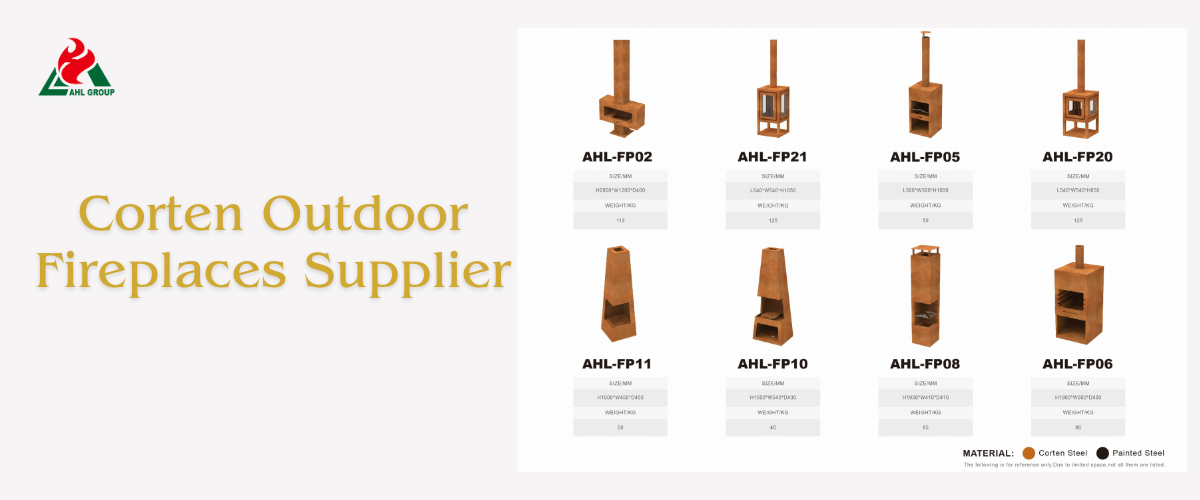
7. Real-World Performance: Corten Fire Pits in Different Climates
Extreme Cold Environments (Canada, Scandinavia, Northern United States)
► Thermal Shock Risk: Igniting an 800°C flame in sub-zero (-30°C) conditions.
► Gradual Heating: Recommended to start with a low flame, allowing metal to expand slowly in sub-zero environments.
Hot, Arid Climates (Southwestern U.S., Middle East, Australia)
► Compound Heat: Ambient 45°C combined with flame heat.
► Cooling Rate: Slow cooling during warm nights stabilizes the glaze layer, preventing “flaking” common in high-humidity zones.
Humid Coastal Environments
► High Heat + Moisture: Fire energy traps moisture through evaporation, effectively “resetting” rust layers.
► Salt Corrosion: Elevated temperatures consolidate rust layers, enhancing resistance to salt pitting common in coastal areas.
8. The Patina-Heat Relationship: A Unique Advantage
How Heat Accelerates Patina Formation
Thermal energy accelerates the chemical reaction between the alloy and oxygen, enabling the “weathered” appearance to develop within weeks rather than months.
“Flame Treatment” Effect: Darkening and Color Transformation
Direct flame exposure often transforms orange-brown patina into deep, rich “gunmetal” or dark chocolate hues, creating stunning visual contrast.
Stabilization Effect: How Heat Builds a Durable Oxidation Layer
High temperatures “cure” the rust layer, making it less prone to fading over time, staining clothing, or polluting patios compared to untreated weathering steel surfaces.
9. Material Thickness: The Critical Factor in Heat Performance
Why Thickness Matters: Heat Capacity and Heat Distribution
Thicker steel acts as a “heat sink,” distributing energy evenly across the surface and preventing the formation of “hot spots” that cause deformation.
Recommended Minimum Thickness for Fire Pits: 4mm, 5mm, or 6mm?
► 3mm: Entry-level (prone to minor deformation).
► 4mm: Professional standard (perfect balance of weight and durability).
► 6mm+: Heavy-Duty Commercial Grade (Nearly Indestructible).
Thin Steel vs. Thick Steel: Risk of Deformation vs. Long-Term Stability
Thin steel plates (≤2mm) will eventually develop a “potato chip-like” bend or warp when carrying firewood at high temperatures. AHL mandates that all high-performance fire pits use steel plates at least 3-4mm thick.
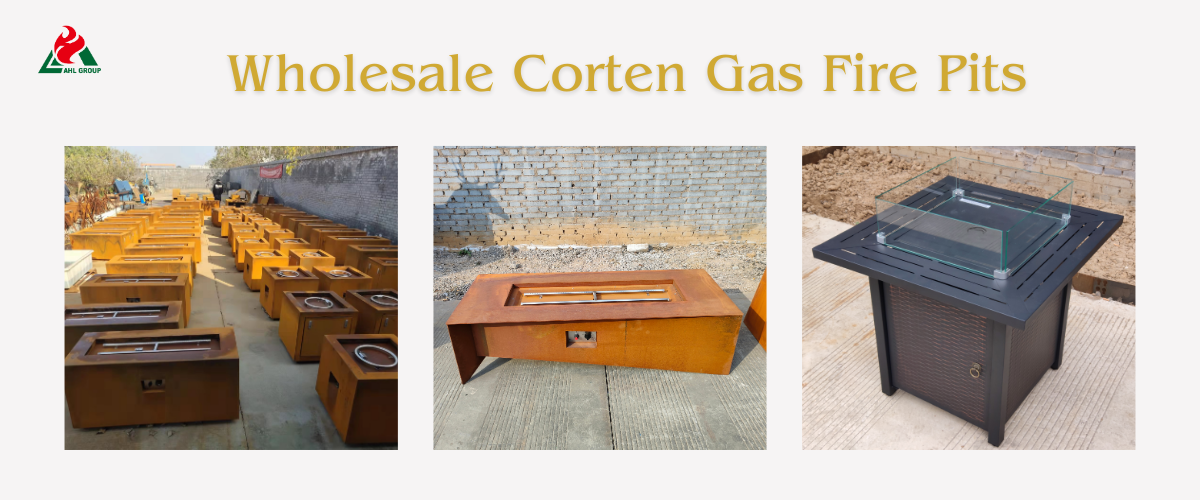
10. Potential Issues and How to Prevent Them
Warping and Deformation
► Cause: Uneven heating or use of thin metal sheets.
► Prevention: Select materials ≥4 mm thick and maintain a centered heat source.
Oxidation Flaking
► Cause: Sudden temperature spikes (e.g., using coal in charcoal stoves).
► Prevention: Strictly use specified fuel types and allow natural cooling.
Structural Fatigue: Long-Term Considerations
► Repeated Cycling: Inspect welds annually for micro-cracks.
► Maintenance: Remove damp ash from the firebox, as it may acidify and corrode the protective rust layer.
Conclusion: Embrace the Joy of Serenity, Regardless of Weather
The CORTEN Fire Pit is an engineering marvel that transforms the destructive power of flames into an aesthetic companion. By mastering the science of thermal energy and selecting the appropriate specifications from AHL Group products, you gain not just a fireplace that withstands wind and rain—it radiates brilliance through its natural surroundings.
【Discover the AHL Group Fire Pit Collection—engineered for real-world performance. Contact our team for technical specifications and project consultation.】

