


Corten steel grills have become a popular choice in modern outdoor cooking thanks to their perfect blend of durability, low-maintenance requirements, and architectural aesthetics. Unlike traditional grills, they are designed not only as cooking tools but also as long-lasting landscape features.
This guide will provide a detailed overview of the most recommended types of Corten steel BBQ grills for 2026, the features that matter most, how to compare different models, and how to choose the right grill based on your cooking style, space constraints, and long-term expectations.
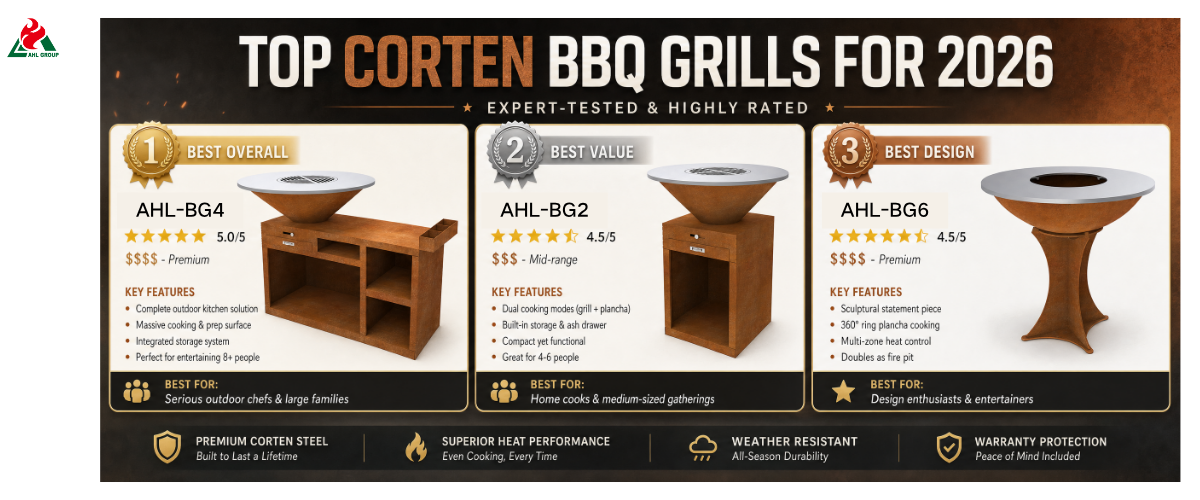
This guide will provide a detailed overview of the most recommended types of Corten steel BBQ grills for 2026, the features that matter most, how to compare different models, and how to choose the right grill based on your cooking style, space constraints, and long-term expectations.
1. Introduction
Why It’s Worth Including Corten Grills in Your Comparison
By 2026, outdoor cooking design will have decisively shifted from cold, mass-produced equipment to organic architectural elements that complement the landscape and age gracefully. The Corten grill is the pinnacle of this trend, seamlessly blending the beauty of Brutalist architecture with high-performance wood-fired cooking. Selecting a high-end outdoor grill requires careful comparison of various options; unlike ordinary grills that gradually deteriorate over time, a true weathering steel grill is a permanent fixture in your landscape. By comparing these products, you’ll not only find a system that aligns with your cooking style but also gain the precise thermodynamic characteristics needed to achieve perfect wood-fired grilling.
The Difference Between Corten Steel and Ordinary Barbecue Grill Materials
Traditional barbecue grills rely on outer coatings—such as high-temperature powder coatings, enamel, or paint—to protect the underlying iron from moisture. Under the intense thermal cycling of open-flame cooking, these surface coatings inevitably crack, bubble, and peel, leading to gradual structural rusting of the exposed steel.
Weathering steel has completely overturned this traditional notion. By adding precisely balanced proportions of copper (Cu), chromium (Cr), and nickel (Ni), it initiates a self-limiting oxidation process. When exposed to the natural environment, a microcrystalline, ultra-high-density protective rust layer forms on its surface. This velvety-textured surface seals the underlying steel matrix, completely blocking the diffusion of atmospheric oxygen that causes damage to ordinary grills.
This Guide Will Help You Make Your Choice
Shopping in the high-end weathering steel market can be quite challenging, as many low-cost imitations mimic the appearance of Corten steel but lack its structural integrity. This comprehensive buying guide details the engineering, cooking principles, and design features of authentic weathering steel grills. By analyzing structural thickness, layout geometry, and fuel dynamics, this guide will directly lead you to select the ideal premium grill for your patio, estate, or outdoor kitchen project.
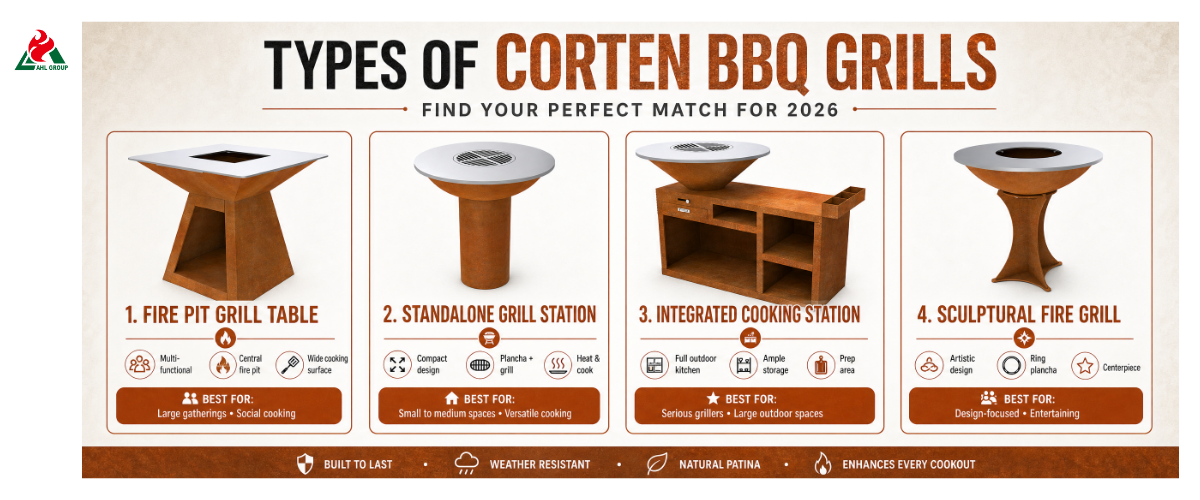
2. Types of Corten BBQ Grills
Classic Charcoal Grill
The Classic Corten Steel Charcoal Grill features a traditional deep-bowl firebox paired with an adjustable, heavy-duty grill grate. These grills are specifically designed for traditional direct and indirect open-flame grilling. The thick, weathering steel walls provide exceptional thermal insulation, reflecting radiant heat into the charcoal bed. This creates an extremely efficient combustion pattern that maintains rock-solid cooking temperatures while reducing charcoal consumption, making it ideal for cooking traditional steaks, ribs, and vegetables.
Flat-Top Grill
The flat-top griddle barbecue has completely revolutionized the high-end outdoor dining experience. This series features a heavy, round carbon steel or cast-iron griddle (plancha) set atop a conical or sculptural weathering steel fire cone. Wood burns directly at the center of the cone, heating the circular griddle. This design creates distinct thermal zones—ranging from a high-temperature zone of 300°C (572°F) near the inner edge for quick searing, to a low-temperature zone of 150°C (302°F) at the outer edge for cooking tender eggs, seafood, or warm vegetables.
Fire Pit Grill Combination
For maximum dual functionality, the fire pit grill combination serves as both a cozy gathering spot and a powerful cooking station. These units come equipped with removable grates, rotating arm assemblies, or modular griddle rings. Once dinner is ready, simply remove the cooking components safely, and the unit transforms into a beautiful outdoor fire pit that continues to radiate steady, comforting warmth onto your patio well into the night.
Smoker-Style Weathering Steel Grill
Designed specifically for enthusiasts of “low and slow” grilling, the Smoked Corten Steel Grill features an offset firebox design or a heavy-duty vertical cabinet system. The thick weathering steel construction offers significant advantages for smoke cooking: its thermal mass prevents internal temperature fluctuations in low-temperature environments or during sudden gusts of wind. This allows you to maintain a stable 110°C (230°F) smoking environment for hours with minimal airflow adjustments.
Outdoor Kitchen Grill Units
Designed to serve as the crowning touch for modular masonry or stone outdoor islands, these units function as built-in or freestanding Corten outdoor grill components. Equipped with integrated storage drawers, wood-storage grooves, and clean, flowing mechanical lines, they blend seamlessly into settings featuring natural stone, polished concrete, or concrete pavers. In a minimalist, ultra-modern outdoor kitchen, they create a stunning, rustic contrast.
3. What to Look for in a Corten BBQ Grill
Cooking Area
To determine the ideal cooking area, assess the number of guests you typically entertain. A compact 60cm (24-inch) diameter griddle or barbecue grill is perfect for small family gatherings of 4 to 6 people. To accommodate more guests, opt for a commercial-grade model with a diameter of 85 cm or 100 cm (40 inches). The large cooking surface provides ample space to prepare various types of food simultaneously across different temperature zones.
Temperature Control Options
Open-flame cooking requires precise airflow management. A high-quality Corten grill should feature a mechanical air intake damper at the bottom of the firebox, and models with lids should also include an adjustable exhaust flue. For flat-top griddle systems, choose a design with an integrated air intake so you can finely adjust the burning rate of the firewood from the outside, thereby achieving absolute control over the griddle surface temperature.
Material Thickness and Manufacturing Process
Material thickness directly determines the service life and structural integrity of a Corten steel grill. Cheap knockoff products typically use thin, 1.5-millimeter-thick carbon steel, which is prone to warping at high temperatures. A thick steel plate construction provides the structural quality needed to resist high-temperature deformation, ensuring your grill remains in perfect condition for decades of safe use.
Grill Design and Functionality
Take a close look at the design details of the grill during everyday use. Does it feature a built-in ash drawer that’s easy to access and can be emptied without removing the cooking tray? Are the mechanically welded seams finely polished and seamless to prevent water buildup? High-end models typically feature smart modular designs, such as a central ring-shaped opening that accommodates rotating grill attachments, wok stands, or traditional Brazilian churrasco skewers.
Ease of Cleaning and Maintenance
The cooking surface itself must be easy to clean. Choose a flat-bottomed grill ring designed with a slight inward slope. This subtle incline allows excess cooking grease and food debris to be scraped into the central fire pit, rather than spilling over the edges and onto your patio.
4. Best Corten BBQ Grills by Use Case
Best for Small Patios
For small urban gardens or compact patios, a Corten steel BBQ grill with a simple, columnar design and a small footprint is the ideal choice. We recommend a model with a vertical base design and an integrated wood storage compartment beneath the fire cone. This vertically stacked layout maximizes floor space while providing a professional-grade cooking surface.
Best for Family Cooking
A medium-sized 80cm round flat-top grill or a classic cart-style charcoal grill offers the perfect balance for everyday family meals. It provides ample space to grill main courses and side dishes simultaneously, heats up quickly with minimal fuel, and cools down efficiently in a safe, family-friendly environment.
Best for Entertaining Guests
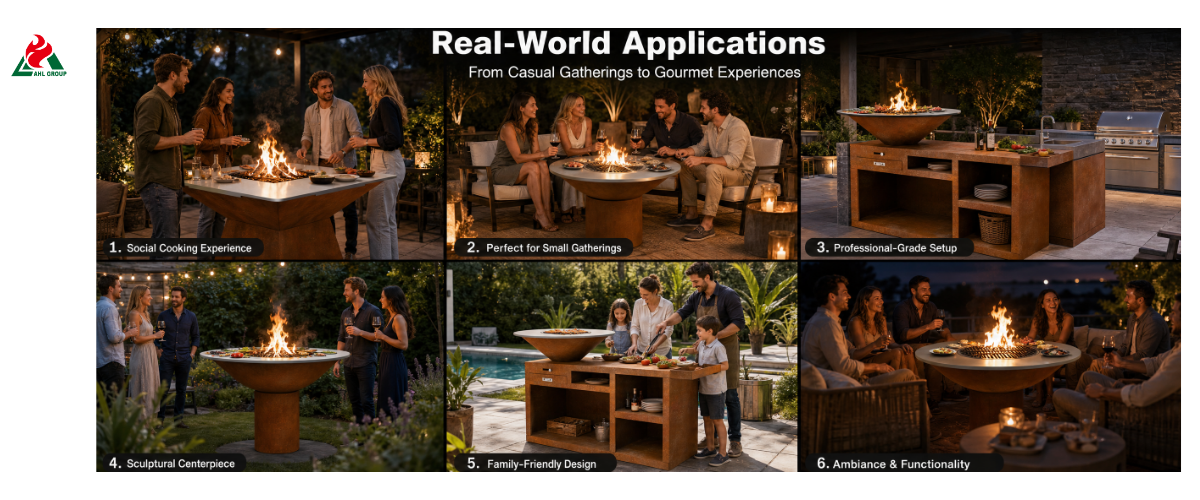
If you frequently host large gatherings on weekends, a spacious 100-centimeter round flat-top grill is the ultimate choice. The open, circular design naturally creates a hub for interaction. Guests can safely gather around the warm, weather-resistant steel base, chatting while personally grilling skewers over an open flame—enjoying a social, theatrical cooking experience.
Best for Smoking and Slow-cooking
To prepare authentic Texas-style brisket or pork shoulder, choose a dedicated offset Corten steel smoker made from 4-millimeter-thick steel plates. Its substantial thermal mass effectively retains heat, creating a stable internal environment that develops a deep smoke ring and delivers an amazingly tender texture.
5. Performance and Durability
How Weathering Steel Withstands High Temperatures and Harsh Weather
Weathering steel performs exceptionally well under extreme conditions. While heat stress and rain can erode traditional painted barbecue grills, these factors actually help enhance the protective properties of weathering steel. The high temperatures generated by a wood fire bake and harden the protective rust layer, while rain and moisture continuously promote the formation of its corrosion-resistant outer layer.
Why Durability Is Critical in Outdoor Environments
Barbecue grills face the harsh combination of high internal temperatures and damp outdoor weather, which accelerates rusting in ordinary steel. Investing in heavy-gauge weathering steel ensures your grill won’t rust through at the welds or thin over time, allowing it to remain outdoors year-round without needing to be covered.
A Preview of Long-Term Performance
When you receive your brand-new Corten grill, its surface may appear as raw, bright steel gray or have a faint orange haze. Once this deep, rich color stabilizes, the rust layer will no longer flake off, forming an attractive and completely maintenance-free protective surface.
How the Rust Layer Affects Appearance
The rust layer creates a naturally textured finish, the appearance of which varies depending on the climate in your region. Grills in humid or coastal environments will gradually develop a deep, velvety dark brown hue, while those in dry climates will take on a lighter, rustic reddish-brown tone. This unique weathering process ensures that every grill has a one-of-a-kind appearance.
6. Design Features to Compare
A Comparison of Round and Square Grill Designs
► Round Grills (Conical and Bowl-Shaped): These provide natural, efficient airflow and ensure even heat distribution. They are ideal for skillet-style cooking, as the round design eliminates “cold spots” and allows guests to gather around the grill from all sides.
► Square/Geometric-Shaped Grills: Featuring clean, modern architectural lines, they integrate seamlessly with walls, benches, and outdoor kitchen layouts. Their deep corners also serve as convenient low-temperature warming zones for keeping food warm.
Open-Flame vs. Enclosed Cooking Zones
Open-flame cooking (such as griddles and open-top roasting pans) delivers intense searing heat and an excellent interactive experience, but requires closer attention to wind conditions and fuel consumption. Enclosed cooking areas (grills with heat shields or lids) trap heat and smoke, making them better suited for baking, slow-roasting, or smoking in variable weather conditions.
Storage Space and Accessories
High-end rusted steel grills often double as functional outdoor furniture. We recommend choosing a model with a built-in firewood storage compartment beneath the firebox. Storing firewood here keeps it completely dry and ready to burn, while the weight of the wood also provides excellent stability to the entire structure.
Wheels, Stands, and Mobility
Since a heavy-duty, Corten BBQ grill—typically 3 to 6 millimeters thick—often weighs between 60 and 120 kilograms (130 to 260 pounds), mobility is a key factor to consider. If you plan to move the grill around your patio, choose a model equipped with heavy-duty industrial casters with locking mechanisms, or select a design with a base that allows for easy movement using a standard pallet jack.
Fixed vs. Portable Grills
Fixed grills are designed as permanent structures and are secured by anchoring them to stone or concrete patios. Portable grills, on the other hand, feature modular interlocking panels or removable fire pits that can be disassembled for easy transport, making them ideal for beach barbecues, camping, or tailgate parties.
7. Corten BBQ Grills vs Other Materials
Weathering Steel vs. Stainless Steel
Stainless steel (304 grade) offers a clean, modern commercial kitchen aesthetic and is completely rust-resistant. However, high-temperature flames can cause stainless steel to permanently discolor, giving it an uneven golden-blue hue, and frequent cleaning with specialized acids is required to maintain its appearance. Weathering steel, on the other hand, naturally blends with high heat, incorporating the unique markings of the flame directly into its deep, ever-evolving, rustic patina—without the need for any polishing.
Weathering Steel vs. Ordinary Steel
While standard low-carbon steel grills have a low initial purchase cost, their service life is extremely short. Without continuous repainting, they develop flaky rust during every heavy rain and gradually corrode, eventually burning through and failing. Weathering steel uses its own stable rust layer as a permanent, self-healing shield, eliminating this cycle of damage and offering a service life that lasts decades longer than ordinary steel.
Weathering Steel vs. Cast Iron
Cast iron has excellent heat retention properties, making it ideal for BBQ grills and griddles; however, due to its high carbon content (>2%), it is relatively brittle and hard. If a scorching-hot cast-iron pan is struck by a heavy log or exposed to sudden cold rain, it may crack due to thermal shock. Weathering steel is a tough, low-carbon alloy that can expand, bend, and withstand sudden temperature drops without any risk of cracking.
Material Comparison Profile
| Material Option | Thermal Shock Resistance | Weatherproofing Mechanism | Long-Term Maintenance | Average Lifespan |
| Corten Steel | Exceptional (Ductile alloy) | Self-Sealing Patina | None (Clear ash out only) | 25 to 50+ Years |
| Stainless Steel | High | Chrome Oxide Layer | High (Requires acid polishing) | 20 to 30 Years |
| Regular Steel | High | Synthetic Paint/Coatings | High (Requires constant repainting) | 2 to 5 Years |
| Cast Iron | Low (Can crack) | Oil Seasoning Layer | High (Requires regular oiling) | 10 to 20 Years |
8. Maintenance and Care
Cleaning Cooking Surfaces
Although the Corten steel base requires virtually no maintenance, the carbon steel cooking plate or cast-iron grill requires simple, regular care:
► Scraping Off Residue: While the steel plate is still hot, use a heavy-duty steel scraper to scrape food residue directly into the fire.
► Removing Burnt-On Residue: Spray a small amount of water onto high-temperature, stubborn stains to soften them with steam, then scrape them off again.
► Oiling the Surface: Apply a thin layer of high-smoke-point vegetable oil (such as canola or grapeseed oil) to the warm steel plate to keep it in perfect condition, prevent sticking, and prevent rust.
Dealing with Rust Stains
During the initial 12 to 18 months of weathering, the Corten metal grill will shed tiny particles of iron oxide when it rains. This orange-brown rust runoff can permanently stain porous patio surfaces, such as light-colored concrete, limestone, or marble.
Expert Tip: To protect your patio during the early weathering phase, place a temporary rubber mat, a sheet of plywood as a sacrificial layer, or a set of inexpensive concrete pavers under the grill legs to catch the early rust runoff.
Protecting Surrounding Surfaces
Please place the BBQ grill away from light-colored stucco walls or wooden fences to prevent wind-driven rain from splashing iron-rich water onto these surfaces. Once the rust has reached the mature, deep chocolate-brown stage, the oxide layer will be completely stable and will stop bleeding color; at this point, it is safe for all hardscape features.
Seasonal Maintenance Tips
Before winter sets in, thoroughly remove any old wood ash from the firebox. Wet ash mixed with rainwater forms an alkaline solution that, over time, can damage even the most durable protective rust layer. After cleaning, apply a thick coat of protective cooking oil to the grill. Corten steel structures can be safely stored uncovered throughout the winter.
9. Common Buying Mistakes
Choosing the Wrong Grill Size
If you’re only cooking for two people, don’t buy a huge commercial-grade grill. Larger fireboxes require a lot of wood or charcoal to reach the optimal cooking temperature, which not only wastes fuel but also results in excessively long preheating times when preparing simple weeknight dinners.
Ignoring Fuel Type and Cooking Style
Make sure the grill suits your preferred cooking style. If you appreciate the quick temperature control and ease of use offered by gas grills, you might find a charcoal grill with an open flame too much of a hassle. Weathering steel grills are designed for those who truly enjoy the process of building a real wood fire and cooking over coals.
Ignoring Assembly Requirements
Because high-quality weathering steel sheets are thick, these durable grills are very heavy. Be sure to confirm whether your grill is shipped as a fully welded unit or arrives flat-packed on a pallet. Flat-packed products require self-assembly, so make sure you have someone to help and have the appropriate heavy-duty tools on hand to safely handle the heavy steel sheets.
Focusing Only on Appearance
It’s easy to be drawn to the beautiful appearance of architecturally styled grills, but never overlook their day-to-day practicality. Be sure to confirm that it includes essential practical features, such as drainage holes for rainwater, adjustable air vents, and a comfortable operating height for cooking.
10. How to Choose the Right Grill
Choose the Right Grill for Your Space
Carefully measure the dimensions of your patio and ensure you maintain a safe distance of 3 meters (10 feet) from any flammable walls, overhanging branches, or vinyl siding. Compact, round pedestal grills are perfect for cozy patio corners, while spacious outdoor areas can easily accommodate large flat-top grills or built-in kitchen islands.
Choose a Grill Based on Your Cooking Habits
► Choose a flat-top grill: If you enjoy preparing a wide variety of meals, such as breakfast items, diced vegetables, pressed burgers, and delicate seafood.
► Choose a classic grill: If you prefer traditional high-heat steak grilling, smoking large cuts of meat, or cooking directly over an open charcoal fire.
Choose a Grill Based on Your Budget
An authentic, sturdy weathering steel grill is a quality investment that saves you the hassle of buying cheap, temporary grills every few years. Set aside a budget for a model made of genuine 3-millimeter or thicker weathering steel with precision welding to ensure it lasts for decades.
Choose a Grill Based on Your Personal Style
Select a design that complements your existing outdoor furniture and the architectural style of your home. Smooth, rounded conical shapes pair well with soft, natural gardens, while angular, geometric square grills complement modern landscapes and minimalist architecture.
.png)
11. Frequently Asked Questions
Q1: Is the Corten Steel Grill Safe for Cooking?
Yes, Corten grills are perfectly suited for outdoor cooking. Weathering steel is used only for the structural base, firebox, and support cones. The actual cooking surfaces are made of thick, food-grade carbon steel, seasoned cast iron, or stainless steel, ensuring that no harmful substances will ever transfer to your food.
Q2: Do Corten Grills Require a Lot of Maintenance?
No, they require far less maintenance than traditional grills. The main body of a Corten grill does not need to be painted, sanded, or covered with a winter protective cover. The only maintenance you need to perform is scooping out old ashes from the firebox and wiping down the oiled grates after use to keep them seasoned.
Q3: Does Corten Steel Rust More Severely Over Time?
No. Although it may look like ordinary rust, the rust layer on Corten Steel is actually a stable protective layer that prevents further corrosion. It forms a protective film that seals the steel, preventing rust from penetrating the metal’s interior, thereby maintaining its structural strength for decades.
Q4: Which Weathering Steel Grill Is Best for Beginners?
A model that combines a fire pit and a flat-top grill is an excellent entry-level choice for beginners. The large, round cooking surface is very forgiving to use, and its distinct heat zones allow you to easily move food around to prevent burning while you learn to control the open flame.
Conclusion: The Best Type of Corten Steel Grill for Most Consumers
For most outdoor enthusiasts, the medium-sized round flat-bottomed grill-and-fire pit combo perfectly blends versatility with enjoyment. It offers a highly flexible, multi-zone cooking surface that easily handles everything from everyday family meals to large weekend gatherings. After dinner, it easily transforms into an aesthetically pleasing architectural-style fire pit, bringing warmth, style, and a striking visual focal point to your outdoor living space for years to come.

