


In modern commercial architecture, the selection of materials is no longer based solely on structural performance—there is a greater focus on how materials perform over time, their aging process, and their ability to convey a brand’s image. This is precisely why Corten steel screens have emerged as a standout choice. With their distinctive rust-like patina and exceptional durability, these screens have become the preferred solution for architects, designers, and developers seeking a balance between functionality, aesthetics, and long-term value.
But why are Corten steel screens so highly favored in commercial settings? The answer lies in their ability to address multiple challenges simultaneously: privacy protection, durability, maintenance costs, and visual appeal. Whether used in hotels, retail spaces, or corporate environments, they offer a unique combination of engineering performance and design flexibility that other materials struggle to match.
This in-depth guide will provide a comprehensive breakdown of everything you need to know—from material properties and practical applications to design strategies and maintenance tips—helping you confidently determine whether Corten screens are the ideal choice for your commercial project.
But why are Corten steel screens so highly favored in commercial settings? The answer lies in their ability to address multiple challenges simultaneously: privacy protection, durability, maintenance costs, and visual appeal. Whether used in hotels, retail spaces, or corporate environments, they offer a unique combination of engineering performance and design flexibility that other materials struggle to match.
This in-depth guide will provide a comprehensive breakdown of everything you need to know—from material properties and practical applications to design strategies and maintenance tips—helping you confidently determine whether Corten screens are the ideal choice for your commercial project.
1. What Are Corten Steel Screens?
Corten Steel Definition and Material Properties
Weathering steel, also known as Corten steel, is a high-strength alloy containing elements such as copper, chromium, and nickel. These elements enable the steel to form a stable, protective oxide layer when exposed to the environment. Unlike ordinary steel, which continues to corrode, weathering steel forms a self-limiting corrosion layer that protects the underlying material from further corrosion.
From a structural perspective, weathering steel offers excellent tensile strength and weather resistance, making it an ideal choice for long-term outdoor applications. This is particularly important in commercial projects where durability and lifecycle costs are key considerations.
How Weathering Steel Develops Its Protective Patina
The distinctive appearance of weathering steel stems from its rust layer—a controlled oxidation process triggered by alternating wet and dry environmental conditions. In the early stages, the surface may appear uneven, and rust may even seep through. However, over time, this process gradually stabilizes, forming a dense protective layer that reduces further corrosion.
This ever-evolving surface is not only functional but also aesthetically pleasing. The gradient of orange, brown, and deep rust tones creates a vibrant finish that adds a unique character and depth to commercial spaces.
Why Corten Steel Is Popular in Commercial Architecture
Architects favor weathering steel because it perfectly combines industrial-grade strength with refined design. It integrates seamlessly with materials such as concrete, glass, and wood, allowing designers to create visually striking contrasts. Furthermore, its low-maintenance requirements make it an ideal choice for large-scale commercial development projects.
2. Why Corten Steel Screens Are Popular in Commercial Spaces
Commercial Privacy and Visual Separation
In commercial settings, there is often a need to balance openness with privacy. Weathering steel screens offer an elegant solution: they provide partial visual privacy while still allowing air to circulate and light to filter through. This is particularly practical for outdoor dining areas, office courtyards, and mixed-use developments.
Exceptional Outdoor Durability
Unlike wood or painted metal, weathering steel performs exceptionally well in outdoor environments. It withstands weathering, UV exposure, and temperature fluctuations, making it ideal for projects that require long-term reliability and minimal maintenance costs.
A Low-Maintenance Solution for Businesses
Maintenance costs for commercial properties can quickly add up. Weathering steel requires no painting or frequent treatment, saving on labor costs and reducing material expenses over time. This makes it a cost-effective choice for property owners and facility managers.
Modern Industrial Aesthetics for Professional Settings
The rugged, textured visual appeal of weathering steel aligns perfectly with contemporary design trends. It conveys a sense of authenticity and strength, making it a preferred choice for brands seeking to project a modern, high-end, or industrial aesthetic.
3. Benefits of Corten Steel Screens for Commercial Projects
Long-lasting Weather Resistance
Weathering steel forms a protective rust layer, meaning it does not show significant deterioration even after years of outdoor exposure. This durability reduces the need for replacement and ensures consistent performance.
Stylish Design That Enhances Brand Identity and Architectural Appeal
In commercial spaces, first impressions are crucial. Weathering steel screens can be customized with patterns, logos, or unique designs, reinforcing brand identity while enhancing visual appeal.
Flexible Application in Indoor and Outdoor Spaces
Although primarily used outdoors, Corten screen panels can also be integrated into indoor spaces, serving both decorative and functional purposes. Their versatility allows for a seamless transition between indoor and outdoor environments.
A Sustainable and Cost-Effective Design Choice
Weathering steel is environmentally friendly due to its long service life and minimal maintenance requirements. Over time, reduced replacement and disposal needs translate to lower resource consumption.
4. Best Commercial Applications for Corten Steel Screens
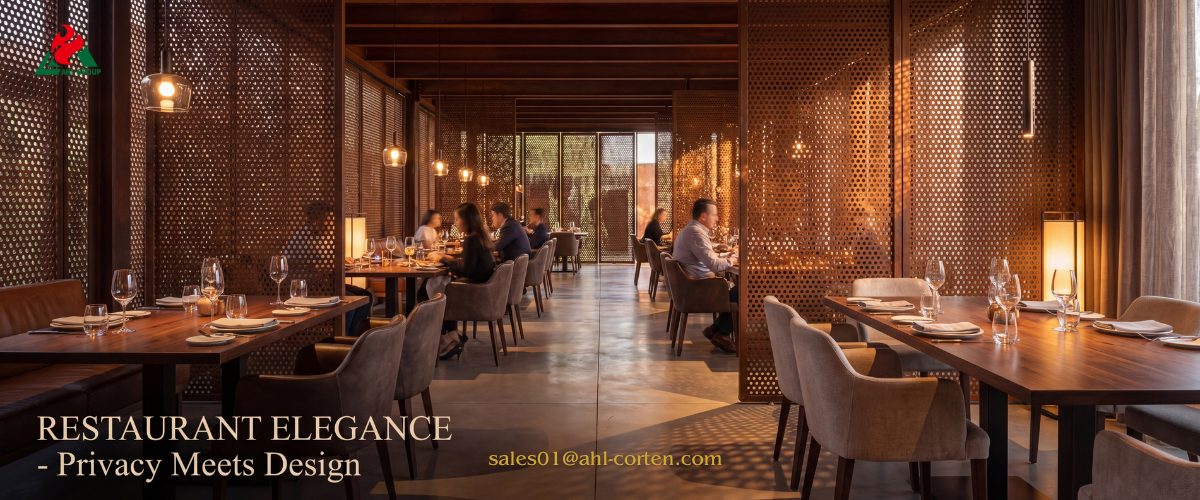
Restaurant Patios and Dining Areas
In the hospitality and dining industry, the guest experience is closely tied to the comfort of the space. Corten privacy screens allow restaurants to create semi-private dining areas that do not completely enclose the space, while maintaining airflow and reducing visual and auditory distractions. Unlike fabric or glass partitions, weathering steel screens are resistant to grease and moisture and can withstand frequent cleaning, making them ideal for high-traffic dining environments. Additionally, laser-cut patterns can reinforce brand identity by subtly integrating logos or thematic designs into the dining environment.
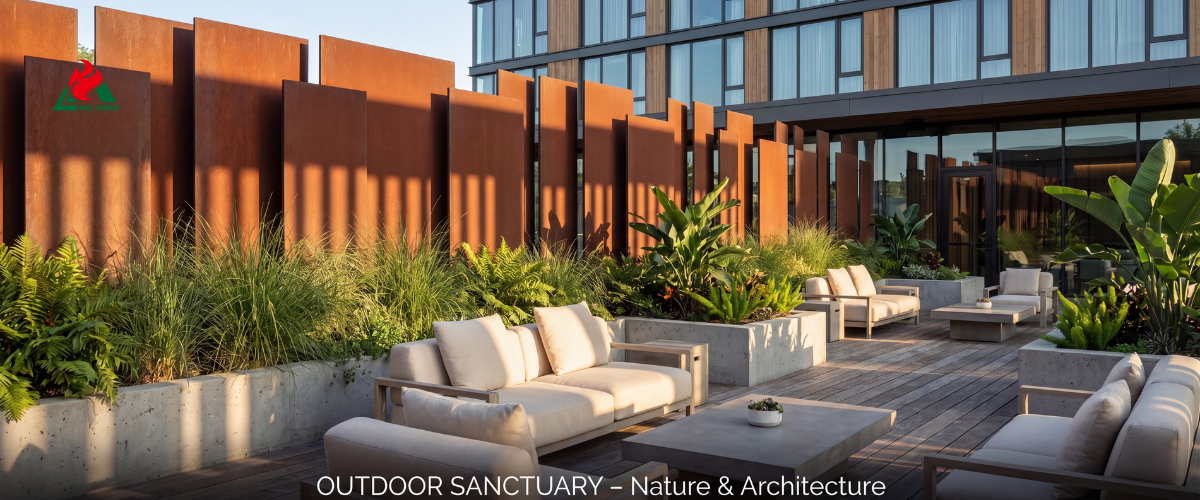
Hotel Courtyards and Resort Spaces
Luxury hotel projects require materials that age gracefully. Corten steel outdoor screens add warmth and texture to landscapes that are otherwise minimalist or dominated by stone, thereby creating a resort-style atmosphere. They are particularly effective in delineating spa areas, poolside lounges, and private garden spaces. Over time, the evolving patina enhances the sense of integration with nature, aligning with the biophilic design principles increasingly valued in high-end developments.
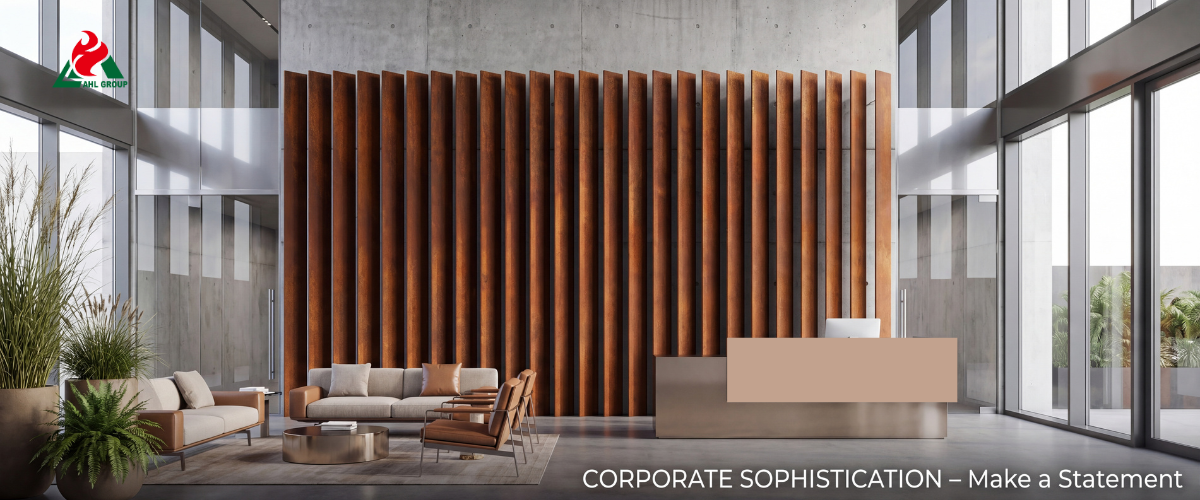
Office Buildings and Corporate Campuses
Modern office environments prioritize outdoor collaboration areas and employee well-being. Corten metal screens help create these environments by establishing functional micro-spaces—such as quiet zones, meeting corners, or shaded break areas—without compromising the sense of openness. From a facilities management perspective, weathering steel screens require lower maintenance costs compared to painted steel or wood, which necessitate ongoing upkeep, thereby reducing operational expenses.
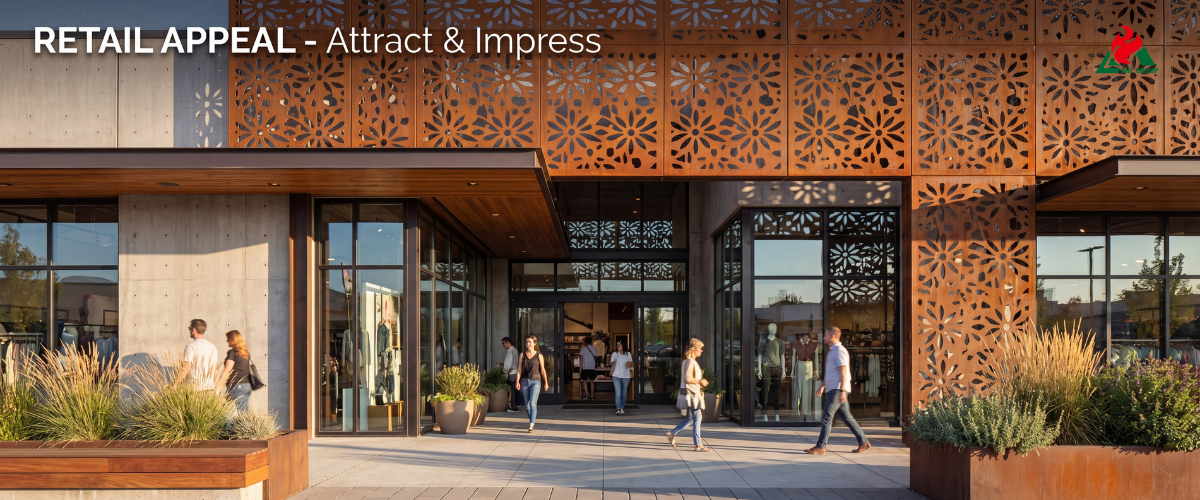
Retail Centers and Storefronts
In the retail sector, visual differentiation is crucial. Weathering steel screens serve as architectural branding tools to frame entrances, guide foot traffic, or highlight storefronts. Their textured surfaces provide a striking contrast to glass and aluminum facades, capturing attention while enhancing perceived value. Additionally, during non-business hours, they function as security barriers without appearing overly industrial or cold.
Public Squares and Mixed-Use Developments
Large-scale urban development projects require materials that can withstand heavy use while maintaining aesthetic integrity. Corten screens are often used to delineate circulation paths, rest areas, and transitional spaces. Their exceptional durability allows them to withstand vandalism and environmental erosion, while their modular nature enables scalable design solutions across expansive sites.
5. Corten Steel Screen Design Options
Perforated Corten Steel Screens
Perforated panels strike a delicate balance between privacy, airflow, and natural light. The perforation rate (typically 10%–50%) directly influences visibility and wind resistance. In commercial applications, this allows designers to fine-tune the desired level of openness while maintaining structural integrity.
Laser-Cut Decorative Screens
Laser-cutting technology enables high-precision customization, transforming metal screens into functional works of art. From geometric patterns to organic motifs, these designs can reflect brand identity while complementing architectural themes. However, it is important to note that overly complex patterns may compromise structural strength, necessitating the use of thicker materials or reinforced frames.
Solid Privacy Screens
For areas requiring complete visual obstruction—such as service zones or waste disposal areas—solid panels provide maximum coverage. In open commercial environments, strategic spacing or staggered layouts are typically employed to avoid creating a “heavy” visual effect.
Modular Commercial Partition Systems
Modular systems are increasingly popular due to their flexibility and scalability. Prefabricated panels can be installed, replaced, or reconfigured with minimal disruption, making them ideal for ever-changing commercial spaces. This approach also streamlines logistics and reduces installation time.
Freestanding vs. Fixed Partition Installation
Freestanding screens suit temporary or flexible layouts, while fixed installations provide greater stability for permanent structures. The specific choice depends on factors such as wind loads, frequency of use, and long-term design intentions.
6. How Corten Steel Screens Improve Outdoor Commercial Spaces
Creating Privacy Without Blocking Style
Unlike solid walls, Corten outdoor screens offer graduated privacy, allowing designers to control sightlines while maintaining a sense of openness. This is particularly valuable in commercial settings, where visibility and accessibility must be balanced.
Defining Rest Areas and Pedestrian Pathways
In high-traffic areas, spatial layout is crucial. Serving as visual guides, screen panels can cleverly direct foot traffic and delineate functional zones without the need for solid barriers. This enhances both the user experience and operational efficiency.
Adding Warmth to Concrete, Glass, and Metal Structures
Many commercial buildings make extensive use of cold-toned materials such as glass and steel. Weathering steel offers a warm, rustic contrast that softens the overall aesthetic, making the space more inviting. This directly influences customers’ perceptions and the length of their stay.
Embodying Modern Landscape Design Principles
Weathering steel blends seamlessly with contemporary landscape elements such as gravel, native plants, and minimalist paving. Its natural tones complement the greenery, creating a harmonious design aesthetic that evolves.
7. What to Consider Before Installing Corten Steel Screens
Screen Height and Placement
Height determines both privacy and structural requirements. Taller screens may require additional bracing to withstand wind loads, particularly in open commercial environments. Installation locations should also take into account sightlines, accessibility, and safety regulations.
Required Level of Privacy
Not all applications require complete privacy. Designers must assess whether the objective is visual screening, noise reduction, or spatial division, and select the appropriate panel type accordingly.
Climate and Environmental Conditions
Weathering steel performs best in environments with alternating wet and dry conditions. In persistently humid or marine environments, the rust layer may not stabilize effectively, so additional design considerations—such as drainage or protective coatings—are necessary.
Installation and Structural Support
Proper anchoring is critical, especially for large panels. This may involve concrete foundations, steel frames, or wall-mounted systems. Improper installation can lead to structural instability, particularly when subjected to wind loads.
Long-Term Maintenance Expectations
Although weathering steel (Corten) requires minimal maintenance, it is not entirely maintenance-free. Understanding the initial oxidation phase and the long-term formation of the rust layer helps avoid unrealistic expectations and ensures the development of a reasonable maintenance plan.
8. Corten Steel Screens vs Other Materials
Choosing the right material for commercial screens is more than just a design decision—it directly impacts lifecycle costs, maintenance requirements, durability, and long-term visual consistency. While weathering steel is growing in popularity, understanding how it compares to other common materials is essential for making an informed investment decision.
Corten Steel vs. Wooden Screens
Wood remains a traditional choice due to its natural warmth and accessibility. However, in commercial settings, wood presents several long-term challenges. It is highly susceptible to moisture, UV degradation, insect infestation, and warping, particularly in outdoor applications. Maintaining wooden screens requires ongoing sealing, staining, or painting—typically once a year in exposed environments.
In contrast, weathering steel offers a similar warm, natural aesthetic without these drawbacks. Its patina forms naturally, requiring no protective coatings. Over a 10- to 20-year lifespan, weathering steel typically significantly reduces maintenance costs and replacement frequency, making it a more reliable choice for commercial spaces with high foot traffic or exposure to harsh weather conditions.
Corten Steel vs Aluminum Screens
Aluminum is widely used due to its light weight and corrosion resistance. It is easy to fabricate and install, making it highly attractive for projects with tight deadlines or structural constraints. However, aluminum lacks the deep texture and rich visual appeal of weathering steel. Powder-coated surfaces may fade, peel, or require recoating over time, particularly in environments with intense ultraviolet radiation.
Although weathering steel is heavier, it creates a more substantial architectural presence. Its rust patina is an integral part of the material itself, rather than a surface coating, meaning it will not peel or degrade like conventional coatings. For projects that prioritize high-end aesthetics and long-term visual stability, weathering steel is often superior to aluminum.
Corten Steel vs Stainless Steel Screens
Stainless steel is renowned for its clean, shiny appearance and excellent corrosion resistance. It is often used in high-end settings or environments where hygiene is a priority. However, in outdoor commercial settings, stainless steel can appear overly reflective or cold, especially when paired with natural landscape elements.
Weathering steel, on the other hand, offers a warmer, more tactile aesthetic, making it a preferred choice in hotel, retail, and public space design. Additionally, stainless steel surfaces are prone to fingerprints, stains, and scratches, requiring regular cleaning to maintain their appearance. In contrast, the distinctive textured patina of weathering steel naturally conceals minor imperfections.
Corten Steel vs Powder-Coated Steel
Powder-coated steel offers a wide range of color options and a uniform finish, making it an ideal choice that combines design flexibility with versatility. However, the coating itself is a potential weak point. Once peeling, scratching, or UV aging occurs, the underlying steel is exposed, leading to corrosion and the need for repairs.
Weathering steel eliminates this risk by eliminating the need for a coating. Under the right conditions, its protective layer forms spontaneously and self-repairs. This gives it a significant advantage in commercial settings, where long-term durability and minimal maintenance are typically top priorities.
Which Material Is Best Suited for Commercial Applications
While there is no one-size-fits-all solution, for most commercial applications, weathering steel offers the optimal balance between durability, low maintenance costs, and architectural aesthetics. It is particularly well-suited for projects aimed at creating a distinctive visual identity while minimizing long-term operating costs. However, the final choice of material should always be based on a comprehensive evaluation of environmental conditions, structural requirements, and design intent.
9. Maintenance Tips for Corten Steel Screens
A key advantage of weathering steel is its low-maintenance nature—but “low maintenance” does not mean “maintenance-free.” A well-thought-out maintenance strategy ensures that the material performs as intended and retains its aesthetic appeal for decades.
Changes in the Rust Layer Over Time
The formation of the rust layer is a dynamic process that typically progresses through several stages. Initially, the surface may appear uneven, with a bright orange hue and visible streaks. Over time, in environments where conditions alternate between wet and dry, the rust layer gradually stabilizes, eventually forming a dense, dark brown protective layer.
Understanding this process is crucial. Many first-time users mistakenly interpret the early-stage seepage or color changes as defects, when in fact these are natural and temporary phases in the material’s lifecycle.
Basic Cleaning and Inspection
Routine maintenance primarily consists of visual inspections and occasional cleaning. Dust, dirt, and organic debris such as leaves may accumulate on the surface, potentially causing water to pool and leading to localized, uneven weathering. These accumulations can usually be removed simply by rinsing with water or using a soft-bristle brush.
Inspections should focus on structural joints, fasteners, and mounting systems to ensure that all components are secure and free from excessive wear.
Preventing Unwanted Stains or Rust Runoff
During the first 3 to 6 months, weathering steel may produce rust runoff that can stain adjacent surfaces, such as concrete, stone, or light-colored tiles. This is one of the most common concerns in commercial projects.
Preventive strategies include:
► Designing drip edges or drainage channels
► Installing a gravel border beneath the screen
► Pre-weathering the steel before installation
► Applying a protective sealant to nearby surfaces
Addressing runoff issues during the design phase is far more effective than attempting to remove stains afterward.
Management of Environmental Factors
Environmental conditions play a significant role in the performance of weathering steel. In areas with persistent moisture or poor drainage, the rust layer may fail to stabilize properly, potentially leading to ongoing corrosion. Ensuring good air circulation and preventing water accumulation is critical to maintaining the material’s integrity.
When to Repair or Replace Damaged Sections
Although weathering steel offers exceptional durability, it is still susceptible to physical damage. Impacts, improper installation, or extreme environmental conditions can lead to deformation or localized corrosion. In such cases, repair measures may include grinding, re-weathering, or replacing individual panels.
Modular systems offer a significant advantage in this regard, as they allow for targeted, localized replacements without affecting the entire installation.
10. Choosing the Right Corten Steel Screen for Your Project
Choosing the right Corten outdoor screen is not just about aesthetics—it requires a strategic approach that takes into account functionality, the environment, structural performance, and long-term value.
Ensuring the Screen Complemented the Architectural Style
Weathering steel offers exceptional adaptability, but its impact depends on how well it integrates with the surrounding architecture. For modern buildings, clean lines and geometric patterns may be most appropriate. For landscape-driven designs, organic or nature-inspired patterns can create a more harmonious connection.
The goal is to ensure the garden screen feels like an intentional extension of the building, rather than an afterthought.
Balancing Privacy, Aesthetics, and Durability
Different projects have varying requirements for privacy. Perforated or laser-cut designs offer partial screening, while solid panels provide complete seclusion. The key lies in balancing these functional needs with visual considerations and structural requirements.
For example, while high-density perforated panels reduce wind resistance, they may compromise privacy. Conversely, solid panels increase wind loads and may require a more robust support system.
Partner with Experienced Manufacturers
Manufacturing quality directly impacts product performance. Experienced manufacturers can provide guidance on the following aspects:
► Material thickness (commercial screens typically range from 2 mm to 5 mm)
► Structural framing and support systems
► Compatibility of fasteners to prevent electrochemical corrosion
► Tolerances for large-scale installation projects
Working with professionals ensures that the final product meets both engineering standards and design expectations.
Planning for Long-Term Commercial Performance
Commercial projects must consider performance throughout the entire lifecycle, not just the initial installation. This includes:
► Exposure to weather and environmental conditions
► Accessibility for maintenance
► Potential future modifications or expansions
► Compliance with local building codes and safety regulations
A well-planned Corten landscape screen system can provide decades of reliable performance with minimal intervention, making it a highly cost-effective solution in the long term.
Opportunities for Customization and Brand Promotion
Corten steel privacy screens offer unique opportunities for customization, ranging from laser-cut logos to bespoke patterns. For commercial spaces, this not only reinforces brand identity but also creates a memorable experience for customers. However, when customizing, it is essential to always balance structural integrity with manufacturing feasibility.
Conclusion: Final Thoughts on Design, Privacy, and Durability
Corten screen panels offer a combination of durability, low maintenance costs, and design flexibility, making them a wise choice for commercial spaces. By gaining a deep understanding of this material and planning carefully, businesses can not only create fully functional spaces but also cultivate visually engaging and long-lasting environments.

