


Corten steel edging has become one of the most popular landscaping materials in modern gardens, commercial landscapes, public parks, and outdoor architectural spaces. Its unique rust-colored appearance not only creates clean visual boundaries but also blends naturally with plants, stone, wood, and other landscaping materials.
Unlike traditional steel, which gradually deteriorates as it rusts, weathering steel is specially designed to weather naturally and form a protective surface layer. This unique characteristic allows it to showcase its aesthetic appeal while ensuring long-term durability with virtually no human intervention.
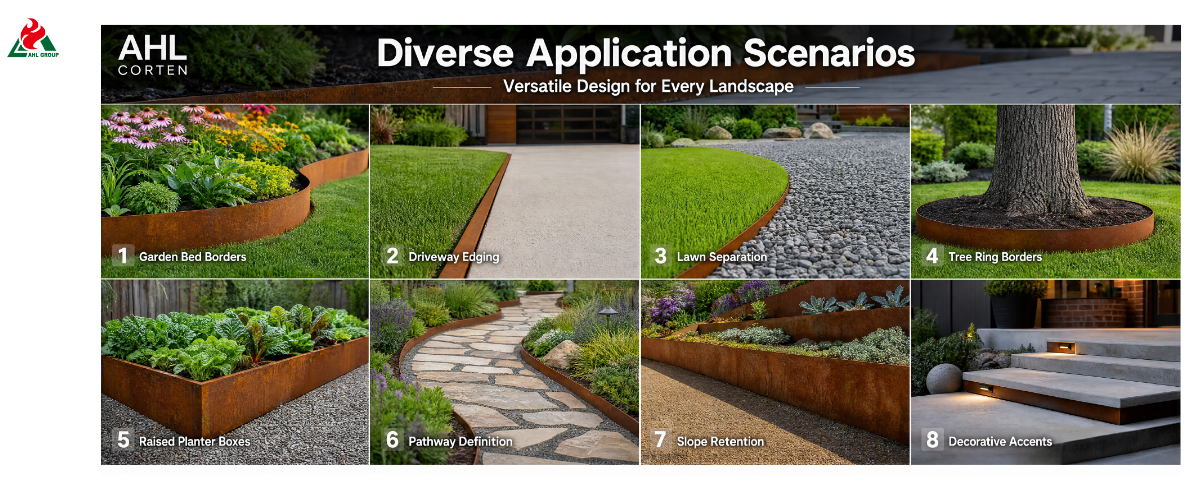
Unlike traditional steel, which gradually deteriorates as it rusts, weathering steel is specially designed to weather naturally and form a protective surface layer. This unique characteristic allows it to showcase its aesthetic appeal while ensuring long-term durability with virtually no human intervention.
1. Introduction
Why Weathering Steel Borders Are So Popular
Landscape designers, property owners, and digital marketers specializing in the high-end hardscape market typically prioritize materials that both showcase architectural beauty and ensure long-term structural stability. Corten steel borders—commercially known as weathering steel—have surged in popularity due to their rugged, industrial aesthetic and unique self-healing properties. When exposed to the elements, it develops a deep, natural, terracotta-colored patina that blends seamlessly with modern, minimalist, or rustic garden designs. Beyond its visual appeal, its high tensile strength enables clean, crisp boundaries, sharp geometric angles, and gentle curves, securely holding soil, gravel, and sod in place with unmatched structural integrity.
Common Maintenance Questions
Since weathering steel relies on corrosion to develop its distinctive appearance, a perplexing question has persisted among estate managers, contractors, and homebuyers: Do items that are actively rusting require meticulous, ongoing maintenance or chemical treatment to prevent deterioration that could lead to structural failure? Traditional iron-based metals used outdoors require constant application of protective coatings or rust inhibitors. Applying these maintenance requirements to weathering steel often leads to unnecessary labor, improper product application, and a shortened service life of the material.
What This Guide Covers
This technical guide provides an authoritative analysis of the operational maintenance and chemical treatment procedures for Corten steel landscape edging. We will explore the metallurgical principles behind its self-protective rust layer, clarify when the use of chemical sealants is recommended and when it is not, outline seemingly minor yet critical maintenance tasks, and provide direct material comparisons with alternative boundary systems. Ultimately, this document will equip specifiers and procurement professionals with the necessary expertise to maximize the service life of weathering steel edging under a variety of outdoor microclimates.
2. Does Corten Steel Edging Need Maintenance
Short Answer: Usually, Almost None
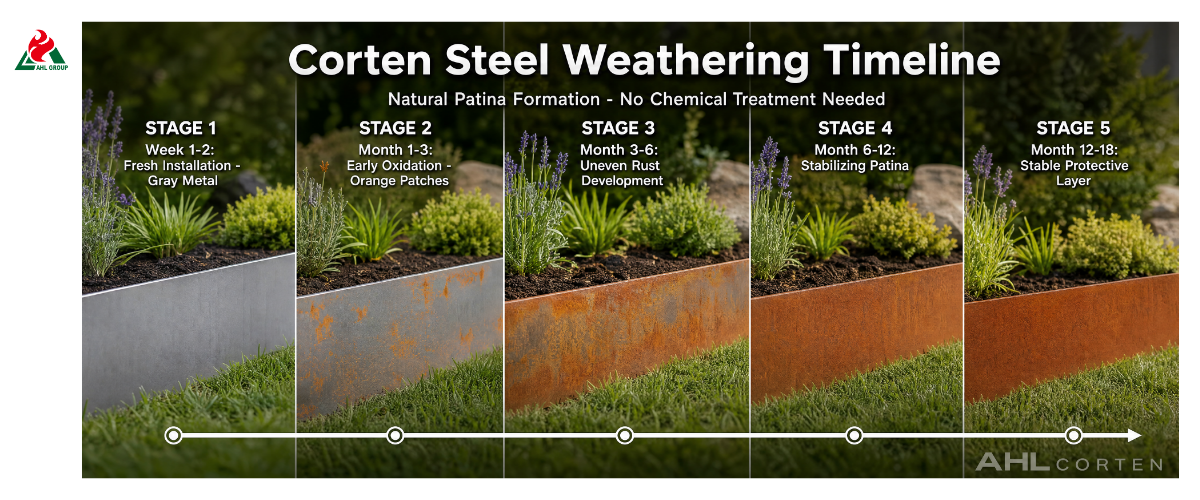
In short, the answer is no; under standard atmospheric conditions, Corten edging requires almost no structural maintenance. Unlike wood, which rots, or plastic, which cracks under ultraviolet (UV) exposure, weathering steel is specifically designed to be a “set-it-and-forget-it” material. Once anchored in the soil, it undergoes a natural chemical transformation on its own, gradually changing from its original dark gray rolled surface to a fully stable, protective rust layer—without the need for human intervention or ongoing maintenance.
When Maintenance Is Needed—and When It Isn’t
Although no routine or seasonal manual maintenance is required, claiming that weathering steel “never needs attention” is a misleading generalization that could lead to premature failure. When curbs are installed in environments with alternating wet and dry conditions, well-drained soil, and good ventilation, no maintenance is required. However, maintenance is necessary if the curbs are buried under thick, compacted layers of wet organic debris, trapped in stagnant anaerobic water, or exposed to high concentrations of chemicals such as highly acidic fertilizers or de-icing salts.
The Difference Between Maintenance and Treatment
To manage landscape assets efficiently, it is essential to distinguish between structural maintenance and surface treatment.
Structural maintenance involves passive environmental management—ensuring proper drainage, clearing fallen leaves and debris, and keeping path edges clear so that the steel can “breathe” and remain dry.
Localized treatment, on the other hand, refers to the targeted application of external chemical agents, such as accelerated rusting agents, polyurethane varnish, or anti-graffiti sealants, to alter or halt the natural weathering process.
3. How Corten Steel Protects Itself
What Is a Weathered Rust Layer?
The secret to Corten steel’s durability lies in its unique chemical composition. Corten steel is an alloy steel in which the contents of copper (Cu), chromium (Cr), nickel (Ni), phosphorus (P), and silicon (Si) are precisely balanced. When the steel comes into contact with moisture and oxygen, these alloying elements react to form a dense, tightly adherent oxide layer on the metal’s surface. This layer is known as “patina.” Unlike the flaky, porous rust layer that forms on ordinary carbon steel, Corten steel’s patina develops a highly stable microscopic crystalline structure that acts as a physically impermeable barrier against water.
How the Rust Skin Slows Further Corrosion
On ordinary steel, the rust layer is expansive and porous; it flakes off, continuously exposing fresh iron atoms to oxygen and moisture, causing the steel to gradually thin and ultimately leading to structural failure. The mechanism of action of the Corten rust skin is entirely different. Because the copper and chromium in the alloy form insoluble alkali metal complexes within the rust layer, the layer can firmly seal the microscopic pores in the steel. This greatly slows the rate at which oxygen and moisture diffuse into the underlying, unweathered steel substrate. The rate of ongoing corrosion is significantly reduced, and once the rust layer is fully matured (typically requiring 12 to 24 months of atmospheric exposure), the corrosion rate drops to a nearly negligible level.
The Difference Between Weathering Steel and Ordinary Steel
The fundamental difference lies in the structure’s self-healing properties. If ordinary structural carbon steel is scratched, moisture penetrates the scratch, causing rust to spread outward and leading to blistering and peeling of the surrounding paint or coating. If a Corten garden edging is deeply scratched by a lawnmower blade or trimmer, the exposed steel surface will simply undergo atmospheric oxidation once again. A protective barrier of copper-chromium oxide will reform at the scratch, effectively “self-repairing” the surface damage without any loss of structural thickness or the need for repainting.
4. Is Chemical Treatment Necessary
Why Corten Steel Typically Does Not Require Chemical Treatment
For purely structural reasons, chemical treatment of Corten steel borders is completely unnecessary and may even be counterproductive. This alloy is specifically designed to remain exposed and unpainted. Forcing chemical treatment in standard landscape installations not only increases procurement costs but also adds repetitive maintenance steps to a product whose core values are “maintenance-free” and “durable.”
When to Use Sealants or Surface Treatments
Chemical sealants or transparent surface coatings are typically used for aesthetic control or risk mitigation, rather than structural protection. The primary legitimate applications include:
► Mitigating stains caused by rust runoff: When curbstones are installed directly adjacent to high-value, porous hardscape materials (such as white limestone, light-colored granite, or precast concrete), designers may apply an acrylic or polyurethane sealant during the initial weathering phase to lock in loose rust dust.
► Preventing changes in appearance: If a client particularly favors a certain amber or deep orange hue during the transition phase, a UV-resistant clear sealer can be applied to temporarily “freeze” the oxidation process at that specific visual stage.
Pros and Cons of Using Chemical Products
Before applying any chemical sealant to weathering steel edging strips, please consider the following technical trade-offs:
| Attribute | Pros of Chemical Treatment | Cons of Chemical Treatment |
| Aesthetics | Eliminates rust staining on nearby light-colored walkways. | Alters the natural matte texture, often leaving a plastic-like glossy or semi-gloss finish. |
| Maintenance | Temporarily stops loose iron oxide dust from migrating. | Introduces a permanent maintenance cycle; UV radiation degrades clear coats, requiring stripping and reapplication every 2–4 years. |
| Longevity | Prevents rapid oxidation in ultra-humid environments. | If the sealer develops microscopic cracks, moisture becomes trapped underneath, causing localized deep pitting and accelerated corrosion. |
5. Basic Maintenance Tasks
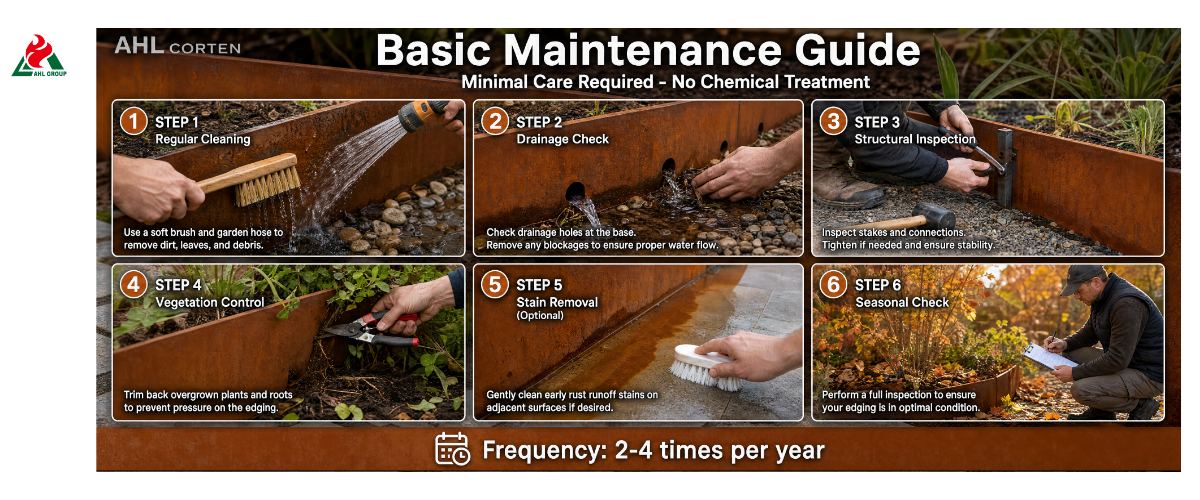
Rinse Away Dirt and Debris
During construction, landscaping, or heavy rain, mud and topsoil may splash onto the exposed upper edges of Corten steel edging. While dry soil is harmless, caked-on mud traps moisture from the atmosphere on the steel surface, hindering the uniform airflow needed for patina formation. Regularly rinsing the exposed edging with a clean, low-pressure garden hose removes these layers of mud, ensuring uniform exposure to the atmosphere.
Check for Standing Water
The main enemy of weathering steel is prolonged, continuous contact with water without alternating drying cycles. During routine landscape inspections, check the backside where the landscape edging meets the flower bed. Ensure that heavy clay is not pushed all the way up to the top edge without a porous drainage layer, as clay retains moisture indefinitely and may force the steel into a state of continuous wet oxidation.
Removing Fallen Leaves and Accumulated Soil
In the fall, fallen leaves accumulate along garden borders, forming a thick, damp layer of organic mulch directly above the Corten edging. As these leaves decompose, they release organic acids and keep the metal surface constantly moist. This anaerobic environment strips away the stable oxide layer, forcing the steel back into an active and destructive cycle of rusting. During seasonal cleanup, remove fallen leaves, mulch, and grass clippings from the surface of the edging lawn.
Inspect Seams and Edges
High-quality Corten steel edging systems utilize interlocking clips, pins, or sleeve joints. Over time, ground settlement, frost heave, or accidental impact from heavy lawn equipment may cause these connections to shift or separate. Please inspect these joints annually to ensure the structural integrity of the edging line remains intact and that the inner edges of the exposed, untreated steel have not been worn down by friction.
6. Common Problems to Watch For
Uneven Rusting
During the first 3 to 9 months after installation, weathering steel typically exhibits a mottled, uneven, and inconsistent appearance. This is a completely normal phenomenon and does not constitute a product defect. Weathering steel reacts dynamically to local microclimates; the edges facing the morning sun will oxidize faster than those in the shade. As the oxide layer gradually thickens and evens out, this unevenness will naturally subside, eventually forming a uniform, deep brown surface.
Rust Runoff and Stains
During the initial oxidation phase, passing rainstorms may wash away loose, unbound iron oxide particles from the surface. This runoff contains a strong orange pigment that may cause permanent stains on adjacent porous surfaces.
Important Warning: Never install unweathered weathering steel in direct, tight contact with light-colored concrete, sandstone, or porous paving bricks. A gravel buffer zone must be established or a temporary impermeable sealant applied to intercept seeping oxide particles.
Scratches and Surface Marks
Whether caused by flying grass clippings, the wheels of a wheelbarrow, or an accidental bump from a shovel while gardening, surface scratches are inevitable. Fortunately, these marks are only temporary. Since Corten steel is a self-healing alloy, these bright metal scratches will darken within a few weeks upon exposure to rain and air, forming new iron oxide that seamlessly blends into the surrounding, established rust layer.
Damage Caused by Standing Water
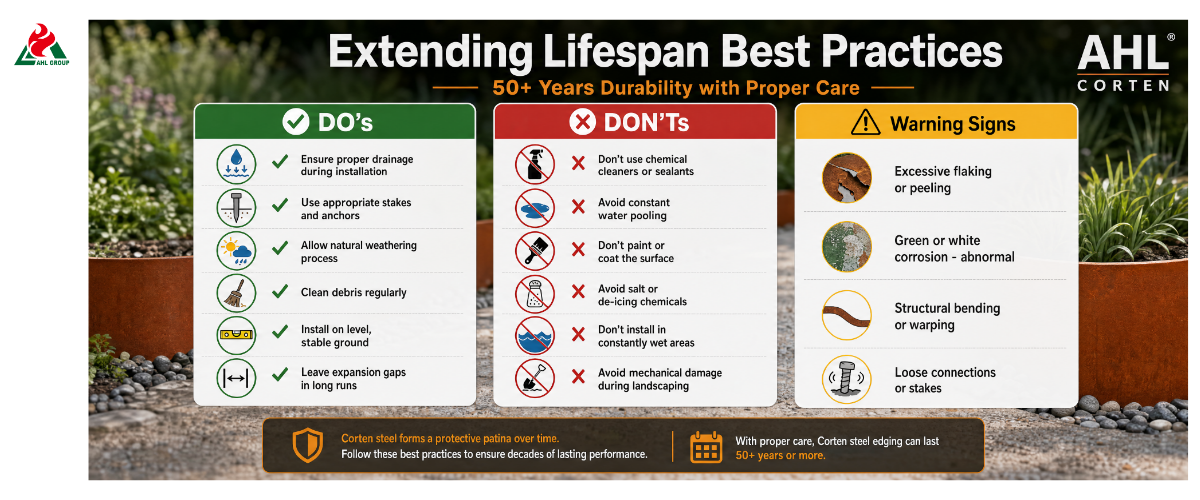
If your metal edging is installed in a low-lying area of the garden where water pools for several days without draining, the steel will be unable to access the atmospheric oxygen needed to regenerate its protective rust layer. Over the course of several years, this prolonged waterlogging can cause the steel plate to flake, with the metal peeling off in thick layers, gradually reducing the steel’s thickness and shortening its service life.
7. When Extra Care May Be Needed
Coastal or High-Salinity Environments
Sea salt (sodium chloride) in the atmosphere can significantly accelerate the corrosion rate of all iron-based metals. In coastal areas within a few miles of the ocean, high salt concentrations can prevent the formation of a protective copper-chromium oxide film, instead promoting the formation of a coarse-grained, non-protective rust layer. In these areas, the condition of the weathering steel perimeter must be closely monitored, thicker material specifications (such as 3 mm or thicker) should be selected, and the area should be regularly rinsed with fresh water to remove accumulated salt crystals.
Areas with Poor Drainage
In areas with heavy, dense clay or marshy terrain with a consistently high water table, standard installation methods may put the perimeter edges at risk. If the subgrade remains saturated year-round, the installation method must be adjusted: backfill a narrow trench directly behind and below the steel strip with clean, washed angular crushed stone or coarse gravel to block capillary suction.
Frames Installed Near Light-Colored Surfaces
If your design layout requires Corten steel landscape edging to be installed directly adjacent to pure white marble walkways, institutional-style concrete plazas, or light-colored stucco retaining walls, proactive protective measures must be taken. Designers must specify the use of pre-weathered (acid-passivated) steel that has undergone an initial weathering cycle at the factory, or apply a high-performance surface sealer to eliminate the risk of color bleeding and staining from the edging material onto adjacent hardscape elements.
High-Traffic Landscaped Areas
In locations such as public parks, commercial developments, or recreational trails—where foot traffic is heavy, skateboarding is frequent, or heavy-duty commercial mowers frequently come into contact with curbstones—mechanical wear is always a factor that cannot be ignored. Frequent impacts can strip away the fragile outer rust layer before it has fully matured. In these high-traffic applications, heavy-duty commercial-grade steel (4 mm to 6 mm) should be specified to ensure that the structural core remains unaffected by surface wear.
8. How to Extend the Life of Corten Edging
Proper Installation
The most effective way to maximize the service life of Corten steel borders is to install them correctly from the start. This requires installing the borders on a stable, compacted aggregate base and ensuring that at least one side of the profiles has a path for water drainage. When driving anchor posts, ensure they are made of the same type of weathering steel or high-quality galvanized steel to eliminate the risk of electrochemical corrosion—a reaction that occurs when dissimilar metals come into contact in the presence of an electrolyte such as water.
Good Drainage and Ventilation
Weathering steel relies on atmospheric circulation to remain in good condition. When designing the fence layout, avoid burying the steel profiles entirely in compacted, oxygen-deprived soil. The top of the fence should remain exposed above ground level, and adjacent groundcover or turf should be maintained at an appropriate height to allow ambient wind to thoroughly dry the metal surface after rain.
Avoid Prolonged Exposure to Moisture
Never allow plastic weed barrier fabric, impermeable landscape fabric, or heavy rubber covers to tightly wrap around or lie directly against the surface of Corten metal edging. These synthetic materials trap moisture, hinder necessary oxygen exchange, and create a localized microclimate of persistent dampness, which can lead to deterioration of the steel’s internal matrix.
Routine Inspection and Cleaning
Establish a simple, twice-yearly landscape maintenance plan:
► Spring: Walk along the perimeter, remove fallen leaves that have accumulated over the winter, check for soil heaving, and rinse away mud that has built up over the winter.
► Fall: Before the ground freezes, clear away thick layers of fallen leaves and inspect the mechanical joints.
9. Corten Edging vs Other Materials
Corten Steel vs. Galvanized Steel
Galvanized steel relies on a sacrificial zinc coating to protect the underlying carbon steel from rust. Although this protection is highly effective, if the zinc coating is scratched or cut during installation, the exposed steel beneath becomes vulnerable and rusts rapidly, with no self-healing capability. In contrast, weathering steel has a uniform alloy structure throughout its cross-section; scratches do not affect its performance because the metal itself possesses self-sealing properties.
Corten Steel vs. Aluminum Trim
Aluminum trim is extremely lightweight, flexible, and completely immune to conventional atmospheric corrosion, making it ideal for creating clean, modern lines. However, aluminum lacks the structural quality, high impact resistance, and inherent structural weight that steel possesses. In high-traffic areas or applications requiring strong earth retention, aluminum may bend or deform under lateral earth pressure, whereas sturdy weathering steel profiles remain rigid and do not yield.
Corten vs Timber Edging
Pressure-treated wood is a traditional material for landscape fencing, but its deterioration timeline is highly predictable. Even when treated with modern chemical preservatives, wood buried in moist soil will inevitably succumb to fungal decay, rot, and wood-boring insects within 5 to 12 years. Weathering steel edging lasts decades longer than wood, not only eliminating the labor costs associated with repeated replacements but also preventing irritating wood preservative chemicals from seeping into the surrounding garden ecosystem.
Maintenance Comparison by Material
| Material Option | Initial Maintenance Requirements | Long-Term Maintenance Requirements | Expected Lifespan in Soil |
| Corten Steel | None (Allow natural patina formation) | Periodic clearance of organic debris | 25 to 50+ Years |
| Galvanized Steel | None | Touch-up paint on deep scratches | 15 to 25 Years |
| Aluminum | None | None | 30 to 40 Years |
| Treated Timber | None | Continual wood staining or replacement | 5 to 12 Years |
10. Frequently Asked Questions
Q1: Do Corten Steel Edging Curbs Need to Be Painted?
No, Corten steel edging must never be painted. Painting Corten Steel completely defeats the purpose of its engineering design. The chemical structure of Corten steel relies on direct contact with oxygen and moisture to form a protective oxide layer. Applying a standard paint film “smothers” the alloy; when the paint layer inevitably cracks, moisture becomes trapped beneath it, creating a high-maintenance cycle that requires repeatedly scraping off old paint, priming, and repainting.
Q2: Do Weathering Steel Edgings Need to Be Sealed?
In 95% of standard landscaping applications, weathering steel edging should not be sealed. They are designed to remain in their original state and be directly exposed to the natural environment. The only exception is when the edging stones are adjacent to expensive, light-colored, and highly porous hardscape elements; in such cases, they must be sealed during the initial 12-month “bleeding period” to prevent staining caused by rainwater runoff.
Q3: How often should it be cleaned?
For most residential and commercial properties, a simple inspection twice a year is more than sufficient. Cleaning simply involves using a leaf blower or rake to remove wet leaves, grass clippings, or thick layers of organic debris that have accumulated on the steel surface; if there are thick clumps of mud on the surface, give it a quick rinse with clean water.
Q4: Does the Rust Layer Need to Be Replaced?
No. The rust layer is not a surface coating that wears away like paint; it is an active, “living” extension of the steel substrate itself. If part of the rust layer is physically removed or worn away, the alloy components of the underlying steel will automatically react with the atmosphere and reform a protective oxide layer within a short period of time.
Conclusion: Key Points Regarding Maintenance
For landscape architects, property managers, and buyers, the most important conclusion is that Corten steel garden edging is an inherently low-maintenance material. Their metallurgical design is intended to avoid the high-cost maintenance cycles required by traditional wrought iron. By leveraging its inherent chemical composition—particularly copper and chromium—it forms a highly stable protective rust layer that naturally resists environmental erosion, thereby providing an exceptionally long service life with virtually no human intervention.
When purchasing weathering steel edging, focus your attention and budget on sound structural design and high-quality installation practices, rather than post-installation chemical treatment products. Be sure to verify that you are purchasing genuine weathering steel, rather than inexpensive ordinary carbon steel coated with a temporary rust-simulating finish. By selecting the appropriate material thickness, ensuring good soil drainage, and keeping the area around the frame free of heavy, damp organic debris, your weathering steel frame will remain structurally sound and visually striking for decades to come.

