


Corten steel planters are widely used in outdoor gardens, patios, courtyards, and commercial landscapes due to their unique rust-colored patina and exceptional durability. However, their architectural appearance also makes them an ideal choice for indoor spaces, including offices, restaurants, hotels, shopping centers, greenhouses, and modern residences.
The main challenge lies in the fact that weathering steel is designed to withstand the elements. In indoor environments, uncontrolled moisture, drainage water, and rust runoff can cause issues that are not as significant in outdoor settings. Therefore, the key to successfully using weathering steel planters indoors is not to completely prevent the natural weathering process, but to control moisture and protect the surrounding floor surfaces.
Through the use of waterproof liners, effective drainage systems, protective trays or mats, and proper maintenance, Corten steel planters can be successfully used indoors. However, installation methods should be adjusted based on the type of flooring, plant species, planter size, and expected watering frequency.
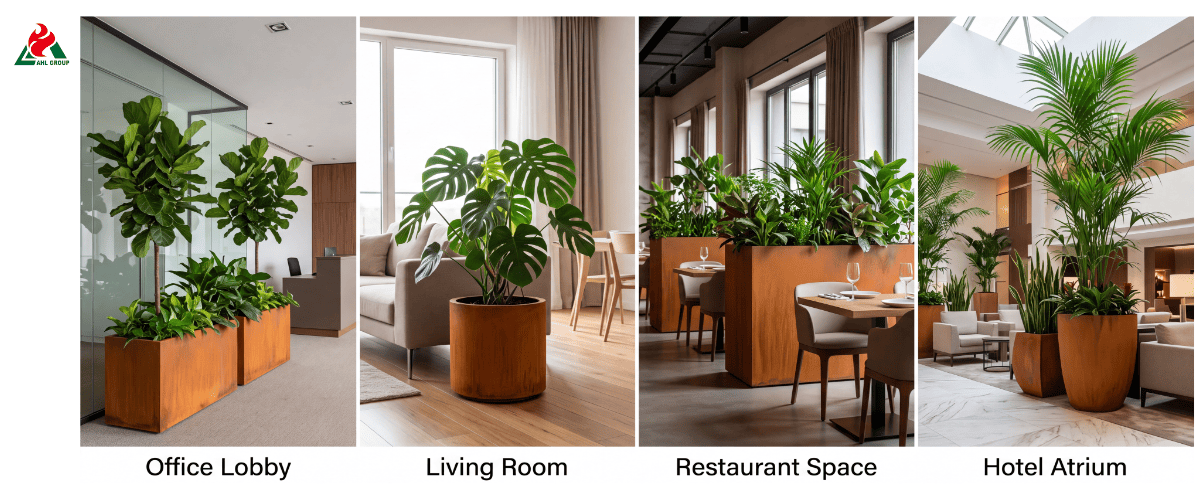
The main challenge lies in the fact that weathering steel is designed to withstand the elements. In indoor environments, uncontrolled moisture, drainage water, and rust runoff can cause issues that are not as significant in outdoor settings. Therefore, the key to successfully using weathering steel planters indoors is not to completely prevent the natural weathering process, but to control moisture and protect the surrounding floor surfaces.
Through the use of waterproof liners, effective drainage systems, protective trays or mats, and proper maintenance, Corten steel planters can be successfully used indoors. However, installation methods should be adjusted based on the type of flooring, plant species, planter size, and expected watering frequency.
1. Quick Answer
Can Corten Steel Planters Be Used Indoors
Yes, Corten planters can be used indoors, but specific installation steps—different from those for outdoor use—must be followed. Because indoor environments lack natural weathering factors such as rain and dew, the metal behaves differently indoors.
Basic Precautions
To safely display Corten planters in residential, office, or commercial spaces, you must install a waterproof liner, use a drip tray, and protect the surrounding floor from potential rust stains or moisture damage.
Key Rust Prevention Measures
Indoor humidity is significantly lower than outdoor precipitation levels. To develop the signature warm orange-brown patina indoors, the flowerpot must undergo pre-weathering outdoors before being moved indoors, or be artificially aged using a controlled organic accelerating spray.
When to Avoid Indoor Use
Please avoid placing untreated, unlined weathering steel planters directly on porous indoor surfaces, such as unvarnished hardwood floors, light-colored carpets, or natural marble floors, unless they are equipped with heavy-duty drip trays and waterproof isolation mats.
2. Waterproof Liners and Drainage
Why Indoor Planters Must Use Liners
Weathering steel (Corten steel) forms a protective oxide layer on its surface when exposed to moisture and oxygen. However, in unlined metal planters, continuous direct contact with damp potting soil can lead to prolonged water accumulation, causing severe structural pitting corrosion rather than the formation of a stable rust layer.
Installation of Polyethylene Liners
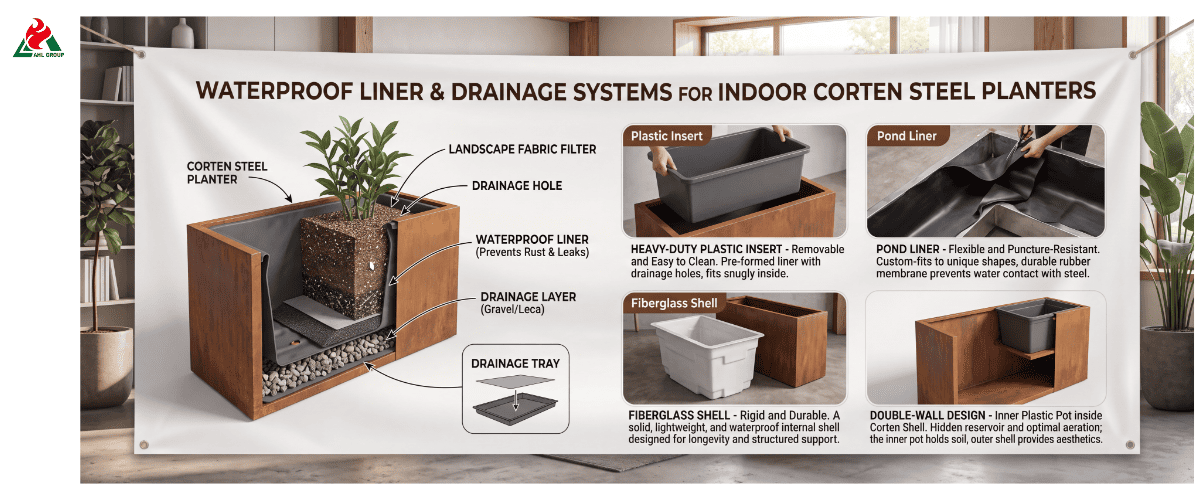
Line the interior of the Corten metal planter with a low-density polyethylene (LDPE) or high-density rubber pond liner that is 0.5 mm to 1.0 mm thick. Ensure the liner extends upward along the inner walls above the soil line and is secured with staples or firmly bonded using heavy-duty construction adhesive to completely isolate the moist soil from the steel walls.
Metal Liner Options
For high-end commercial indoor spaces, custom liners made of stainless steel, powder-coated aluminum, or rigid molded plastic can create a dual-layer barrier. This design allows you to place seedling pots directly into the Corten steel shell without filling the metal container with moist growing medium.
Drainage Hole Requirements
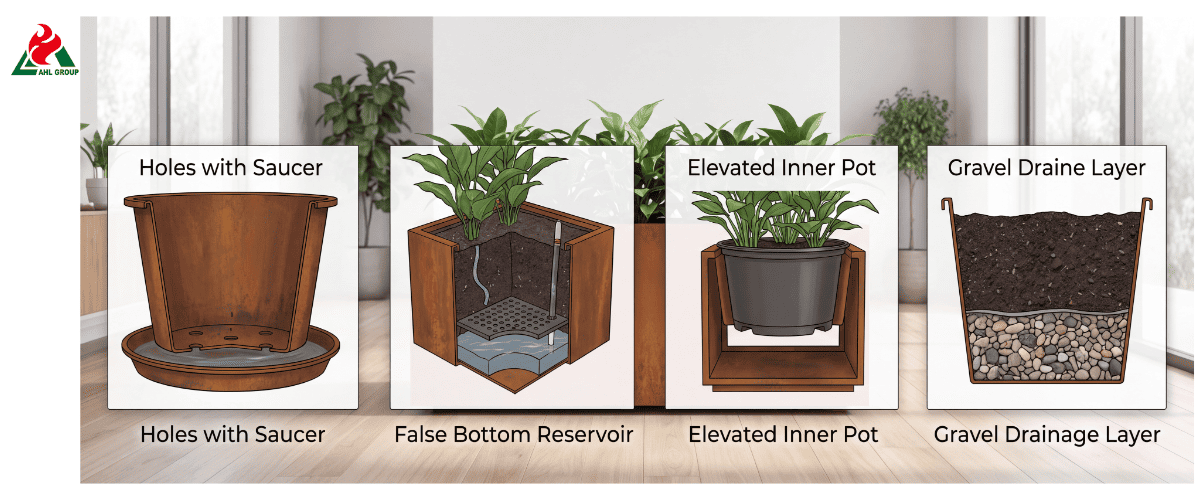
Outdoor planters are equipped with large drainage holes at the bottom to allow rainwater to drain away. Indoors, however, uncontrolled drainage can cause damage to the floor. If your Corten planter box has pre-drilled drainage holes at the bottom, you must direct the drainage directly into a one-piece drip tray or install a watertight connector and route the drain pipe to a sealed collection tank.
Integrated Drip Tray
Please use a custom-made weathering steel or heavy-duty plastic drip tray that is slightly larger than the planter base. This drip tray collects excess irrigation water and prevents standing water from coming into contact with the floor substrate.
Greenhouses and Enclosed Patios
Enclosed sunrooms, residential greenhouses, and covered atriums tend to have higher ambient humidity. In these semi-indoor spaces, ensure good ventilation around the planter pot base to prevent the buildup of moist air beneath the metal base.
3. Prevent Rust Runoff
Understanding Rust Leaching
In the early stages of rust layer formation, when the steel surface comes into contact with water, tiny iron oxide particles detach from the surface. This orange-colored liquid runoff contains loose iron particles and can permanently stain porous stone, wood, tile grout, and textiles.
Leaching Period (6–12 Months)
When untreated weathering steel begins the oxidation process outdoors or after being manually sprayed with an oxidation accelerator, active rust leaching occurs during the first 6 to 12 months. Once the oxide layer stabilizes and forms a tight, dense barrier, the amount of leaching decreases significantly.
Use Drip Trays and Saucers
Equip each indoor plant pot with an oversized saucer or a custom drip tray. Ensure the saucer’s sides are at least 5 centimeters (2 inches) high to catch any overflow from accidental watering before the liquid reaches the surrounding ground cover.
Protective Mats Under the Pot
Place a heavy-duty, impermeable neoprene, silicone, or rubber mat beneath the drip tray. The rubber mat absorbs small amounts of spillage, protects the ground surface from abrasion caused by the sharp corners of the pot, and prevents condensation from accumulating.
Elevate Planters Using Supports
Use heavy-duty rubber feet, solid nylon spacers, or architectural-grade steel planters to elevate flower pots 2 to 5 centimeters off the ground or the bottom of the drip tray. Elevating the planters promotes air circulation at the base, allowing any spilled water to dry more quickly.
Clean Up Spills Immediately
Check the area around the base of the flower pot regularly. If you find standing water, wipe it up immediately using a highly absorbent microfiber towel and clean water. Never allow rust-stained water to dry on floor tiles or in tile grout.
4. Floor Protection
Protective Trays
Powder-coated metal trays or UV-resistant plastic trays can serve as the first line of defense. Match the tray color to the rust of weathering steel or the surrounding interior decor to achieve a visually harmonious blend.
Non-Perforated Floor Mats
Thick, construction-grade silicone floor mats or high-density rubber mats can form a waterproof barrier. Ensure the mats extend 5 to 10 centimeters beyond the outer edge of the garden planter base.
Plant Racks and Raisers
Use industrial-grade plant carts or low-profile furniture risers. Placing heavy planters off the ground significantly simplifies cleaning and floor inspections.
Tiles and Stone
Porous natural stone floors (such as travertine, limestone, and marble) are highly susceptible to absorbing iron oxide, resulting in dark rust stains. Seal the stone surface with a penetrating sealer and use a drip tray.
Hardwood Flooring Precautions
Hardwood floors absorb moisture quickly from beneath heavy planters, leading to warping, mold growth, and dark iron tannin stains. Never place metal planters directly on hardwood floors without leaving a ventilation gap or using a waterproof drip tray.
Laminate Flooring and Vinyl Flooring
Luxury vinyl planks (LVP) and laminate flooring offer better moisture resistance than natural wood, but iron-based stains may still leave marks on the synthetic surface. Use rubber pads to prevent sharp metal edges from scratching the decorative wear layer.
Concrete Protection
Unsealed indoor concrete floors are prone to absorbing rust-colored stains. Apply a high-performance clear epoxy or penetrating concrete sealer beneath the planting box installation area to prevent iron stains from penetrating deeply.
5. Sealing Recommendations
When to Seal (After the Rust Layer Has Stabilized)
If you wish to halt the rusting process and completely eliminate rust dust or rust water from indoor areas, apply a clear, protective topcoat sealer. Apply the sealer only after the Corten steel has fully rusted to your desired color and texture—either outdoors or after treatment with an artificial rust accelerator.
Clear Polyurethane Sealer
Use a clear, outdoor-grade acrylic sealer, a matte polyurethane coating, or a specialized metal sealer formulated specifically for weathering steel. Choose a matte or satin finish to preserve the natural, non-reflective, rustic texture of the weathered steel.
Surface Preparation
Before applying the clear topcoat:
► Allow the weathered surface to dry completely.
► Gently brush away loose, powdery surface rust with a stiff nylon brush (never use a wire brush).
► Wipe the steel surface with a damp, lint-free cloth and let it air dry for 24 hours.
Application Techniques
Using a low-pressure sprayer or a high-density foam roller, apply the sealer evenly in a thin layer. Apply 2 to 3 thin coats, allowing the recommended curing time between each coat. For indoor displays, reapply a maintenance coat every 2 to 3 years.
The Pros and Cons of Sealing
Sealing weathering steel prevents the metal’s natural organic aging process. Over time, the sealant may become scratched or degraded if subjected to impact, which could lead to localized oxidation beneath the clear coat.
When Not to Seal
Do not apply sealant to the surface of unweathered, factory-fresh gray weathering steel. The sealant acts as a moisture barrier, preventing the steel from developing its characteristic rust-colored orange patina.
6. Drainage Requirements
Step 1: Install a Waterproof Liner
Choose a heavy-duty liner to protect the steel inner walls.
Line the inner walls and bottom of the Corten garden planter with an LDPE plastic or custom rubber liner that is 0.5 mm or thicker to prevent moist soil from coming into direct contact with the exposed steel.
Step 2: Add an Underground Aggregate Drainage Layer
Promote internal aeration and prevent waterlogging of the root system.
Place a 5–8 cm (2–3 inches) thick layer of clean crushed gravel, expanded clay pellets, or pumice at the bottom of the planter with the liner already in place.
Step 3: Lay Geotextile Filter Fabric
Prevents soil particles from clogging drainage channels
Before filling the landscape planter with lightweight indoor potting soil, completely cover the drainage aggregate layer with a layer of non-woven geotextile filter fabric.
Step 4: Connect the Underground Drip Tray Assembly
Safely manage runoff within indoor living spaces
Ensure that all drainage outlets direct water into an easily accessible, high-rimmed drip collection tray or a sealed indoor water storage tank.
Why Indoor Drainage Is Important
Poor drainage can lead to soil saturation, which in turn can cause anaerobic root rot in indoor potted plants. Because the evaporation rate is lower indoors, the root zone remains moist for much longer than in outdoor flower beds.
Lay a Layer of Gravel at the Bottom
Placing a 5 to 8-centimeter-thick layer of clean gravel or expanded clay pellets beneath the root zone creates an internal water-retention space, keeping the plant’s roots away from standing water.
Root Barrier
A non-woven geotextile prevents fine soil particles from being washed into the aggregate layer or clogging drainage holes, ensuring water flows smoothly into the saucer.
Prevent Waterlogging
Use a probe-type soil moisture meter to check soil moisture before watering. Avoid over-saturating indoor planters, as excessive standing water in the drip tray can increase indoor humidity and pose a risk of overflow.
Empty the Drip Tray Promptly
Within 30 to 60 minutes after watering, use a manual siphon pump or wet vacuum to remove accumulated runoff from the drip tray to prevent overflow and root waterlogging.
7. Maintenance
Do Not Scrub Vigorously or Apply a Sealant in the Early Stages
Allow untreated weathering steel to weather naturally. Do not scrub vigorously, use wire brushes, or apply a chemical sealant prematurely, as this may cause mottled or uneven discoloration on the surface.
Check Drainage Monthly
Inspect the integrity of the liner, the aggregate layer, and the drip tray monthly to ensure proper drainage and that there are no leaks on the ground.
Remove Debris
Remove surface soil, dead leaves, plant debris, and dust from the drip tray. Decaying organic matter in stagnant rainwater can produce a sour odor and foster mold growth.
Clean with Mild Soap
Occasionally clean the rusted steel exterior with a soft cloth, warm water, and a mild, pH-neutral dish soap. Avoid using harsh chemical cleaners, bleach, or acidic solvents.
Wipe Up Rust Water Promptly
Keep a dedicated microfiber towel next to the indoor planters so you can quickly wipe up any scattered water droplets or beads on the metal rim or the edge of the drip tray.
Avoid Prolonged Water Accumulation
Ensure the bottom of the Corten landscape planters is not continuously submerged in water inside the drip tray. You can place spacers in the drip tray to elevate the planters above the standing water.
8. Safety Considerations
Risk of Rust Stains
Iron oxide leachate can permanently stain clothing, upholstery, light-colored carpets, and porous masonry. Be sure to wear work gloves when handling active rusted steel planters.
Slip Hazard
Water overflowing from the planter’s tray onto smooth hardwood floors, polished concrete, or tile surfaces can immediately create a slip hazard in high-traffic residential or commercial hallways.
Weight Considerations
Architectural planters filled with moist potting soil and large plants are extremely heavy. Before installing large architectural planters indoors, verify that the floor joists and subfloor meet structural load-bearing requirements.
Sharp Edges
Check factory-machined corners and the edges of metal panels for burrs or sharp points. If placing planters in a home with young children or pets, sand the exterior corners with fine-grit sandpaper or install corner guards.
Children and Pets
Keep pets and young children away from open drainage trays. Standing water in the trays may contain excessive amounts of minerals and soil additives and must not be ingested.
9. FAQs
Q1: Will It Rust Indoors?
Weathering steel requires exposure to alternating cycles of wet and dry conditions and contact with oxygen to rust naturally. In a low-humidity indoor environment, the oxidation process will be very slow unless the oxidation process is artificially accelerated or the steel undergoes pre-weathering treatment outdoors beforehand.
Q2: Is an Inner Liner Required?
Yes, when used indoors, a waterproof plastic or rubber liner must be installed inside to isolate the moist potting soil from the steel inner walls and prevent liquid from leaking onto the floor.
Q3: How Can Rust Stains Be Prevented?
Rust stains can be prevented by using a high-sided drip tray, placing an impermeable rubber mat under the base, elevating the container, and immediately wiping up any spilled liquid.
Q4: Do Indoor Planters Need to Be Sealed?
Once the steel surface has developed an ideal patina and is fully stabilized, you can apply a clear, matte acrylic or polyurethane sealant to the exterior steel surface to prevent rust particles from flaking off.
Q5: How Long Will the Rust Bleeding Last?
During the initial weathering phase, active rust bleeding typically lasts 6 to 12 months, after which the oxide layer gradually forms a stable protective layer.
Q6: Which Plants Thrive Best Indoors?
Drought-tolerant plants suitable for indoor growth—such as snake plants, ZZ plants, fiddle-leaf figs, monstera, and succulents—are best suited for minimizing watering needs.
Q7: How Do I Remove Stains?
Use a specialized oxalic acid rust remover, a white vinegar solution, or a mild, commercially available iron stain remover to remove light rust stains from floor tiles or grout.
Conclusion: Summary of Key Considerations
Placing Corten metal planters indoors can add an elegant and warm architectural accent to modern interior spaces. The key to successful indoor placement lies in controlling humidity, protecting the subfloor, and safely managing rust water.
Be sure to install a heavy-duty waterproof liner, a gravel drainage layer, and a geotextile filter inside the metal container. These internal barriers prevent soil saturation and protect the outer steel container from corrosion caused by moisture.
By combining the planter with an oversized drip tray, a non-perforated mat, raised feet, and—where appropriate—a clear protective sealant, you can fully enjoy the stunning beauty of weathering steel indoors without worrying about floor staining or moisture damage.

