


Weathering steel (Corten steel) is frequently used in architectural and landscape design to infuse outdoor spaces with rich, natural textures and the warm, earthy tones of its aesthetic. The material’s velvety-smooth patina creates a sense of raw industrial elegance, with hues that shift and evolve with the changing seasons. However, the true visual allure of weathering steel is often best revealed after sunset.
Without strategic outdoor lighting, the deep, textured surface of weathering steel can appear mundane or even disappear entirely into the night. Conversely, the wrong type of lighting can strip the material of its inherent rustic warmth, transforming what should be a sophisticated architectural highlight into a harsh, uninviting surface. This guide provides a comprehensive evaluation of how light of different color temperatures interacts with weathering steel, helping you select the ideal color temperature for your next design project.
Without strategic outdoor lighting, the deep, textured surface of weathering steel can appear mundane or even disappear entirely into the night. Conversely, the wrong type of lighting can strip the material of its inherent rustic warmth, transforming what should be a sophisticated architectural highlight into a harsh, uninviting surface. This guide provides a comprehensive evaluation of how light of different color temperatures interacts with weathering steel, helping you select the ideal color temperature for your next design project.
1. Introduction
Why Color Temperature Matters for Corten Steel
Color temperature—measured in kelvins (K)—determines whether a light source appears warm or cool to the human eye. Because weathering steel has a highly textured surface and unique chemical properties, its surface does not display a single, uniform color. Instead, it consists of a complex interplay of orange, reddish-brown, ochre, and deep chocolate-brown hues. The color temperature projected onto these layers directly determines which hues are enhanced and which are suppressed.
How Weathering Steel Alters the Appearance of Light
Weathering steel acts as a selective visual filter. Unlike white or metallic surfaces that reflect light uniformly, weathering steel absorbs a significant amount of light energy. Because its surface is covered with a deeply textured, non-porous layer of iron oxide, it scatters light rather than reflecting it sharply. This matte, absorptive quality means that light falling on the panels actually blends with the material’s tones, creating a blended secondary glow.
This guide will help you make the following decisions
Whether you are designing landscape lighting for large-scale commercial cladding walls, intricate laser-cut privacy screens, a series of custom planters, or public landscape sculptures, this guide provides the precise technical specifications you need. You will learn how to select the ideal color temperature range, avoid severe glare issues, and ensure that the Corten lighting layout harmonizes with the architectural ambiance of your project.
2. What Makes Corten Steel Unique
The Color and Texture of CORTEN Steel
To effectively showcase the appeal of weathering steel, one must understand its physical composition. Starting from its original state upon leaving the factory—bright, silver-gray steel—this material gradually develops a colorful protective oxide layer after months of atmospheric exposure. This “skin” features a rich texture composed of microscopic peaks and valleys that capture directional, oblique light, casting subtle shadows across the metal surface.
The Interaction Between Rust and Light
Every garden light source possesses a unique spectral power distribution. Warm-colored light sources are dominated by the red, orange, and yellow bands of the visible spectrum, while the blue and violet bands dominate cool-colored light sources. Since the rust layer of Corten steel consists almost entirely of warm-toned iron oxide, illuminating it with light from the warm-colored spectrum creates a harmonious resonance, bringing the metal to life.
Why Surface Effects Vary Depending on the Environment
Weathering steel is a “living” material. Sheets installed in a desert environment will take on a lighter, more orange-gold hue. In contrast, identical sheets installed in a humid coastal region or a highly polluted urban environment will weather into a deeper, richer purplish-brown tone. Because the material adapts to its surroundings, its underlying color tone will change, requiring targeted adjustments to the surrounding architectural lighting design.
3. Best Color Temperatures for Corten Steel
The Kelvin color temperature system offers a variety of unique lighting solutions, each of which produces a distinctly different visual effect when projected onto the surface of weathering steel.
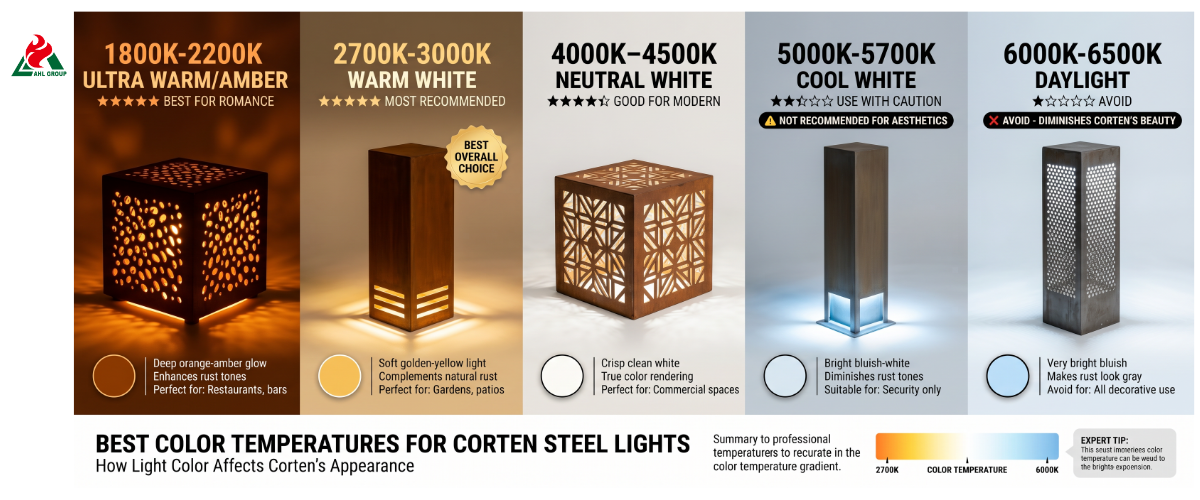
Warm Light Around 2200K to 2700K
This exceptionally warm spectrum is the gold standard for traditional, rustic, and organic design applications. Light in the 2200K to 2400K range mimics the warm, flickering quality of candlelight or high-pressure sodium lamps, casting a rich amber glow. When the color temperature rises to 2700K, it produces a standard soft white light that blends perfectly with classic residential landscape tones.
Neutral Light Approximately 3000K to 3500K
The 3000K to 3500K color temperature range bridges the gap between traditional warm tones and bright, modern styles. At 3000K, the light appears pure white while retaining sufficient warm spectral output to highlight the underlying iron oxide tones without masking them. This color temperature achieves an excellent balance, clearly defining structural edges while preserving the natural variations of the underlying patina.
Cool Light Above 4000K
Cool white light (4000K–5000K) and daylight white light (>5000K) exhibit distinct spectral characteristics with high blue light energy. When directed at weathering steel, cool light has a visually suppressing effect. It dilutes the organic vitality of the rust layer, often tingeing dark brown areas with an unnatural, sickly gray-green hue, creating a cold and detached impression.
Which Color Temperature Range Typically Yields the Best Results
For the vast majority of architectural installation projects, the color temperature range of 2700K to 3000K provides the most universally applicable and expressive visual effect. This range offers sufficient warm-color wavelength energy to enhance the natural iron oxide surface effect, while remaining bright and clean enough to meet the requirements of modern structural design.
4. How Different Kelvin Ranges Change the Appearance
Warm White Light and Richer Rust Tones
When you illuminate Corten steel lights with 2200K to 2700K lighting, you are effectively amplifying the colors optically. Deep amber and red wavelengths fill the microscopic cracks in the rusted surface, causing the orange tones to appear highly saturated and fiery. This gives the metal sheet a highly tactile appearance, as if mimicking the heat radiating from an open hearth.
Neutral White Light and Balanced Contrast
Using a 3000K light source creates a clean, balanced visual effect. Orange and red tones remain visible, but their saturation is reduced. This color temperature highlights the installation’s structural form, revealing the true depth of the deep chocolate brown tones while emphasizing the clean geometric lines of the metal panels, all while avoiding an overly yellowed scene.
Cool White Light and a Sharper, Modern Contrast
Using a 4000K light source creates a strong visual contrast. The bluish light struggles to find corresponding reflection wavelengths on the warm metal surfaces. The result is a sharp, stark contrast, making the steel appear dull, flat, and industrial. Unless intentionally juxtaposed with surrounding materials to create high contrast, this effect may feel harsh.
5. Where the Light Will Be Used
The structural function and spatial layout of weathering steel components play a significant role in selecting the ideal color temperature.
Outdoor Landscape Lighting
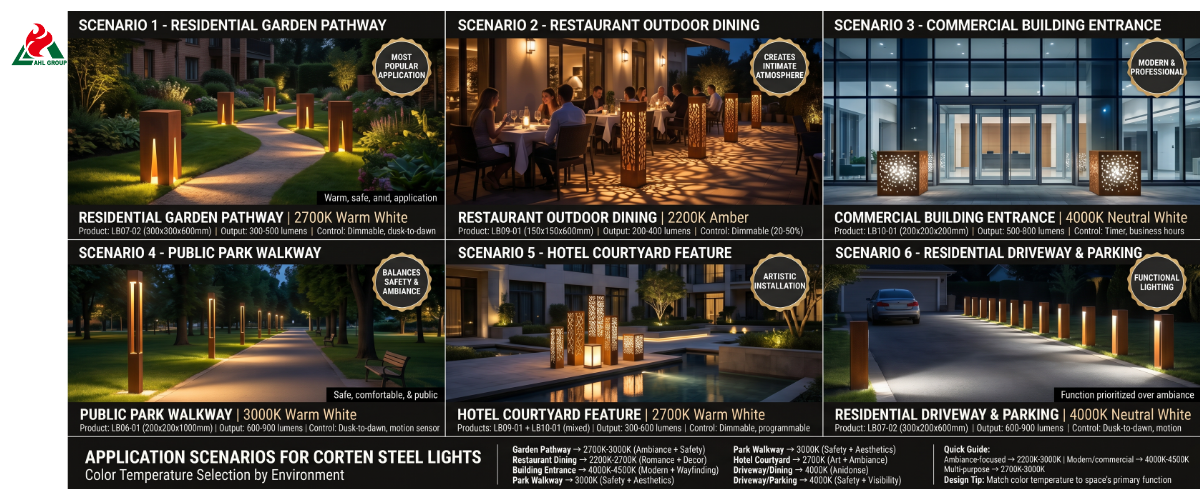
In expansive outdoor landscapes, weathering steel components such as retaining wall panels, large boulders, and natural stone staircases should harmonize with the surrounding vegetation. A color temperature of 2700K ensures that the green foliage of nearby trees appears natural and vibrant, while also bringing out the rustic orange-brown hue of the steel naturally and vividly, allowing it to blend seamlessly into the overall nighttime environment.
Courtyard and Pathway Lighting
For ground-mounted installations such as Corten steel treads, pathway borders, or low-profile illuminated bollards, ultra-warm color temperatures (2200K–2700K) are particularly effective. Low-profile lighting should convey a sense of stability and warmth, creating a safe passageway on neatly manicured lawns or gravel surfaces while avoiding the projection of glaring, dazzling white beams.
Building Façade Lighting
When illuminating the façades of multi-story buildings clad in Corten steel, the focus should be on highlighting the building’s grand scale and surface texture. In this case, wall-washing or wall-mounted lights set to a color temperature of 3000K are the ideal choice. A slightly cooler white light ensures that the illumination extends clearly upward along the building’s façade, preventing the structure from appearing blurry or overly yellowed from a distance.
6. Choosing Light for the Desired Mood
A Soft, Natural Ambience
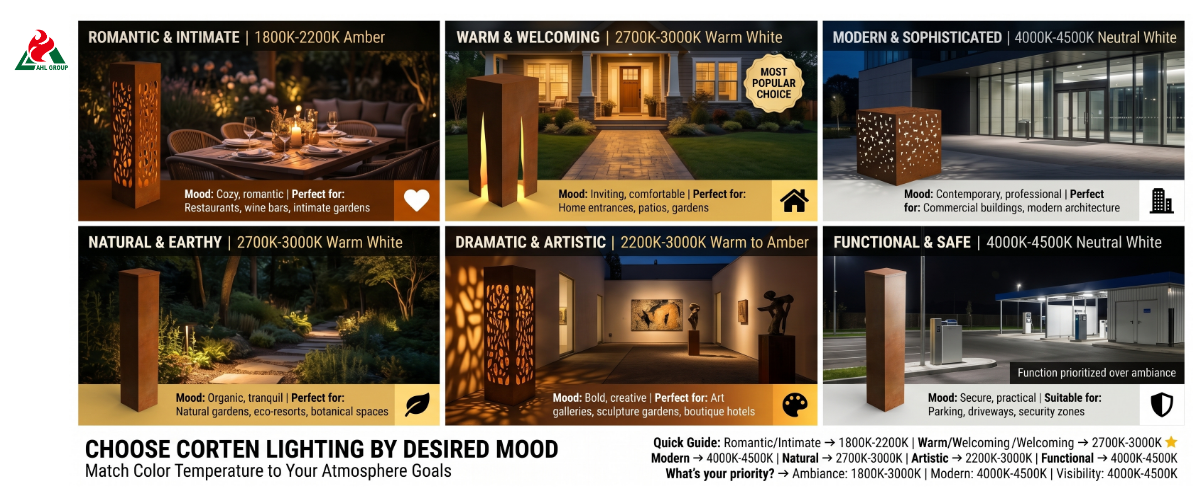
To create a serene, safe, and deeply relaxing outdoor dining area, backyard patio, or residential courtyard, focus on color temperatures ranging from 2200K to 2700K. This lower color temperature range naturally triggers a psychological response of relaxation, making the outdoor space feel like a natural extension of your indoor living room.
Bold and Dramatic Effects
If your goal is to make iconic elements—such as a massive corporate logo carved from weathering steel or an eye-catching water fountain—stand out vividly in the dark, opt for a sharp 3000K beam angle. Pairing this color temperature with high-intensity spotlights creates sharp, dramatic shadows that highlight the structural contours of materials.
Modern Minimalist Style
For ultra-modern residential designs characterized by sharp geometric lines, concealed fasteners, and clean, hard landscaping, the consistent use of 3000K color temperature delivers an ideal aesthetic. It creates a clean, precise, and refined visual effect that perfectly complements architectural metals, glass, and smooth cast-in-place concrete surfaces.
7. Factors That Affect the Final Choice
► Ambient Light Levels: If your project is located in a bustling city center surrounded by bright street lights and neon signs, you’ll need a higher, more vivid color temperature (such as 3000K) to cut through the surrounding light pollution. For rural areas or dark sky preserves, soft 2200K to 2700K bulbs will help preserve the darkness of the night sky.
► Surrounding Materials: Be sure to consider adjacent hardscape elements. If your Corten steel panels are adjacent to a warm, golden-hued wooden deck, opt for 2700K. If they are surrounded by pristine white stucco walls or cool gray basalt tiles, a 3000K light source will help seamlessly blend these contrasting materials.
► Beam Angle and Placement: Using a narrow beam (15°–24°) near the base of a textured weathering steel wall creates a strong “glancing” effect. This highlights the rough texture of the rust patina, while a wide beam (60°+)—though it diminishes the textural effect—provides a softer, more even color rendering.
8. Common Lighting Mistakes
Using Light Sources with Excessively Cool Color Temperatures
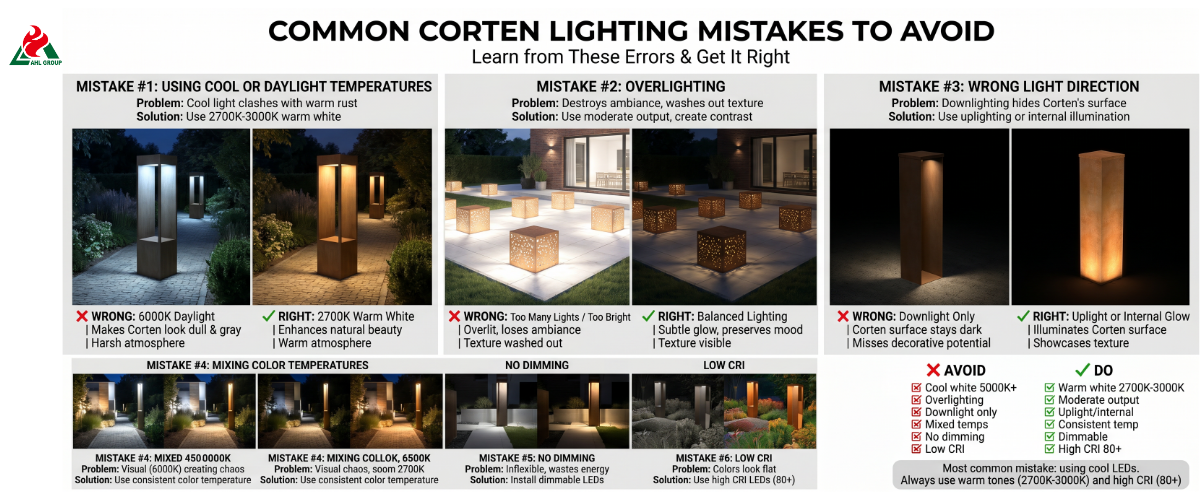
One of the most common mistakes in outdoor architectural lighting is the use of inexpensive, generic 4000K to 5000K floodlights on weathering steel elements. This high-color-temperature light conflicts with the metal’s natural chemical properties, resulting in a cold, harsh appearance that diminishes the artistic value of the patina.
Over-illuminating Steel Surfaces
Because weathering steel is highly light-absorbent, inexperienced installers often use excessively high wattage or raw lumen output to floodlight the panels. Over-illumination suppresses the subtle color variations in the patina, rendering delicate orange hues as glaring white hotspots while causing intense glare for viewers.
Selecting Color Temperature Without Testing
Color rendering varies significantly among different LED manufacturers. A 3000K bulb from one commercial brand may appear noticeably yellower or greener than a bulb of the same specification from another brand. In high-end projects, specifying hundreds of fixtures without conducting on-site simulation tests may result in color discrepancies in the final installation.
9. Practical Recommendations
The Best Choice for Most Corten Steel Projects
If you are looking for a reliable, safe lighting solution suitable for 90% of weathering steel applications, choose a high-quality 2700K LED light with a Color Rendering Index (CRI) of 90 or higher. This configuration accurately renders the underlying orange and ochre tones while maintaining a healthy, natural visual appearance for the surrounding landscape.
The Best Solution for Creating a Warm, Soft Aesthetic
For high-end residential gardens, private outdoor fire pit lounges, or hotel terrace settings, select light sources with a color temperature between 2200K and 2400K. This exceptionally warm color temperature perfectly replicates the cozy, upscale aesthetic of traditional incandescent bulbs, helping to soften the heavy, industrial feel of the steel panels.
How to Test Lighting Effects Before Installation
Before finalizing your Corten lighting design or placing a bulk order for commercial fixtures, be sure to conduct a temporary on-site test. In a completely dark environment, use a portable, battery-powered fixture with adjustable color temperature to illuminate your weathered, rust-resistant steel panels from various distances and angles. Observe how the light diffuses across the rusted surface, adjusting both the angle and color temperature until the ideal depth and warmth are fully achieved.
10. Frequently Asked Questions About Corten Lights
Q1: Is Warm Light Always Better for Weathering Steel?
In almost all cases, the answer is yes. The spectral wavelength of warm light matches that of the iron oxide naturally formed on the surface of weathering steel. This shared spectral characteristic harmoniously enhances the surface texture, whereas cool white light diminishes the material’s inherent beauty.
Q2: Does LED Color Temperature Affect the Color of Rust?
LED lighting cannot physically alter the chemical structure or actual color of the rust patina that forms over time. However, it can fully control how the human eye perceives that color at night. Depending on the specified Kelvin color temperature, it can make the panels appear vibrant and vivid or dull and lifeless.
Q3: Should Indoor and Outdoor Lighting Differ?
Yes. Indoor environments are influenced by stable ambient light conditions and close-up human observation. For indoor weathering steel panels, highly focused, crisp 3000K track lighting paired with an extremely high Color Rendering Index (CRI 95+) is recommended to accurately capture microscopic textures. Outdoor installations typically require warmer tones (2700K) to blend seamlessly with the dark natural landscape.
Q4: What Color Temperature Works Best When Photographing Weathering Steel?
For architectural photography, a neutral color temperature (3000K to 3200K) provides the best balance. This delivers a pure white background, allowing the camera sensor to easily perform white balance correction and avoid an unnatural deep yellow cast across the entire image, thereby ensuring the photograph accurately captures the structure’s true depth.
Conclusion: Final Recommendations on Color Temperature
To fully showcase the beauty of Corten steel architecture after sunset, outdoor landscape lighting must be treated as a deliberately designed element. To highlight the metallurgical characteristics of Corten steel and the unique textures created by its natural weathering, the use of cool-toned daylight color spectra should be completely avoided. For large building facades and clean, modern lines, a clear, balanced light source with a color temperature of 3000K should be selected. For private residential spaces, rich and varied landscape features, and soft accent lighting, a warm and inviting light with a color temperature of 2700K should be used.
Brief Summary of Optimal Color Temperature Ranges
► 2200K – 2400K: Best suited for intimate, candlelit reception areas and warm, extremely comfortable residential accent lighting.
► 2700K: The universal standard for high-end landscape lighting, producing a natural, soft glow that highlights the texture of natural rust tones and the layering of surrounding vegetation.
► 3000K: The preferred choice for modern building facades, high-contrast minimalist designs, and urban commercial development projects.

