


As architects, designers, and building owners increasingly seek exterior cladding materials that combine durability, sustainability, and distinctive visual qualities, Corten steel cladding continues to gain popularity. Although Corten steel was once primarily used in industrial buildings, bridges, and public sculptures, it has now become a premium architectural cladding material for modern residential, commercial, and landscape projects.
The latest trend goes beyond simply using Corten steel as an exterior cladding. Instead, designers are employing it as a statement material to create contrast, highlight texture, and establish a connection between architecture and nature. From the facades of entire homes to decorative feature walls, Corten steel is increasingly becoming a symbol of timeless design.
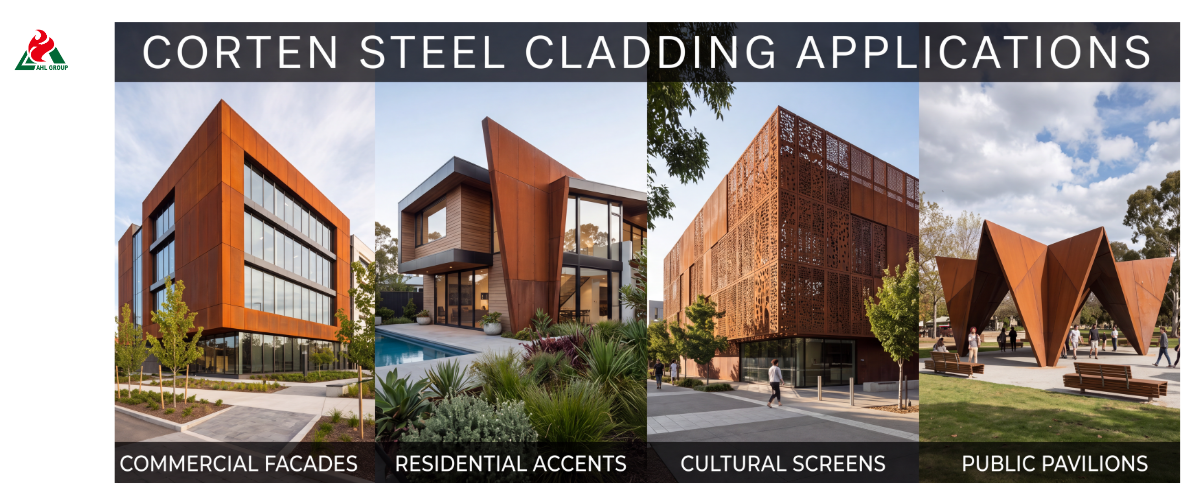
The latest trend goes beyond simply using Corten steel as an exterior cladding. Instead, designers are employing it as a statement material to create contrast, highlight texture, and establish a connection between architecture and nature. From the facades of entire homes to decorative feature walls, Corten steel is increasingly becoming a symbol of timeless design.
1. Introduction
Why Corten Steel Facades Are Making a Comeback
Architectural design is undergoing a decisive shift, gradually moving away from smooth, austere, monochromatic facades toward biophilic textures, warm materials, and structural durability. Corten steel façades—renowned for their rugged, rusted texture—have become central to this trend. Corten steel is no longer merely a niche industrial material; instead, it is being widely adopted at an unprecedented pace in high-end residential developments, cultural landmarks, and commercial skyscrapers. The convergence of advanced pre-weathering chemical technologies, modular curtain wall engineering techniques, and a growing emphasis on low-carbon, maintenance-free building envelopes has propelled Corten steel back into the architectural spotlight.
The Meaning of “Corten Steel” in Modern Architecture
In modern building codes, “Corten steel” refers to high-strength, low-alloy structural weathering steel produced in accordance with standardized specifications such as ASTM A588, ASTM A242, and A606-4. Beyond its metallurgical definition, “Corten steel” also represents a design philosophy that embraces organic transformation. Unlike standard architectural metals that rely on synthetic paints or powder coatings to withstand environmental erosion, Corten steel utilizes atmospheric exposure to form its own protective layer; over its service life, its appearance gradually evolves from a bright copper-orange hue to a rich, deep espresso-bronze color.
What This Guide Covers
This comprehensive architectural guide delves into the latest trends driving Corten steel curtain wall applications. From “luxury industrial” master planning and intricate parametric laser-cut rain screens to pre-aging treatments, concealed mullion installation details, and stormwater runoff control, this handbook provides architects, developers, and building owners with practical technical insights and guidance.
2. What Is Corten Cladding
Comparison of Corten Steel and Ordinary Steel
Ordinary carbon steel continuously oxidizes when exposed to moisture and oxygen in the atmosphere, forming loose, porous iron oxide scales (hematite/magnetite). These scales gradually flake off, continuously exposing the underlying metal until the structure fails. In contrast, weathering steel (Corten steel) contains precisely proportioned alloying elements—copper, chromium, nickel, and phosphorus. These elements act as catalysts in outdoor environments, forming a dense, impermeable crystalline layer composed primarily of goethite. This layer bonds tightly to the steel substrate, preventing further oxygen penetration.
How the Protective Rust Layer Forms
During the drying phase, moisture evaporates in layers, causing iron ions and the copper-chromium alloy to crystallize into a dense, protective matrix. Continuous exposure to moisture or complete submersion hinders this drying phase, resulting in ongoing deterioration similar to that of ordinary carbon steel.
Key Advantages for Exterior Walls and Structures
► Structural Durability: Offers exceptional resistance to atmospheric corrosion, with an expected service life of over 50 to 100 years.
► Zero Surface Maintenance: No repainting, re-staining, or chemical coating treatments are required throughout the building’s entire lifecycle.
► Thermal and Fire Performance: Non-combustible material (Class A1 fire rating), ideal for wildland-urban interfaces (WUI) and high-density downtown areas.
► Dynamic Visual Depth: Displays an ever-evolving, organic patina that interacts naturally with shifting sunlight, shadows, and rainfall.
Common Types of Corten Steel Panels and Profiles
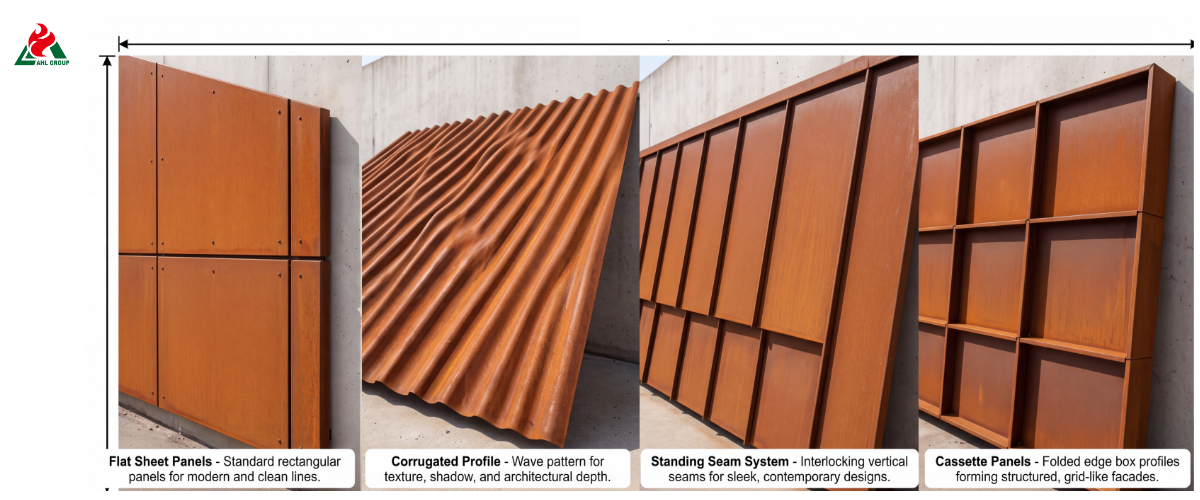
Modern building exterior cladding primarily uses four types of panel structures:
► Rear-ventilated curtain wall modules: 2- to 3 mm-thick, folded-edge tray-style panels with internal drainage channels and concealed hook brackets.
► Standing-seam and corrugated profiles: Roll-formed steel sheets with a thickness of 1 mm to 1.5 mm that create distinct vertical shadow lines and utilize concealed mechanical fasteners.
► Perforated and laser-cut screens: Custom perforated panels designed to serve as sun-shading facades or decorative architectural accents.
► Corrugated and ribbed panels: Structural metal panels ideal for large-scale agricultural, industrial, or modern residential facades.
3. The New Trend for Corten Cladding
From Industrial-Style Accents to Full-Scale Façade Applications
Historically, the use of weathering steel was limited to small decorative elements—such as entrance canopies, chimney caps, or landscape retaining walls. The prevailing trend is now to use weathering steel as the single primary exterior envelope for an entire building volume. Architects are using continuous Corten steel rainscreen systems to clad entire multi-story residential complexes, corporate headquarters, and cultural centers, creating striking and unified architectural forms.
The “Luxury Industrial” Aesthetic in Residential and Commercial Design
The rise of the “luxury industrial” design trend has transformed Corten steel from a rugged, utilitarian material into the material of choice for high-end architecture. High-end residential projects combine thick-gauge Corten steel cladding panels with minimalist, ultra-thin frameless glass systems, polished concrete, and natural wood ceilings. This contrast balances the rugged, weathered texture with refined architectural lines, appealing to developers and homebuyers who seek authentic, natural textures.
Corten Steel: The Signature Material for High-End Projects
In luxury architectural design, weathering steel is a striking embodiment of material authenticity. Unlike synthetic laminates or painted metal panels that mimic rust, genuine weathering steel develops dynamic textural changes over time. Luxury residential projects leverage the visual depth of weathering steel to seamlessly integrate the building into the surrounding landscape.
Increasingly Widespread Use in Harsh Climates and Long-Lifespan Structures
High-altitude mountainous regions, arid desert environments, and areas subject to extreme freeze-thaw cycles pose significant challenges to standard wood, stucco, or painted metal exterior cladding materials. Weathering steel’s exceptional resistance to thermal shock, high wind loads, UV degradation, and ice abrasion makes it the material of choice for long-lasting municipal infrastructure, mountain resorts, and buildings in harsh climates.
4. Design Directions Driving Corten Cladding Trends
Mixed-Material Facades: Corten Steel + Wood, Stone, Glass, and Concrete
A prominent trend in current facade design is the contrast of textures. Architects rarely use weathering steel on its own, but rather integrate it into multi-material facade systems:
► Weathering Steel + Charred Wood (Shou Sugi Ban): Pairing dark-colored charred wood with warm reddish-brown oxidized tones.
► Weathering steel + formwork-finished concrete: Blending smooth, gray industrial concrete with textured metallic rust.
► Weathering steel + structural glass: Creating a striking contrast between ultra-transparent, highly reflective curtain walls and heavy, opaque steel panels.
Bold Contrasts: The Clash of Corten Steel with Glass and Light-Colored Materials
Designers are using high-contrast combinations to emphasize architectural forms. Installing deep, rich Corten steel cladding wall panels alongside off-white lime-plastered walls, light-colored limestone masonry, or transparent floor-to-ceiling glass creates clear visual boundaries, thereby highlighting the building’s cantilevers and geometric openwork structures.
Blending with Natural Elements: Greenery, Stone, and Wood Accents
Guided by biophilic design principles, weathering steel is often integrated with living green walls, vertical gardens, and natural rock outcrops. The warm, earthy tones of weathered steel naturally echo the soil, autumn foliage, and rock formations, allowing large-scale developments to blend seamlessly with surrounding forest or desert landscapes.
From Monotonous Rust Tones to Rich Textures and Depth
Contemporary building facades have moved away from flat, monotonous surfaces. By varying panel depths, adjusting joint spacing, mixing horizontal and vertical corrugated profiles, and using steel sheets at different stages of pre-weathering, architects create dynamic plays of light and shadow on building facades.
5. Popular Corten Cladding Styles and Patterns
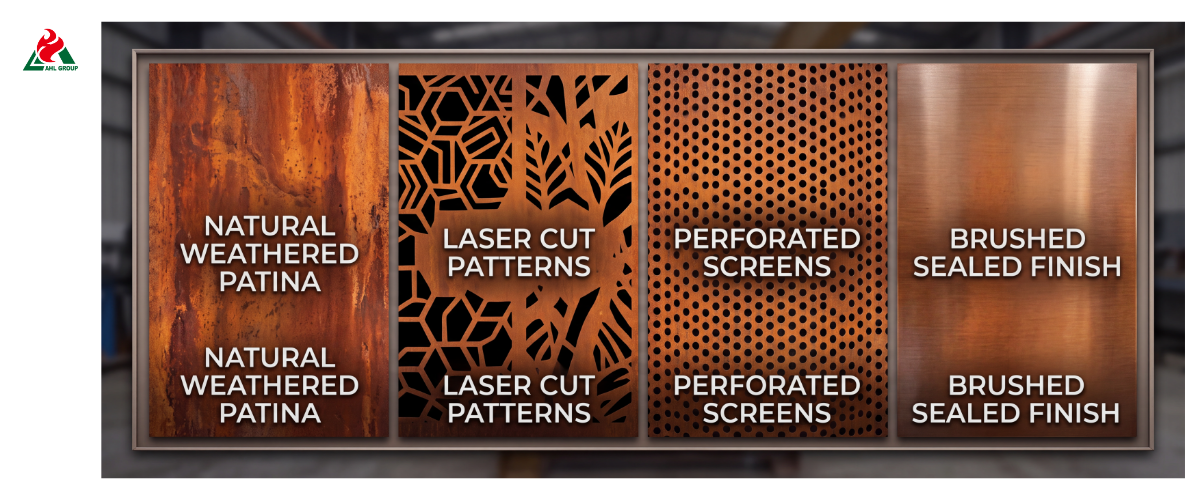
Perforated and Laser-Cut Corten Steel Panels
CNC laser cutting technology enables precision perforation of Corten steel panels ranging from 2 mm to 4 mm in thickness. These custom-perforated screens, functioning as passive shading systems (brise-soleil), not only reduce solar heat gain indoors but also cast intricate shadow patterns in light-filled atrium spaces.
Corrugated and Ribbed Corten Steel Panels
Industrial sine-wave and trapezoidal ribbed profiles are widely used in modern residential and commercial buildings. The repetitive wave geometry adds structural rigidity to thinner steel gauges (1 mm to 1.5 mm), enabling longer support spans while casting subtle, ever-changing linear shadows throughout the day.
Standing Seam and Corrugated Corten Steel Cladding
Standing seam systems feature clean, vertical lines achieved through fully concealed mechanical fasteners. Modern corrugated and micro-ribbed weathering steel sheets impart a textured, linear rhythm to facades, dividing expansive building walls into balanced architectural units.
Dynamically Movable Corten Steel Curtain Wall Components
An emerging high-end architectural trend involves the use of automated, dynamic weathering steel sunshades and folding window shutters. Controlled by a building management system (BMS), these motorized weathering steel panels track the sun’s path, maximizing natural daylight while reducing indoor cooling loads.
Parametric and Custom-Patterned Screens
Architects use computational design tools to generate custom parametric patterns across an entire building’s facade. Variable aperture sizes, geometric cutouts, and algorithmically generated spacing transform vast Corten facades into functional works of architectural art.
6. Color and Finish Trends
A Warm, Rust-Brown Patina as a Signature Look
The deep amber, reddish-brown, and rich espresso tones of fully matured weathering steel have become a favored color palette for modern architectural projects. These warm, earthy tones offer an attractive alternative to stark gray galvanized steel, plain aluminum panels, or dark composite exterior cladding materials.
Pre-weathered and Naturally Weathered Corten Steel
Although natural weathering requires 6 to 18 months of alternating exposure to dry and humid atmospheric conditions, commercial developers typically demand visual consistency immediately upon installation. Through chemical pre-weathering treatments, accelerated spray systems, and controlled passivation washing, manufacturers are able to provide panels with a stable, mature patina from the very first day of delivery.
Pairing Weathering Steel Tones with Dark, Neutral, and Earthy Color Palettes
Color schemes that pair Corten metal cladding with deep charcoal-gray metal trim, anodized bronze window frames, matte black eaves, and warm basalt stone continue to lead trends in exterior design. These deep, neutral backgrounds allow the vibrant, warm tones of weathering steel to stand out even more.
Weathering Steel Complements Terracotta, Brick, and Warm-Toned Stone
Weathering steel shares a common visual language with traditional clay terracotta, red-faced brick, and warm-toned sandstone masonry. Architects use weathering steel panels to construct modern building extensions, creating a harmonious visual unity with historic masonry structures.
7. Where Corten Cladding Is Being Used Most
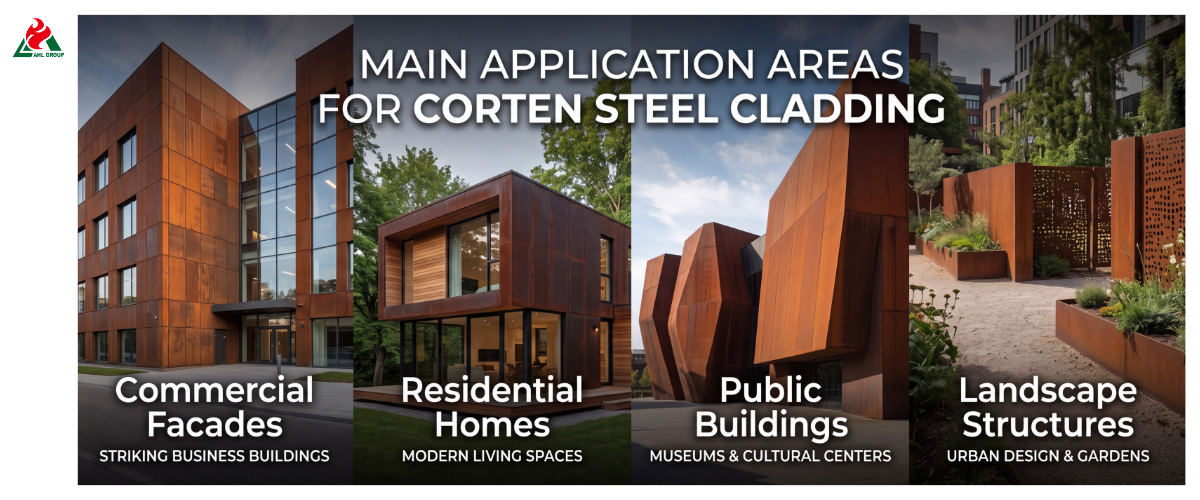
Residential Facades and Feature Walls
Custom homes feature Corten steel cladding on cantilevered upper levels, entrance porches, and the protruding sections of feature walls. This material creates a striking contrast with the ground floor’s glass curtain walls and natural stone base.
Commercial and Cultural Buildings
Art galleries, public museums, civic centers, and winery tasting rooms often incorporate weathering steel cladding panels to highlight their durability and cultural significance. Its low-maintenance nature makes it an ideal choice for municipal and public building projects.
Urban Infill and Mixed-Use Developments
In confined urban spaces, weathering steel siding lends a distinctive character to modern multi-family residential and mixed-use developments. Its rich texture allows buildings to stand out among adjacent precast concrete or glass office towers.
Landscape Structures: Screens, Retaining Walls, and Planters
Beyond the facades of main buildings, weathering steel is widely used in landscape architecture—including integrated planters, stepped retaining walls, perimeter privacy screens, and site entrance signage—thereby creating a unified visual design throughout the site.
8. Performance and Sustainability Angle
Long Service Life and Low Maintenance Requirements
Corten steel has a service life of 50 to 100 years or more, offering exceptional long-term value. Once the protective rust layer has formed and matured, building exteriors require no painting, sealing, or chemical maintenance, significantly reducing lifecycle operating costs.
How Weathering Steel Reduces the Need for Repainting and Coating
Traditional carbon steel facades require periodic repainting, powder coating touch-ups, or sandblasting every 10 to 15 years, which releases volatile organic compounds (VOCs) and consumes chemical resources. Weathering steel, on the other hand, requires no synthetic coatings whatsoever.
Durability Under Sun, Rain, and Temperature Fluctuations
Weathering steel maintains excellent structural stability even under extreme temperature fluctuations. Its low coefficient of thermal expansion minimizes panel warping, joint stress, and fastener fatigue caused by direct sunlight.
Precautions for Coastal and Subtropical Humid Climates
Although Corten steel performs exceptionally well under most atmospheric conditions, its use presents challenges in environments with high salt concentrations in the air (within 1 kilometer of the shoreline) or where sea fog is a persistent factor. High concentrations of chloride deposits can interfere with the formation of the protective goethite layer, leading to ongoing flaking. In these high-salinity areas, architects must specify the use of specialized transparent protective sealants, higher-grade marine-grade alloys, or increased panel thickness to account for greater corrosion allowances.
Design for Easy Dismantling and Reuse
As a 100% recyclable structural metal, weathering steel rainscreen panels connected with mechanical fasteners meet modern circular economy standards. At the end of a building’s service life, the panels can be dismantled, repurposed, or fully recycled into new high-strength steel.
9. Technical and Installation Trends
Larger Prefabricated Corten Steel Panels Enable Faster Installation
Modern architecture relies on off-site modular fabrication. Large-format prefabricated weathering steel panel units (3,000 mm × 1,200 mm or larger) are designed with integrated reinforcing ribs and lifting points, enabling installation teams to quickly cover large areas of the exterior wall.
Concealed Fasteners and Clean Joint Details
Exposed screw heads are increasingly being replaced by concealed hook systems, back-mounted stud anchors, and interlocking vertical seam details. This approach not only creates a smoother panel surface but also prevents spot rusting around fastener holes.
Integration with Curtain Walls and Ventilation Systems
Best installation practice involves mounting weathering steel panels over a ventilated curtain wall cavity (with a minimum air gap of 20 to 50 millimeters). This cavity utilizes natural convection (the chimney effect) to dry condensation on the back surface, control moisture ingress, and enhance thermal performance.
Managing Rainwater Runoff and Staining of Adjacent Surfaces
During the initial 6 to 12 months of active oxidation, rainwater runoff carries loose iron oxide particles. To prevent staining of surrounding porous stone, stucco, or glass surfaces:
► Install concealed stainless steel drip pans and perimeter drip edges beneath the bottom of the panels.
► Direct runoff into the underground stormwater drainage system or a dedicated gravel infiltration bed.
► During construction, apply a clear, penetrating sealant to adjacent stone or concrete surfaces.
Detailing for Windows, Corners, and Wall Penetrations
Precise architectural detailing around window openings, parapet walls, and wall corners is essential. Flashing and window sills must be fabricated from 316-grade stainless steel or pre-weathered weathering steel (Corten), and EPDM rubber gaskets must be used to isolate dissimilar metals and prevent electrochemical corrosion.
10. Common Mistakes and Misconceptions
Using Weathering Steel in Unsuitable Marine Environments or Persistently Damp Conditions
Installing untreated weathering steel in areas directly exposed to sea spray or underwater locations hinders the necessary wet-dry cycle. Without a drying period, the protective rust layer cannot form stably, leading to continuous corrosion similar to that of ordinary steel.
Ignoring Drainage Issues and Areas Prone to Water Accumulation
Designing panels with flat, horizontal edges or without drainage flanges can lead to the accumulation of standing water, debris, and fallen leaves. Trapped moist organic matter deprives the steel of oxygen, leading to localized pitting corrosion and premature panel failure.
Expecting a Uniform Rust Patina Without Understanding the Variations
Weathering steel is a natural and dynamic material. Panel orientation, prevailing wind direction, shade, and microclimates all contribute to variations in color and rust patina formation. Expecting all facades to exhibit a completely uniform, static surface appearance is a misunderstanding of the material’s inherent characteristics.
Confusing Weathering Steel with Ordinary Rusting Steel
Using standard low-carbon steel coated with a rust-inducing solution as a substitute for certified weathering steel (ASTM A588) is a serious structural error. Ordinary steel will continue to corrode until it is completely penetrated, ultimately leading to structural failure.
11. FAQs
Q1: Are Corten Steel Cladding Panels Still Popular?
Yes. In modern luxury architecture, the preference for natural, low-carbon materials, the demand for maintenance-free building envelopes, and the pursuit of rich, warm textures have collectively driven strong growth in demand for Corten steel cladding panel walls.
Q2: Are Weathering Steel Exterior Wall Panels Suitable for All Climatic Conditions?
Weathering steel performs particularly well in alpine, arid, temperate, and continental climates characterized by natural cycles of dry and wet conditions. However, when used in areas directly exposed to high-salinity seawater (within 1 kilometer of the coast), additional technical considerations, transparent sealants, or specialized detailing are required.
Q3: How Long Does It Take for Corten Steel to Form a Protective Rust Layer?
Under natural outdoor atmospheric conditions, the initial rust color will appear within 2 to 7 weeks. Depending on local rainfall and humidity levels, the protective rust layer will gradually stabilize and deepen over 6 to 18 months, eventually forming a rich, espresso-brown bronze finish.
Q4: Can Corten Steel Be Used in Residential Construction?
Yes. Corten Steel is widely used in high-end single-family homes, townhouses, and multi-family residential projects. It is typically applied as a rain screen modular system, a standing-seam curtain wall, or laser-cut privacy screens.
Q5: What Maintenance Does a Corten Steel Exterior Require?
Once the protective rust patina has fully matured, Corten steel requires virtually no maintenance. Generally, an annual inspection is sufficient to remove any debris accumulated in the gutters and rinse the panels with clean water to wash away environmental dust.
Conclusion: Final Recommendations for Architects and Building Owners
When specifying weathering steel exterior wall systems, it is essential to strike a balance between visual appeal and rigorous technical execution. Be sure to verify the steel’s certification standards, design a continuous, ventilated rain screen layer of at least 20 millimeters, use Grade 316 stainless steel fasteners with non-conductive EPDM washers, and carefully plan rainwater drainage paths. When properly installed, Corten exterior wall systems provide a maintenance-free, highly durable building envelope whose appearance becomes increasingly rich and distinctive over time.

