


Outdoor cooking has long since evolved beyond simple charcoal grills. Today, homeowners, landscape architects, and hospitality and foodservice projects are seeking grills that combine performance, durability, and architectural aesthetics. This is one of the reasons why Corten steel grills are growing in popularity.
Corten steel uniquely combines an industrial aesthetic with long-term outdoor performance. It requires no paint or protective coatings; instead, it naturally develops a rust-colored patina that both protects the underlying steel and creates a distinctive look.
Unlike traditional stainless steel or painted metal grills, weathering steel grills are often chosen as permanent outdoor fixtures that blend seamlessly into gardens, courtyards, patios, and modern landscape designs. However, not all Corten steel BBQ grills are created equal. Steel plate thickness, manufacturing quality, airflow design, and cooking functionality all affect their performance.
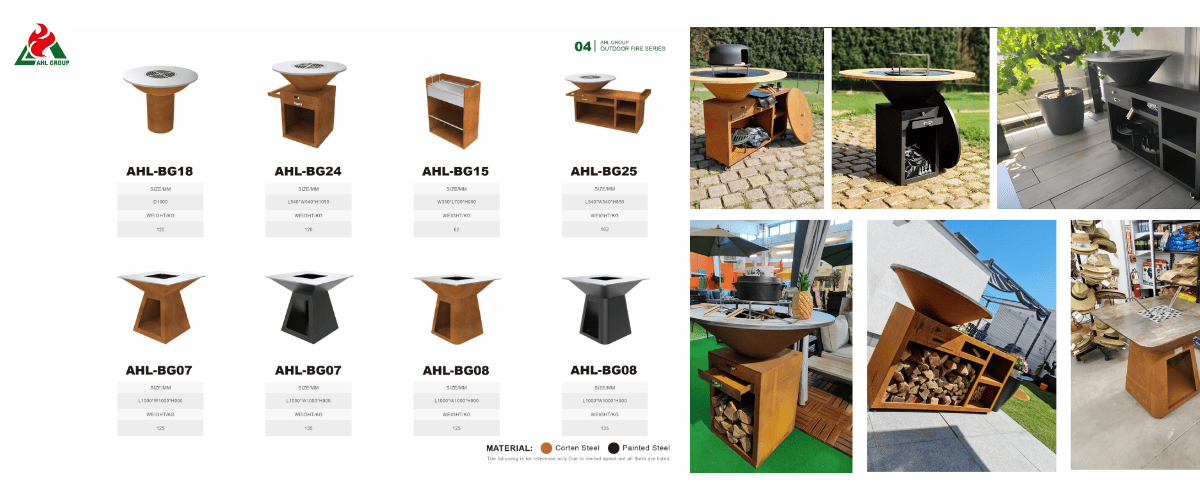
Corten steel uniquely combines an industrial aesthetic with long-term outdoor performance. It requires no paint or protective coatings; instead, it naturally develops a rust-colored patina that both protects the underlying steel and creates a distinctive look.
Unlike traditional stainless steel or painted metal grills, weathering steel grills are often chosen as permanent outdoor fixtures that blend seamlessly into gardens, courtyards, patios, and modern landscape designs. However, not all Corten steel BBQ grills are created equal. Steel plate thickness, manufacturing quality, airflow design, and cooking functionality all affect their performance.
1. Introduction
Why Corten Steel Grills Are So Popular
Corten grills have quickly become a focal point in high-end outdoor kitchens and modern landscape architecture. Unlike those monotonous, mass-produced mass-market stainless steel or black-painted grills that are prone to flaking, peeling, and premature rusting, weathering steel—also known as Corten steel—offers a rugged and sculptural aesthetic. Its warm, natural rust patina—a rich orange-brown hue—develops naturally over time, blending seamlessly with wooden decks, natural stone, and garden greenery, all while offering excellent heat resistance.
This Buying Guide Will Help You Make an Informed Decision
When investing in an outdoor weathering steel grill, it’s important to consider not only its daytime aesthetic appeal but also to evaluate key engineering and functional specifications. This comprehensive buying guide outlines key technical standards—including steel plate thickness, firebox thermodynamics, airflow control valves, grill grate materials, and ash management systems—to ensure you select a high-performance grill that suits your outdoor lifestyle.
2. Understanding Corten Steel as a Grill Material
What Is Weathering Steel
Weathering steel is an engineered steel alloy containing copper, chromium, nickel, and phosphorus. Originally developed for heavy industrial applications and bridge construction, its unique chemical composition allows the metal to react with moisture and oxygen in the atmosphere, forming a dense, protective oxide layer on its surface.
How Is the Protective Rust Layer Formed
When exposed to outdoor weather cycles that alternate between wet and dry conditions, the original slate-gray Corten steel undergoes controlled surface oxidation. Within 3 to 12 months, its surface transforms into a dense, non-porous layer of hematite oxide. This natural skin acts as a water-impermeable barrier, isolating the internal structural steel core from oxygen and thereby preventing deep structural corrosion without the need for synthetic high-temperature paints or chemical coatings.
Durability VS. Stainless Steel and Painted Metal
Traditional painted barbecue grills are prone to peeling under thermal stress—leading to rapid, destructive oxidation of the exposed metal—while the rust layer on weathering steel possesses complete self-healing capabilities. Scratches or wear caused by grilling utensils will quickly re-oxidize and blend back into a uniform surface. In contrast, stainless steel may exhibit rainbow-colored heat discoloration during high-temperature cooking, while the appearance of weathering steel actually becomes more aesthetically pleasing as it is continuously heated and aged.
Advantages in Heat Retention and Thermal Capacity
Weathering steel features high density and high thermal capacity. Once the operating temperature is reached, the thick steel walls store thermal energy and radiate it evenly back into the cooking chamber. This minimizes fluctuations in internal temperature when adding new fuel, creating a stable cooking environment suitable for both high-temperature searing and slow, indirect grilling.
3. Key Factors to Look for in a Corten BBQ Grill
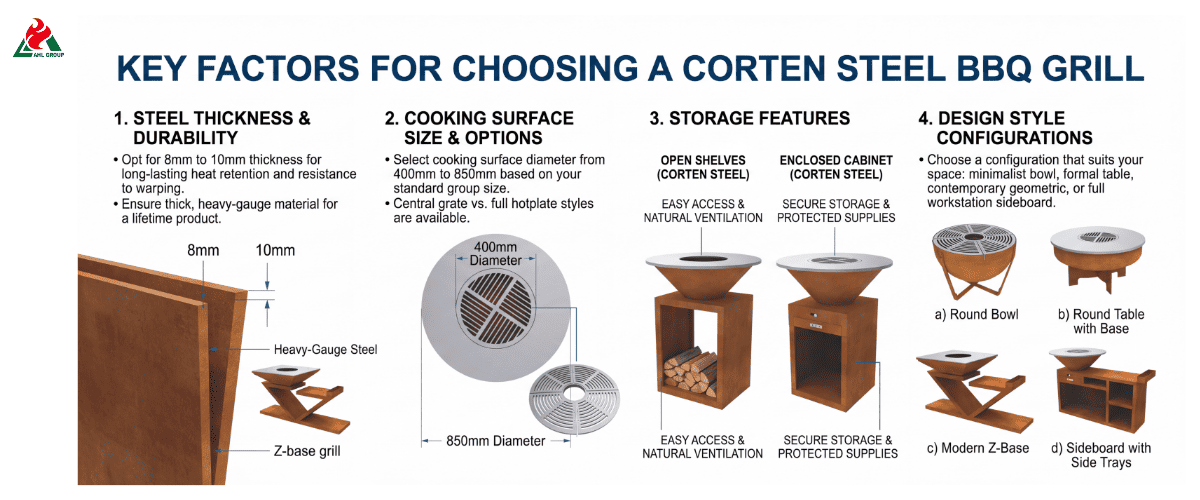
Steel Plate Thickness and Specifications (Why They Matter)
The thickness of the steel plate directly affects the structural lifespan and cooking performance of a Corten BBQ grill. The intense heat generated by burning hardwood or charcoal briquettes subjects thin steel plates to severe thermal expansion stresses, which can lead to structural instability and premature burn-through.
Manufacturing Quality: Welds, Seams, and Reinforcements
Inspect the structural joints of the grill body. High-quality Corten steel grills feature continuous, fully penetrated, and smoothly ground welds along load-bearing edges. Look for internal reinforcement plates or angle iron around the high-temperature firebox to ensure structural alignment is maintained through thousands of thermal expansion cycles.
Firebox Design and Heat Distribution
An engineered firebox should feature a double-wall construction or a design with a raised internal fuel grate. Elevating charcoal briquettes or burning firewood off the solid base plate allows combustion air to circulate beneath the fuel layer, ensuring complete combustion and eliminating cold spots on the cooking surface.
Grill Material: Weathering Steel, Cast Iron, or Stainless Steel
Although the main body of the grill is made of weathering steel, careful consideration must be given to the material selection for the primary surfaces that come into direct contact with food:
► Cast Iron: Excellent heat retention and produces classic grill marks; requires regular maintenance to prevent rust.
► 304-grade stainless steel: Chemically inert, highly corrosion-resistant, and easy to clean; ideal for direct contact with food.
► Carbon steel flat-bottomed griddle ring: Standard configuration for circular fire pit-style weathering steel grills; when oiled at high temperatures, it forms a natural non-stick protective layer.
Overall Weight and Stability
Heavy-duty Corten outdoor grills typically weigh between 50 kilograms and over 150 kilograms (110–330 pounds). Ensure that the base structure provides a wide, stable support surface to prevent tipping, especially when a heavy cast-iron lid is in place, or the swing-out cooking arms are fully extended.
4. Size and Cooking Area
Small Grill for 2 to 4 People
With a cooking diameter of 60 centimeters (24 inches), this compact weathering steel BBQ grill is ideal for use on balconies, small urban patios, or for quick family gatherings. Not only does it use less charcoal, but it also reaches high temperatures quickly.
Medium-Sized Barbecue Grill for 4–6 People
Medium-sized Corten steel barbecue grills feature a cooking area of 80 to 85 centimeters (32 to 34 inches) and are the most versatile choice for residential backyards, allowing you to set up both a direct grilling zone and an indirect warming zone at the same time.
Large Barbecues for 6 or More People and Entertaining
Large round flat-bottomed or barrel-style weathering steel barbecues with a diameter of 100 cm or more (40 inches or more) serve as highly interactive outdoor focal points. Guests can gather around the grill while cooking a variety of foods in different temperature zones.
Measure Your Outdoor Space Before Purchasing
Be sure to allow for a safe activity area around the BBQ grill. Leave at least 1 meter (3 feet) of operating clearance around the grill so the cook can work safely and unobstructed.
5. Airflow and Temperature Control
Bottom Air Inlets and Dampers
Precise temperature control depends on regulating the oxygen supply at the bottom of the firebox. Choose a weathering steel barbecue grill equipped with sliding or rotating stainless steel bottom air dampers to smoothly adjust the main airflow.
Top Exhaust Vents or Chimneys
A weathering steel barbecue smoker with a lid must be equipped with an adjustable top chimney or a daisy-wheel-style exhaust vent. Closing the top exhaust vent traps heat and smoke, making it ideal for low-temperature slow cooking; opening the vent enhances smoke draw and boosts charcoal heat.
Adjustable Vents for Precise Heat Control
Precision-machined air intakes feature laser-cut graduation marks. These marks allow cooks to set repeatable vent openings for specific cooking modes, such as smoking at 110°C (225°F) or high-temperature searing at 300°C+ (570°F+).
Multi-Zone Cooking and Heat Management
The circular weathering steel griddle naturally forms distinct temperature zones:
► Inner Ring (300°C+ / 570°F+): Directly sear steaks and grill vegetables directly above the central heat source.
► Middle Ring (200°C / 400°F): Grill poultry, seafood, and burgers.
► Outer Ring (120°C / 250°F): Bake bread dough and keep cooked food warm.
Lid-Style vs. Open-Flame Designs
► Open-flame flat-top grills: Ideal for lively social gatherings, quick searing, and charcoal grilling.
► Heavy-duty lidded smokers: Lock in heat and moisture, which is essential for slow, indirect smoking of large cuts of meat (such as brisket or pork shoulder).
6. Drainage, Ash, and Grease Management
Rainwater Drainage Design
Since Corten steel modern grills are kept outdoors year-round, standing water in the fire bowl not only damages the fuel but also mixes with residual ashes to form a highly corrosive alkaline slurry. Please ensure the fire bowl has a central, protected drain at the bottom.
Ash Tray or Ash Drawer
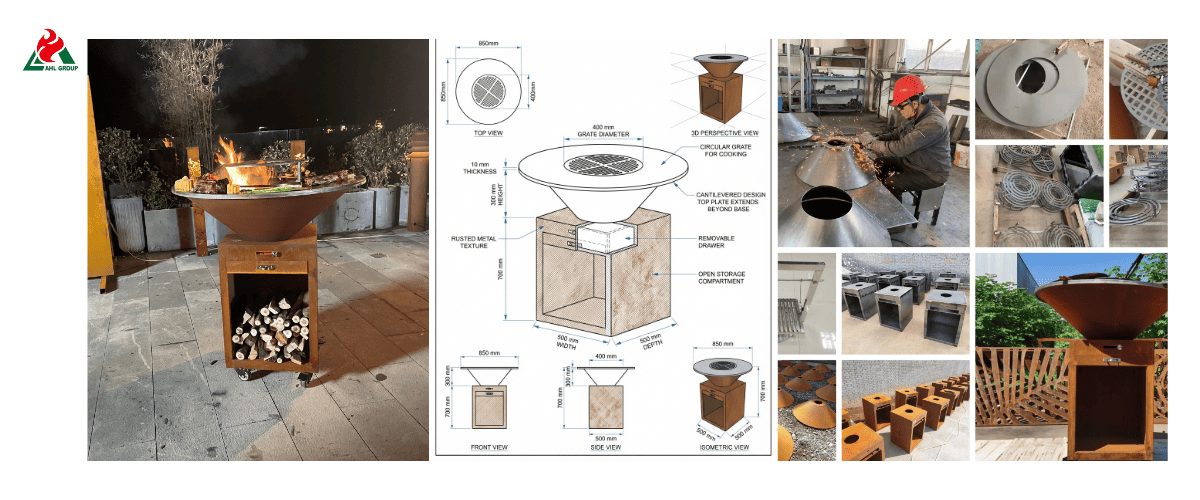
Well-designed rusted steel grills typically feature an integrated, pull-out ash drawer located directly beneath the fuel grate. This allows for quick ash removal without the need for manual shoveling or turning the heavy fire bowl upside down.
Ease of Ash Removal
Choose a system where the ash drawer can be removed independently while the grill is in operation, allowing you to easily clear excess ashes during cooking sessions lasting several hours.
Grease Runoff and Drip Management
For flat-topped circular griddles, select a model where the griddle surface slopes slightly toward the center of the fire pit (at a gradient of 1° to 2°). This design safely channels cooking grease into the fire rather than allowing it to overflow the edges of the Corten steel and drip onto the patio floor.
Preventing Water and Ash Accumulation
Be sure to clean out the ashes from the ash tray promptly after each barbecue session. Wet wood ash contains potassium hydroxide, which can corrode even thick steel plates if left to accumulate in standing water over time.
7. Ease of Cleaning and Maintenance
Removable Grill Grates and Inner Chamber
Ensure that the main grill grate, central extension ring, and wok support can be easily removed without tools for cleaning or refueling.
Smooth, Polished Welds to Prevent Dirt Buildup
Check that the interior surface of the cooking chamber is smooth. Rough welds can trap grease, food scraps, and carbonized residue, which are not only difficult to clean but can also lead to localized corrosion over time.
Flat-Bottom vs. Sloped-Bottom Design
A tapered or funnel-shaped weathering steel fire bowl is more effective at draining ash and moisture than a flat-bottomed, box-style fire bowl, directing residue directly into the collection drawer.
Cleaning Tools and Procedures
► Plancha Cooktops: While it is still warm, use a stainless steel spatula to scrape food residue into the fire tray, spray a small amount of water or add ice cubes to remove burnt-on residue, then wipe clean and apply a thin layer of food-grade cooking oil (such as canola oil or grapeseed oil).
► Corten Steel Exterior: Virtually maintenance-free. Brush off loose dirt with a soft nylon brush; avoid using strong chemical degreasers, as they may strip away the protective rust layer.
Basics of Long-Term Rust Layer Maintenance
To preserve the natural appearance, allow the weathering steel outer shell to remain exposed to natural weather cycles. If rust runoff occurs during the initial weathering phase, rinse the surrounding pavers with clean water. Once stabilized (typically within 6–12 months), the rust layer will largely maintain itself.
8. Safety and Installation Considerations
Safety Distance from Walls and Flammable Surfaces
Maintain a minimum distance of 1.5 meters (5 feet) between the Corten grill and flammable structures, such as wooden fences, vinyl siding, or cantilevered wooden pergolas.
Sturdy Base and Leg Design
Please ensure the grill’s base has a wide footprint or a one-piece construction. When the Corten metal grill is loaded with charcoal and heavy cast-iron grates, its center of gravity shifts toward the top; if the base is too narrow or structurally unstable, there is a risk of tipping.
Wind Resistance and Weather Resistance
Place the barbecue grill in an area sheltered from strong prevailing winds. Strong winds can accelerate charcoal consumption, interfere with temperature control, and may blow hot embers onto surrounding patio surfaces.
Clearance for Lids, Skewers, and Accessories
If you choose a model with a hinged lid, flip-up grill arms, or a rotating rotisserie spit, ensure there is sufficient clearance above and behind the grill to operate these accessories smoothly and without obstruction.
Local Fire Codes and Homeowners’ Association Restrictions
Before purchasing, review municipal open-flame regulations and your homeowners’ association’s guidelines regarding outdoor equipment that uses solid fuels (wood/charcoal) to ensure compliance with relevant regulations regarding smoke emissions and spark arresters.
9. Features and Accessories to Consider
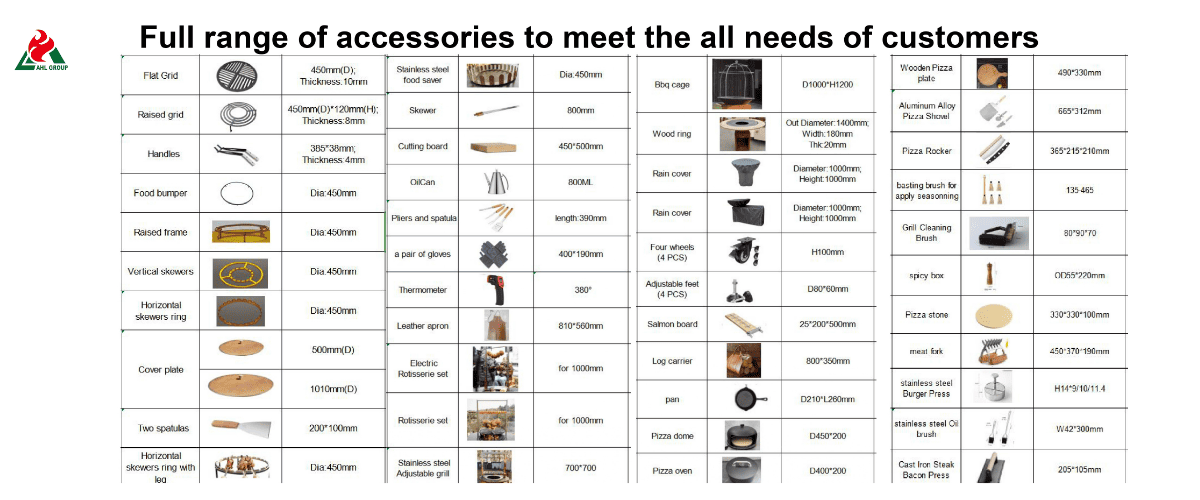
Modular Accessories: Grill Grates, Wok Rings, Skewer Holders
We recommend choosing a Corten barbecue grill equipped with modular central insert accessories. Replacing the central grill grate with a cast-iron wok ring or a Brazilian-style skewer holder will expand your cooking options.
Side Tables, Shelves, and Storage Space
A grill equipped with an integrated weathering steel side shelf or a wooden storage base keeps prep trays, cutting boards, seasonings, and firewood neatly organized and within easy reach.
Wheels and Mobility Options
Since bulky weathering steel grills can be difficult to move, models equipped with heavy-duty casters or an integrated cart-style handle allow for easy maneuvering across patio surfaces.
Thermometers and Temperature Gauges
A covered grill should be equipped with a professional-grade lid thermometer installed at grill height to accurately monitor the internal smoking temperature.
Compatibility with Covers and Protective Accessories
Choose a grill that comes with a dedicated, heavy-duty weatherproof cover. Covering the grill when not in use protects the flat carbon steel griddle from rain damage, thereby preserving its seasoned surface.
10. Fuel Type and Cooking Style
Weathering Steel Grill for Charcoal Use Only
Charcoal grills provide clean, controllable heat with minimal smoke emissions, making them ideal for precise temperature control and traditional direct grilling.
Hybrid Design (Charcoal + Firewood, or Grill + Griddle)
Hybrid weathering steel grills can use either charcoal briquettes or split hardwood logs. Burning aromatic woods—such as oak, hickory, or applewood—adds a rich, wood-fired flavor to food cooked over the central flame or on the outer griddle.
Open-Flame vs. Covered Grilling Styles
► Open-Flame Griddles: Best suited for quick, social, high-heat cooking, such as flattened burgers, seared seafood, vegetables, and teppanyaki-style dishes.
► Covered Kettle/Smoker: Best suited for roasting whole poultry and ribs under a sealed dome, as well as low-and-slow smoking.
Choose a Grill Based on Your Cooking Preferences
Assess the dishes you cook most often. If your menu consists mainly of breakfast platters, stir-fries, and pan-seared meats, choose a ring-style griddle grill. If you specialize in traditional American-style barbecue and slow-roasted meats, choose a covered Corten steel smoker.
Future Flexibility with Different Fuels
Choose a heavy-duty unit with a firebox at least 5 mm thick, and you’ll be able to switch freely between wood chips, charcoal briquettes, and hardwood logs without worrying about heat damage.
11. Budget, Brand, and Warranty
How Thickness and Features Affect Price
Weathering steel panels cost more than standard low-carbon steel. Increased wall thickness (4 mm or more compared to 2 mm) and precision CNC laser-cut airflow components, while significantly raising the initial cost, result in a longer service life and superior cooking performance.
Evaluating Brand Reputation and User Reviews
Look for manufacturers specializing in outdoor metal products for architecture. Check verified customer reviews to confirm the quality of welding, shipping protection measures, and the accuracy of steel plate thickness.
Warranty Duration and Coverage
Choose a brand that offers a 5- to 10-year structural warranty on weathering steel enclosures. Ensure the warranty terms explicitly cover burn-through and weld integrity.
Availability of Replacement Parts and Accessories
Select reputable manufacturers that sell replacement parts—such as ash pans, grates, and weather covers—separately, so your grill can be maintained throughout decades of use.
12. Common Mistakes to Avoid
Choosing a Grill That’s Too Small or Too Large
A grill that’s too small can lead to a crowded cooking area, delaying meal preparation during gatherings; conversely, a grill that’s too large (over 100 centimeters) will consume excessive amounts of firewood during small, weeknight dinners.
Ignoring Steel Sheet Thickness and Manufacturing Process
Purchasing a grill marketed as “weathering steel style” but actually made from thin 1.5-millimeter steel sheets often leads to disappointment. Thin steel sheets warp at high temperatures, causing flat grates to buckle and compromising the ventilation seal within just a few seasons.
Neglecting Airflow and Vent Design
A Corten steel firebox without adjustable air intakes restricts the oxygen needed for combustion, producing bitter, tar-laden smoke and causing the charcoal to smolder rather than form clean, high-temperature cooking embers.
Neglecting Drainage and Ash Removal
Grills without bottom drainage ports trap rainwater in the wood ash, creating a corrosive slurry that damages the internal floor panels over time.
Placing the Grill in an Unsafe or Inconvenient Location
Installing a bulky grill far from the indoor kitchen or placing it directly under a flammable wooden eave not only creates a safety hazard but also causes significant inconvenience when preparing food.
13. FAQs
Q1: Is Corten Steel Safe for Use in Barbecue Grills?
Yes. Corten steel is suitable for manufacturing barbecue grills. The outer layer of Corten steel forms a stable protective layer of iron oxide, while the surfaces that come into contact with food are made of specialized carbon steel grates, cast iron grates, or 304-grade stainless steel liners to ensure food safety.
Q2: What is the Ideal Thickness for a Weathering Steel Grill?
A wall thickness of 4 to 5 millimeters (8 gauge to 3/16 inch) is recommended for the main body and firebox. For flat-topped ring griddles, choose thick carbon steel plates ranging from 8 to 12 millimeters to prevent warping at high temperatures.
Q3: Will a Weathering Steel Grill Rust Through Quickly?
No. Weathering steel forms a protective layer of hematite oxide, which seals the inner steel core and prevents deep structural corrosion. High-quality weathering steel grills made from 4 mm or thicker steel are expected to last 30 to 50 years or more outdoors.
Q4: Can a Corten Steel Grill Be Left Outdoors Year-Round?
Yes. Corten Steel grills are designed to remain outdoors year-round and withstand various weather conditions, including rain, snow, freezing temperatures, and intense UV exposure, without the need for protective coatings.
Q5: How Do I Control the Temperature of a Corten Grill?
You can adjust the temperature by regulating the main air intake damper at the bottom (to control the oxygen supply to the fire) and by managing the amount of fuel used. For flat-bottomed grilling ring models, you can also adjust the heat by moving food between the high-temperature inner grilling zone and the cooler outer warming zone.
Conclusion: Choosing the Right Corten Steel Grill
A well-designed Corten steel BBQ grill is more than just a cooking appliance—it’s a lasting outdoor feature that combines functionality, durability, and timeless architectural style. By selecting the right thickness, size, and design, you’ll not only enjoy years of reliable outdoor cooking but also create a distinctive visual focal point for your garden or patio.

