


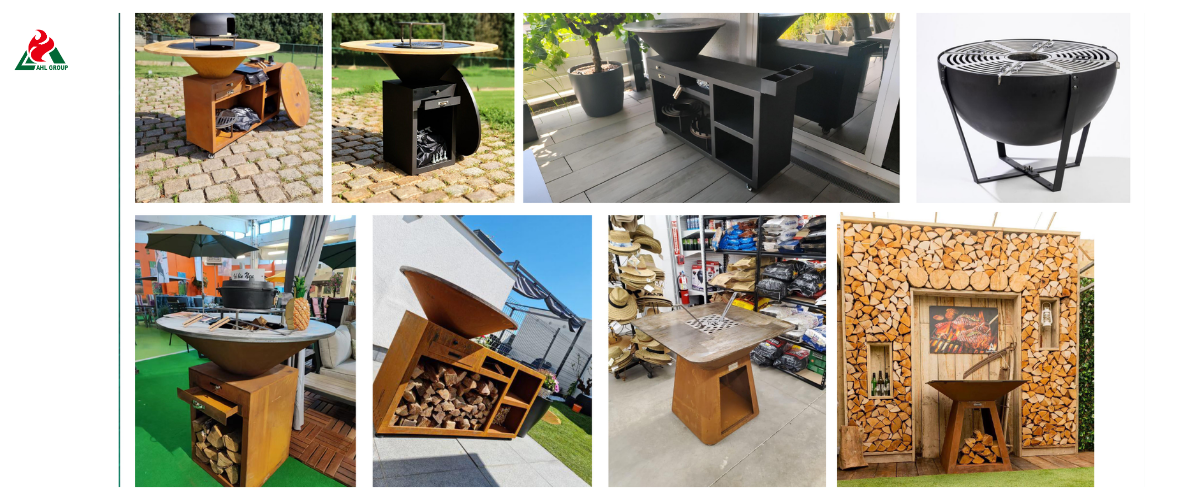
Corten steel grills are designed to provide years of outdoor cooking enjoyment, but as with any high-temperature outdoor product, proper use is essential to ensure safety, performance, and longevity. Many users choose Corten steel BBQ grills precisely because of their durability, low-maintenance nature, and unique weathered appearance. However, some common mistakes can reduce performance, damage the surface, or create unnecessary safety risks. The biggest problems usually stem not from the weathering steel material itself, but from improper installation, improper cleaning, excessive exposure to high temperatures, or a misunderstanding of the characteristics of weathering steel.
1. Introduction
Why “Do’s and Don’ts” Are Critical for Weathering Steel Grills
Weathering steel grills—known for their eye-catching wood-fired grates, skillet-style cooking surfaces, and rich, rustic patina—have become the centerpiece of modern outdoor kitchens and commercial patios. However, their unique metallurgical properties require adherence to specific operating guidelines. Unlike standard enameled gas grills or bulky cast-iron smokers, Corten BBQ grills combine structural weathering steel with direct exposure to high-temperature cooking. Significant mistakes in heat management, surface maintenance, or cleaning can permanently damage the cooking grates, ruin surrounding hardscape, and even pose serious safety hazards.
The Difference Between Corten Grills and Standard Grills
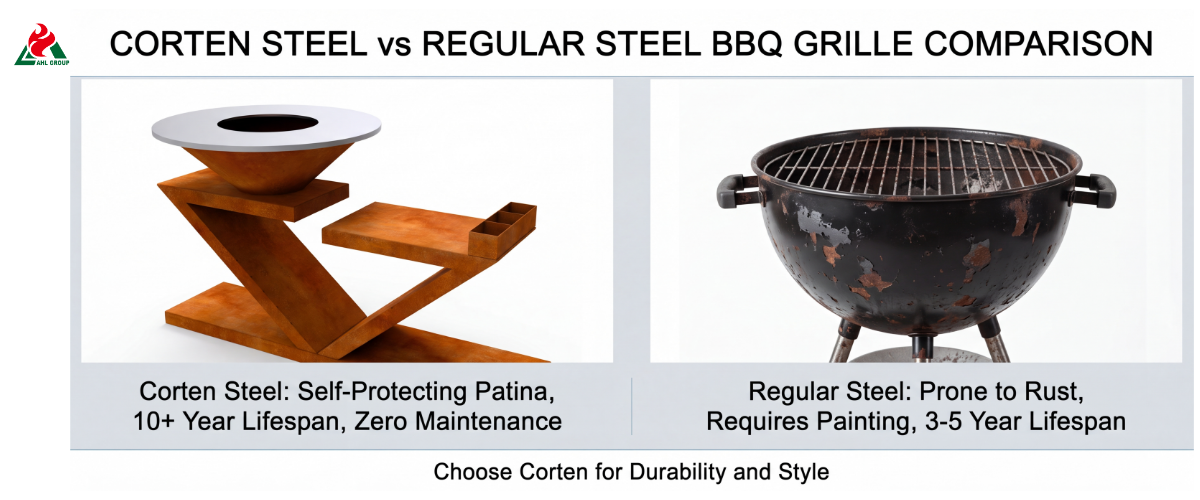
Corten grills rely on two distinctly different material properties: a self-protecting alloy body and a food-grade carbon steel or stainless steel cooking ring positioned above the central firebox. Standard outdoor grills typically feature synthetic powder coatings or high-temperature paints designed to artificially resist moisture. In contrast, weathering steel forms an organic, dense, crystalline layer of iron oxide rust known as “goethite,” which develops through natural cycles of drying and wetting. Because the metal actively reacts with heat, oxygen, wood ash, and cooking oils, using a weathering steel grill requires following a unique set of maintenance guidelines.
What This Guide Will Help You Avoid
From the perspectives of structural engineering and cooking equipment, this guide provides a detailed list of the most common operational, structural, and maintenance mistakes made by users of Corten steel barbecue grills. By familiarizing yourself with these key safety guidelines, temperature limits, surface care tips, and spill prevention methods, you can ensure safe outdoor cooking while extending the life of your grill by decades.
2. Safety Mistakes to Avoid
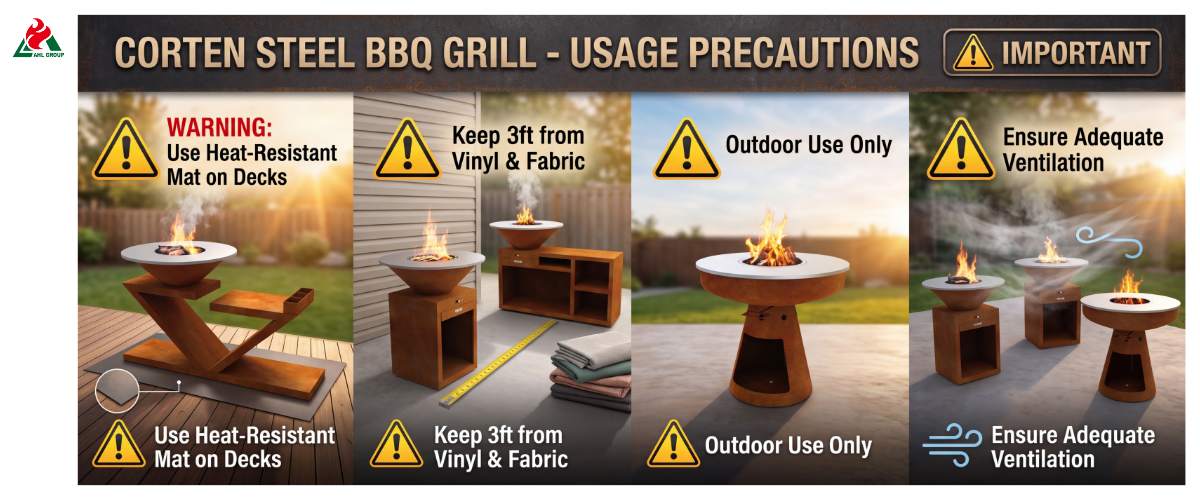
Using a Grill in Enclosed or Poorly Ventilated Areas
Never use a wood- or charcoal-fired Corten grill in an enclosed porch, on a screened patio, in a garage, or under a low residential awning. Burning wood produces large amounts of carbon monoxide (CO), thick particulate smoke, and flying embers. The firebox of a Corten grill radiates intense heat in all directions (360 degrees); using it in poorly ventilated or confined spaces poses a serious risk of carbon monoxide poisoning and a significant fire hazard to the structure.
Placing the Grill too Close to Walls, Fences, or Overhanging Structures
When fully loaded, the radiant heat output at the core of the Corten steel charcoal grill's firebox can easily exceed 500°C (930°F). Maintaining a safe distance is critical: Horizontal clearance: Keep the grill at least 10 feet (3 meters) away from vinyl siding, wooden privacy fences, dry vegetation, and glass windows. Even without direct contact with the flames, intense radiant heat can cause vinyl siding to warp and shatter double-pane glass. Vertical clearance: Ensure 15 feet of vertical clearance and avoid obstacles such as overhanging tree branches, wooden pergolas, or fabric awnings to prevent flying sparks from igniting overhead structures.
Do Not Leave the Grill Unattended
Open-top griddles (planchas) use direct open flame. Sudden gusts of wind may scatter burning embers into the yard, or cause flames to flare up violently when fat from high-protein meats drips into the central fire pit. Never leave the area while the fire is burning vigorously. Be sure to designate a specific person to supervise the grill and keep a certified Class B/K fire extinguisher or a heavy-duty fire blanket nearby.
Allowing Children or Pets Too Close to the Grill
Because weathering steel conducts heat throughout the entire unit, the outer walls of the firebox and base become extremely hot to the touch during use. Unlike double-walled, insulated grills, the exposed single-layer outer panels can cause severe burns upon contact. Maintain a 6-foot safety radius around the unit and ensure that children and pets remain away from the cooking area at all times.
3. Fire and Heat Management Mistakes
Adding Too Much Fuel at Once to Start a Fire
Stuffing large pieces of firewood into a cold, Corten steel firebox and lighting them all at once subjects the steel to severe thermal shock. Steel expands when heated; if the temperature is rapidly raised from ambient temperature (20°C) to blazing heat (600°C+) within a few minutes, it can cause uneven thermal expansion of the grill top, resulting in warping or denting. Be sure to start with a small fire using a few kindling pieces, then gradually build up the fire over 30 to 45 minutes.
Improper Use of Ignition Aids or Fuel Additives
Never pour gasoline, lighter fluid, kerosene, or alcohol-based fuel additives into a Corten steel outdoor grill. Highly volatile liquid fuels can seep into the porous carbon steel cooking grate and the unweathered interior steel walls. Once ignited, they form explosive vapor clouds, leave toxic chemical residues on the cooking surface, and destroy the natural flavors of the food. Please use only natural wood shavings, dry firelighters, or standard chimney-style fire starters.
Firebox Overload or Excessively High Burning Temperatures
Overfilling the central firebox with high-calorific-value fuel (such as coal or an excessive amount of hardwood firewood) may cause the internal core temperature to exceed 800°C (1470°F). Prolonged burning at extreme temperatures may cause the firebox, made of thin steel sheet, to warp, burn through the internal support brackets, and strip away the protective curing oil layer from the surface of the cooking ring.
Ignoring the Risks of Strong Winds and Intense Flames
Using a Corten steel plancha grill during a severe storm can turn the central fire pit into a blast furnace, scattering embers across the patio and causing unpredictable and drastic temperature fluctuations. Additionally, allowing liquid animal fat to accumulate around the inner fire ring without scraping it into the firebox can trigger sudden and intense grease fires, which not only scorch food but also pose a risk of burns.
Pouring Water on a Scorching Corten Grill to Cool It Down
Pouring cold water directly onto a red-hot weathering steel fire pit grill or cooking ring is the quickest way to ruin your grill. The sudden drop in temperature creates extreme mechanical stress on the metal structure, causing high-strength steel plates to warp, crack along welds, or snap structural pins instantly. Be sure to let the fire burn out naturally and allow the grill to cool completely overnight.
4. Food and Cooking Mistakes
Cooking Directly on the Untreated Weathering Steel Surface
Although the outer base and fire bowl are made of weathering steel, the cooking ring on top is typically made of food-grade carbon steel or S235 steel plate. Never cook food on an untreated metal plate that has not been “seasoned.” Cooking on an untreated metal surface will cause food to stick immediately and expose ingredients to loose iron oxide dust.
Using the Grill Before the Initial Seasoning Process
Before placing food on a brand-new weathering steel barbecue grill, you must complete a high-temperature seasoning cycle. Skipping this step will leave factory-applied oils and rust-preventive shipping coatings on the metal surface, which can affect food quality.
► Build a moderate fire and heat the grill for 60 minutes to burn off any factory residues.
► Scrape the warm surface clean with a metal spatula.
► Apply several thin layers of high-smoke-point oil (such as canola oil, grapeseed oil, or avocado oil) to form a smooth, dark, non-stick polymer layer.
Food Sticking to the Pan Due to Improper Cooking Temperature
Flat baking pans have a natural temperature gradient: the temperature is higher near the inner heating element (≈300°C) and gradually cools toward the outer edge (≈150°C). Placing delicate ingredients such as fish or eggs directly on a pan that has not been preheated or greased can cause them to break apart or burn. First, allow the griddle to preheat thoroughly, coat it with a thin layer of oil to create a protective barrier, and then move the delicate ingredients to the cooler outer edge.
Failure To Use Appropriate Grates, Cookware, or Liners
Placing a heavy cast-iron Dutch oven directly on the warm inner rim of a carbon steel cooktop may scratch the polymer protective coating or cause metal dents. Please use a dedicated center grate, raised cross-support rack, or wok ring designed specifically for your grill model to ensure even heat distribution and prevent surface damage.
Mistaking Weathering Steel for Stainless Steel or Enameled Steel
You cannot treat a weathering steel grilling surface the same way you would an enameled gas grill or a 304 stainless steel cooking surface. Enameled surfaces are acid-resistant, non-porous glass coatings, while stainless steel does not require oil seasoning. Weathering steel and carbon steel cooking surfaces function similarly to giant cast-iron skillets; they require regular oiling, careful temperature control, and protection from moisture to remain food-safe and rust-free.
5. Cleaning and Maintenance Mistakes
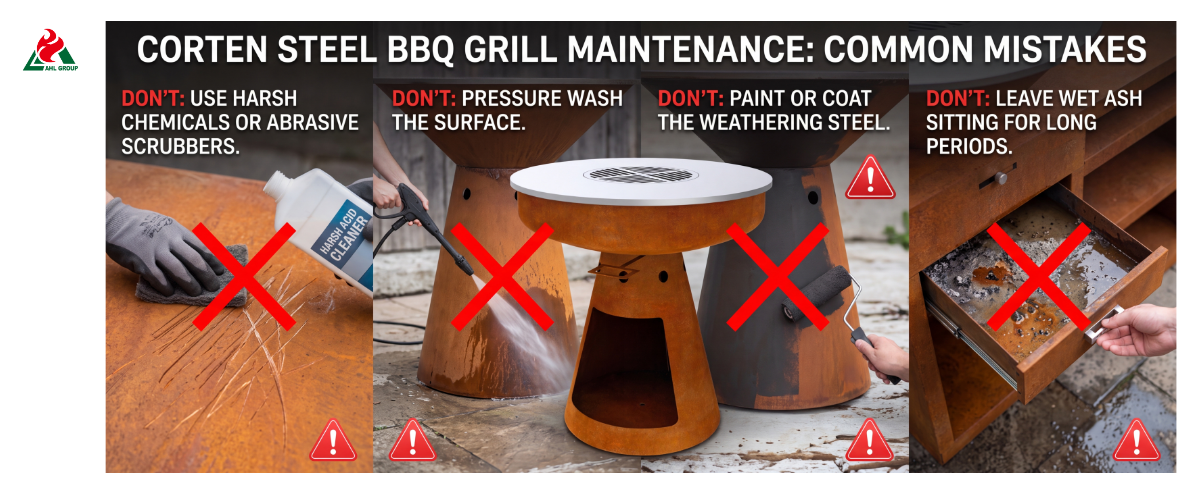
Using Strong Chemical Cleaners or Acidic Cleaners on Weathering Steel
Never use oven cleaners, degreasers, bleach, or acidic solutions (such as concentrated vinegar or hydrochloric acid) on weathering steel or seasoned cooktops. Chemical degreasers will strip away the nonstick patina you’ve worked so hard to build up on your cooktop, while strong acids will destroy the protective hematite rust layer on the exterior, causing the exposed carbon steel to suffer from corrosive, flaking rust.
Scrubbing with Coarse Wire Brushes That Damage the Rust Layer
Using high-speed wire wheel attachments or hard stainless steel wire brushes on the Corten steel frame will scrape away the smooth, protective rust layer, leaving shiny, unsightly scratches that will take months to regrow into an even, natural rust layer. On cooking surfaces, coarse, stiff steel bristles may break off and contaminate food. Please use a flat-headed stainless steel scraper to clean the cooktop and a soft nylon brush to clean the outer frame.
Storing a Wet Grill or Storing It Before It’s Dry
Allowing rainwater to accumulate in the fire bowl or on the surface of the carbon steel grill grate can easily lead to severe pitting corrosion. Although the outer walls of Corten steel are highly resistant to rainwater, standing water on the flat grill grate will damage the oil-curing layer and form a thick layer of red rust. Be sure to wipe the grill dry after rain and reapply a protective oil coating.
Ignoring rust runoff onto patios or decks
During the first 6 to 18 months of outdoor use, untreated weathering steel will shed loose iron oxide particles during heavy rain. Placing a new Corten metal grill directly on light-colored travertine, white concrete, porous sandstone, or unsealed wooden deck flooring will leave permanent orange rust stains. Before the rust stains set in, be sure to place your new BBQ grill on a bed of dark gravel, basalt pavers, or heavy-duty silicone protective mats.
6. Installation and Setup Mistakes
Placing the Grill on a Flammable Surface
Never place a heavy, wood-burning Corten grill directly on an untreated wooden deck, composite deck, or hay without taking heat-insulation precautions. Radiant heat conducted through the base plate, combined with sparks falling from the ash pan, may scorch the composite material or ignite the wooden deck beneath the grill.
Failure to Use Heat-Resistant Bases or Mats
If you must install the barbecue grill on a wooden deck or light-colored stone deck, use the following protective measures:
► Lay down a heavy-duty, heat-resistant silicone or rubber grill mat to catch dripping grease.
► Place thick, non-combustible concrete pavers or dark granite hearth stones beneath the base to absorb radiant heat and catch rust-laden rainwater runoff.
Installation on Uneven Ground Causes Instability
Rusted steel grills filled with heavy items—including thick steel plates and firewood—can weigh between 80 kilograms and over 150 kilograms (175–330+ pounds). If the grill is installed on soft soil, a sloped lawn, or loose gravel, the base will settle unevenly. This not only creates a dangerous risk of tipping but also causes cooking oil from the top grate to flow directly into the fire pit instead of remaining beneath the food.
Blocking the airflow around the grill
The Corten charcoal grill relies on engineered air intakes around the base and ash pan to deliver oxygen to the fire in a controlled manner. Piling wood next to the air intakes—which can block them—or allowing ash to accumulate on the air intake grates will deprive the fire of oxygen, resulting in thick, bitter smoke and lower-than-desired cooking temperatures.
Failure to Comply with Local Fire Codes and Homeowners’ Association Rules
Before installing a permanent outdoor wood-burning fireplace, consult your local municipal fire codes, open-air burning regulations, and homeowners’ association guidelines. Many urban areas require the installation of a spark arrestor screen over open fire pits, specify minimum distances from property lines, or enforce fire bans during summer droughts to restrict outdoor wood burning.
7. Seasonal and Weather Mistakes
Using the Grill in High Winds or Stormy Weather
Lighting the outdoor grill in high winds (>30 kilometers per hour) will prevent safe heat management. Strong winds can blow embers out of the center of the firebox, direct flames toward the user, and cause one side of the grill grate to become too cold while the other side becomes too hot, thereby increasing the risk of heat distortion.
Leaving the Grill Unprotected Outdoors in Harsh Coastal or Salt-Fog Environments
Although weathering steel performs exceptionally well under standard inland climatic conditions, salt fog (NaCl) within 1 mile of the coastline can interfere with the formation of the protective ferritic rust layer. Chloride ions can penetrate the oxide film and, if left untreated, will cause the grill to rust through rapidly. Users in coastal areas must rinse the weathering steel exterior with tap water monthly to wash away accumulated salt deposits.
Left Uncovered During Long-Term Storage
Although weathering steel can easily withstand outdoor weather conditions, leaving the flat-bottomed cooking grate exposed to snow, ice, and fall leaves for several months will damage the protective seasoning layer on its surface. During the off-season, after the unit has cooled, cover it with a sturdy, durable, breathable, and waterproof protective cover to prevent rainwater from seeping into the firebox and to keep the cooktop clean.
Improper Storage of Winter Fuel or Accessories
Storing damp firewood in the firewood compartment beneath the base during winter can cause the interior walls to remain constantly damp. Moisture evaporating from the damp firewood becomes trapped inside the base, leading to severe surface rust. Be sure to store firewood on a firewood rack that is dry, elevated off the ground, and away from the grill’s base.
8. Common User Errors Specific to Corten
Expecting Completely Rust-Free, Rather Than a Controlled Rusting Effect
A common mistake first-time buyers make is expecting Corten steel to retain its original appearance or remain completely rust-free. Corten steel is designed to rust in a controlled manner. Accepting its natural color changes—from the original gray to a bright orange, and eventually to a deep, rich espresso brown—is key to appreciating this material.
Lack of Understanding About Weathering Steel and Concerns About Surface Rust
Some users panic when they see a light dusting of rust on the surface during the first few months of outdoor use, leading them to spray the grill with clear varnish or synthetic paint. Never apply clear varnish or rust inhibitors to a weathering steel grill. Synthetic coatings break down under the high temperatures of the firebox, forming unsightly flakes and preventing the steel from developing its natural, self-healing rust layer.
Using Thin-Walled or Poor-Quality Corten Steel Grates That Warp or Burn Through
Not all “weathering steel” grills on the market meet the same standards. Cheap imitations made from thin steel sheets (<1.5 mm) lack the structural strength required to withstand the high temperatures of a wood fire. Be sure to choose a grill with a base made of at least 3 mm thick weathering steel and grates made of 8 mm to 12 mm thick carbon steel.
| Component | Minimum Recommended Gauge | Ideal Heavy-Duty Spec | Primary Failure Risk if Too Thin |
| Plancha Cooktop Ring | 8mm (5/16") | 10mm to 12mm (3/8"-1/2") | Severe dish warping under heat |
| Inner Fire Bowl | 3mm (11Gauge) | 4mm to 5mm (3/16") | Early heat burn-through |
| Outer Pedestal Base | 2mm (14Gauge) | 3mm (11Gauge) | Structural tipping / wobbly base |
Failure to Follow the Initial Seasoning Instructions
If you rush the initial lighting process and place steak directly on an unseasoned grill pan, the food will burn, taste bitter, and stick firmly to the untreated carbon steel surface. Be sure to take the time to perform a dedicated 60-minute oil-seasoning burn-in before your first official cooking session.
Mixing Corten Steel Grills with Incompatible Accessories
Placing standard low-temperature plastic lids, thin aluminum drip pans, or uncertified glass lids on a high-temperature Corten steel brazier poses a significant safety hazard. The high-temperature steel will melt inferior plastics, causing them to adhere to the grill surface. This not only makes cleanup difficult but also produces toxic chemical fumes.
9. Corten Grill vs Other Grills: What Not to Do
Treat Weathering Steel as Painted Steel
With standard painted carbon steel grills, once the surface is scratched, the exposed metal will rust and flake off until it is repainted. Scratches on weathering steel, however, are self-healing: the exposed steel reacts with rainwater and air to naturally rebuild its protective rust layer. Never sand the weathering steel base, and never use aerosol paint for touch-ups.
No Special Treatment Required—Treat Weathering Steel Like Cast Iron
Although carbon steel grill rings require a “seasoning” process similar to that of cast-iron skillets, they behave differently under thermal loads. Cast iron retains heat well but is brittle and prone to cracking from thermal shock. Carbon steel grill rings are ductile and tough, but they experience greater thermal expansion and warping when exposed to direct flame. Be sure to arrange the firewood properly to ensure even heat distribution across the griddle.
Assuming All Barbecue Safety Rules Apply to All Materials
Unlike gas grills with insulation and enclosed lids, weathering steel flat-top grills are open-flame cooking appliances. Radiant heat spreads farther around the grill, charcoal embers can be carried away by air currents, and grease can flow inward toward the open flame. Please adjust your cooking techniques, tool lengths, and safety distances accordingly.
Ignoring the Manufacturer's Specific Maintenance Guidelines for Corten Steel Grills
The user manuals for standard gas grills typically recommend washing the surface with soapy water after cooking and scrubbing all parts clean with a wire brush. Applying this method to a durable steel grill will not only strip away the protective layer on the grill surface but also wash rust-containing water onto your patio. Be sure to follow the specific maintenance procedures for weathering steel grills: scrape off residue, oil the surface, scoop out the ashes, and keep it dry.
10. Frequently Asked Questions
Q1: Is It Safe to Cook Directly on Weathering Steel?
You should not cook food directly on untreated, unseasoned weathering steel. High-quality Corten BBQ grills are equipped with a cooking ring made of food-grade carbon steel or stainless steel on top. Once properly seasoned with a high-smoke-point vegetable oil, this carbon steel plate provides a completely safe, non-stick, and food-grade cooking surface.
Q2: Will a Corten steel grill rust through quickly?
No. A high-quality Corten steel grill manufactured with a firebox at least 3 mm thick and a cooking ring at least 10 mm thick will not rust through for 20 to 30 years or more under normal outdoor conditions. Rusting through only occurs when wet wood ash accumulates continuously at the bottom of the firebox for several years.
Q3: What Cleaning Products Must Never Be Used on a Corten Grill?
Never use chemical oven degreasers, bleach, hydrochloric acid, concentrated vinegar, or strong chemical rust removers on a Corten grill. These chemicals will damage the non-stick coating on the cooking grate and strip away the protective rust layer on the exterior.
Q4: Can the Corten Steel Grill Be Left Outdoors Year-round?
Yes, Corten steel is specially designed to withstand year-round outdoor exposure, including ice and snow in harsh winters, heavy rain, and the scorching summer sun. However, when the grill is not in use for an extended period, you should cover the top grilling grate with a breathable protective cover to preserve the oil-curing layer and prevent rainwater from entering the ash pan.
Q5: What Are the Most Common Mistakes When Using the Grill for the First Time?
The three most common mistakes made during initial use are:
► Pouring cold water onto a scorching-hot grill to cool it down, which can cause the steel to warp.
► Forgetting to clean out wet wood ash, which can turn into corrosive alkaline sludge.
► Placing a new metal grill directly on lightweight concrete pavers without taking protective measures for the patio, leading to premature rust seepage.
Conclusion: Final Recommendations for Extending the Lifespan of Your Corten Steel Grill
Using a Corten steel charcoal grill allows you to experience the joy of open-flame cooking while enjoying a rustic outdoor style. By starting a small fire to prevent thermal shock, thoroughly seasoning the grill grate with vegetable oil, promptly removing cooled ashes, and protecting the surrounding hardscape during the initial weathering phase, your Corten grill will remain a reliable and high-performance cooking appliance for decades to come.

